Briefly
A totem is a symbol—often an animal, plant, or natural object—that holds spiritual significance for a group or individual, particularly in indigenous cultures. Totems represent clan identity, ancestral lineage, and a deep connection to nature. They are believed to offer guidance, protection, and a sense of belonging, serving as a bridge between the human and natural worlds.
What Does Totem Symbolize?
Totems primarily symbolize identity and kinship. In many indigenous societies, a totem animal or plant is adopted by a clan as its emblem, representing the group’s shared ancestry and values. The totem embodies the qualities of that being—strength, wisdom, cunning, or nurturing—and members are expected to honor those traits. On a personal level, a totem can act as a spirit guide, offering insight and protection during life’s challenges. The totem also symbolizes the interdependence of all living things, reminding people of their place within the ecosystem.
Positive and Negative Meanings
Positive associations: Totems are linked to unity, spiritual guidance, and respect for nature. They provide a sense of purpose and continuity, reinforcing community bonds and moral values. A totem animal can inspire courage, patience, or creativity, and is often seen as a benevolent protector.
Negative meanings: In some contexts, totems can signify exclusion or rigidity. Outsiders may be barred from certain rituals, and strict totemic rules can limit personal freedom. Misappropriation of totemic symbols by non-indigenous people can also lead to cultural disrespect and stereotyping.
History and Origins of Totem Symbolism
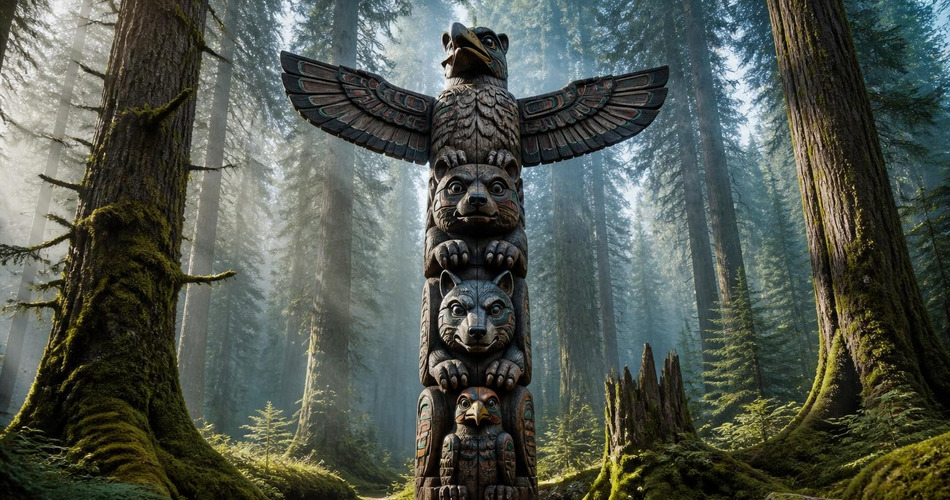
The word “totem” comes from the Ojibwe language, meaning “his kinship group.” Anthropologists in the 19th century, such as James Frazer and Émile Durkheim, studied totemism as one of the earliest forms of religious and social organization. Totemic systems were found across North America, Australia, Africa, and parts of Asia. In the Pacific Northwest, totem poles were carved to tell stories, mark territories, or honor ancestors. These poles often featured stylized animals like ravens, eagles, wolves, and bears, each with layered meanings. The practice of totemism reinforced social structure and ecological knowledge, linking human identity to the natural world.
Totem Symbolism in Different Cultures
In Native American cultures, totems are deeply personal and communal. Many tribes believe each person has a spirit animal or totem that guides them from birth. The Ojibwe, for example, have a clan system where each clan is named after an animal (e.g., Crane, Bear, Marten) and members share responsibilities. In the Pacific Northwest, totem poles are monumental carvings that depict family histories, supernatural beings, and important events. Among Australian Aboriginal peoples, totems (often called “dreamings”) connect individuals to specific landscapes, animals, and ancestral stories. A person’s totem might be a kangaroo, a honey ant, or a rain cloud, dictating dietary restrictions and ceremonial roles. In African cultures, totemic animals are often taboo to kill or eat, and they appear in proverbs and initiation rites. The Maasai of East Africa, for instance, have clan totems like the lion and the elephant, which symbolize bravery and strength.
Spiritual Meaning of Totem
Spiritually, a totem is more than a symbol—it is a living presence. Many indigenous traditions hold that the totem’s spirit can communicate with humans through dreams, visions, or nature encounters. A person might seek a totem through fasting, meditation, or a vision quest. The totem then becomes a lifelong guide, offering wisdom and protection. This concept has been adopted in modern spirituality as “spirit animals,” though practitioners emphasize respect for the original cultural contexts. The totem also represents the soul’s journey and the interconnectedness of all life.
Totem in Myths and Folklore
In many creation myths, totem animals play a central role. Among the Tlingit of the Pacific Northwest, the raven is a trickster and creator who brought light to the world. The Haida tell stories of the bear as a teacher and guardian. In Australian Aboriginal mythology, the Rainbow Serpent is a powerful totem associated with water, fertility, and life cycles. These myths reinforce the moral and ecological lessons embodied by the totem. Folklore also includes taboos: harming one’s totem animal is believed to bring bad luck or illness.
Totem in Dreams
Dreaming of a totem animal or symbol is often interpreted as a message from the subconscious or the spirit world. In many indigenous traditions, such dreams are taken seriously as guidance. A recurring totem in dreams may indicate a need to embody that creature’s qualities—for example, dreaming of a wolf might suggest loyalty and teamwork, while a bear could signal introspection and strength. Dream encounters with a totem can also mark a transition or a call to reconnect with one’s heritage.
Common Dream Scenarios
- Encountering a totem animal: Seeing a specific animal repeatedly in dreams may indicate that animal is your personal totem, offering guidance.
- Dreaming of a totem pole: A totem pole in a dream can represent family history, ancestral wisdom, or the need to honor one’s roots.
- Being given a totem object: Receiving a totem in a dream (e.g., a carved figure) may symbolize a gift of protection or a new responsibility.
- Transforming into a totem animal: This scenario suggests a deep identification with the animal’s traits and a desire for change or empowerment.
Totem in Superstitions and Omens
Superstitions surrounding totems often involve taboos. For example, in some cultures, it is considered bad luck to kill or eat one’s totem animal. Seeing a totem animal unexpectedly—like a raven crossing one’s path—may be interpreted as an omen, either positive or negative depending on the context. In the Pacific Northwest, a fallen totem pole is sometimes seen as a sign of social upheaval or the death of a chief. Conversely, finding a small carved totem or a feather from a totem bird can be considered a protective charm.
Totem in Art and Literature
Totem poles are among the most recognizable art forms of the Pacific Northwest, with intricate carvings that tell stories and record lineage. In literature, totems appear in works such as Sherman Alexie’s The Absolutely True Diary of a Part-Time Indian, where the protagonist draws totem animals to explore his identity. In film, Disney’s Brother Bear (2003) centers on a young man who receives a totem representing love and undergoes a spiritual transformation. The novel The Totem by David Morrell uses the concept in a horror context, though it is less culturally grounded. Totem imagery also appears in contemporary art, such as the sculptures of Bill Reid, a Haida artist whose works celebrate indigenous heritage.
Tattoo Meaning of Totem
Totem tattoos are popular as expressions of personal identity, heritage, or spiritual beliefs. Common designs include animals like the wolf, eagle, bear, or owl, each carrying specific meanings: the wolf for loyalty, the eagle for vision, the bear for strength. A totem pole tattoo may represent family lineage or a life story. It is important for wearers to understand the cultural significance and avoid trivializing sacred symbols. Many indigenous artists create custom totem tattoos that honor traditional styles.
Meanings of Different Types of Totems
- Animal totems: The most common type, each animal symbolizes distinct traits—fox for cunning, deer for gentleness, turtle for longevity.
- Plant totems: Some clans adopt plants like cedar or corn, representing sustenance, growth, and connection to the earth.
- Natural element totems: Thunder, rain, or mountains can serve as totems, embodying power, renewal, or permanence.
- Totem poles: These are composite totems, with multiple figures stacked to tell a story or honor ancestors.
Frequently Asked Questions
Q: What is the difference between a totem and a spirit animal?
A: A totem is often a clan or family symbol passed down through generations, while a spirit animal is typically a personal guide that appears in dreams or visions. However, the terms overlap in modern usage.
Q: Can I choose my own totem?
A: In traditional cultures, totems are inherited or revealed through spiritual practices, not chosen arbitrarily. Many modern people adopt a totem based on personal resonance, but it’s important to respect the original cultural meanings.
Q: Are totem poles religious objects?
A: Totem poles are not worshipped; they are ceremonial and commemorative, telling stories, marking territory, or honoring the dead. They hold spiritual significance but are not idols.
Q: What does it mean if my totem is a predator?
A: Predator totems like the lion or wolf often symbolize leadership, courage, and protection. They may also remind the individual to balance strength with respect for others.
Related Symbols
- Spirit animal – a personal guide often equated with a totem in modern contexts
- Clan emblem – a visual symbol representing a kinship group
- Animal guide – a helper in shamanic traditions
- Heraldic beast – similar use of animals as symbols in European heraldry
- Fetish – an object believed to have spiritual powers, sometimes overlapping with totem