Briefly
Pigeons are among the most familiar birds in urban environments, yet their symbolic weight is profound. Across cultures, they represent peace, love, fidelity, and the idea of homecoming. As natural messengers, they have been used for centuries to carry vital communications. At the same time, pigeons can symbolize urban grit, survival, and even nuisance. Their dual nature—gentle and resilient—makes them a rich symbol in mythology, religion, art, and everyday life.
What Does Pigeon Symbolize?
Pigeons are most widely recognized as symbols of peace and love, largely due to their close association with doves. Their homing instinct makes them powerful symbols of home, return, and faithfulness. In many contexts, pigeons also represent communication, as they have been trained to carry messages across long distances. Additionally, their ability to thrive in cities has made them symbols of adaptability and survival. In some traditions, pigeons embody fertility and abundance because of their prolific breeding.
Positive and Negative Meanings
Positive associations: Pigeons are often linked with peace, harmony, and gentle love. Their homing ability symbolizes loyalty, commitment, and the enduring bond of family or friendship. In religious art, the white pigeon (dove) represents the Holy Spirit, purity, and divine grace. As messengers, they stand for reliable communication and the delivery of good news.
Negative meanings: In modern urban settings, pigeons are sometimes seen as pests, associated with dirt, disease, and overpopulation. Their constant cooing and droppings can symbolize annoyance, decay, or the less glamorous side of city life. In some contexts, they represent gullibility or being easily led, as in the phrase “pigeon” meaning a dupe or victim of a scam.
History and Origins of Pigeon Symbolism
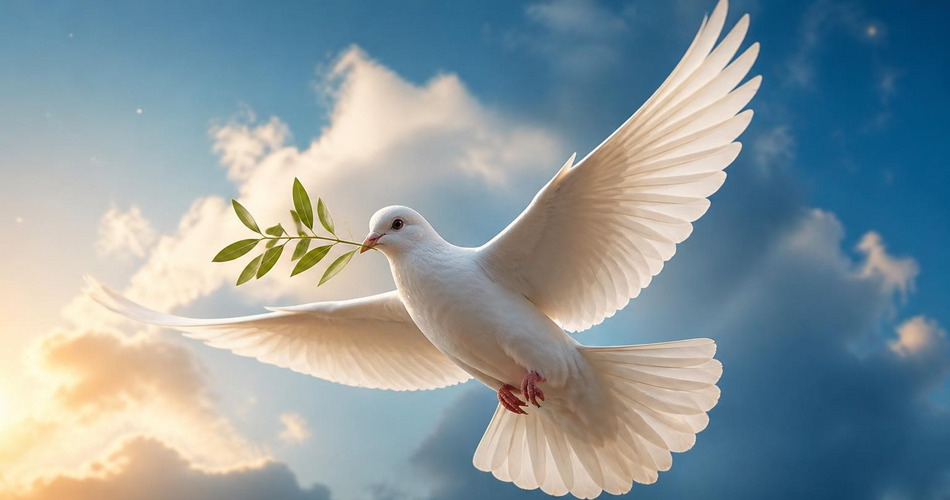
The symbolic history of pigeons stretches back thousands of years. In ancient Mesopotamia, pigeons were associated with the goddess Ishtar (Inanna), representing love and war. In ancient Greece, doves (the same family) were sacred to Aphrodite, the goddess of love. The Romans used pigeons for communication and as symbols of domesticity. The biblical story of Noah’s ark features a dove returning with an olive branch, establishing the pigeon/dove as a universal symbol of peace and hope. Throughout the Middle Ages, pigeons were kept in dovecotes as a sign of wealth and status, and their symbolism of fidelity was celebrated in wedding traditions.
Pigeon Symbolism in Different Cultures
In Christianity, the white dove (a type of pigeon) represents the Holy Spirit, peace, and purity. The story of Noah’s dove is one of the most enduring symbols of hope and divine promise. In Hinduism, pigeons are sometimes associated with love and peace, and they appear in stories of the god Krishna. In Islamic tradition, pigeons are respected as messengers and are said to have helped the Prophet Muhammad by nesting at the mouth of a cave to hide him from enemies. In Chinese culture, pigeons symbolize fidelity, longevity, and peace. They are also seen as auspicious birds that bring good news. In Native American traditions, pigeons and doves often represent peace, love, and the spirit of the home.
Spiritual Meaning of Pigeon
Spiritually, pigeons are seen as messengers between the physical and spiritual worlds. Their homing instinct is interpreted as a reminder to stay connected to one’s roots and inner truth. Seeing a pigeon can be a sign to trust in the journey and to maintain faith that you will find your way home—whether that means a physical place, a state of mind, or a spiritual path. Pigeons also encourage gentleness and compassion, urging us to approach life with a peaceful heart.
Pigeon in Myths and Folklore
In Greek mythology, doves drew the chariot of Aphrodite and were symbols of love and beauty. The Roman poet Ovid wrote of the dove as a messenger of love. In Norse mythology, the god Freyr had a magical ship that could be folded like a cloth, and doves were associated with his realm of peace and fertility. In European folklore, pigeons were believed to carry souls to the afterlife or to bring messages from departed loved ones. In some traditions, a pigeon landing on a house was an omen of good fortune or a visit from a spirit.
Pigeon in Dreams
Dreaming of pigeons often relates to themes of peace, communication, and home. A pigeon appearing in a dream may indicate a need to reconnect with family or to deliver an important message. It can also symbolize a desire for calm and harmony in one’s life. The behavior of the pigeon in the dream—whether it is flying, cooing, or resting—can offer additional nuance.
Common Pigeon Dream Scenarios
- A white pigeon: Often symbolizes peace, purity, or spiritual guidance.
- A pigeon carrying a message: May represent an important communication or news that is about to arrive.
- A flock of pigeons: Can indicate community, social connections, or feeling overwhelmed by many demands.
- A pigeon in a cage: Might symbolize feeling trapped or restricted in a situation.
- A pigeon flying away: Could represent lost opportunities or a desire for freedom.
Pigeon in Superstitions and Omens
- White pigeon seen: Considered a very positive omen, often signifying peace, blessings, or a spiritual presence.
- Pigeon landing on your windowsill: Believed to bring good luck or a message from afar.
- Pigeon droppings on you: In some superstitions, this is actually considered lucky, bringing unexpected money or good fortune.
- Dead pigeon: Sometimes seen as a bad omen, warning of loss or the end of a peaceful period.
- Pigeon nesting near your home: Thought to bring stability, fertility, and protection to the household.
Pigeon in Art and Literature
Pigeons have been depicted in art for centuries. One of the most famous examples is Pablo Picasso’s “Dove of Peace” (1949), which became an iconic symbol of the peace movement. In literature, pigeons appear in “The Pigeon” by Patrick Süskind, a novella about a man whose orderly life is disrupted by a pigeon—a story that explores themes of fear, routine, and transformation. In Charles Dickens’ “A Tale of Two Cities”, pigeons are used as symbols of domestic peace. The biblical story of Noah’s dove has inspired countless paintings, poems, and hymns. In film, pigeons often appear as symbols of urban life, as in the animated movie “Valiant” (2005), which features homing pigeons as wartime heroes.
Pigeon Tattoo Meaning
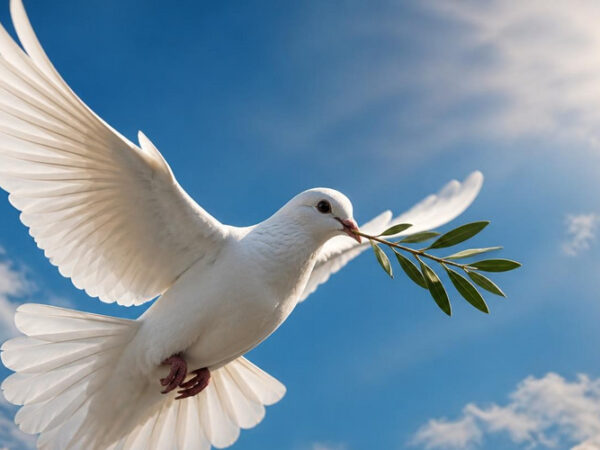
Pigeon tattoos often carry personal meanings of peace, freedom, and home. A white pigeon tattoo can represent a loved one lost, a commitment to non-violence, or a spiritual guide. A homing pigeon tattoo may symbolize loyalty, the importance of family, or the idea of always finding your way back. Urban-style pigeon tattoos can reflect a connection to city life, resilience, and adaptability. The olive branch in a pigeon’s beak is a classic peace symbol.
Meanings of Different Pigeon Types and Colors
- White pigeon (dove): Purity, peace, the Holy Spirit, and new beginnings.
- Gray pigeon: The common city pigeon, symbolizing adaptability, survival, and the everyday.
- Homing pigeon: Communication, reliability, and the ability to return home against odds.
- Wood pigeon: Often associated with the countryside, nature, and a gentler pace of life.
- Rock dove: The wild ancestor of domestic pigeons, representing strength and natural instinct.
Frequently Asked Questions About Pigeon Symbolism
Q: What does a pigeon symbolize in the Bible?
A: In the Bible, the dove (a type of pigeon) symbolizes the Holy Spirit, peace, and God’s promise after the flood. It also represents purity and sacrifice in temple rituals.
Q: Is a pigeon a good luck symbol?
A: Yes, in many cultures pigeons are considered good luck, especially white pigeons. They are believed to bring peace, messages of hope, and even financial fortune when their droppings land on you.
Q: What does it mean when a pigeon visits you?
A: A pigeon visiting you can be a sign to find peace, reconnect with home or family, or pay attention to a message that is coming your way. It may also be a reminder of loyalty and faithfulness.
Q: Are pigeons and doves the same symbolically?
A: Largely yes, as they belong to the same family. Doves are often seen as the white, pure version, while pigeons are the more common gray or urban variety. Both share core meanings of peace, love, and communication.
Related Symbols
- Dove – the white counterpart, strongly associated with peace and the Holy Spirit.
- Olive branch – often paired with the dove as a symbol of peace and reconciliation.
- Raven – another messenger bird, but associated with mystery and prophecy.
- Swan – symbolizes grace, beauty, and transformation.
- Eagle – represents power, freedom, and vision.