
Briefly
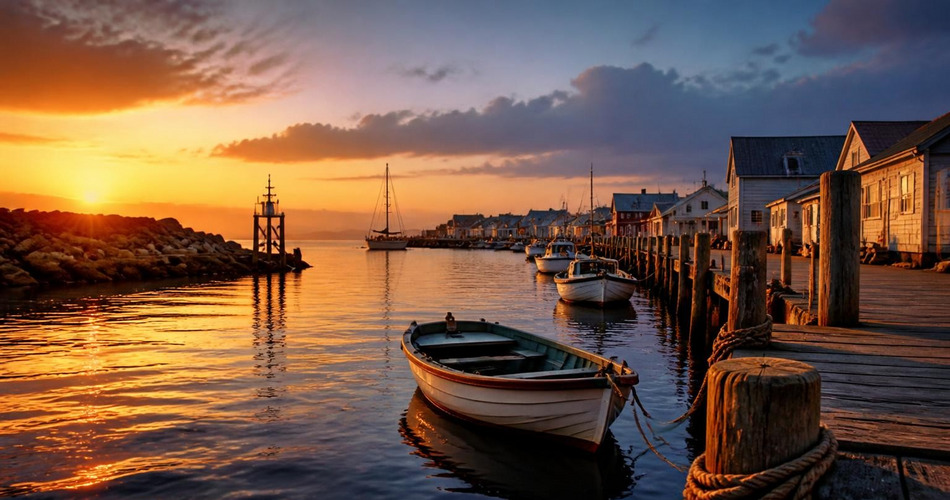
A harbor is a sheltered body of water where ships and boats can anchor safely, protected from storms and rough seas. Symbolically, the harbor represents a place of refuge, security, and rest after a voyage. It embodies the idea of arrival, completion, and the end of a journey, offering a contrast to the open, uncertain ocean. As a symbol, the harbor also evokes themes of homecoming, welcome, and the threshold between the known and the unknown.
What Does Harbor Symbolize?
The harbor stands as one of the most powerful symbols of safety and shelter in human experience. For centuries, reaching a harbor meant survival—escape from storms, pirates, or the simple exhaustion of a long passage. This literal meaning has carried over into metaphorical language: we speak of a “safe harbor” for someone in distress or a “harbor of refuge” for those seeking peace. The harbor also symbolizes transition. It is a liminal space between sea and land, between one phase of a journey and the next. Goods are unloaded, passengers disembark, and new paths begin. This makes the harbor a symbol of connection and exchange—not only of cargo but of ideas, cultures, and stories. In many contexts, the harbor represents community and interdependence, as ports rely on networks of workers, traders, and travelers to function.
Positive and Negative Meanings of Harbor
Positive associations: The harbor is overwhelmingly a positive symbol in most cultures. It represents safety, comfort, homecoming, and the successful completion of a difficult journey. Harbors are places of rest, replenishment, and community—where voyagers are welcomed, repairs are made, and supplies are refreshed. In literature and everyday speech, the harbor symbolizes emotional security, the end of loneliness, and the embrace of loved ones.
Negative meanings: A harbor can also symbolize stagnation or confinement. For those who long for adventure or freedom, being stuck in a harbor may feel like imprisonment or a refusal to grow. Harbors can represent the past, old routines, or places where one feels trapped. The very safety that makes a harbor comforting can also feel limiting to someone yearning for the open sea. Additionally, harbors can be sites of exploitation, danger, or bad news—ships that never arrive, cargoes lost, or the darker side of port life.
History and Origins of Harbor Symbolism
The symbolism of the harbor is deeply rooted in human maritime history. Since the earliest seafaring civilizations, harbors were vital for trade, communication, and survival. Ancient cultures such as the Phoenicians, Greeks, and Romans built elaborate port cities that became hubs of economic and cultural exchange. The harbor naturally came to symbolize prosperity and connection to the wider world. In classical Greek and Roman literature, the harbor often functioned as a metaphor for a safe conclusion to a difficult journey—whether literal or spiritual. The philosopher Seneca wrote of the harbor as a place where the soul finds rest after the storms of life. During the Age of Exploration, harbors were the gateways to new lands and unknown adventures, reinforcing their dual symbolism of return and departure. In many coastal communities, the harbor remains central to identity, representing both livelihood and a gateway to distant places.
Harbor Symbolism in Different Cultures
In Western cultures, the harbor is a common metaphor for safety and home. Phrases like “any port in a storm” reflect the universal need for shelter, while “safe harbor” appears in legal, emotional, and spiritual contexts. In American literature, harbors often symbolize the promise of a new beginning—immigrants arriving at Ellis Island saw New York Harbor as the threshold of a new life. In nautical cultures worldwide, such as those of the Pacific Islands and Scandinavian countries, the harbor is both a practical necessity and a spiritual symbol of protection. In Japanese culture, fishing ports are deeply tied to community life and ancestral traditions, representing continuity and respect for the sea. In Hindu and Buddhist traditions, the idea of crossing a dangerous sea to reach a safe shore is a metaphor for spiritual liberation from the cycle of suffering. The harbor, in this sense, symbolizes enlightenment or the end of the spiritual journey.
Spiritual Meaning of Harbor
In many spiritual traditions, the harbor symbolizes the ultimate goal of the soul’s journey. Life is often compared to a voyage across a turbulent sea, and the harbor represents peace, salvation, or union with the divine. The image of a safe harbor appears in Christian hymns and prayers as a metaphor for heaven or God’s protection. In a personal spiritual context, dreaming of a harbor may indicate a desire for inner peace, resolution of conflict, or a period of healing. The harbor can also symbolize a return to one’s true self after a period of confusion or difficulty. It is a reminder that rest and safety are not only physical but also emotional and spiritual necessities.
Harbor in Myths and Folklore
Harbors and ports appear in myths and folklore as settings for significant transitions. In classical mythology, the harbor at Phaleron was where Theseus’s ship returned from Crete, marking the triumph over the Minotaur. In Greek mythology, the harbor of Aulis was the gathering point for the Greek fleet before the Trojan War, symbolizing both departure and destiny. In Norse sagas, harbors were where heroes set out on quests and where they returned to be honored. Folk tales from coastal Europe often feature haunted harbors where ghost ships appear, warning of disaster, or where drowned sailors are said to return to their home port one last time. Many cultures have legends of “phantom ships” that enter harbors at midnight only to vanish, symbolizing unresolved voyages or souls lost at sea. The harbor in folklore is nearly always a threshold—between life and death, land and sea, home and adventure.
Harbor in Dreams
In dream interpretation, harbors generally reflect the dreamer’s emotional state and life situation. A harbor can represent a desire for security, a need to rest, or the completion of a project or phase of life. Dreaming of a calm, welcoming harbor often suggests satisfaction, emotional stability, and a sense of being grounded. It may indicate that the dreamer has reached a safe place after a period of difficulty. A stormy or inaccessible harbor can symbolize anxiety, unresolved problems, or a feeling that safety is out of reach. A deserted harbor may suggest loneliness or a sense of abandonment. As with all dream symbols, context and personal associations are crucial—the same image may mean different things to different people.
Common Harbor Dream Scenarios
- Arriving at a harbor: Symbolizes reaching a safe place, achieving a goal, or finding emotional peace. It can also represent coming home after a long journey.
- Leaving a harbor: Represents starting a new adventure, taking a risk, or breaking away from security. It may indicate readiness for change or fear of the unknown.
- A stormy or rough harbor: Suggests emotional turmoil, obstacles in achieving safety, or a feeling that your refuge is threatened. It can also warn of difficult decisions ahead.
- An empty or abandoned harbor: Symbolizes loneliness, loss, or a sense of being cut off from community. It may reflect a need for connection or a grief over lost relationships.
- A busy, active harbor: Represents opportunity, exchange, and the energy of community. It can symbolize a time of productivity, social connection, or material gain.
- Searching for a harbor: Indicates a deep need for safety, guidance, or a place to rest. It often occurs during periods of stress, uncertainty, or major life transitions.
Harbor in Superstitions and Omens
Among maritime communities, harbors have long been associated with omens and superstitions. Seeing a harbor for the first time on a voyage was often considered a good omen, signaling the end of danger. However, certain events in a harbor could be seen as ill omens: a bird flying into a ship’s rigging while in port might foretell bad luck, while a sudden change in wind after entering harbor could be seen as a warning to stay longer. In some traditions, dropping an anchor in a harbor and having it catch on something unusual (like a submerged wreck) was considered an omen of hidden trouble. The superstitions surrounding harbors reflect the deep emotional weight these places carry—they are not just practical shelters but charged with hope, fear, and the unknown.
Harbor in Art and Literature
Harbors appear frequently in art and literature, often as powerful symbols of transition and emotion. In visual art, the harbor is a classic subject for marine painters. Artists such as Claude Monet, J.M.W. Turner, and Edouard Manet created famous works depicting harbors—Monet’s “Impression, Sunrise” shows Le Havre harbor in a misty dawn, capturing both the industrial bustle and the ephemeral beauty of the moment. In literature, the harbor serves as a crucial setting in many novels and poems. Homer’s “Odyssey” repeatedly uses the image of a port as a place of refuge and danger. In F. Scott Fitzgerald’s “The Great Gatsby”, the harbor symbolizes the distance between Gatsby’s world and Daisy’s, and the green light at the end of the dock represents an inaccessible future. In poetry, harbors are often evoked as metaphors for safety or loss—for example, in John Masefield’s “Sea Fever”, the speaker longs for the sights and sounds of the harbor and the sea. In film, the harbor is a recurring motif for arrival and departure, such as in “Casablanca” (though set inland, the film’s theme of escape centers on the idea of a safe exit) and in numerous immigration stories where the harbor of New York represents hope and a new beginning.
Frequently Asked Questions
Q: What does a harbor symbolize in a dream?
A: In dreams, a harbor generally symbolizes safety, rest, and the completion of a journey. It can also represent a desire for emotional peace or a need to return to a place of comfort. However, the specific meaning depends on the dreamer’s feelings and the context of the dream.
Q: Is a harbor always a positive symbol?
A: While the harbor is most often a positive symbol of safety and refuge, it can also have negative connotations, such as stagnation, confinement, or the fear of being trapped. Its meaning depends on the individual’s perspective and life circumstances.
Q: What is the spiritual meaning of a harbor?
A: Spiritually, the harbor symbolizes peace, salvation, and the end of a difficult journey. It represents the soul’s longing for safety and union with the divine or with one’s true self.
Q: What cultures emphasize the symbolism of harbors?
A: Many maritime cultures place great importance on harbors, including those of the ancient Greeks, Romans, Phoenicians, Scandinavian peoples, and Pacific Islanders. In modern times, American culture often uses the harbor as a symbol of immigration and new beginnings.
Related Symbols
- Anchor — stability and hope
- Ship — journey and adventure
- Lighthouse — guidance and warning
- Ocean — the unknown and the subconscious
- Port — commerce and connection
- Bay — shelter and calm