Briefly
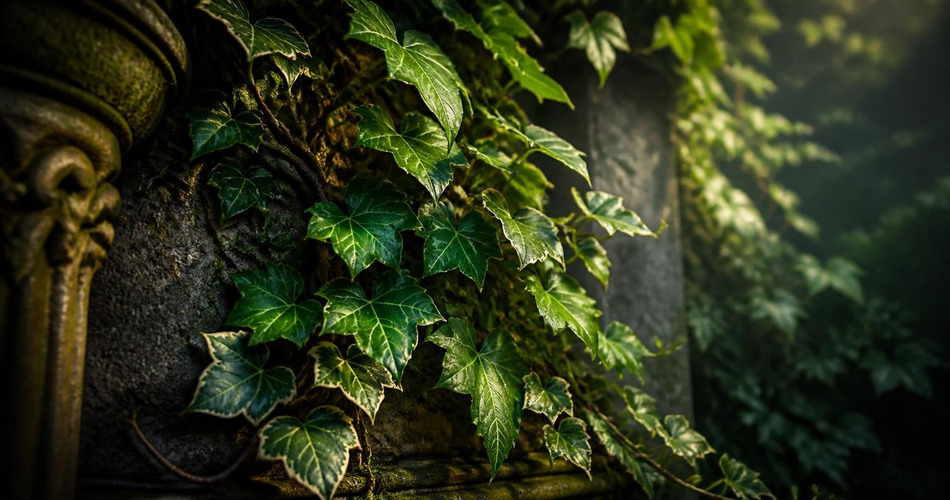
Ivy is a climbing evergreen plant that has long symbolized fidelity, endurance, and eternal life. Its ability to cling tightly to walls and trees has made it an emblem of lasting attachment and loyalty, while its year-round greenery represents undying life and regeneration. At the same time, ivy’s invasive growth can signify over-dependence or suffocating attachment, giving the plant a dual meaning as both a protective and a potentially destructive force.
What Does Ivy Symbolize?
Ivy primarily symbolizes fidelity and unwavering loyalty. Its habit of clinging to supports—walls, trees, or trellises—has been interpreted as a metaphor for steadfast commitment in relationships and friendships. In ancient Greece, ivy was sacred to Dionysus and represented joy and vitality, while in Rome it was linked to Bacchus and used in wreaths for poets and athletes as a mark of honor. The plant’s evergreen leaves also connect it to immortality and renewal, as it remains green through winter when other plants die back. In funerary art, ivy appears as a symbol of the soul’s immortality and the hope of reunion after death.
Positive and Negative Meanings
Positive associations: Ivy is widely seen as a symbol of lasting love, friendship, and marital fidelity. Its evergreen nature represents eternal life, rebirth, and resilience. In many traditions, ivy is also a protective plant, believed to ward off evil spirits and bring good luck to a home.
Negative meanings: Ivy’s aggressive growth can symbolize entrapment, suffocation, or unhealthy attachment. In literature and common speech, being “ivy-covered” may imply stagnation or being overtaken by the past. Its association with ruins and decay—since ivy often grows over abandoned structures—can represent neglect, death, or the passage of time.
History and Origins of Ivy Symbolism
The symbolic use of ivy dates back to ancient civilizations. In ancient Egypt, ivy was associated with Osiris, the god of the afterlife, and was placed in tombs to ensure resurrection. The Greeks linked ivy to Dionysus, the god of wine and ecstasy; ivy was believed to prevent intoxication and was worn during festivals. The Romans continued this tradition, using ivy in garlands for poets and as a symbol of intellectual achievement. In medieval Europe, ivy was a common motif in church architecture and manuscript illumination, representing the soul’s clinging to divine truth and eternal life. By the Victorian era, ivy had become a staple in the language of flowers, where it signified fidelity and wedded love, often used in bridal bouquets and wedding decorations.
Ivy Symbolism in Different Cultures
In Celtic tradition, ivy was one of the sacred plants of the druids, associated with the winter solstice and the goddess Arianrhod. It symbolized protection, healing, and the cyclical nature of life. In Chinese culture, ivy is less prominent but sometimes appears in art as a symbol of resilience and tenacity, as it can thrive in poor soil and harsh conditions. In Christian symbolism, ivy’s clinging nature was seen as a metaphor for the soul’s dependence on God, and its evergreen leaves represented faith that endures through trials. In some Native American traditions, ivy was used in medicinal preparations and was valued for its ability to bind and heal, both literally and symbolically.
Spiritual Meaning of Ivy
On a spiritual level, ivy represents connection—to the divine, to ancestors, or to one’s inner self. Its ability to climb and cover obstacles can symbolize the soul’s journey toward enlightenment, rising above earthly concerns. Ivy is also associated with protection in spiritual practices: it was hung over doorways in many European cultures to keep evil spirits and witches at bay. In modern paganism and Wicca, ivy is used in rituals for binding, fidelity, and protection, and it is often included in wreaths for Yule as a symbol of the return of light and life.
Ivy in Myths and Folklore
In Greek mythology, the ivy plant was linked to the story of Dionysus, who was said to have been protected by ivy as an infant. The plant became his sacred emblem, and his followers, the Maenads, wore ivy crowns during ecstatic rites. In Roman lore, ivy was associated with Bacchus and was believed to cure hangovers. In European folklore, ivy was often paired with holly as a symbol of the male and female principles—ivy representing the feminine, clinging and receptive, while holly stood for the masculine, protective and assertive. This pairing was central to medieval Christmas carols and pagan winter solstice traditions. Ivy also appears in British folklore as a protective plant; cutting it down was considered unlucky, and it was sometimes planted on graves to keep the dead from rising.
Ivy in Dreams
In dream interpretation, ivy often reflects themes of attachment, growth, and the passage of time. Seeing ivy in a dream may indicate a strong emotional bond that is either nurturing or suffocating. Healthy, green ivy suggests enduring love, friendship, or personal growth, while dead or overgrown ivy can point to neglect, stagnation, or a relationship that has become restrictive. Dreaming of ivy climbing a wall may symbolize ambition or the slow but steady progress toward a goal. Conversely, ivy that covers and obscures a structure can represent hidden feelings, secrets, or being overwhelmed by the past.
Common Dream Scenarios
- Dreaming of planting ivy: This may symbolize a desire to establish long-lasting relationships or to cultivate patience and endurance in your life.
- Dreaming of ivy growing on a house: This often represents protection, a strong family bond, or a sense of being rooted in tradition. However, if the ivy is smothering the house, it can indicate feeling trapped by family obligations.
- Dreaming of removing ivy: This might reflect a need to break free from a confining relationship or to let go of past attachments that no longer serve you.
- Dreaming of ivy with flowers or berries: This is generally a positive omen, suggesting that your efforts will bear fruit and that your loyalty will be rewarded.
Ivy in Superstitions and Omens
- Ivy on the house brings luck: In many European traditions, ivy growing on a home was believed to protect against lightning, fire, and evil spirits.
- Cutting ivy is unlucky: Some folklore warns that cutting down ivy, especially on certain days like May Day or Halloween, could bring misfortune or cause the plant’s protective spirit to flee.
- Ivy on a grave: Planting ivy on a grave was thought to keep the deceased’s spirit at rest and prevent them from haunting the living. It also symbolized the soul’s immortality.
- Ivy as a love charm: In some rural traditions, a sprig of ivy was carried by young women to attract a faithful lover, or placed under the pillow to dream of one’s future spouse.
- Ivy and marriage: In Victorian times, ivy was used in wedding decorations to ensure fidelity and a long, happy union. It was also given as a gift to newlyweds.
Ivy in Art and Literature
Ivy appears in various works of art and literature, often as a symbol of enduring attachment or decay. In the poem “Ivy” by Christina Rossetti, the plant represents constancy and undying love, contrasted with the fleeting nature of other flowers. In Charles Dickens’ novel Bleak House, the character of Miss Flite is described as living in a house covered with ivy, which symbolizes her seclusion and the decay of her family’s fortunes. In visual art, ivy is frequently depicted in Victorian still-life paintings and Pre-Raphaelite works, where it often accompanies themes of fidelity and memory. The plant also appears in heraldry and stained glass in medieval churches, representing the soul’s adherence to faith. In contemporary culture, ivy is commonly used in logos and branding to convey trust, tradition, and longevity.
Ivy Tattoo Meaning
As a tattoo, ivy commonly symbolizes fidelity, endurance, and an unbreakable bond with a person, place, or belief. Its winding, climbing form can represent personal growth, the journey of life overcoming obstacles, or a connection to nature. Ivy tattoos are often chosen by couples or family members to signify lasting loyalty. They may also be used to cover scars, as ivy’s growth can symbolize covering over past wounds and moving forward. Darker interpretations include ivy as a reminder of mortality or the inescapable passage of time, often seen in Gothic-inspired designs.
Meanings of Different Types, Colors, or Variations
- English ivy (Hedera helix): The most common variety, symbolizing traditional values, fidelity, and resilience.
- Variegated ivy: With leaves edged in white or gold, it can represent balance, diversity, and the blending of light and dark aspects of life.
- Ivy with berries: In winter, ivy produces dark berries that are a food source for birds; symbolically, they represent sustenance, community, and the cycle of giving.
- Golden ivy: Varieties with yellow or gold markings are associated with wealth, prosperity, and the sun’s sustaining energy.
Frequently Asked Questions
Q: What does ivy symbolize in the language of flowers?
A: In Victorian floriography, ivy symbolizes fidelity, marriage, and eternal attachment. It was often given as a token of undying love or friendship.
Q: Is ivy considered a lucky plant?
A: Yes, in many European traditions ivy is considered lucky, bringing protection to the home and ensuring fidelity in relationships. Growing ivy on a house was thought to ward off evil spirits and lightning.
Q: What is the significance of ivy in winter?
A: Because ivy remains green throughout the winter, it has long been a symbol of eternal life, resilience, and hope in the darkest times. It is often used in Christmas decorations and winter solstice rituals.
Q: Does ivy have any negative meanings?
A: Yes, ivy can also represent suffocation, decay, or unhealthy attachment when its growth becomes invasive or covers a structure too densely. In literature and folklore, ivy over a ruin can symbolize neglect or the passage of time.
Related Symbols
- Holly – Often paired with ivy in winter traditions; masculine counterpart to ivy’s feminine symbolism; represents protection and assertiveness.
- Oak – Symbol of strength and endurance; ivy often grows on oak trees, representing the union of resilience and attachment.
- Vine – Like ivy, a climbing plant symbolizing connection, growth, and sometimes intoxication (in the form of grapevines).
- Mistletoe – Another evergreen plant associated with protection, fertility, and winter celebrations.
- Laurel – Used in wreaths for victory and honor; ivy was similarly used in classical times for poets and athletes.