Briefly
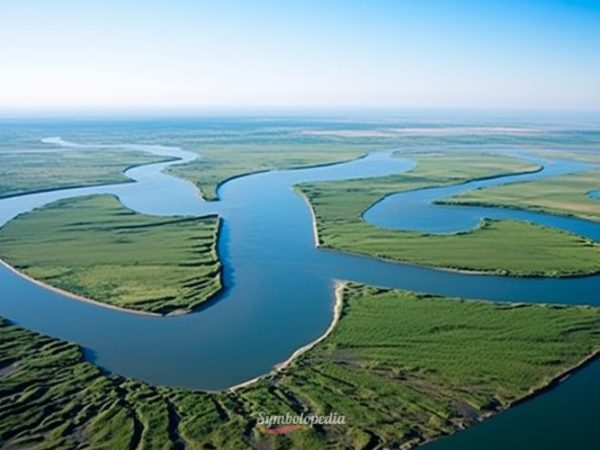
The river mouth is the place where a river ends its journey and flows into a larger body of water, such as an ocean, sea, or lake. Symbolically, it represents a point of transition, culmination, and merging. It is often seen as a threshold between the known and the unknown, the familiar and the mysterious, and the fresh and the salt. The river mouth embodies both an ending and a beginning, as the waters mix and new landscapes are formed.
What Does River Mouth Symbolize?
River mouths symbolize a variety of concepts, primarily centered around transition, merging, and fertility. As the endpoint of a river’s flow, they represent the culmination of a journey, the achievement of a goal, or the completion of a cycle. The mixing of fresh river water with salt seawater creates a unique brackish environment, symbolizing the union of opposites and the creation of something new. River mouths are also associated with abundance and life, as deltas formed at river mouths are often fertile agricultural lands. In many cultures, they are seen as sacred boundaries between worlds, serving as gateways to the afterlife or to other realms.
Positive and Negative Meanings of River Mouth
Positive associations: River mouths are often linked to fertility, abundance, and renewal. The rich sediments deposited at river mouths create fertile deltas that support agriculture and biodiversity. They symbolize successful completion, arrival, and the merging of different elements in harmony. The transition from river to sea can represent personal growth, transformation, and the opening of new possibilities.
Negative meanings: On the other hand, river mouths can also symbolize danger, uncertainty, and loss. The meeting of currents can create treacherous waters, making navigation difficult. They can represent the end of a journey in a final sense, such as death or irreversible change. The brackish water may symbolize confusion or the loss of identity, as the clear river water becomes mixed and diluted.
History and Origins of River Mouth Symbolism
The symbolic meaning of river mouths likely originates from their physical and geographical significance. Since ancient times, river mouths have been important sites for human settlement, trade, and agriculture. The Nile Delta in Egypt, for example, was the cradle of one of the earliest civilizations, and its annual flooding brought fertile silt, symbolizing renewal and life. In many ancient cultures, river mouths were considered sacred places where the river god met the sea god, representing the intersection of different divine forces. The concept of the river mouth as a threshold between worlds appears in various mythologies, such as the Greek River Styx, which marked the boundary between the living world and the underworld, though its mouth was often depicted as a cave or spring rather than a typical river mouth.
River Mouth Symbolism in Different Cultures
In many cultures around the world, river mouths hold significant symbolic meaning. In Chinese culture, the confluence of rivers and the meeting of fresh and salt water are seen as auspicious, representing harmony and balance. The Yangtze River’s mouth has been a symbol of prosperity and trade. In Hindu tradition, the confluence of rivers (sangam) is considered sacred, and the mouth of the Ganges River, where it meets the Bay of Bengal, is a holy site for pilgrimage and ritual purification. In Native American cultures, river mouths were often seen as places of power and spiritual significance, where the physical and spiritual worlds intersected. The Kwakwaka’wakw people of the Pacific Northwest, for example, have stories about the river mouth as a place where supernatural beings dwell.
Spiritual Meaning of River Mouth
Spiritually, the river mouth represents a threshold or gateway. It is a place where the flow of life (the river) meets the vastness of the infinite (the sea). This can symbolize the soul’s journey from the physical world to the spiritual realm, or the merging of the individual self with the universal consciousness. The mixing of waters can also represent the integration of different aspects of the self, such as the conscious and subconscious, or the masculine and feminine. In meditation and visualization practices, the river mouth can be used as a symbol for letting go and surrendering to a larger whole.
River Mouth in Myths and Folklore
River mouths appear in myths and folklore as liminal spaces. In Greek mythology, the mouth of the River Acheron was believed to be an entrance to the underworld. In Norse mythology, the river mouth might be associated with the boundary between Midgard and other realms. In African folklore, river mouths are often inhabited by spirits or deities that control the passage between worlds. For example, in Yoruba mythology, the river goddess Oshun is associated with rivers and their mouths. However, specific myths vary widely, and the river mouth often serves as a setting for stories of transformation, encounter with supernatural beings, or journeys to the afterlife.
River Mouth in Dreams
In dream interpretation, a river mouth can symbolize a significant transition or decision point in one’s life. It may represent the end of a phase and the beginning of a new one, such as graduating, moving, or starting a new relationship. The state of the river mouth in the dream—whether calm or turbulent, clear or muddy—can indicate the dreamer’s feelings about the change. A calm river mouth might suggest a peaceful transition, while a stormy one could indicate anxiety or resistance. The merging of waters can also symbolize the integration of different parts of the personality or the union of two people.
Common River Mouth Dream Scenarios
- Standing at the river mouth: This may symbolize being at a crossroads or on the verge of a major life change.
- Sailing through the river mouth: Could represent navigating a transition, with the journey from river to sea indicating a move from a confined situation to greater freedom.
- Seeing a polluted or blocked river mouth: Might symbolize obstacles to progress or feelings of being stuck in a transition.
- Witnessing the merging of waters: Can represent the union of opposites, such as the coming together of two people or two aspects of the self.
River Mouth in Superstitions and Omens
In some coastal communities, river mouths are considered places where luck can change. Fishermen might view the river mouth as a good omen for a bountiful catch, as fish often gather there. Conversely, crossing a river mouth at certain times might be considered bad luck, especially if the waters are rough. In some traditions, it is believed that spirits of the dead gather at river mouths, making them places to avoid after dark. However, these beliefs are not universal and vary by region.
River Mouth in Art and Literature
River mouths have been depicted in art and literature as powerful symbols. In literature, the river mouth often marks a point of no return or a threshold to adventure. For example, in Joseph Conrad’s “Heart of Darkness,” the journey up the Congo River begins at its mouth, symbolizing the entry into the unknown and the heart of darkness. In T.S. Eliot’s poem “The Dry Salvages,” the river mouth is used as a metaphor for the end of life and the merging with eternity. In visual art, the Impressionists like Monet painted the mouth of the Seine, capturing the play of light and water at this transitional space. In film, the river mouth can serve as a dramatic setting for arrivals and departures, such as in “Apocalypse Now,” where the river journey into Cambodia begins at the mouth of the river.
Frequently Asked Questions About River Mouth Symbolism
Q: What does a river mouth symbolize in dreams?
A: In dreams, a river mouth often symbolizes a major life transition, the end of a journey, or the merging of different aspects of life. It can represent both the culmination of efforts and the beginning of a new phase.
Q: Is the river mouth a positive or negative symbol?
A: The river mouth has both positive and negative connotations. Positively, it symbolizes fertility, abundance, and successful completion. Negatively, it can represent danger, loss, or the end of something important.
Q: How is the river mouth used in spiritual practices?
A: Spiritually, the river mouth is seen as a threshold or gateway. It can be used in meditation to symbolize letting go and merging with a larger consciousness, or as a place for rituals marking transitions.
Related Symbols to River Mouth
- River: The journey of life, flow, time, and change.
- Ocean: The infinite, the unconscious, the source of all life.
- Delta: Fertility, abundance, the creation of new land.
- Estuary: Transition, brackish water, the meeting of fresh and salt.
- Threshold: A point of entry or exit, a liminal space.
- Confluence: The merging of rivers, symbolizing union and harmony.