Briefly
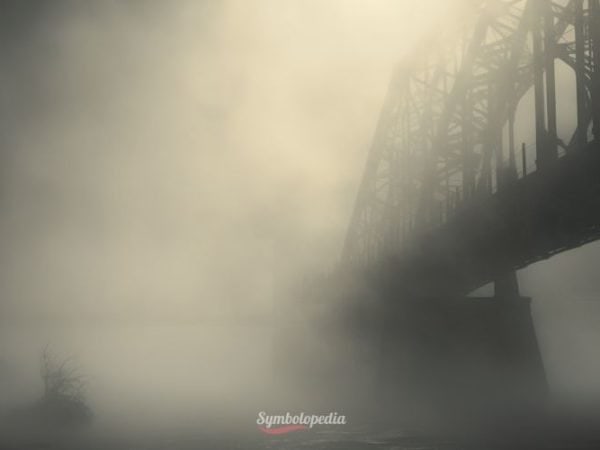
A fog bank is a dense, often sudden, mass of fog that rolls in from the sea or settles over land, dramatically reducing visibility and altering the landscape. Symbolically, a fog bank represents the boundary between the known and the unknown, a veil that obscures the future or hides deeper truths. It is often associated with mystery, transition, uncertainty, and the potential for both danger and revelation. This natural phenomenon serves as a powerful metaphor for periods of confusion, introspection, and the liminal spaces between clarity and obscurity.
What Does a Fog Bank Symbolize?
A fog bank primarily symbolizes uncertainty and the unknown. It represents a state of limbo or transition, where the path ahead is unclear, forcing introspection or caution. It can symbolize a veil between worlds, a temporary state of confusion that precedes clarity, or the obscuring of truth. In literature and art, it often sets a tone of suspense, mystery, or impending change. It also symbolizes isolation, as it can cut off a person from their surroundings, creating a private, reflective space. The suddenness of a fog bank emphasizes the unpredictable nature of life and the limits of human perception.
Fog Bank: Positive and Negative Meanings
Positive associations: A fog bank can symbolize a fresh start or a blank slate, where the old landscape is hidden and a new one may emerge. It represents mystery and the allure of the unknown, inviting exploration and discovery. It can also signify protection, hiding something precious from view, or a moment of quiet introspection away from the distractions of the clear world. In a spiritual context, it can represent the necessary obscurity before a breakthrough.
Negative meanings: A fog bank is often a symbol of danger, confusion, and disorientation. It represents loss of direction, both physically and metaphorically, and can signify being lost in a difficult situation or state of mind. It is associated with isolation, fear of the unknown, and the concealment of threats. In maritime traditions, it is a direct hazard, symbolizing the sudden and unpredictable dangers that can derail a journey.
Fog Bank Symbolism in Different Cultures
In maritime cultures, a fog bank is a well-known hazard, symbolizing the sudden and unpredictable dangers of the sea. Sailors view it with a mix of respect and wariness, as it can disorient a ship and hide treacherous rocks or other vessels. This has cemented the fog bank as a symbol of caution and the respect for nature’s power, a reminder that the sea is never fully tamed.
In Celtic mythology and folklore, fog is often associated with the Otherworld, a realm of spirits and fairies. A fog bank rolling in could signify a thinning of the veil between worlds, a time when supernatural beings might be encountered or when a person might stumble into a fairy realm. This imbues the fog bank with a sense of magic and otherworldly potential, making it a boundary marker between the mundane and the magical.
In Japanese culture, fog (kiri) is often depicted in art and poetry as a symbol of transience and the ephemeral nature of beauty and life. It can also represent a state of emotional or spiritual obscurity, a common theme in classical literature where characters are lost in a ‘fog’ of love or grief. The aesthetic of fog is deeply tied to the concept of yūgen, a profound, mysterious sense of the beauty of the universe.
In Native American traditions, fog can be seen as a cleansing force or a sign of change, carrying away the old and bringing in a new perspective, though it is also treated with caution as a time when spirits are active and the boundary between worlds is blurred. It is a time for introspection and respect.
Spiritual Meaning of a Fog Bank
Spiritually, a fog bank represents a period of spiritual uncertainty or a dark night of the soul. It is a time when the divine path is not clear, forcing an individual to rely on faith and inner guidance rather than external signs. This obscurity is often seen as a necessary precursor to spiritual breakthrough or enlightenment. The fog bank acts as a veil that, when lifted, reveals a higher truth or a new phase of spiritual understanding. It symbolizes the mystery of the divine and the limits of human perception. In many spiritual traditions, entering the fog is a metaphor for entering the unknown territory of the self, confronting the subconscious, and emerging with greater wisdom. It represents the fertile void from which new creation can spring.
Fog Bank in Myths and Folklore
In Norse mythology, the primordial void of Ginnungagap was bordered by Niflheim, a realm of mist and fog, from which the first being, Ymir, was formed. This connects fog to the very origins of creation, a chaotic, formless potential from which the cosmos emerged.
In European folklore, fog banks are often the haunts of will-o’-the-wisps or other misleading spirits that lead travelers astray. They are liminal spaces where the rules of the ordinary world do not fully apply. The fog bank serves as a stage for supernatural encounters.
The legend of the Flying Dutchman, a ghost ship doomed to sail the oceans forever, is often sighted emerging from fog banks, reinforcing the connection between fog, the supernatural, and ill omens. This tale has permeated popular culture, solidifying the fog bank as a setting for ghostly apparitions.
Fog Bank in Dreams
Dreaming of a fog bank typically symbolizes confusion, uncertainty, or a lack of clarity about a specific situation or the direction of one’s life. It represents a period of transition where the dreamer is unable to see the full picture. It can also symbolize repressed emotions or memories that are just below the surface of consciousness, obscured but not gone. The fog bank in a dream can be a sign to slow down, trust one’s intuition, and wait for clarity rather than forcing a decision. It is a powerful symbol of the subconscious mind’s hidden depths.
Common Fog Bank Dream Scenarios
- Lost in a Fog Bank: Represents feeling overwhelmed by a lack of direction or purpose in a specific area of life, such as a career or relationship. The dreamer feels disoriented and unable to find their way.
- Fog Bank Lifting: Symbolizes a coming period of clarity, understanding, or the resolution of a confusing problem. It is a positive omen of insight and the dissipation of doubt.
- Fog Bank Approaching: Can signify an impending challenge, a difficult decision, or a period of upheaval that the dreamer senses is coming. It creates a sense of dread or anticipation.
- Seeing a Fog Bank from a Distance: Represents an awareness of confusion or uncertainty in one’s life that has not yet fully manifested, or observing a problem from a safe vantage point.
Fog Bank in Superstitions and Omens
In many seafaring superstitions, a fog bank is considered an omen of bad luck or a warning to turn back. It is a time when the natural order is disrupted. Some rural traditions hold that fog on certain days of the year (e.g., St. Swithin’s Day) predicts the weather for the coming season, but a sudden fog bank is often seen as a portent of change or a warning to stay close to home. In some cultures, a fog bank rolling in is believed to carry spirits or souls, making it a time to be cautious and respectful. These superstitions highlight the fog bank’s role as a boundary marker between the safe, known world and the dangerous, unknown realm.
Fog Bank in Art and Literature
Fog banks are a powerful visual and thematic tool. In literature, they are used to create atmosphere and symbolize moral or intellectual obscurity. Charles Dickens frequently used fog in his novels, most famously in Bleak House, where the opening lines describe a pervasive London fog that symbolizes the fog of the legal system and social decay. The fog is a character in itself, representing the inescapable and obscuring nature of the Victorian bureaucracy.
Stephen King uses fog effectively in his novella The Mist, where a mysterious fog bank traps people in a supermarket, hiding monstrous creatures and symbolizing the terror of the unknown and the breakdown of society. The fog bank acts as a catalyst for revealing the true nature of the characters.
In painting, the Hudson River School artists like Albert Bierstadt and Frederic Edwin Church often depicted atmospheric conditions, including fog and mist, to evoke the sublime power and mystery of the American wilderness. The fog softens the landscape, creating a sense of depth and the infinite.
In film, John Carpenter’s The Fog (1980) uses a glowing fog bank as a conduit for vengeful spirits, cementing the fog bank as a symbol of supernatural threat and obscured danger. The fog in Frank Darabont’s film adaptation of The Mist (2007) similarly represents an unstoppable, unknowable threat that isolates and terrorizes a community, playing on the primal fear of what lurks just out of sight.
Frequently Asked Questions About Fog Bank Symbolism
Q: What does a fog bank symbolize in literature?
A: In literature, a fog bank typically symbolizes mystery, uncertainty, confusion, or a barrier between the known and the unknown. It is often used to create a suspenseful atmosphere or to represent a character’s psychological state.
Q: Is a fog bank a positive or negative symbol?
A: It is an ambivalent symbol. It can represent negative concepts like danger, confusion, and isolation, but also positive ones like protection, mystery, introspection, and the potential for a fresh start or revelation.
Q: What is the spiritual significance of a fog bank?
A: Spiritually, it represents a period of transition, a ‘dark night of the soul,’ or a veil between the physical and spiritual worlds. It is a time for introspection and trusting inner guidance when the external path is unclear.
Related Symbols
- Mist: A lighter, more ethereal form of fog, often symbolizing subtle mystery or a gentle veil rather than a dense barrier.
- Clouds: While in the sky, clouds share the symbolism of obscuring the heavens and representing transience, dreams, and the unknown.
- Smoke: Symbolizes obscurity, transition, and messages carried between worlds, but is often man-made and carries connotations of fire and purification.
- The Veil: A direct symbol of the barrier between the known and the unknown, the physical and the spiritual.
- Darkness: Represents the unknown, fear, and the absence of clarity, sharing the disorienting quality of a fog bank.