Briefly
Armor is a powerful symbol of protection, strength, and invulnerability. Throughout history, it has represented the physical and metaphorical barriers people erect to defend themselves from harm, whether in battle, in society, or within the psyche. Armor can signify readiness, discipline, and the ability to withstand adversity, but it can also suggest emotional detachment, rigidity, and a refusal to be vulnerable. Its meaning shifts across cultures and contexts, from the literal gear of a warrior to the figurative armor of the heart.
What Does Armor Symbolize?
Armor primarily symbolizes protection — both physical and psychological. It represents the means by which an individual or group shields itself from external threats. In a broader sense, armor stands for strength, resilience, and the capacity to endure hardship. It is often associated with warriors, knights, and soldiers, embodying ideals of courage, honor, and duty. At the same time, armor can symbolize invulnerability, suggesting an impenetrable barrier that nothing can breach. This duality makes armor a rich symbol in literature, art, and personal identity.
Beyond the battlefield, armor appears as a metaphor for emotional defenses. People speak of “putting on armor” to face a difficult conversation or to protect themselves from emotional pain. In this sense, armor represents self-preservation and the boundaries necessary for mental health. However, too much armor can isolate a person, preventing genuine connection and growth.
Positive and Negative Meanings
Positive associations: Armor is widely seen as a symbol of safety, preparedness, and strength. It conveys the idea that one is equipped to face challenges and emerge victorious. In many traditions, armor is linked to divine protection, as in the concept of the “armor of God” in Christianity, which represents spiritual defenses against evil. Armor also signifies discipline, training, and the commitment to a cause — qualities admired in warriors and leaders.
Negative meanings: On the flip side, armor can represent emotional coldness, rigidity, and an unwillingness to show vulnerability. A person who is “armored” may be seen as closed off, defensive, or aggressive. In psychological terms, excessive armor can indicate trauma responses or a fear of intimacy. Armor can also symbolize oppression or authoritarian control, as when a ruling class uses military force to maintain power. In some contexts, armor is a reminder of violence and conflict, carrying connotations of fear and aggression.
History and Origins of Armor Symbolism
The symbolism of armor is deeply rooted in human history. From the earliest shields and helmets of ancient Mesopotamia to the full plate armor of medieval Europe, armor has been both a practical necessity and a potent emblem. In ancient Greece, the hoplite’s bronze armor represented citizenship and the collective defense of the city-state. Roman legionaries wore armor that signified the might of the empire and the discipline of its army. Over time, armor became associated with chivalry and the idealized knight — a figure who used his armor not only for personal protection but to uphold justice and protect the weak.
In East Asia, samurai armor (yoroi) was not only functional but also highly symbolic, reflecting the wearer’s status, clan, and spiritual beliefs. The intricate designs often incorporated Buddhist or Shinto motifs, linking armor to spiritual protection. Similarly, in India, armor used by Rajput warriors was decorated with symbols of honor and divine favor. Across cultures, armor evolved from simple leather and metal into elaborate works of art that communicated power, identity, and values.
Armor Symbolism in Different Cultures
In Western culture, armor is most famously associated with the medieval knight. The knight’s armor symbolized his oath of loyalty, his readiness to defend the realm, and his adherence to the code of chivalry. The ritual of “arming” a knight — putting on each piece of armor — was a ceremony rich with meaning, each piece representing a virtue such as truth, honor, or courage.
In Japanese culture, samurai armor (yoroi) was a symbol of the warrior’s duty and honor. The helmet (kabuto) often featured a crest (maedate) that identified the clan and served as a talisman for protection. Armor was also a status symbol, with higher-ranking samurai wearing more ornate and expensive sets. The concept of “bushido” — the way of the warrior — was embodied in the armor as a reminder of the samurai’s moral code.
In Hindu and Buddhist traditions, armor appears in iconography as a symbol of spiritual protection. Deities such as Vishnu and Shiva are sometimes depicted wearing armor, representing their role as protectors of the cosmos. In Tibetan Buddhism, ritual armor is used in ceremonies to ward off negative energies. In many indigenous cultures, armor made from animal hides or bones carried the spiritual power of the animal, offering protection not just physically but also spiritually.
Spiritual Meaning of Armor
Spiritually, armor represents the protective barriers one creates to maintain inner peace and integrity. In many religious texts, armor is a metaphor for faith, righteousness, and divine protection. The Christian concept of the “armor of God” (Ephesians 6:10–18) includes the belt of truth, breastplate of righteousness, shield of faith, helmet of salvation, and sword of the Spirit. Each piece symbolizes a spiritual defense against evil forces. This idea has influenced Western thought for centuries, making armor a symbol of moral and spiritual strength.
In a more personal spiritual context, armor can symbolize the boundaries a person sets to protect their energy and well-being. It is a reminder that while openness is valuable, so is the wisdom to know when to shield oneself. Armor can also represent the process of spiritual growth — the shedding of old, heavy armor as one becomes more confident and less defensive.
Armor in Myths and Folklore
Armor appears prominently in myths and folklore around the world. In Greek mythology, Achilles’ armor was forged by the god Hephaestus and was nearly invulnerable — except for the famous heel. This story highlights the theme that even the strongest armor has a weakness. In Norse mythology, the god Thor wore a belt of strength and iron gloves, which functioned as armor to enhance his power. The legend of King Arthur features the armor of the Knights of the Round Table, symbolizing their quest for the Holy Grail and their commitment to chivalry.
In Japanese folklore, the armor of the samurai often carried protective charms and was believed to house the spirit of the warrior. Stories tell of armor that could move on its own or protect its wearer even after death. In Celtic mythology, magical armor appears in tales of heroes like Cú Chulainn, whose battle gear was said to be enchanted. These myths reinforce the idea of armor as not just physical protection but as a conduit for supernatural power.
Armor in Dreams
Dreaming of armor often relates to feelings of protection or defensiveness in waking life. If you dream of wearing armor, it may indicate that you are preparing to face a challenge or that you are emotionally guarded. The condition of the armor matters: clean, strong armor suggests confidence and readiness, while rusted or broken armor can point to vulnerability or a need to let down your guard. Seeing someone else in armor might represent a person you perceive as protective or distant.
Armor in dreams can also symbolize a desire for safety or a fear of being hurt. It may reflect a situation where you feel the need to protect yourself from criticism, conflict, or emotional pain. Alternatively, dreaming of removing armor can signify a willingness to be open and vulnerable, which may be a positive step toward deeper relationships.
Common Dream Scenarios
- Wearing heavy, uncomfortable armor: This may indicate that you are burdened by your defenses — perhaps you are overprotecting yourself and it is exhausting.
- Armor that is too small or too large: Ill-fitting armor suggests that your current defenses are not appropriate for the situation; you may be under- or over-prepared.
- Being unable to remove armor: This can symbolize feeling trapped by your own emotional barriers, unable to connect with others.
- Polishing or repairing armor: This dream may reflect a conscious effort to strengthen your defenses or to prepare for an upcoming challenge.
- Seeing ancient or ornate armor: Such armor might represent a connection to tradition, heritage, or past experiences that have shaped your protective instincts.
Armor in Superstitions and Omens
In various folk traditions, armor is associated with good luck and protection against evil. Soldiers and warriors have long carried charms or amulets attached to their armor to ward off harm. In some European superstitions, a piece of armor hung above a doorway was believed to protect the home from negative spirits. Conversely, finding a rusted or broken piece of armor was sometimes seen as an omen of coming conflict or vulnerability. In modern times, the phrase “a chink in one’s armor” refers to a hidden weakness, echoing the ancient belief that even the strongest protection has a flaw.
Armor in Art and Literature
Armor is a recurring motif in art and literature, often used to symbolize heroism, conflict, and transformation. In literature, the most famous example is perhaps the armor of Achilles in Homer’s Iliad, which represents both his invincibility and his tragic flaw. In chivalric romances like Sir Thomas Malory’s Le Morte d’Arthur, armor signifies the knight’s identity and moral code. In modern fantasy, such as J.R.R. Tolkien’s The Lord of the Rings, the armor of the characters reflects their roles — from the simple leather of the hobbits to the gleaming mithril of the elves.
In visual art, armor appears in countless paintings and sculptures. The Renaissance artist Paolo Uccello’s “The Battle of San Romano” depicts soldiers in elaborate armor, emphasizing the pageantry and horror of war. Albrecht Dürer’s engravings often feature knights in armor, symbolizing Christian virtue and the struggle against evil. In contemporary media, armor is a staple of film and video games, from the medieval armor in Game of Thrones to the futuristic suits in Iron Man, which use armor as a symbol of technological power and personal redemption.
Armor Tattoo Meaning
Armor tattoos are popular as symbols of personal strength, resilience, and protection. Many people choose armor designs to represent their ability to withstand life’s challenges or to honor a protective figure in their life. The imagery can range from realistic suits of armor to stylized, tribal-inspired patterns. A full suit of armor tattoo may symbolize a warrior mindset, while a single piece like a shield or helmet can stand for specific virtues such as courage or faith. Armor tattoos are also common among military personnel and first responders as a tribute to their service and the protective role they play.
Meanings of Different Types, Colors, or Variations
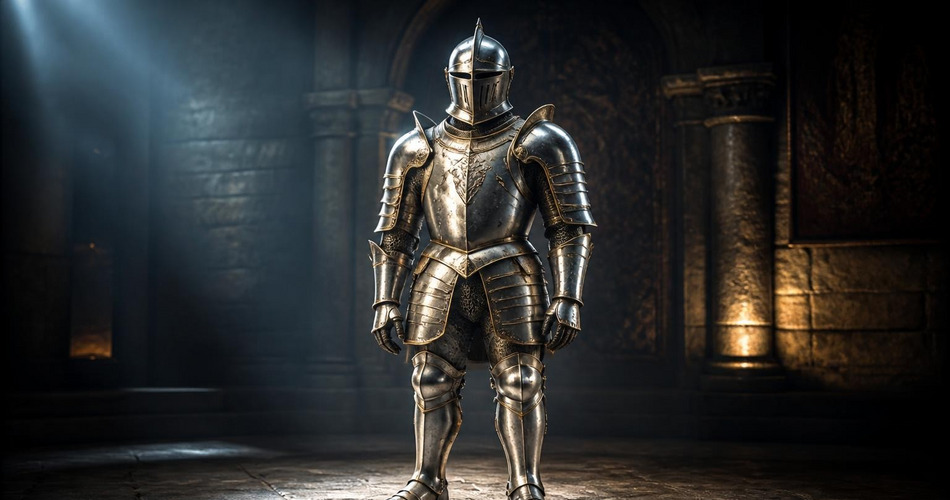
- Plate armor: Symbolizes maximum protection, discipline, and the weight of responsibility. Often associated with medieval knights and the ideals of chivalry.
- Chainmail: Represents flexibility within protection — it moves with the wearer, suggesting adaptability and resilience.
- Leather armor: Tied to lighter, more agile warriors; symbolizes resourcefulness and a connection to nature.
- Golden armor: Often signifies divine or royal protection, as well as wealth and status.
- Black armor: Can represent mystery, power, or a dark, intimidating presence; sometimes associated with villains or anti-heroes.
- White armor: Symbolizes purity, righteousness, and the protection of a noble cause.
- Rusted or damaged armor: Indicates vulnerability, past battles, or the passage of time; can be a symbol of experience and survival.
Frequently Asked Questions
Q: What does armor symbolize in a spiritual sense?
A: Spiritually, armor represents divine protection, moral strength, and the boundaries one sets to preserve inner peace. It is often used as a metaphor for faith and righteousness in religious texts.
Q: Is armor a positive or negative symbol?
A: Armor can be both. Positively, it symbolizes protection, strength, and readiness. Negatively, it can represent emotional coldness, rigidity, or oppression.
Q: What does it mean to dream of wearing armor?
A: Dreaming of wearing armor often indicates that you are feeling defensive or preparing to face a challenge. It may also reflect a desire to protect yourself from emotional harm.
Q: Why is armor a popular tattoo design?
A: Armor tattoos are chosen to symbolize personal strength, resilience, and protection. They can represent a warrior mindset, a tribute to service, or a reminder of one’s ability to overcome adversity.
Q: What is the “armor of God” in Christianity?
A: The “armor of God” is a biblical metaphor from Ephesians 6:10–18, describing spiritual defenses such as truth, righteousness, faith, and salvation that protect believers from evil.
Related Symbols
- Shield: A close companion to armor, symbolizing direct defense and protection.
- Sword: Represents offensive power and justice, often paired with armor in warrior symbolism.
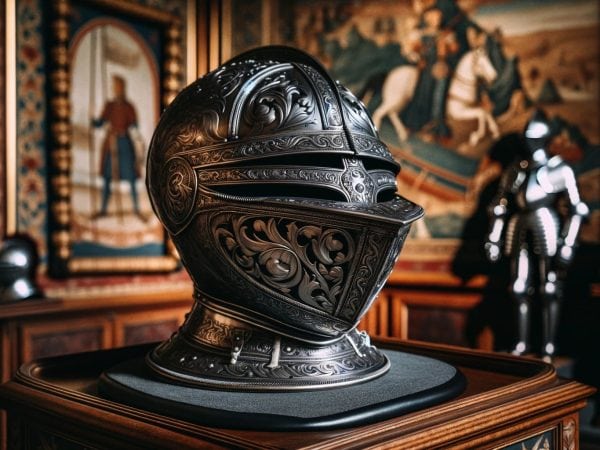
- Helmet: Focuses on protection of the mind and intellect; also a symbol of authority.
- Chainmail: A specific type of armor that emphasizes flexibility and interconnectedness.
- Fortress: A larger-scale symbol of protection and impenetrability, akin to armor for a city or kingdom.