Briefly
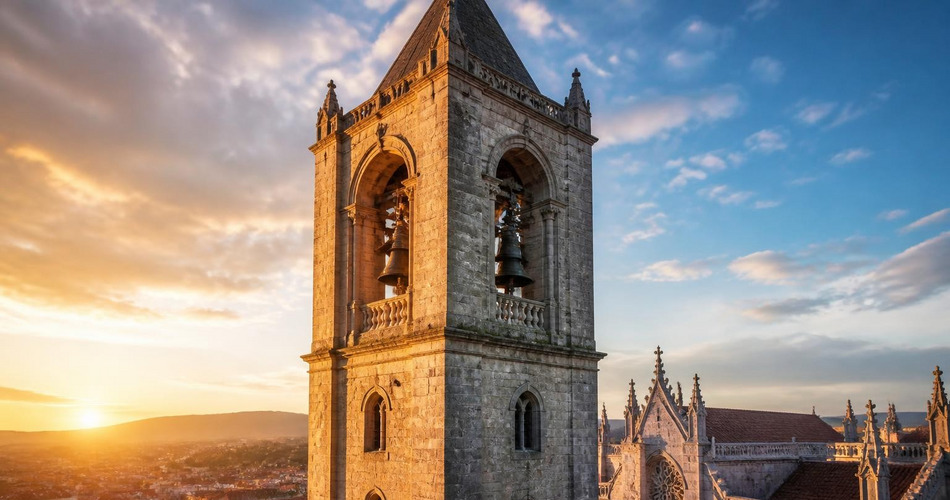
A bell tower is a prominent architectural structure designed to house bells, most commonly found attached to churches, cathedrals, town halls, and other public buildings. As a symbol, the bell tower represents a bridge between the earthly and the divine, marking time and calling communities together for worship, celebration, or warning. Its vertical reach toward the sky evokes aspiration, vigilance, and spiritual connection, while the sound of its bells can signify joy, sorrow, urgency, or reflection depending on context. Across cultures, bell towers have served as landmarks, clocks, and instruments of communication, embodying both the voice of authority and the heartbeat of communal life.
What Does a Bell Tower Symbolize?
At its core, the bell tower symbolizes connection — between the human world and the heavens, between the individual and the community, and between the present moment and the rhythms of daily life. Historically, bell towers have been used to announce important events: the start of a religious service, a wedding, a death, an emergency, or the changing of the hours. Their elevated position makes them visible from afar, representing watchfulness and protection. The bell itself, when struck, sends out sound waves that carry over distances, symbolizing the spread of a message, whether sacred or secular. In many traditions, the bell tower also stands as a symbol of authority and civic pride, as town councils often built towers to display their wealth and power.
The verticality of a bell tower is another key symbolic element. Rising above surrounding buildings, it points toward the sky, suggesting a longing for transcendence and a reminder of the spiritual realm. This upward motion is often associated with hope, aspiration, and the human desire to reach beyond the material world. At the same time, the tower’s solid base grounds it in the earth, symbolizing stability and permanence. Together, these features make the bell tower a potent emblem of the intersection between the temporal and the eternal.
Positive and Negative Meanings of Bell Towers
Positive associations: Bell towers are widely seen as symbols of community unity, spiritual awakening, and guidance. The ringing of bells can mark moments of celebration, call people to prayer, and serve as a comforting reminder of shared traditions. In many cultures, tower bells are thought to ward off evil spirits and protect the surrounding area, especially when rung during storms or at funerals. Their prominence in cityscapes also makes them symbols of orientation and belonging, helping people locate themselves within a town or neighborhood.
Negative meanings: On the darker side, bell towers can evoke fear and solemnity. The tolling of a bell often announces death or disaster, and the phrase “death knell” directly links bell sounds with mortality. Towers themselves, due to their height and isolation, can also represent imprisonment, surveillance, or the oppressive power of institutions. In literature and folklore, bell towers are sometimes settings for haunting or tragedy, such as the fate of Quasimodo in Victor Hugo’s The Hunchback of Notre-Dame. The relentless marking of time by clock towers can also symbolize the inexorable passage of life and the anxiety of deadlines.
History and Origins of Bell Tower Symbolism
The use of towers to house bells dates back to at least the early Middle Ages in Europe, when Christian churches began constructing separate bell towers, or campaniles, to hold their bells. The earliest known examples include the campanile of Old St. Peter’s Basilica in Rome and the famous Leaning Tower of Pisa. These structures served both practical and symbolic purposes: the bells called the faithful to worship and marked the hours of the monastic day, while the tower itself stood as a visible sign of the Church’s presence and authority.
Before Christianity, similar tower-like structures were used in ancient Rome and Greece for signaling and timekeeping. The practice of hanging bells in towers spread throughout Europe during the Gothic period, when cathedrals competed to build the tallest spires and most resonant bells. In many towns, the bell tower became the center of public life, its bells regulating work, rest, and celebration. Over time, bell towers also appeared in civic buildings, such as town halls and clock towers, symbolizing secular governance and communal identity. The tradition continues today in modern architecture, though often in more abstract forms.
Bell Tower Symbolism in Different Cultures
In Western Christian culture, the bell tower is primarily a religious symbol, associated with the call to worship and the presence of God. The sound of church bells is believed to sanctify the surrounding area and remind people of their faith. In some traditions, bells are blessed or baptized before installation, reinforcing their sacred role.
In Eastern Orthodox Christianity, bell towers are equally important, though the architectural style differs. Russian Orthodox churches, for example, often feature a separate bell tower or a belfry integrated into the church structure. The ringing of bells is a highly developed art form, with specific sequences used for different liturgical occasions.
In Islamic architecture, tall minarets serve a function similar to bell towers: they are used for the call to prayer (adhan). While minarets do not contain bells, their height and role as a visual and auditory link between the mosque and the community echo the symbolism of bell towers. In parts of East Asia, pagodas sometimes house bells and also function as spiritual landmarks, though their symbolism draws on Buddhist and Taoist cosmology rather than Western traditions.
Spiritual Meaning of Bell Towers
Spiritually, the bell tower represents a portal between the earthly and the divine. Its height is seen as a physical attempt to reach toward the heavens, while the sound of its bells can be interpreted as a form of prayer or blessing that travels outward to touch all who hear it. In many Christian traditions, the ringing of bells is believed to drive away evil spirits, especially during thunderstorms or at the moment of death. The tower itself can also symbolize the soul’s ascent to God, a ladder between the material and the spiritual.
The act of ringing bells is itself a spiritual practice in some contexts. Monks and bell-ringers often consider the sound a meditation or invocation, and the vibrations are thought to purify the atmosphere. In metaphysical terms, the bell tower can be seen as a channel for divine energy, its bells releasing that energy into the world in audible form.
Bell Tower in Myths and Folklore
Bell towers appear in a range of European folktales and legends, often associated with supernatural beings or events. One common motif is the ghostly bell-ringers who continue to toll after death, or bells that ring of their own accord to warn of imminent disaster. In some British legends, witches were believed to be unable to stand the sound of church bells, so towers were used as protective structures. The famous legend of the Bell of Huesca in Spain tells of a bell made from the heads of rebellious nobles, symbolizing justice and terror. While specific myths vary, the bell tower often appears as a liminal place — neither fully on the ground nor in the sky — where the boundaries between the natural and supernatural are thin. (Note: This folktale is widely known in Spanish history; it is not invented.)
Bell Tower in Dreams
Dreaming of a bell tower can carry multiple meanings depending on context, though dream interpretation is subjective and not universally standardized. In general, the tower may represent ambition, spiritual aspiration, or a need for guidance. Hearing a bell tower’s chime in a dream might indicate an important message or a call to pay attention to something in waking life. Conversely, a crumbling or abandoned bell tower could signify neglect of spiritual matters or a fear of losing one’s way. As with all dream symbols, personal associations and cultural background play a significant role.
Common Dream Scenarios Involving Bell Towers
- Climbing a bell tower: Often symbolizes effort toward a goal, spiritual ascent, or a quest for knowledge. The height may represent ambition, but also fear of falling.
- Hearing bells from a tower: May signify a call to action, an important announcement, or a reminder of a deadline. In some interpretations, it suggests the need to listen to one’s conscience.
- A silent or broken bell tower: Can indicate a lack of direction, suppressed emotions, or a disconnect from one’s community or faith.
- Being trapped in a bell tower: Often reflects feelings of isolation, confinement, or being overwhelmed by responsibilities. The tower’s height can amplify a sense of being stuck or observed.
- Ringing the bell: May represent a desire to be heard, to assert authority, or to celebrate a personal achievement.
Bell Tower in Superstitions and Omens
Many superstitions surround bell towers and the sound of their bells. In European folk belief, ringing bells during a storm was thought to dispel lightning and ward off evil forces. Bells were also rung to frighten away witches, demons, and other malevolent entities, especially on saints’ days or during epidemics. The tolling of a bell at the moment of a person’s death was believed to help guide the soul to the afterlife — a practice known as the “passing bell.” Conversely, hearing a bell ring without any visible cause was considered an omen of death or misfortune. In some cultures, it is considered unlucky for a bell tower to stand empty or for its bells to remain silent for too long, as silence invites stagnation or bad luck.
Bell Tower in Art and Literature
One of the most famous depictions of a bell tower in literature is Victor Hugo’s The Hunchback of Notre-Dame (1831), where the cathedral’s towers and bells are central to the story and its protagonist, Quasimodo, the bell-ringer. The novel uses the bell tower as a symbol of both isolation and connection — Quasimodo is trapped within its walls, yet his ringing of the bells is his only expression of joy and freedom. In art, the bell tower is a common subject in landscape paintings and cityscapes, from Italian Renaissance depictions of campaniles (e.g., Giotto’s Campanile in Florence) to modernist works. The famous painting The Scream by Edvard Munch (1893) includes a bell-shaped skyline in the background that some interpret as a church tower, emphasizing existential dread. In film, Alfred Hitchcock’s Vertigo (1958) features a bell tower as a key setting, where the protagonist’s fear of heights and a tragic fall occur — using the tower to symbolize danger, obsession, and the pull of the past.
Meanings of Different Types of Bell Towers
- Church bell towers: Typically symbolize faith, community worship, and the presence of the divine. They are often the tallest structures in a village, representing the centrality of religion.
- Clock towers: Emphasize the passage of time, order, and human regulation. They are common in civic buildings and are often associated with punctuality and modern urban life.
- Campaniles (freestanding bell towers): Common in Italian architecture, they symbolize artistic achievement and local pride, often serving as landmarks independent of a larger church structure.
- War memorial bell towers: Built to honor the fallen, they symbolize remembrance, sacrifice, and the eternal vigilance of a nation or community.
- Belfries (town hall towers without religious function): Represent secular authority, civic wealth, and the protection of communal rights. Many medieval belfries were symbols of a city’s autonomy.
Frequently Asked Questions About Bell Tower Symbolism
Q: Why are bell towers often the tallest buildings in towns?
A: Their height allows the sound of bells to travel farther, ensuring the entire community can hear calls to worship, alarms, or time announcements. It also symbolizes spiritual aspiration and the Church’s prominence in pre-modern society.
Q: What does it mean when a bell tower is silent?
A: Silence can indicate mourning, renovation, or a loss of function. In symbolism, a silent bell tower may represent a community in decline, a break in tradition, or spiritual emptiness.
Q: Are bell towers still built today?
A: Yes, many modern churches and civic buildings include bell towers, though they are often smaller or more abstract. Some communities also restore historic bell towers as cultural landmarks.
Q: What is the difference between a bell tower and a campanile?
A: A campanile is a specific type of bell tower that is separate from the main building, common in Italian architecture. Both serve the same symbolic functions, but the term “campanile” refers to its freestanding form.
Related Symbols
- Bells – the sound source at the heart of the tower, symbolizing voice, warning, and celebration
- Churches – the most common building associated with bell towers, representing faith and community
- Clocks – often housed in towers, symbolizing time, order, and mortality
- Spires – vertical architectural features that share the symbolism of reaching toward the heavens
- Towers in general – represent strength, protection, ambition, and isolation