Briefly
Belladonna, also known as deadly nightshade, is a highly poisonous plant whose striking appearance hides a potent danger. Its symbolism is deeply rooted in duality, representing both deadly peril and powerful protection, dark magic and hidden wisdom. Throughout history, it has been revered and feared as a plant of witches, a cosmetic aid, and a potent medicine, making it a complex symbol of transformation and the shadow self.
What Does Belladonna Symbolize?
Belladonna primarily symbolizes the dual nature of existence: the thin line between life and death, beauty and danger, medicine and poison. It is a potent emblem of transformation, as its psychoactive and toxic properties were historically used to journey into other states of consciousness or to end life. It also represents hidden knowledge and the mysteries of the natural world, often acting as a symbol of the occult and the forbidden.
In a broader sense, belladonna symbolizes feminine power and seduction, a meaning derived directly from its Italian name, “bella donna” (beautiful lady). This association links the plant to allure, mystery, and the dangerous charm that can captivate and destroy.
Positive and Negative Meanings of Belladonna
Positive associations: Belladonna is seen as a powerful protective agent in magical traditions. It was believed to ward off evil spirits and negative influences when planted near homes or used in protective charms. Its connection to transformation and shamanic journeying also gives it a positive aspect as a tool for profound spiritual insight and personal rebirth.
Negative meanings: The most prominent symbolism of belladonna is that of death and danger. As a deadly poison, it represents treachery, hidden threats, and the ultimate end. Its historical use in witchcraft and its ability to induce delirium and madness firmly associate it with dark magic, fear, and the loss of control.
History and Origins of Belladonna Symbolism
The symbolism of belladonna is deeply intertwined with its botanical and historical uses. Its genus name, Atropa, is derived from Atropos, the Greek Fate who cuts the thread of life, immediately cementing its connection to mortality. In ancient Rome, it was used as a poison, most famously by Livia Drusilla, wife of Emperor Augustus, who was said to have used belladonna-laced figs to eliminate rivals.
During the Middle Ages and the Renaissance, belladonna became inextricably linked with witchcraft. It was a key ingredient in “flying ointments,” which witches were believed to use to fly to their sabbaths. This sensation of flight was likely a hallucinogenic side effect of the plant’s tropane alkaloids. In Renaissance Italy, women used drops of belladonna juice to dilate their pupils, believing it made them more attractive, thus giving the plant its common name. This cosmetic use highlights the theme of deceptive appearances that defines the plant’s symbolism.
Belladonna Symbolism in Different Cultures
In European folklore, belladonna is universally regarded as a “witch’s plant” and is deeply associated with the Devil. It was believed that witches could summon the plant by dancing around it, and that it could be used to transform into animals. In Germany, it was known as “Schlafbeere” (sleep berry) and “Tollkirsche” (mad cherry), emphasizing its narcotic and dangerous qualities.
In Italy, the name “belladonna” reflects a cultural association with beauty and cosmetics, a stark contrast to the fear it inspired elsewhere. This duality captures the essence of the plant’s cultural footprint: a beautiful, deadly enigma. In some Slavic traditions, it was used in love charms and protective rituals, highlighting its perceived power over human emotions and fate.
Spiritual Meaning of Belladonna
Spiritually, belladonna is a plant of the shadow self and the underworld. It is not a plant for casual spiritual work but is instead associated with deep, transformative journeys that involve facing one’s greatest fears. Its energy is intense and protective, often used in spiritual practices to create powerful barriers against negative energies or to aid in the release of the old self to make way for rebirth.
The plant is also seen as a guardian of forbidden knowledge. In shamanic traditions, despite its extreme toxicity, it was used (with great risk and skill) to access other realms of consciousness. Its spiritual meaning is one of profound respect for the power of nature and the hidden forces that govern life and death.
Belladonna in Myths and Folklore
Belladonna is a central figure in the folklore of witchcraft. The most persistent myth is its use in “flying ointments.” Witches were said to apply an ointment made from belladonna to their bodies, which would allow them to fly through the air. Modern scholars believe this sensation was a powerful hallucination caused by the plant’s alkaloids, which can induce a feeling of weightlessness and astral projection.
Another common folk belief is that belladonna could be used to turn humans into werewolves. This myth likely stems from the plant’s ability to cause severe hallucinations and altered states of consciousness, making a person feel as if they were transforming into an animal. The plant was also widely believed to be a favorite of the Devil, who tended it in his garden, making it a staple of black magic and sorcery.
Belladonna in Dreams
When belladonna appears in dreams, it is rarely a literal sign but rather a powerful symbol of a hidden threat or a seductive illusion. It can represent a person or situation that appears beautiful and alluring on the surface but is fundamentally dangerous or toxic. Dreaming of belladonna often calls for a careful examination of one’s surroundings and relationships.
Conversely, a dream of belladonna can symbolize a powerful internal transformation. Just as the plant can be both poison and medicine, its appearance in a dream might signal a painful but necessary change, a period of intense personal growth that requires confronting a difficult truth or breaking a harmful pattern.
Common Dream Scenarios Involving Belladonna
- Eating belladonna berries: This dream often symbolizes taking a significant and dangerous risk. It may represent a choice that could lead to great reward or severe loss.
- Growing belladonna in a garden: This suggests a fascination with the dark or forbidden. It can represent cultivating a secret, a hidden power, or a dangerous relationship.
- Being poisoned by belladonna: A powerful symbol of betrayal or feeling harmed by someone or something you trusted. It can also represent a toxic influence in your life that is slowly causing harm.
- Using belladonna as medicine: This dream can indicate a need for a drastic, transformative healing. It suggests that the cure for a current problem might be difficult or painful but ultimately necessary.
Belladonna in Superstitions and Omens
Superstitions surrounding belladonna are overwhelmingly cautionary. It was considered extremely bad luck to bring the plant into a home, as it was believed to invite death and misfortune. In some traditions, uprooting the plant could summon a storm or anger the spirits of the dead.
However, it was also used as a protective omen. Planting belladonna near the entrance of a home was thought to ward off witches and evil spirits, turning the plant’s dangerous reputation into a shield. Its presence was a warning to outsiders and a comfort to those who understood its power.
Belladonna in Art and Literature
Belladonna has a rich presence in literature, often serving as the perfect poison in mystery and crime fiction. Agatha Christie famously used atropine, the active alkaloid in belladonna, as the murder weapon in her first novel, The Mysterious Affair at Styles. Its subtle and deadly nature makes it a recurring tool for fictional poisoners.
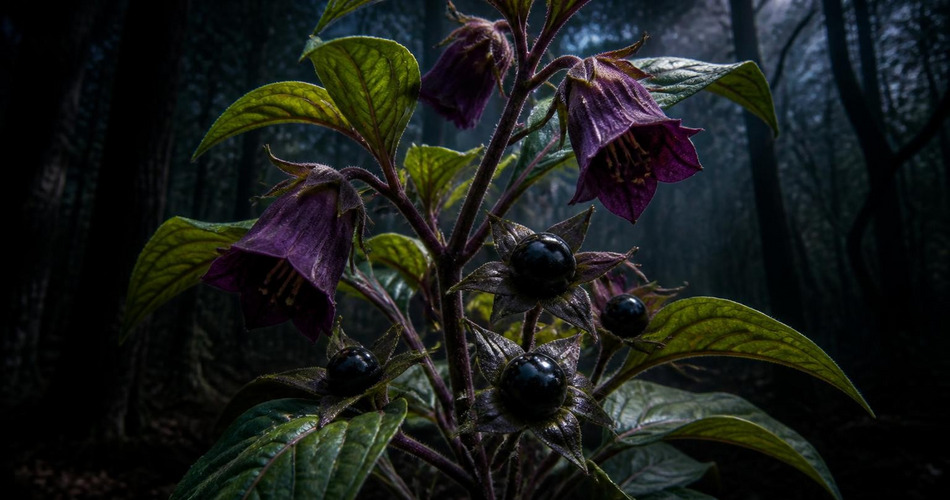
In poetry, the plant’s name and nature are often used to explore themes of dangerous beauty and duality. The poet Fleur Adcock’s poem “Belladonna” directly contrasts the plant’s cosmetic use with its deadly potential. In visual art, belladonna is frequently depicted in botanical illustrations and dark romantic paintings, its glossy black berries and purple flowers symbolizing the gothic and the macabre. It also appears in modern fantasy and horror, where it is the definitive plant of witches and dark magic.
Belladonna Tattoo Meaning
A belladonna tattoo is a bold statement of embracing duality. It is a popular choice for those who are drawn to the darker aspects of nature and life, symbolizing an acceptance of death as part of the cycle of existence. The tattoo often represents protection, as the wearer adopts the plant’s dangerous reputation as a personal shield.
It can also signify a personal transformation or a survival of a toxic period. The beautiful flower and deadly berry serve as a reminder that strength can be found in the most unlikely and dangerous places, and that true power often lies in understanding and respecting the shadow self.
Frequently Asked Questions About Belladonna Symbolism
Q: What does the name “belladonna” mean?
A: In Italian, “belladonna” translates to “beautiful lady,” a name derived from its historical use by women to dilate their pupils for cosmetic purposes.
Q: Is belladonna used in modern medicine?
A: Yes, the plant’s alkaloids, particularly atropine, are used in modern medicine to dilate pupils during eye exams and to treat certain heart conditions and gastrointestinal disorders.
Q: What does a belladonna tattoo typically symbolize?
A: A belladonna tattoo commonly symbolizes duality, danger, beauty, protection, and a deep connection to the mysteries of life and death.
Related Symbols
- Mandrake: Another powerful, toxic plant of the nightshade family with deep roots in witchcraft and magic.
- Hemlock: A deadly poison famously used in ancient Greece, symbolizing execution and philosophical death.
- Wolfsbane (Aconite): A highly toxic plant associated with werewolves, witchcraft, and protection.
- Foxglove: A beautiful but poisonous plant that shares belladonna’s duality of healing and killing.
- Black Rose: A symbol of dark beauty, death, and rebirth, often paired with belladonna in gothic imagery.