Briefly
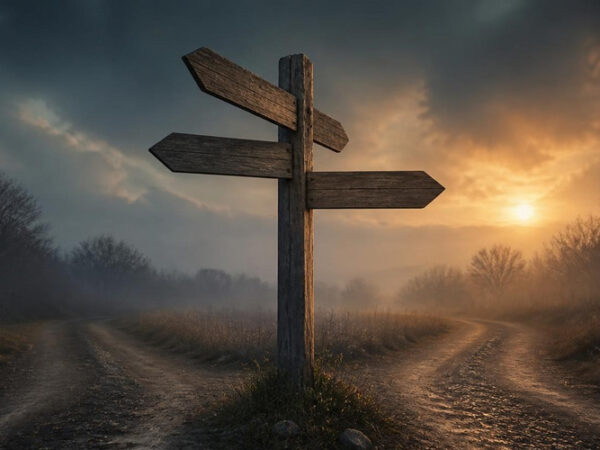
A fork in the road is a powerful and universal symbol representing a point of decision, a turning point, or a moment of choice where a path diverges into two or more distinct directions. It embodies the concept of free will and the weight of decision-making, often carrying connotations of both opportunity and uncertainty. This symbol reminds us that the choices we make shape our journey and define our future.
What Does a Fork in the Road Symbolize?
The fork in the road primarily symbolizes a critical decision or a turning point in one’s life journey. It represents the moment when a person must choose between two or more distinct paths, each leading to a different future. It is a symbol of free will, agency, and the consequences of choice. Psychologically, the fork in the road represents the moment of agency, where an individual moves from passive acceptance of circumstances to active choice. This is why it is such a potent symbol in narratives of personal growth and transformation.
Positive and Negative Meanings of the Fork in the Road
Positive associations: The fork in the road symbolizes opportunity, new beginnings, and the power of personal choice. It represents a chance to change one’s life direction, embrace growth, and actively shape one’s destiny. It is a symbol of hope and the potential for a better future.
Negative meanings: The fork in the road can also represent anxiety, indecision, and the fear of making the wrong choice. It embodies the stress of uncertainty and the potential for regret over the path not taken. It can symbolize a difficult or painful transition where no option is clearly good, highlighting the burden of responsibility that comes with freedom of choice.
History and Origins of the Fork in the Road Symbolism
The literal fork in the road, a physical divergence of a path, has been a practical landmark for travelers for millennia. Its symbolic meaning arises directly from this physical reality. The very word ‘decision’ comes from the Latin decidere, meaning ‘to cut off,’ which perfectly mirrors the action of a fork in the road: by choosing one path, you symbolically ‘cut off’ the other possibilities. The most famous classical origin of its deeper symbolic meaning is the ancient Greek story of Hercules at the Crossroads, where the hero must choose between the path of Virtue and the path of Vice. This allegory, popularized by the philosopher Prodicus and later by artists and writers, cemented the fork in the road as a powerful metaphor for moral choice and life’s defining moments.
Fork in the Road Symbolism in Different Cultures
In Western culture, heavily influenced by the Hercules myth, the fork in the road is a standard metaphor for moral and practical choices. In Roman mythology, the goddess Trivia (from trivium, meaning ‘three roads’) was associated with crossroads. In various folk traditions across Europe and the Americas, crossroads are seen as liminal spaces—places where the boundary between worlds is thin, and where one might encounter spirits or make supernatural bargains. This liminal quality gives the fork in the road a spiritual weight, representing a point between the known and the unknown, the safe and the dangerous.
Spiritual Meaning of the Fork in the Road
Spiritually, the fork in the road symbolizes a divine test or a moment of spiritual awakening. It represents the soul’s journey and the choices that define one’s karmic path. It is a moment of alignment where one’s true values and intentions are revealed. The choice at the fork is often seen as a choice between the ego’s desires and the soul’s purpose, between the easy, comfortable path and the path of growth and higher meaning. In many spiritual traditions, this symbol is a reminder that every choice carries spiritual weight and contributes to the evolution of the soul.
The Fork in the Road in Myths and Folklore
Beyond Hercules, the fork in the road and its close relative, the crossroads, are rich in folklore. In African-American blues folklore, the crossroads is where the musician Robert Johnson supposedly sold his soul to the devil in exchange for musical talent. In Greek mythology, Hecate, the goddess of witchcraft and magic, was often associated with crossroads, where offerings were left to her at the dark of the moon. In Slavic folklore, the crossroads is a place where evil spirits gather and where witches are buried. In the myth of Oedipus, the hero encounters his father Laius at a fork in the road, leading to a fatal quarrel that sets the tragedy in motion. These stories reinforce the fork in the road as a place of power, danger, and profound consequence.
The Fork in the Road in Dreams
In the context of dreams, a fork in the road is a potent symbol of the dreamer’s subconscious processing of a major life decision. It often appears during times of transition, such as a career change, a relationship decision, or a personal crossroads. The state of the paths (clear vs. overgrown, light vs. dark) can offer insight into the dreamer’s feelings about the options available to them. The dream is rarely about the literal path, but rather a symbolic representation of the dreamer’s psychological journey and the anxiety or excitement associated with the unknown future.
Common Fork in the Road Dream Scenarios
- Choosing between two clear paths: Represents a conscious, difficult decision where both options have clear pros and cons.
- One path is dark and one is light: Symbolizes a choice between the unknown (risk, adventure) and the familiar (safety, stagnation).
- The path disappears or is blocked: Reflects feelings of being stuck, having no good options, or fear of the consequences of a choice.
- Standing at a fork and feeling paralyzed: Represents anxiety and indecision in the waking life, a fear of making the wrong choice.
- Taking the less-traveled path: Symbolizes a desire for individuality, non-conformity, or a unique life journey.
The Fork in the Road in Superstitions and Omens
Crossroads have long been considered powerful and sometimes dangerous places in superstition. A fork in the road, as a type of crossroads, inherits this significance. In some traditions, crossroads are where suicides or criminals were buried to confuse their spirits. In Hoodoo and other folk magic traditions, crossroads are where one can leave offerings or perform rituals to influence fate. Finding a fork in the road in a dream or in waking life is often seen as an omen that a significant change is imminent, demanding careful thought and decisive action. It is a call to become an active participant in one’s own destiny.
The Fork in the Road in Art and Literature
The fork in the road is a cornerstone of Western literature and art. The most famous example is Robert Frost’s poem “The Road Not Taken” (1916), where the speaker stands at a fork in the woods and contemplates the choice between two paths, ultimately reflecting on the profound impact of the choice not made. In Lewis Carroll’s Alice in Wonderland (1865), Alice asks the Cheshire Cat which path she should take, leading to the famous exchange about where she wants to go. In film, The Matrix (1999) presents its protagonist, Neo, with a literal choice between a red pill and a blue pill, a modern fork in the road that determines his entire reality. In visual art, the fork is often depicted in paintings of the Hercules myth, such as those by Paolo Veronese and Annibale Carracci. The symbol’s power is so ingrained that it transcends high art; the famous quote often attributed to Yogi Berra, ‘When you come to a fork in the road, take it,’ humorously plays with the idea of indecision and the absurdity of choice.
Fork in the Road Tattoo Meaning
A fork in the road tattoo is a popular design for individuals who have overcome a major life transition or who wish to honor a significant choice they made. It symbolizes a turning point, personal agency, and the journey of life. It can represent a new beginning, a change in career, a recovery from addiction, or a commitment to a new philosophy. Common design elements include trees splitting into two distinct directions, a road diverging in a yellow wood (a direct reference to Frost’s poem), or a simple, minimalist Y-shape. The tattoo can be a powerful reminder of a past decision that shaped the wearer’s life, or a talisman for a future choice they must make.
Meanings of Different Types of Fork in the Road
The specific configuration of the fork can influence its meaning. A Y-junction implies a single path splitting into two, emphasizing the moment of choice. A crossroads (a four-way intersection) implies more complex choices and the convergence of different life paths. The condition of the paths is also significant: a well-worn path represents the conventional or expected choice, while an overgrown or narrow path represents a more difficult or unconventional journey. The presence of a signpost at the fork can symbolize the guidance of fate, intuition, or external advice. The Roman term for a three-way fork, trivium, is the root of the word ‘trivial,’ suggesting that not all forks carry the same weight.
Frequently Asked Questions About the Fork in the Road
Q: What does a fork in the road symbolize in a dream?
A: In dreams, a fork in the road typically symbolizes a significant life decision or a turning point that the dreamer is currently facing or will soon face. It represents the subconscious weighing of different options and the anxiety or excitement associated with the unknown future.
Q: What is the origin of the phrase “a fork in the road”?
A: The phrase originates from the literal forking of a road or path into two or more branches. Its use as a metaphor for a point of decision has been common in English since the 17th century, but its symbolic power was greatly amplified by the ancient Greek allegory of “Hercules at the Crossroads.”
Q: Is a fork in the road a positive or negative symbol?
A: It is an ambivalent symbol. It represents positive concepts like opportunity, free will, and new beginnings, but also negative ones like anxiety, indecision, and the fear of regret. Its meaning depends heavily on the context and the individual’s perspective.
Related Symbols to the Fork in the Road
- Crossroads: A closely related symbol representing a complex choice or a meeting of paths, often with stronger supernatural or folkloric associations.
- Path: Represents the journey of life itself, with the fork being a specific point of decision upon this path.
- Journey: The overarching context for the fork, representing life, growth, and experience.
- Threshold: Represents a point of transition or a new beginning, similar to the moment of choice at the fork.
- Choice: The core abstract concept that the fork in the road symbolizes.