Briefly
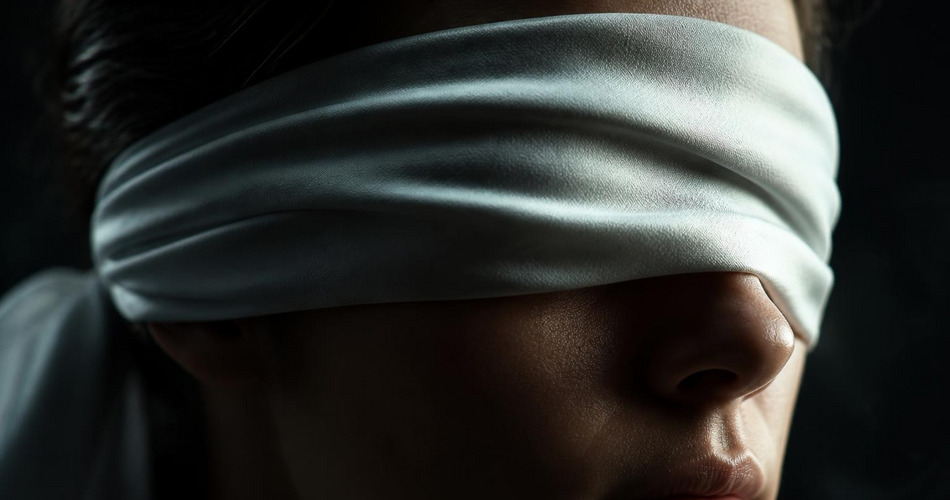
A blindfold is a piece of cloth tied over the eyes to block vision. Its symbolism is deeply dualistic, representing both the absence of physical sight and the potential for inner vision. It can signify impartial justice, willful ignorance, profound mystery, or a test of faith, making it a powerful and versatile symbol across numerous contexts.
What Does the Blindfold Symbolize?
The blindfold is a potent symbol with a wide range of meanings, often depending entirely on the context in which it is used. At its core, it represents the blocking of sight, which can be interpreted in several contrasting ways. It is most famously a symbol of impartial justice, as seen in the figure of Lady Justice, who wears a blindfold to ensure her decisions are based on facts and law, not on the appearance or status of those before her.
Conversely, the blindfold is a powerful emblem of ignorance and denial. To be “blindfolded” is to be kept from the truth, either by one’s own will or by external forces. It represents a refusal to see reality or an imposed state of unawareness. This duality extends to its representation of mystery and the unknown, where the blindfold hides identity or obscures the future, as in the figure of blindfolded Cupid representing the randomness of love.
Finally, the blindfold can symbolize faith and trust. Voluntarily wearing a blindfold requires a surrender of control and a reliance on other senses or on another person. This is seen in trust exercises and certain spiritual practices where the blindfold is used to turn attention inward, shutting out the distractions of the external world to focus on inner truth.
Positive and Negative Meanings of the Blindfold
Positive associations: The blindfold symbolizes impartiality, objectivity, and fairness, most notably through the figure of Lady Justice. It also represents trust, faith, and the courage to surrender control. In spiritual contexts, it signifies the pursuit of inner vision and enlightenment, where physical blindness leads to greater spiritual clarity. It can also be a symbol of protection, shielding the wearer from disturbing sights or the “evil eye.”
Negative meanings: The blindfold is often a symbol of ignorance, willful denial, and deception. It represents being kept in the dark, whether through censorship, propaganda, or personal refusal to accept reality. It is also a symbol of vulnerability and helplessness, most starkly represented by its use on condemned prisoners before execution, where it signifies the end of sight and life.
History and Origins of Blindfold Symbolism
The most enduring origin of blindfold symbolism in the Western world is the figure of Lady Justice (Iustitia). Originally depicted in Roman mythology without a blindfold, the blindfold was added during the Renaissance period. This addition was meant to emphasize that justice must be blind—applied without regard to wealth, power, race, or social standing. The blindfold ensured that justice was seen as objective and impartial.
Another grim historical origin lies in the practice of execution. Blindfolding a condemned prisoner before an execution served a practical purpose: it calmed the victim by shielding them from the sight of the weapons or the firing squad, and it also protected the executioners from the emotional impact of the condemned’s gaze. This tradition cemented the blindfold as a symbol of finality, fate, and the transition between life and death.
In social and recreational contexts, the game of “Blindman’s Buff” (or blind man’s buff) has been played since at least the 16th century. The blindfold in this game represents the playful suspension of sight, creating a temporary state of confusion and vulnerability that is central to the game’s fun and challenge.
Blindfold Symbolism in Different Cultures
In Western culture, the blindfold is overwhelmingly tied to the concept of justice and the rule of law. Statues of Lady Justice blindfolded and holding scales are ubiquitous in courthouses, representing the ideal of a fair legal system. The blindfold here is a positive symbol of equality before the law.
In some Eastern spiritual traditions, the blindfold is used in meditation and sensory deprivation practices. The goal is not to represent ignorance but to turn the senses inward. By blocking external visual stimuli, the practitioner can focus on internal awareness, breath, and the deeper states of consciousness. This represents a journey from the material world to the spiritual self.
In ancient Greek and Roman art, the goddess Fortuna (Tyche) was sometimes depicted blindfolded, representing the random and unpredictable nature of luck and fortune. This contrasts with the deliberate impartiality of Lady Justice, instead emphasizing the chaotic and arbitrary distribution of fate.
Spiritual Meaning of the Blindfold
Spiritually, the blindfold often represents the veil that separates the physical world from the spiritual realm. It symbolizes the limitations of ordinary perception and the need to develop inner sight or clairvoyance. To remove the blindfold is to achieve enlightenment or a higher state of awareness.
It also represents a profound test of faith. Being blindfolded forces a person to trust in a higher power, a guide, or the universe itself, without the reassurance of physical sight. This act of surrender is a key theme in many spiritual paths, where the ego’s desire to see and control must be set aside to allow for true spiritual growth.
Blindfold in Myths and Folklore
The most prominent myth involving a blindfold is that of Cupid (Eros). Cupid is almost always depicted as a blindfolded cherub shooting arrows of love. This symbolizes the irrational and unpredictable nature of love, which can strike anyone at any time, regardless of their qualities, status, or readiness. Love is “blind” to reason.
In the myth of Cupid and Psyche, Psyche is forbidden to look upon her husband Cupid’s face. This represents a test of trust and faith. When she eventually breaks the rule and looks, she loses him, illustrating the consequences of doubt and the power of blind faith. The Fates (Moirai) in Greek mythology were also sometimes depicted with blindfolds, spinning the thread of life without regard for human desires, symbolizing the impartial and unavoidable nature of destiny.
Blindfold in Dreams
In the language of dreams, a blindfold is a powerful symbol of perception and awareness. Dreaming of a blindfold often indicates a situation in waking life where you are refusing to see the truth, or where someone is deliberately keeping information from you. It can be a call to open your eyes to a reality you have been avoiding.
Alternatively, a blindfold in a dream can represent a positive focus on inner senses. It may suggest that you need to stop relying on superficial appearances and trust your intuition or inner wisdom. The dream might be encouraging a period of introspection and trust.
Common Blindfold Dream Scenarios
- Being blindfolded by someone else: This often represents a feeling of powerlessness, deception, or being controlled by external forces. It may indicate a lack of agency in your life or a situation where you are being manipulated.
- Voluntarily wearing a blindfold: This can symbolize a conscious choice to escape a stressful reality, a need for introspection, or a deliberate act of trust in someone or something. It reflects a desire to shut out the world and turn inward.
- Removing a blindfold: This is a powerful symbol of awakening, realization, and the discovery of a hidden truth. It represents gaining clarity, insight, and a new perspective after a period of confusion or ignorance.
Blindfold in Superstitions and Omens
In various folk traditions, the blindfold serves a protective function. It is sometimes used to shield the wearer from the evil eye, a malevolent glare believed to cause harm. By covering the eyes, the wearer is thought to be protected from both seeing and being seen by harmful spirits or envious glances.
In certain initiation rituals and ceremonies, blindfolds are used to symbolize the transition from one state of being to another. The blindfold represents the death of the old self or the ignorance of the uninitiated. Its removal at the climax of the ritual symbolizes rebirth, enlightenment, and the gaining of secret knowledge.
Blindfold in Art and Literature
The blindfold is a recurring motif in art and literature. The most famous artistic representation is the figure of Lady Justice, blindfolded and holding scales, which appears in countless paintings, sculptures, and legal iconography. This image powerfully communicates the ideal of impartial judgment.
In literature, the theme of the blindfold is central to Plato’s *The Republic*, specifically in the Allegory of the Cave. The prisoners in the cave are effectively blindfolded by their chains and limited perspective, unable to see the true reality of the world outside. The allegory uses this metaphorical blindfold to explore themes of ignorance, enlightenment, and the philosopher’s journey toward truth.
In painting, Paul Delaroche’s *The Execution of Lady Jane Grey* (1833) is a powerful example. The young queen is depicted blindfolded, groping for the block. The blindfold here emphasizes her innocence, vulnerability, and the tragic injustice of her fate, making her a sympathetic martyr. The blindfold in this context is a deeply emotional symbol of helplessness in the face of political power.
Blindfold Tattoo Meaning
As a tattoo, the blindfold is a popular choice for its rich and varied symbolism. It can represent a personal commitment to justice and fairness, or a reminder of a time when the wearer overcame a period of deception or ignorance. It can also be a symbol of faith, trust in the universe, or a declaration of living life without judgment.
For some, a blindfold tattoo represents a “see no evil” philosophy, or a rejection of society’s superficial standards. It can also be a powerful symbol of resilience, signifying that the wearer has learned to see with their heart or intuition rather than just their eyes. The meaning is highly personal, often tied to a specific experience of revelation or trust.
Frequently Asked Questions About Blindfold Symbolism
Q: What does a blindfold symbolize in the context of justice?
A: In justice, the blindfold symbolizes impartiality and objectivity. It represents the ideal that justice should be applied without prejudice, based purely on evidence and law, regardless of the identity or status of the individual.
Q: Why is Cupid often depicted wearing a blindfold?
A: Cupid’s blindfold symbolizes the blindness of love. It suggests that love is irrational, random, and does not follow the rules of logic or reason. It can strike anyone, anywhere, without regard for their worthiness or suitability.
Q: Is a blindfold always a negative symbol?
A: No, the blindfold is a deeply dualistic symbol. While it can represent ignorance, denial, and vulnerability, it also powerfully represents faith, trust, impartiality, and the pursuit of inner truth. Its meaning depends heavily on the context.
Symbols Related to the Blindfold
- Scales of Justice: Often paired with the blindfold to represent the weighing of evidence impartially.
- The Veil: A similar symbol of concealment, mystery, and the boundary between the known and the unknown.
- The Mask: Represents hidden identity and deception, sharing themes of concealment with the blindfold.
- The All-Seeing Eye: The opposite of the blindfold, representing awareness, knowledge, and surveillance.
- The Sword of Justice: Often held by Lady Justice, representing the power and finality of a just decision.