Briefly
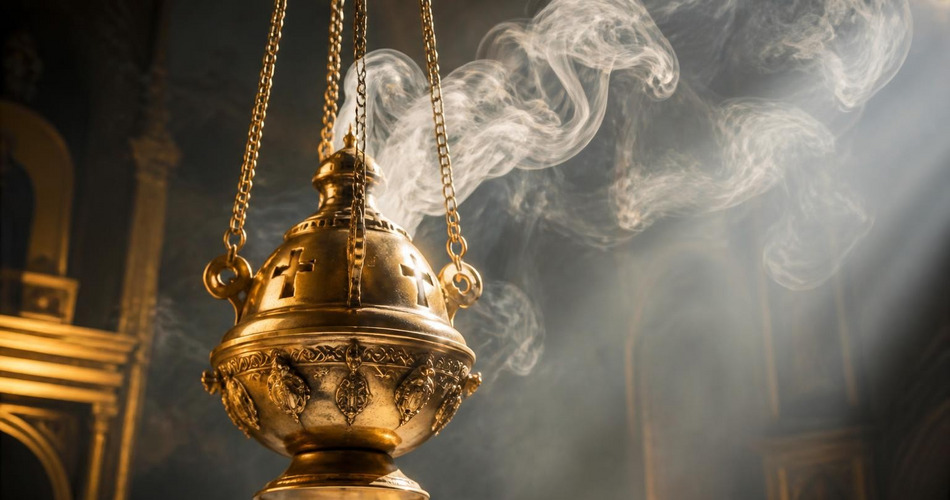
A censer, also known as a thurible, is a vessel used for burning incense during religious ceremonies. Its primary symbolism revolves around purification, prayer, and the ascent of spiritual offerings to the divine. The smoke from the censer represents the prayers of the faithful rising to heaven, while the fragrant aroma signifies the presence of the sacred. Censers are found in many religious traditions, including Christianity, Buddhism, and Hinduism, where they play a key role in ritual purification and creating a sacred atmosphere.
What Does Censer Symbolize?
The censer symbolizes the connection between the earthly and the divine. The burning incense represents the transformation of material into spiritual, and the smoke carries prayers upward. In Christian liturgy, the censer is used to honor the altar, the Gospel book, and the congregation, symbolizing the sanctification of the entire assembly. The swinging motion of the censer spreads the incense, representing the diffusion of God’s grace. In Eastern traditions, the censer is a tool for purifying the environment and the mind, clearing away distractions before meditation or worship. The censer also symbolizes the heart of the worshipper offering its devotion as a sweet fragrance to the divine.
Positive and Negative Meanings of Censer
Positive associations: Censers are associated with holiness, reverence, and the presence of the divine. They symbolize the power of prayer, the cleansing of sin, and the creation of a sacred space. The fragrant smoke is seen as a pleasing offering to God or the gods, and its use can elevate the spiritual atmosphere of any ritual. The censer also represents the unity of the community in worship, as the smoke envelops all present.
Negative meanings: In some contexts, the heavy use of incense can be associated with obscuring truth or creating an overwhelming sensory experience that may be seen as manipulative. The smoke can also symbolize transience and the fleeting nature of life, reminding of mortality. In a negative light, a censer that fails to produce smoke or that emits an unpleasant odor might be interpreted as a sign of spiritual emptiness or divine displeasure.
History and Origins of Censer Symbolism
The use of censers dates back to ancient times. In the Hebrew Bible, incense was burned in the Tabernacle as a sacred offering. The Book of Exodus describes a specific recipe for holy incense and the altar of incense. Early Christian churches adopted the practice from Jewish tradition, and by the Middle Ages, censers were common in Catholic and Orthodox liturgies. The symbolism of incense as prayer is rooted in Psalm 141:2: “Let my prayer be set forth as incense before thee.” The censer thus became a tangible representation of this verse. In the Byzantine tradition, the censer is used extensively during the Divine Liturgy, and its smoke is believed to carry the prayers of the faithful to heaven. The development of the thurible—a censer suspended on chains—allowed for dramatic swinging motions that further emphasized the symbolism of prayer ascending.
Censer Symbolism in Different Cultures
In Christianity, the censer is used during Mass, especially at the entrance procession, Gospel reading, and consecration. The swinging of the censer symbolizes the movement of the Holy Spirit and the spread of the Gospel. In the Catholic Church, the use of incense is regulated by liturgical norms, and the censer is often made of precious metals. In Buddhism, censers are used in temples to purify the environment and as an offering to the Buddha. The smoke is believed to carry away negative energies and create a conducive atmosphere for meditation. In Hinduism, incense is offered to deities during puja, and the censer (dhup) is a common ritual item. The smoke is thought to please the gods and purify the worshippers. In Shinto, incense is also used, though less prominently. The censer thus appears across many cultures as a universal symbol of purification and communication with the divine.
Spiritual Meaning of Censer
Spiritually, the censer represents the heart of the worshipper offering its devotion. The fire within the censer symbolizes the divine spark, and the incense the soul’s yearning for union with the divine. The act of swinging the censer can be seen as a dance of prayer, spreading blessings throughout the space. In mystical traditions, the censer is a tool for raising consciousness and entering a state of prayerful contemplation. The smoke is often associated with the Holy Spirit or spiritual presence, and its fragrance is believed to have healing and purifying properties. The censer also symbolizes the transformation of the mundane into the sacred, as the incense is consumed and rises as a sweet-smelling vapor.
Censer in Myths and Folklore
Censers appear in various myths and legends. In Christian folklore, the smoke from a censer was sometimes said to have healing properties, and the censer itself was considered a protective object. One famous example is the Botafumeiro, a large thurible in the Cathedral of Santiago de Compostela in Spain. According to legend, the giant censer was originally used to mask the smell of tired pilgrims and to purify the air. Its dramatic swinging has become a symbol of the pilgrimage and the power of prayer. In some folk traditions, censers were used to ward off evil spirits, and the smoke was believed to drive away demons. In Eastern European folklore, incense and censers were part of rituals to bless homes and fields.
Censer in Dreams
Dreaming of a censer may symbolize a need for spiritual purification or a desire to connect with the divine. It can also represent the offering of one’s thoughts and prayers. The state of the censer (lit or unlit) can indicate the dreamer’s spiritual condition. A brightly burning censer suggests active faith and answered prayers, while an empty or cold censer may indicate spiritual dryness or neglect. The smoke in the dream can represent the dreamer’s prayers or intentions rising to heaven, or it might symbolize confusion if the smoke is thick and obscuring.
Common Dream Scenarios
- Seeing a censer burning: indicates spiritual awakening or answered prayers.
- Using a censer: suggests the dreamer is actively seeking purification or offering devotion.
- A cold or empty censer: may represent spiritual dryness or lack of faith.
- A censer that produces excessive smoke: could symbolize confusion or hidden truths.
- A broken censer: might indicate a disruption in one’s spiritual practice or a need to repair one’s relationship with the divine.
Censer in Superstitions and Omens
In some cultures, seeing a censer being used in a dream or in real life is considered a good omen, indicating blessings and protection. However, a broken censer might be seen as a sign of disrupted spiritual connection. In folk belief, the direction of the smoke from a censer could be interpreted as an omen: smoke rising straight up indicated clear prayers, while smoke drifting sideways might suggest distractions or obstacles. Some traditions hold that if the incense fails to burn properly, it is a sign of evil presence or divine displeasure.
Censer in Art and Literature
Censers appear frequently in religious art, particularly in paintings of the Annunciation, the Last Supper, and scenes of worship. In medieval illuminated manuscripts, censers are often depicted being swung by angels or clergy. A notable example is the Botafumeiro in Santiago de Compostela, which has been featured in travelogues and artworks. In literature, the censer is used as a symbol of prayer and sanctity. In T.S. Eliot’s poem “The Waste Land,” the image of incense is evoked to create a ritualistic atmosphere. In Umberto Eco’s novel “The Name of the Rose,” the monastic setting includes the use of censers during liturgical hours, emphasizing the spiritual and mysterious aspects of medieval life. The censer also appears in Dante’s “Paradiso” as a symbol of the ascent of souls and the fragrance of divine love.
Censer Tattoo Meaning
Censer tattoos are not extremely common but can symbolize spirituality, devotion, and a connection to the divine. They may be chosen by individuals with strong religious faith or those who value purification and prayer. The design often includes the censer with smoke forming patterns, sometimes incorporating crosses, flames, or other religious symbols. A censer tattoo can represent the wearer’s commitment to a spiritual path, their desire for inner purification, or their role as a “sweet fragrance” in the world. The placement is often on the arm, chest, or back, where the detail of the chains and smoke can be appreciated.
Meanings of Different Types, Colors, or Variations of Censer
Censers vary in material, shape, and design, each adding nuance to the symbolism. Gold censers symbolize divinity and royalty; silver represents purity and clarity; brass is more common and symbolizes humility and accessibility. The shape can range from simple cup-like vessels to elaborate structures with multiple chains. In Christian tradition, a thurible with three chains often symbolizes the Trinity, while four chains may represent the four Gospels. The number of bells attached to the chains can also have symbolic meaning, with bells representing the voice of God or the call to prayer. In Eastern traditions, censers may be shaped like lotus flowers, symbolizing purity and enlightenment. The color of the incense itself—white, black, or colored—can also carry specific meanings in different rituals.
Frequently Asked Questions
Q: What does a censer symbolize in Christianity?
A: In Christianity, a censer symbolizes the prayers of the faithful rising to God, purification, and the presence of the Holy Spirit.
Q: Is a censer used in other religions?
A: Yes, censers are used in Buddhism, Hinduism, and other traditions for purification and offering.
Q: What is the difference between a censer and a thurible?
A: The terms are often used interchangeably; a thurible is a type of censer that is suspended from chains and swung during ceremonies.
Q: Can a censer be used for non-religious purposes?
A: While primarily religious, censers are sometimes used in secular contexts for aromatherapy or as decorative items, though their symbolic meaning is rooted in ritual.
Related Symbols
- Incense
- Altar
- Prayer
- Smoke
- Purification