Briefly
A closed door is a powerful symbol of transition, boundary, and choice. It represents both opportunities that have passed and protection from external forces. As a universal threshold symbol, a closed door can signify a pause, a secret, or the end of a phase, inviting reflection on what lies behind it and what awaits beyond.
What Does a Closed Door Symbolize?
A closed door primarily symbolizes a boundary between two spaces – the familiar inside and the unknown outside, or vice versa. It marks the end of one chapter and the potential beginning of another, often forcing a decision: to knock, to wait, or to turn away. As a symbol, it embodies privacy, security, and the right to exclude. At the same time, it can represent limitation, rejection, or an obstacle that must be overcome. Whether seen as protective or restrictive depends on context: a closed bedroom door suggests personal space, while a closed office door may imply authority or unapproachability.
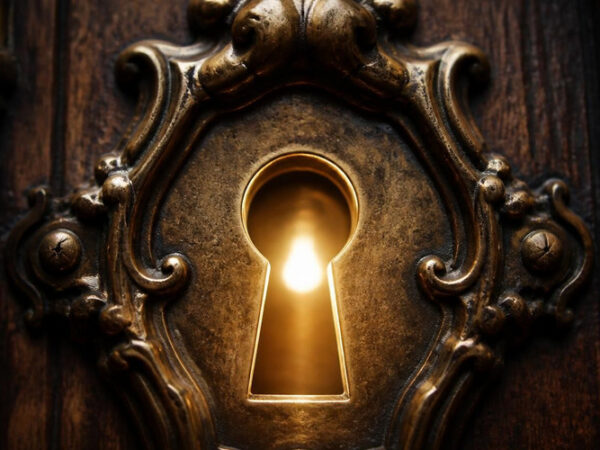
In a broader sense, a closed door is also a symbol of mystery. Because what lies behind it is hidden, it invites curiosity and speculation. That hidden quality makes the closed door a common metaphor for undisclosed truths or forbidden knowledge.
Positive and Negative Meanings of a Closed Door
Positive associations: A closed door offers privacy, safety, and a clear boundary. It allows individuals to retreat, focus, and control who enters their space. In many contexts, a closed door represents a moment of rest or a needed pause before moving forward.
Negative meanings: A closed door can signify rejection, exclusion, or missed opportunities. It may represent a barrier to progress, a refusal to listen, or an ending that brings disappointment. When locked, it can evoke feelings of being trapped or shut out.
History and Origins of the Closed Door Symbolism
The symbolic weight of doors is ancient, rooted in the fundamental human need for shelter and separation. Early dwellings had simple doorways that, when closed, marked the boundary between the domestic sphere and the wild. In many traditions, the doorstep itself was considered a sacred threshold, and crossing it without permission was a violation. The closed door therefore became a symbol of authority – the power to admit or deny entry.
Religious texts reinforce this symbolism. In the Bible, Jesus says, “I stand at the door and knock” (Revelation 3:20), implying that the closed door represents an individual’s will and the choice to open one’s heart. In ancient Roman culture, the god Janus was depicted with two faces looking at a door, representing beginnings and transitions. The closed door of a temple or treasury further emphasized that certain spaces were off-limits, protected by the divine or by earthly power.
Closed Door Symbolism in Different Cultures
Across many cultures, the closed door carries consistent themes of protection and transition. In Chinese Feng Shui, a closed door can block the flow of vital energy (chi), so placement and color of doors are carefully considered to maintain harmony. A closed front door is especially significant because it is seen as the “mouth of chi” – keeping it closed controls the energy entering the home.
In European folklore, closing doors tightly at night was a common practice to ward off evil spirits, ghosts, and malevolent forces. The threshold itself was often treated with respect, and carrying a bride over the threshold is a survival of the belief that evil spirits could enter through the feet. In Japanese culture, sliding doors (fusuma) serve as flexible boundaries, and a closed door can indicate a formal, private space inside the home. Across these examples, the closed door consistently symbolizes the power to define and defend personal or sacred space.
Spiritual Meaning of a Closed Door
Spiritually, a closed door is rarely a dead end. Instead, it is often understood as a redirection or a test of patience. The popular saying “When one door closes, another opens” captures this idea: a closed door is not an end but a necessary closure that guides a person toward a different path. Many spiritual traditions view closed doors as opportunities for inner work, reflection, and trust in a larger plan.
In prayer and meditation, a closed door can represent a boundary with the outside world, creating a sacred space for connection with the divine. The practice of “closing the door” to distractions is a metaphor for focusing one’s spiritual energy. Conversely, a closed door in a spiritual context may also indicate that certain knowledge or experience is not yet accessible – a reminder to wait and cultivate readiness.
Closed Doors in Dreams
Dreams about closed doors are common and often highlight feelings about choices, privacy, or barriers in waking life. A closed door may represent a missed opportunity or a decision that has been postponed. Alternatively, it can reflect a desire for solitude or a need to protect oneself from others. The condition of the door – locked, unlocked, broken, or slightly ajar – changes its meaning. Dream analysts often point out that a closed door in a dream can symbolize the boundary between the conscious and unconscious mind, with what lies behind representing hidden aspects of the self.
Common Dream Scenarios Involving Closed Doors
- A locked closed door: Feeling stuck or unable to progress; a barrier that requires a key or permission to pass.
- A door that will not close properly: Vulnerability, lack of privacy, or worry that boundaries are not secure.
- Many closed doors in a hallway: Confusion or a sense of being overwhelmed by choices; each door may represent a different life path.
- Opening a closed door to find something unexpected: Revelation, discovery of hidden knowledge, or confronting a suppressed memory.
- Being shut out by a closed door: Rejection, exclusion, or a feeling of being unwanted in a relationship or group.
Closed Doors in Superstitions and Omens
Superstitions around closed doors are rooted in the idea that doors are thresholds between the ordinary and the supernatural. In many traditions, it is considered bad luck to leave a door open after entering, as it is believed to let in evil spirits or allow good fortune to escape. Some cultures hold that you should never open a closed door after knocking if no one answers – the closed door is a boundary that should be respected. In Victorian times, a closed door in a home indicated that the room was private or that mourning was taking place. These customs reinforce the closed door as a signal of social and spiritual boundaries.
Closed Doors in Art and Literature
In literature, the closed door is a recurring motif that represents mystery, hidden truth, or a transition point. In Frances Hodgson Burnett’s The Secret Garden, the closed garden door symbolizes the hidden joy and healing that lies beyond grief and neglect. The act of finding the key and opening the door parallels the protagonist’s emotional awakening. Similarly, in the fairy tale “Bluebeard,” the forbidden closed door hides the violent secrets of the husband, and the wife’s curiosity leads to a confrontation with truth. The closed door here represents the boundaries of trust and the danger of hidden knowledge.
In poetry, Claude McKay’s sonnet “The Closed Door” uses the image of a door shut against racial injustice, reflecting exclusion and resilience. H.G. Wells’ short story “The Door in the Wall” presents a mysterious green door that leads to a magical world of beauty and happiness, but only appears at certain moments, making the closed door a symbol of elusive opportunities and the tension between reality and imagination. In each case, the closed door is not merely an object but a meaningful threshold that drives narrative and emotional depth.
Frequently Asked Questions
Q: What does a closed door symbolize in a dream?
A: In dreams, a closed door often represents a barrier, a missed opportunity, or a desire for privacy. Details such as whether the door is locked or unlocked help refine the interpretation.
Q: What is the spiritual meaning of a closed door?
A: Spiritually, a closed door usually signifies a need for patience, protection, or redirection. It may suggest that a certain path is not yet meant for you and that you should trust the timing of your life.
Q: Is a closed door a positive or negative symbol?
A: It can be both. Positively, it represents safety, privacy, and the ability to set boundaries. Negatively, it can stand for rejection, limitation, or lost chances. Context determines its meaning.
Q: Why do closed doors appear in so many stories?
A: Closed doors create narrative tension by hiding something and inviting curiosity. They naturally symbolize the unknown, making them a powerful tool in plot development and character conflict.
Related Symbols
- Gate – a larger, often more symbolic threshold
- Window – a transparent boundary that allows sight but not passage
- Threshold – the actual line between inside and outside
- Key – the means of access beyond a closed door
- Lock – the mechanism of restriction
- Barrier – a general symbol of obstruction
- Doorway – the passage itself, often seen as an opening