Briefly
The locked door is a powerful and universal symbol that sits at the intersection of protection and prohibition. It represents a conscious barrier, guarding what lies within from the outside world while simultaneously keeping the outsider at bay. As a symbol, it embodies the duality of safety and confinement, offering security to those inside while presenting a challenge or a mystery to those outside. Across various contexts, the locked door signifies a threshold that cannot be crossed without the proper key, knowledge, or permission, making it a potent metaphor for secrets, opportunities, and personal boundaries.
What Does a Locked Door Symbolize?
At its core, a locked door symbolizes a boundary. It is a declaration of ownership and a mechanism of control. The person who holds the key possesses the power to grant or deny access, making the locked door a potent symbol of authority, privacy, and exclusivity. It can represent a secret waiting to be discovered, a danger best left contained, or a part of the self that is not yet ready to be revealed.
The locked door also symbolizes a state of transition that is currently blocked. While an open door invites passage, a locked door forces a pause. It represents an obstacle that must be overcome, a test of worthiness, or a sign that one is not yet ready for what lies ahead. In this sense, it is a symbol of patience, preparation, and the journey towards a goal.
Positive and Negative Meanings
Positive associations: The locked door is first and foremost a symbol of safety and security. It protects the home, the family, and one’s personal treasures from external threats. It provides a sense of privacy and intimacy, creating a sacred, inviolable space. In a psychological sense, a locked door can represent healthy boundaries, the ability to say no, and the protection of one’s inner self from unwanted intrusion.
Negative meanings: On the other hand, a locked door can be a deeply negative symbol, representing exclusion, rejection, and imprisonment. Being on the wrong side of a locked door can evoke feelings of loneliness, fear, and isolation. It can signify missed opportunities, closed-off communication, and the denial of love or knowledge. In its most extreme form, the locked door symbolizes a prison, a trap, or a state of being silenced and contained against one’s will.
History and Origins of the Locked Door Symbolism
The symbolism of the locked door is as old as the invention of locks and keys themselves, which date back over 4,000 years to ancient Egypt and Babylon. The earliest locks were simple wooden devices, but they immediately carried immense symbolic weight. The key, often worn as a status symbol, represented authority and access. In ancient Rome, the goddess Janus was the god of doors, gates, and transitions, often depicted with keys. The locking of city gates at night was a ritual of communal security, while the possession of a key to a locked door signified trust and privilege within a household.
Throughout the Middle Ages, the locked door became a central symbol in folklore and architecture. Castles were designed with layers of locked gates and doors, symbolizing the feudal hierarchy and the impregnability of power. The locked door of a monastery or convent represented a spiritual withdrawal from the world. The cultural weight of the locked door grew with the rise of the individual and the concept of private property, becoming a fundamental symbol of personal autonomy and secrecy in the modern era.
Locked Door Symbolism in Different Cultures
In Western culture, the locked door is a common motif in fairy tales, such as the forbidden room in Bluebeard, which symbolizes the dangers of curiosity and the dark secrets of the past. The concept of the locked room mystery is a staple of detective fiction, where the locked door represents a seemingly impossible puzzle.
In Japanese culture, the sliding door (fusuma or shoji) is a flexible boundary. When locked, it can represent a formal separation of spaces, but the thinness of the door emphasizes that the barrier is one of social agreement rather than brute force. The kagi (key) is a powerful symbol of trust and responsibility.
In Chinese culture, locks are often used in protective rituals. A lock necklace is given to children to symbolically lock their health and safety to them, preventing evil spirits from taking their soul. The locked door of a home is a sacred boundary, protected by door gods (menshen) who are pasted on the door to ward off evil.
Spiritual Meaning of a Locked Door
Spiritually, the locked door represents a barrier to higher knowledge, enlightenment, or a specific state of being. It is the gate to the inner sanctum, the temple, or the heart. Many spiritual traditions speak of the door to the self that must be unlocked through meditation, discipline, or grace. The locked door is a guardian of the sacred, ensuring that only those who are prepared or worthy may enter.
The concept of the Pearly Gates of Heaven is a prime example of a locked door that requires a specific key, a righteous life, to enter. Conversely, the gates of Hell are often depicted as locked from the inside, symbolizing the inescapable nature of damnation. In personal spirituality, a locked door can represent a chakra or a psychological block that must be unlocked through healing and self-awareness.
Locked Door in Myths and Folklore
The locked door is a central element in many myths and folk tales. One of the most famous is the story of Bluebeard, where a wealthy nobleman forbids his wife from entering a single locked room in his castle. Her curiosity overwhelms her, and upon unlocking the door, she discovers the bodies of his previous wives. Here, the locked door symbolizes a terrible secret and the danger of disobeying a prohibition.
In the Greek myth of Pandora, the jar (often mistranslated as a box) was a locked container that held all the evils of the world. When Pandora opened it, she released them, leaving only Hope inside. This story uses the concept of a sealed, locked container to explore themes of curiosity, consequence, and the human condition. Similarly, the tale of Ali Baba and the Forty Thieves features the magical phrase Open Sesame which acts as a key to a locked cave, symbolizing the power of knowledge and luck in accessing hidden treasure.
Locked Door in Dreams
The locked door is one of the most common and potent symbols in dreams. It almost always represents a psychological barrier or a point of transition in the dreamer’s life. The specific details of the dream, the type of door, the location, and the dreamer’s emotional state, are crucial for interpretation.
A locked door often appears when a person is feeling stuck, anxious about a decision, or confronted with a part of themselves they have not yet acknowledged. It can represent the subconscious mind’s way of signaling that a door has closed on a past chapter, or that a new one is waiting to be unlocked.
Common Dream Scenarios
- Being locked out: This is a classic anxiety dream. It often symbolizes feelings of rejection, insecurity, or being excluded from a group, relationship, or opportunity. It can also represent a fear of missing out or not being good enough.
- Being locked in: This dream symbolizes entrapment. It can reflect a feeling of being stuck in a job, a relationship, or a situation with no easy way out. It may also represent feeling suffocated or controlled.
- Finding a key to a locked door: This is a very positive dream symbol. It represents a breakthrough, a solution to a problem, or the discovery of a new path. It signifies empowerment and the unlocking of one’s own potential.
- A door locking behind you: This dream often represents a point of no return. It can symbolize a commitment, a major life change, or the feeling that the past is truly behind you, whether you are ready for it or not.
- A door that will not stay locked: This can symbolize a violation of boundaries, a fear of being vulnerable, or a secret that is about to be exposed.
Locked Door in Superstitions and Omens
Superstitions surrounding locked doors are deeply ingrained in many cultures. A common belief is that locking doors at night keeps not only physical threats out but also malevolent spirits and negative energies. In some traditions, a door that unlocks itself is considered a bad omen, suggesting that a secret is about to be revealed or that a spirit is trying to enter.
Conversely, in some systems of folk magic, leaving a door unlocked is considered an invitation to good luck or to the spirits of ancestors. The act of locking a door can be a ritual of protection, while unlocking one can be a ritual of welcome. The open door policy of hospitality is a direct contrast to the locked door, which can be seen as inhospitable or distrustful.
Locked Door in Art and Literature
The locked door is a powerful narrative device in art and literature. In Charlotte Brontë’s Jane Eyre, the madwoman Bertha Mason is locked in the attic, a physical and symbolic representation of the secrets and suppressed passions within the Thornfield household. The locked door creates a mystery that drives the plot and symbolizes the societal constraints placed on women.
In Franz Kafka’s The Castle, the protagonist K. spends the entire novel trying to gain access to the Castle, whose gates are perpetually closed or locked to him. The locked door here symbolizes the absurdity of bureaucracy and the unattainable nature of authority and truth. In film, Stanley Kubrick’s The Shining uses locked doors, the pantry and Room 237, to create suspense and symbolize the barriers between reality and madness, as well as the dark secrets of the Overlook Hotel.
Tattoo Meaning of a Locked Door
As a tattoo, a locked door is a rich and personal symbol. It can represent a secret that the wearer has sworn to keep, or a part of their past that they have chosen to lock away. It can also symbolize the overcoming of a major obstacle, with the door representing the challenge that was eventually unlocked.
A tattoo of a locked door can also be a reminder of a person or a memory that is locked in the wearer’s heart. It is often combined with a key, either hanging in the lock or lost, to emphasize themes of loss, protection, or the search for a solution. A door locked from the inside can symbolize a strong sense of self and healthy personal boundaries.
Meanings of Different Types of Locked Doors
- A heavy iron gate: Symbolizes a formidable barrier, often representing societal or institutional obstacles, imprisonment, or the boundary between life and death.
- A locked wooden door: Represents a more personal barrier, such as a family secret, a private space, or a domestic boundary.
- A door locked from the inside: Symbolizes self-protection, a retreat from the world, or a refusal to let others in. It implies the power is in the hands of the person inside.
- A door locked from the outside: Symbolizes imprisonment, being trapped, or a lack of control over one’s own circumstances.
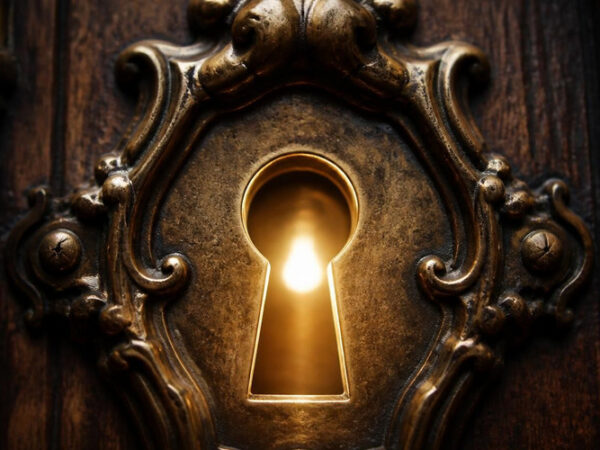
- A door with a visible keyhole: Implies that the barrier is not absolute and that a solution, the key, exists, offering a sense of hope or mystery.
Frequently Asked Questions
Q: What does a locked door symbolize in a dream?
A: In dreams, a locked door often symbolizes a missed opportunity, a hidden secret, a personal barrier, or a feeling of being trapped or excluded. The context of the dream, whether you are locked in or out, provides crucial insight into its meaning.
Q: Is a locked door a positive or negative symbol?
A: It is a deeply ambivalent symbol. Positively, it represents security, privacy, and the protection of one’s inner world. Negatively, it can signify rejection, imprisonment, and the denial of access to knowledge or opportunity.
Q: What is the spiritual meaning of a locked door?
A: Spiritually, a locked door represents a barrier to enlightenment or a higher state of being. It can also symbolize the guardian of a sacred space that requires specific knowledge or purity to enter.
Related Symbols
- Key: The counterpart to the lock, representing the solution, access, or knowledge required to open the door.
- Threshold: The point of transition which the locked door controls.
- Gate: A larger, often more formidable version of a door, guarding entrances to cities, estates, or the underworld.
- Window: Another point of entry or exit, but often more vulnerable and associated with observation rather than passage.
- Wall: An absolute barrier, representing complete separation, whereas a door implies a potential passage.