
Briefly
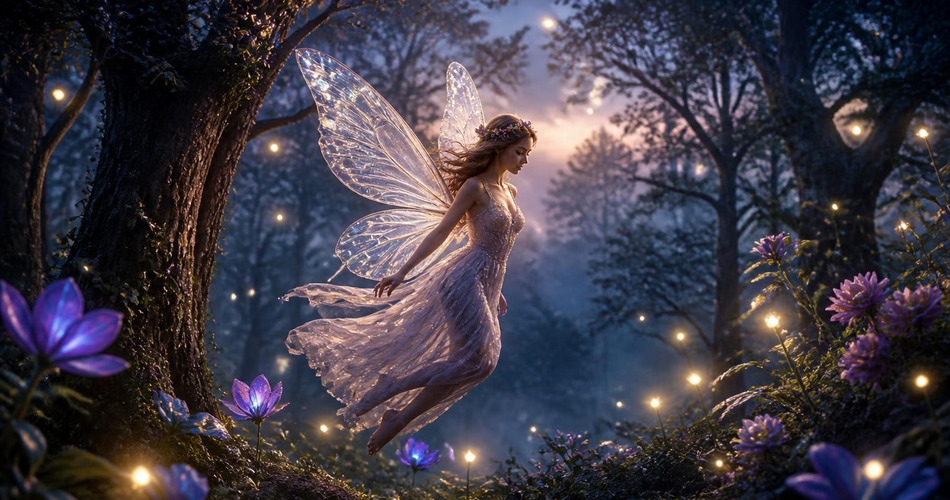
Fairies are ethereal beings rooted in European folklore, often depicted as small, winged creatures with magical powers. They symbolize enchantment, the unseen forces of nature, and the thin boundary between the human world and the supernatural. While some traditions portray them as benevolent protectors of the natural world, others warn of their mischievous or dangerous tendencies. Overall, fairies represent mystery, wonder, and the potential for both good and ill in the hidden realms around us.
What Does Fairy Symbolize?
Fairies primarily symbolize the connection between humanity and the natural world. They are often seen as guardians of forests, meadows, and bodies of water, embodying the life force and vitality of these environments. In many legends, their presence signals a liminal space or time, such as twilight or the edges of woods, where ordinary rules may not apply.
Beyond nature, fairies also represent transformation and change. Tales of humans being taken to fairy realms for a night only to return decades later highlight themes of time distortion and altered perception. This underscores the idea that encountering a fairy can lead to personal growth or upheaval.
Additionally, fairies are associated with creativity and inspiration, especially in the arts. Stories of fairy muses inspiring music, poetry, or craftsmanship are common, linking these beings to the spark of imagination that fuels artistic endeavor.
Positive and Negative Meanings
Positive associations: Fairies are frequently seen as benevolent beings who bring luck, prosperity, and protection to those who respect them. They are connected to fertility of the land and bountiful harvests, as well as to good fortune in love and health. In folklore, leaving offerings for fairies can earn their favor, resulting in blessings for one’s home and family.
Negative meanings: Conversely, fairies are also known for their trickster nature and capacity for causing harm. They may lead travelers astray, steal children or livestock, or curse those who offend them. This dual aspect reflects the unpredictable and often dangerous power of nature itself, reminding humans to approach the unknown with caution and respect.
History and Origins of the Symbolism
The concept of fairies evolved from ancient pagan beliefs in nature spirits and deities. In Celtic mythology, figures like the sidhe were considered a race of supernatural beings living in mounds or underground realms. These early fairies were not small and delicate but powerful, sometimes dangerous entities associated with fertility, war, and sovereignty.
During the medieval period, literary works like Sir Orfeo and Le Morte d’Arthur began to depict fairies as more human-like figures, often interacting with knights and royalty. The Renaissance saw a further romanticization, with Shakespeare’s A Midsummer Night’s Dream presenting fairies as playful, mischievous beings who meddle in human affairs. The Victorian era then popularized the diminutive, winged fairy through illustrations and children’s stories, cementing the image familiar today.
Symbolism in Different Cultures
In Irish and Scottish folklore, fairies are deeply tied to the landscape. The sidhe are still respected in some rural communities, with certain trees and hills considered sacred. Fairy legends often explain natural phenomena, such as the origin of circular mushroom rings (fairy rings) which are said to mark places where fairies dance.
In Scandinavian tradition, beings like the huldra resemble fairies but are more closely linked to the forest. They are beautiful but have a cow’s tail, and luring men to their doom is common in tales. These stories serve as warnings about the dangers of straying into the wild.
In other parts of Europe, such as Germany and France, fairies often appear as household spirits (e.g., kobolds, lutins) who help with chores but can become vengeful if mistreated. This reinforces the theme of reciprocal relationship between humans and the supernatural.
Spiritual Meaning
In modern spiritual contexts, fairies are seen as nature spirits or elemental beings that embody the essence of the earth, air, water, and fire. They are sometimes invoked in practices like Wicca or neo-paganism to connect with the natural world and its cycles. Believers often describe sensing their presence in gardens or wilderness, and they may leave offerings as a sign of respect.
The spiritual meaning of fairies also revolves around imagination and the power of belief. They represent the idea that the world is filled with unseen wonders and that maintaining a sense of childlike wonder is valuable for personal well-being and spiritual growth.
Fairy in Myths and Folklore
Fairies appear in countless myths and folktales across Europe. In the British Isles, the legend of the Changeling tells of fairies swapping a human baby with a fairy infant, often to prevent a human from knowing the fairy child’s true nature. These stories served as explanations for unexplained illnesses or developmental differences.
One famous fairy tale is The Fairy (or The Diamonds and the Toads) by Charles Perrault, where a kind girl is rewarded by a fairy with jewels falling from her lips, while a cruel girl is cursed with serpents. This moral tale emphasizes the value of kindness and the consequences of cruelty.
In Irish myth, the Bean Sidhe (banshee) is a fairy whose wailing foretells death. Unlike the playful fairies of later lore, the banshee is a solemn, mournful figure, highlighting the diversity of fairy roles in folklore.
Fairy in Dreams
Dreaming of fairies can be rich in personal symbolism. They often represent feelings of wonder, escape from reality, or a connection to a deeper, magical aspect of life. The context of the dream—whether the fairy is friendly, threatening, or indifferent—shapes its interpretation.
Fairies in dreams may also symbolize intuition or a desire for a more enchanted existence. They can appear during times of transition, suggesting that the dreamer is open to change or needs to embrace their own inner magic.
Common Dream Scenarios
- Flying fairies: May indicate a desire for freedom or transcendence from daily worries.
- Talking to a fairy: Could represent receiving guidance or insight from an intuitive part of the self.
- Fairy offering a gift: Often seen as a symbol of unexpected luck or a new creative endeavor.
- Angry or mischievous fairy: Might reflect fear of being deceived or concern about unpredictable changes.
Superstitions and Omens
Many superstitions surround fairies in rural communities. One common belief is that damaging fairy dwellings, such as thorn bushes or fairy forts, brings bad luck. Conversely, leaving milk or bread for fairies is thought to ensure a prosperous household.
- If you walk in a fairy ring, you may be forced to dance until dawn or be spirited away.
- Hearing fairy music could mean you are being enchanted or invited to their realm.
- Seeing a lone fairy flower, like a bluebell, is considered an omen of fairy presence and should be treated with respect.
These superstitions highlight the importance of respecting boundaries between the human and fairy worlds, a theme central to many folk traditions.
Fairy in Art and Literature
Fairies have been a prominent subject in art and literature for centuries. William Shakespeare’s A Midsummer Night’s Dream (c. 1595) features characters like Oberon and Titania, the fairy king and queen, who influence the mortal world with capricious magic. This play helped establish the fairy as a romantic and whimsical figure.
In the 19th century, the Cottingley Fairies hoax—a series of photographs purporting to show real fairies—sparked widespread fascination. The images, taken by young girls in England, were initially believed by many, including Sir Arthur Conan Doyle, reflecting the era’s longing for proof of the supernatural.
In literature, J.M. Barrie’s Peter Pan (1904) introduced Tinker Bell, a sassy, temperamental fairy whose size and powers are limited but her loyalty is immense. This character further popularized the tiny, winged fairy stereotype. More recently, fairy tales collected by the Brothers Grimm and Hans Christian Andersen continue to shape modern perceptions.
Frequently Asked Questions
Q: What is the most common symbol associated with fairies?
A: Wings, often depicted as translucent and insect-like, represent freedom, ethereality, and the ability to move between worlds.
Q: Are fairies always good?
A: No; in traditional folklore, they are morally ambiguous—capable of kindness or malice depending on how they are treated and the circumstances.
Q: What is a fairy ring?
A: A naturally occurring circle of mushrooms, often associated in folklore with fairy dances or gatherings; stepping into one is considered risky.
Related Symbols
- Elves – similar nature spirits in Germanic folklore
- Pixies – smaller, more mischievous British fairies
- Leprechauns – Irish fairy known for shoemaking and trickery
- Banshee – a fairy that foretells death in Irish legend
- Sidhe – hill-dwelling supernatural beings in Celtic myth


