Briefly
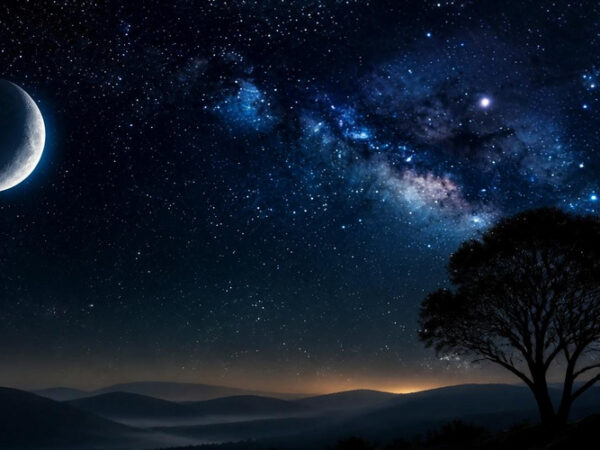
A galaxy is a massive, gravitationally bound system of stars, stellar remnants, interstellar gas, dust, and dark matter. As a symbol, the galaxy represents the vastness of the universe, the infinite potential of the human mind, and the interconnectedness of all things. It evokes feelings of awe, wonder, and humility, reminding us of our small place in the cosmos while also inspiring exploration and creativity. The galaxy symbolizes the unknown, the mysterious, and the limitless possibilities that lie beyond our immediate perception.
What Does Galaxy Symbolize?
The galaxy primarily symbolizes the infinite and the unknown. Its sheer scale and complexity make it a powerful metaphor for the vastness of human potential, the mysteries of the universe, and the depths of the subconscious mind. The spiral shape of many galaxies, such as the Milky Way, also represents cycles of birth, death, and rebirth, as well as the journey of life and the evolution of consciousness. Additionally, galaxies symbolize unity and interconnectedness, as they are composed of countless individual stars and systems bound together by gravity, mirroring the relationships between people, communities, and ideas.
Positive and Negative Meanings
Positive associations: The galaxy symbolizes inspiration, creativity, and the boundless potential of the universe. It encourages exploration, curiosity, and a sense of wonder. Spiritually, it represents the connection between the individual soul and the cosmos, suggesting that we are all part of something much larger than ourselves. The galaxy also symbolizes hope, as its vastness implies that possibilities are endless.
Negative meanings: On the negative side, the galaxy can evoke feelings of insignificance, loneliness, and existential dread. Its immense scale can make individuals feel small and powerless, highlighting the fragility of human life and the apparent randomness of the universe. The darkness of space and the unknown nature of distant galaxies can also symbolize fear of the unknown, isolation, and the void.
History and Origins of Galaxy Symbolism
The word “galaxy” comes from the Greek galaxias, meaning “milky,” referring to the Milky Way’s appearance as a milky band of light across the night sky. Ancient Greek mythology held that the Milky Way was formed from the milk of the goddess Hera. For centuries, galaxies were not understood as separate systems; they were simply part of the celestial backdrop. It was only in the 20th century, through the work of astronomers like Edwin Hubble, that the true nature of galaxies as vast, independent systems of stars was revealed. This scientific shift transformed the galaxy from a mere celestial phenomenon into a symbol of cosmic scale and the expanding frontiers of human knowledge.
Galaxy Symbolism in Different Cultures
In many indigenous cultures, the Milky Way galaxy is seen as a celestial river or path. For example, the Navajo people refer to it as the “Road of the Holy People,” a spiritual pathway for the departed. In Aboriginal Australian astronomy, the dark patches of the Milky Way are often seen as the emu in the sky, a figure central to creation stories and seasonal cycles. In Hindu mythology, the Milky Way is considered the celestial river Ganges, flowing through the heavens. These cultural interpretations often emphasize the galaxy as a bridge between the earthly and the divine, a guide for souls, or a marker of time and seasons.
Spiritual Meaning of the Galaxy
Spiritually, the galaxy represents the macrocosm—the universe as a reflection of the inner self. Many spiritual traditions view the galaxy as a symbol of the divine order, where chaos and structure coexist in harmony. Contemplating the galaxy can lead to a sense of transcendence, helping individuals feel connected to a greater cosmic consciousness. The spiral shape of many galaxies is often linked to spiritual evolution, the journey of the soul, and the cyclical nature of existence. In modern spirituality, galaxies are also associated with the concept of the multiverse and the idea that consciousness itself is a fundamental aspect of the cosmos.
Galaxy in Myths and Folklore
In Greek mythology, the Milky Way was said to have been created when the infant Heracles (Hercules) suckled so forcefully at the breast of the goddess Hera that her milk sprayed across the sky. This story imbues the galaxy with themes of divine lineage, strength, and nourishment. In Norse mythology, the Milky Way was sometimes seen as the path of the souls of the dead, leading to Valhalla. In Finnish folklore, the galaxy was known as Linnunrata, the “Birds’ Way,” believed to be the path that birds followed during migration, linking the heavens and the earth. These myths often cast the galaxy as a cosmic road or bridge, connecting different realms or guiding travelers.
Galaxy in Dreams
Dreaming of a galaxy often reflects a sense of awe, exploration, or a desire to understand the bigger picture of one’s life. It can indicate that the dreamer is contemplating their place in the universe or seeking meaning beyond everyday concerns. The galaxy in dreams may also represent the subconscious mind, with its vast, uncharted territories of thoughts, memories, and emotions. Such dreams can be both inspiring and overwhelming, depending on the dreamer’s emotional state.
Common Dream Scenarios
- Floating in a galaxy: This scenario often symbolizes a feeling of freedom, expansion, and connection to the universe. It may indicate a period of spiritual growth or a desire to escape from constraints.
- Seeing a galaxy from a distance: This can represent a goal or aspiration that seems beautiful but distant. It may suggest that the dreamer is seeking something greater but feels it is out of reach.
- A dark or empty galaxy: This may evoke feelings of loneliness, isolation, or existential uncertainty. It can reflect a fear of the unknown or a sense of being lost in the vastness of life.
- Traveling through a galaxy: This often symbolizes a journey of self-discovery, adventure, or a significant life transition. It suggests movement toward new experiences and knowledge.
Galaxy in Art and Literature
Galaxies have been a source of inspiration in art and literature, particularly since the 20th century. In literature, galaxies are central to the science fiction genre. For example, in Isaac Asimov’s Foundation series, the galaxy is the setting for a vast human empire, symbolizing both the grandeur and the fragility of civilization. In Douglas Adams’s The Hitchhiker’s Guide to the Galaxy, the galaxy represents absurdity, adventure, and the humor of cosmic scale. In visual art, Vincent van Gogh’s The Starry Night (1889) depicts a swirling sky that evokes the dynamic, emotional quality of a galaxy, long before such structures were fully understood. Contemporary artists like Yayoi Kusama use infinite mirror rooms filled with lights to create immersive experiences that evoke the feeling of being inside a galaxy, exploring themes of infinity and self-obliteration.
Frequently Asked Questions
Q: What does it mean if I see a galaxy in my dream?
A: Seeing a galaxy in a dream often symbolizes a desire for exploration, a sense of wonder, or a need to understand the bigger picture of your life. It can also reflect feelings of awe or insignificance, depending on the context of the dream.
Q: Is the galaxy a positive symbol?
A: The galaxy can be both positive and negative. Positively, it represents infinite potential, creativity, and connection to the cosmos. Negatively, it can evoke feelings of smallness, loneliness, or fear of the unknown.
Q: What does the Milky Way symbolize in different cultures?
A: In many cultures, the Milky Way is seen as a celestial river, path, or bridge. For example, in Greek myth it is Hera’s milk, in Navajo tradition it is the “Road of the Holy People,” and in Finnish folklore it is the “Birds’ Way.”
Related Symbols
- Stars: The building blocks of galaxies, stars symbolize guidance, hope, and individuality.
- Spiral: The spiral shape of many galaxies represents cycles, evolution, and the journey of life.
- Cosmos: The universe as a whole, symbolizing order, mystery, and the interconnectedness of all things.
- Nebula: A cloud of gas and dust where stars are born, symbolizing creation, potential, and transformation.
- Black Hole: A region of spacetime with immense gravity, symbolizing the unknown, the void, and the limits of human understanding.