Briefly
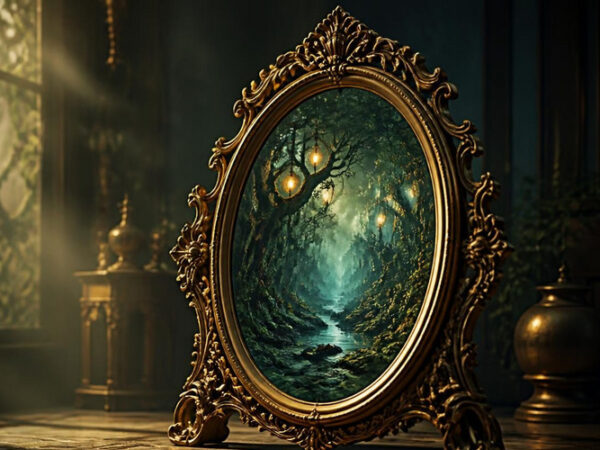
A glass mirror is more than a reflective surface; it is a powerful symbol of self-awareness, truth, and the boundary between the physical and spiritual worlds. Throughout history, mirrors have been used to reveal hidden realities, but also to deceive, as they can show a reversed or distorted image. They represent the human desire to know oneself, yet they also carry warnings about vanity and the fragility of appearance. Whether in folklore, dreams, or daily life, the glass mirror invites contemplation of identity and perception.
What Does Glass Mirror Symbolize?
Glass mirrors primarily symbolize self-reflection and introspection. They are tools for examining one’s own appearance, but metaphorically they encourage looking inward at one’s character and motives. Mirrors also represent truth—they show things as they are, without flattery or distortion—yet their reversed image hints at the idea that reality can be inverted or that there is more than meets the eye. Additionally, mirrors are seen as portals or thresholds, believed in many traditions to connect the living world with the spirit realm. They can symbolize vanity when associated with excessive self-admiration, and fragility, as glass breaks easily, reflecting the delicate nature of human ego and perception.
Positive and Negative Meanings of Glass Mirrors
Positive associations: Glass mirrors encourage honest self-assessment and personal growth. They are used in rituals for divination and in meditation to focus the mind. In many cultures, mirrors are placed to ward off negative energy, as they are thought to reflect evil spirits away. They also symbolize clarity, as a clean mirror gives a true image, representing clear thinking and truthfulness.
Negative meanings: Mirrors can represent vanity and excessive self-obsession, as seen in the myth of Narcissus. A broken mirror is famously considered an omen of seven years of bad luck, reflecting the belief that mirrors hold a part of the soul. They can also symbolize illusion and deception, since the image is reversed and can be manipulated, reminding us that appearances are not always reliable. In some superstitions, mirrors are covered after a death to prevent the deceased’s spirit from being trapped.
History and Origins of Glass Mirror Symbolism
The earliest mirrors were made of polished stone or metal, but the invention of glass mirrors in the 1st century CE by the Romans marked a turning point. However, it was during the Renaissance that Venetian glassmakers perfected the technique of backing glass with a reflective coating, making mirrors widely available. This led to a surge in their symbolic use in art and literature. The association of mirrors with truth and vanity grew during this period, as they became common in wealthy households. In medieval Europe, mirrors were sometimes considered magical objects, used by seers and alchemists. The idea of the mirror as a symbol of self-knowledge was also prominent in philosophical and religious texts, such as the concept of the “mirror of the soul” in Christian mysticism.
Glass Mirror Symbolism in Different Cultures
In Chinese culture, mirrors are believed to ward off evil spirits and are often placed in homes or on doors. They are also associated with the moon and water, symbolizing calm reflection. In Japanese Shinto tradition, the mirror (kagami) is a sacred object representing the sun goddess Amaterasu, and it is used in shrines as a symbol of divine presence and truth. In African traditions, mirrors are used in divination and as protective amulets. In Western culture, mirrors are common in fairy tales as portals to other worlds (e.g., “Through the Looking-Glass”) or as objects that reveal the truth (e.g., the magic mirror in “Snow White”). In Hinduism, mirrors are used in rituals to reflect the divine and are considered symbols of the mind’s ability to reflect reality.
Spiritual Meaning of Glass Mirrors
Spiritually, glass mirrors are seen as tools for introspection and connecting with higher consciousness. In meditation, gazing into a mirror can help focus the mind and reveal inner truths. Many spiritual traditions believe that mirrors can capture and store energy, so they are often used in feng shui to redirect chi. In some New Age practices, mirrors are used for scrying—a form of divination where one gazes into a reflective surface to receive visions. The mirror is also a symbol of the soul’s journey toward self-realization, reflecting the divine light within. However, because mirrors are believed to attract spirits, they are often covered during prayer or after a death to avoid spiritual interference.
Glass Mirrors in Myths and Folklore
Mirrors appear in numerous myths and folk tales. The most famous is the Greek myth of Narcissus, who fell in love with his own reflection in a pool of water (a natural mirror) and died of longing. This story warns against vanity and self-absorption. In the Brothers Grimm fairy tale “Snow White,” the evil queen’s magic mirror tells her who is the fairest, representing truth and the queen’s obsession with appearance. In Japanese folklore, mirrors are said to be homes for spirits, and breaking one can release a malevolent entity. Slavic folklore tells of mirrors being used to summon spirits or to see one’s future husband. In many cultures, covering mirrors during a thunderstorm or after a death is a common practice to prevent lightning strikes or to keep the soul from being trapped.
Glass Mirrors in Dreams
Dreaming of a glass mirror often relates to self-perception and how you see yourself or are seen by others. A clear mirror suggests clarity of thought and honest self-reflection, while a cracked or broken mirror may indicate a fractured identity or fear of aging. Seeing your reflection in a dream can symbolize a need for introspection or a confrontation with your true self. If the reflection is distorted, it may point to self-deception or confusion about your identity. Mirrors in dreams can also represent the boundary between the conscious and subconscious mind, inviting exploration of hidden aspects of your personality.
Common Dream Scenarios Involving Glass Mirrors
- Looking into a mirror and seeing a different face: This often indicates a disconnect between your inner self and outer persona, or a fear of losing your identity.
- Breaking a mirror in a dream: May symbolize a sudden change, the shattering of an illusion, or anxiety about bad luck. It can also represent a desire to break free from self-criticism.
- A mirror with no reflection: Suggests feelings of invisibility, lack of self-awareness, or spiritual emptiness.
- Cleaning a mirror: Represents a desire to clear away confusion and see the truth more clearly.
Glass Mirrors in Superstitions and Omens
Superstitions about mirrors are widespread. The most common is that breaking a mirror brings seven years of bad luck, a belief that originated in ancient Rome, where it was thought that mirrors held a part of the soul and that breaking one would damage the soul’s health. Other superstitions include: covering mirrors in a house of mourning to prevent the deceased’s spirit from becoming trapped; never looking into a broken mirror, as it reflects a fractured soul; and placing a mirror facing the front door to reflect evil spirits away. In some cultures, a mirror that falls and breaks by itself is seen as a warning of impending death or misfortune. Conversely, a mirror that remains intact after a fall is considered a sign of protection.
Glass Mirrors in Art and Literature
Mirrors are a recurring motif in art and literature. In Lewis Carroll’s Through the Looking-Glass, the mirror serves as a portal to a fantastical world where everything is reversed, symbolizing the imagination and the blurring of reality. Oscar Wilde’s The Picture of Dorian Gray uses a portrait (a kind of mirror) to show the protagonist’s true moral decay while his physical appearance remains youthful, highlighting the theme of hidden truth. In the fairy tale “Snow White,” the magic mirror speaks the truth about beauty, driving the plot. In visual art, Jan van Eyck’s The Arnolfini Portrait features a convex mirror that reflects the scene, symbolizing the viewer’s presence and the idea of divine witness. More recently, the mirror has been used in films like The Matrix to represent the illusion of reality and self-discovery.
Glass Mirror Tattoo Meaning
Glass mirror tattoos are less common but carry rich symbolism. They often represent self-reflection, the duality of human nature, or the idea of seeing beyond the surface. A broken mirror tattoo can symbolize a past trauma that has shattered one’s self-image, or a deliberate break from vanity. A mirror with a crack may indicate resilience—despite being broken, the mirror still reflects. Some choose mirror tattoos to represent the concept of truth, as a mirror cannot lie. The design often includes a frame, which can be ornate or simple, adding to the aesthetic and symbolic meaning. Mirror tattoos are popular among those who value introspection and authenticity.
Meanings of Different Types of Glass Mirrors
- Antique or ornate mirror: Symbolizes history, tradition, and the weight of the past. Often associated with wisdom and the passage of time.
- Broken mirror: Represents bad luck, shattered illusions, or a fractured identity. Can also signify a necessary break from false perceptions.
- Two-way mirror: Suggests surveillance, hidden agendas, or the idea that you are being watched. It symbolizes the boundary between public and private selves.
- Mirror with a dark or tarnished surface: Indicates obscured truth, repressed memories, or a clouded self-image.
Frequently Asked Questions About Glass Mirrors
Q: What does it mean when a mirror breaks accidentally?
A: In superstition, it is considered a sign of bad luck, often seven years of misfortune. Psychologically, it may symbolize a sudden realization or a shattering of an illusion.
Q: Why are mirrors covered in some cultures after a death?
A: It is believed that the soul of the deceased may become trapped in the mirror, or that the mirror can attract spirits. Covering it prevents this and allows the soul to move on peacefully.
Q: Can mirrors be used for protection?
A: Yes, in feng shui and many folk traditions, mirrors are placed to reflect negative energy or evil spirits away from a home or person.
Related Symbols to Glass Mirrors
- Water – natural reflective surface, symbolizing emotion and the subconscious
- Window – a transparent boundary between inside and outside, similar to a mirror’s threshold
- Eye – the mirror of the soul, reflecting inner truth
- Moon – often associated with reflection and illusion
- Portrait – an artificial mirror capturing identity