Briefly
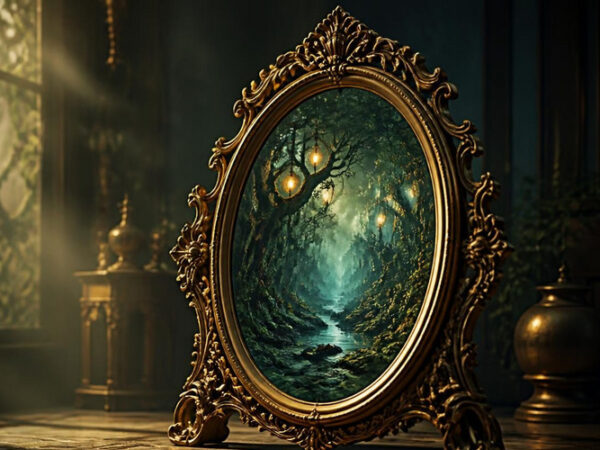
Reflection serves as a powerful symbol of self-awareness, truth, and the boundary between the inner and outer worlds. Across cultures, the act of looking at one’s own image has been linked to introspection, the soul, and the search for identity. At the same time, reflection can represent illusion, vanity, and the danger of mistaking appearance for reality. Whether in a physical mirror or in the mind’s contemplative gaze, reflection invites a deeper examination of who we are and how we perceive the world.
What Does Reflection Symbolize?
Reflection primarily symbolizes self-knowledge and the capacity to see oneself honestly. It represents the moment of recognition — when a person sees not just a surface image but the deeper truths of character, motive, and emotion. In this sense, reflection is a tool for personal growth and moral accountability.
Reflection also embodies duality. A mirror presents a reversed image, reminding us that appearances can be deceptive and that there is often a hidden side to every situation. This duality extends to concepts of truth versus illusion, reality versus perception, and the conscious versus the unconscious mind.
In many traditions, reflection is linked to the soul. Mirrors were once thought to capture or hold a person’s spirit, making them objects of both reverence and fear. The act of reflection thus becomes a metaphor for spiritual examination — the quest to understand one’s place in the cosmos and one’s relationship with the divine.
Positive and Negative Meanings
Positive associations: Reflection encourages introspection, leading to greater self-awareness, emotional clarity, and personal development. It allows individuals to learn from past experiences, correct mistakes, and cultivate virtues such as honesty and humility. In art and philosophy, reflection inspires creativity and deeper understanding of the human condition.
Negative meanings: Reflection can also indicate vanity, narcissism, and excessive preoccupation with one’s own image. The myth of Narcissus warns of the danger of falling in love with one’s own reflection at the cost of everything else. Reflective surfaces have also been associated with deception — a mirror can distort, and a person’s outward reflection may hide inner flaws. In superstition, broken mirrors are believed to bring misfortune, and in some cultures, covering mirrors during mourning protects against trapping a departed soul.
History and Origins of Reflection Symbolism
The symbolic significance of reflection dates back to ancient civilizations. The earliest mirrors were polished stones or metal surfaces, and their ability to produce a clear likeness was regarded as magical or divine. In ancient Egypt, mirrors were associated with the sun god Ra and were placed in tombs to guide the soul in the afterlife. The Greek philosopher Socrates famously urged, “Know thyself,” linking reflection to moral philosophy and the examined life.
During the Middle Ages, mirrors were seen as symbols of vanity and pride, often depicted in art alongside figures like the Virgin Mary to contrast humility with worldly concerns. The Renaissance revived the classical idea of reflection as a path to wisdom, with artists using mirrors to explore perspective and the nature of reality. The invention of the glass mirror in the 16th century made reflective surfaces widely available, cementing their role in both everyday life and symbolic thought.
In Eastern traditions, reflection holds similar weight. In Taoism, still water is a metaphor for a clear mind that accurately reflects reality. In Buddhism, the mirror symbolizes the pure, undefiled nature of the mind — when free of attachments, it perfectly reflects the world without distortion.
Reflection Symbolism in Different Cultures
In Chinese culture, mirrors were believed to reveal the true form of spirits and demons, making them powerful protective talismans. Round mirrors, in particular, symbolized completeness and harmony, and were often hung above doorways to ward off evil influences. The Chinese also used bronze mirrors in burial practices to illuminate the path for the deceased.
In Japanese Shinto, the mirror is one of the three sacred imperial regalia, representing wisdom and the sun goddess Amaterasu. It serves as a symbol of truth and self-reflection, used in rituals to help worshippers see their own virtues and impurities.
In many African traditions, reflective surfaces like calm water or polished stones were used in divination. The ability to “see” beyond the surface was a gift of the shaman or healer, who could read reflections to interpret the will of ancestors or spirits. Similarly, in indigenous Australian cultures, the concept of reflection appears in stories about waterholes as mirrors between the physical and dreaming worlds.
In European folklore, mirrors were often covered during thunderstorms or after a death to prevent lightning from striking or to keep the soul of the departed from being trapped. The idea that a mirror holds a person’s soul is widespread, from the vampire myth — where a vampire casts no reflection — to the belief that breaking a mirror brings seven years of bad luck, a superstition rooted in the notion of damaging one’s own spirit.
Spiritual Meaning of Reflection
On a spiritual level, reflection represents the journey inward. It is the process of examining one’s thoughts, actions, and intentions to align with higher principles. Many meditation practices use the image of a still pond or clear mirror to describe the ideal state of mind — calm, clear, and able to perceive truth without distortion.
In Christian mysticism, reflection is linked to contemplation of God’s creation and the soul’s relationship with the divine. The mirror is sometimes used as a symbol of the Virgin Mary, who reflects God’s grace without blemish. More broadly, spiritual reflection invites a person to see themselves not as separate from the universe but as a reflection of a greater whole.
Reflection in Myths and Folklore
The most famous myth involving reflection is that of Narcissus. In Greek mythology, Narcissus was a beautiful youth who fell in love with his own reflection in a pool of water. Unable to tear himself away, he eventually died, and from his body sprang the narcissus flower. This story powerfully illustrates the dangers of excessive self-love and the inability to see beyond appearances.
Another significant myth is that of Medusa, whose gaze turned people to stone. Perseus defeated her by using a polished shield as a mirror, reflecting her own petrifying stare back at her. Here, reflection becomes a weapon — a way to turn an enemy’s power against them through indirect observation.
In Japanese folklore, the “mirror of the sun” plays a central role in the myth of Amaterasu. When the sun goddess hid in a cave, plunging the world into darkness, the other gods placed a mirror outside the cave. Seeing her own radiant reflection, Amaterasu was lured out, restoring light to the world. This story underscores the mirror’s power to reveal truth and bring about renewal.
Reflection in Dreams
Dreams involving reflection often highlight issues of self-perception, identity, and hidden truths. Seeing one’s own reflection in a dream can indicate a need for introspection or a confrontation with aspects of oneself that have been ignored. It may also represent the dreamer’s self-image — how they see themselves versus how they think others see them.
A distorted or unclear reflection often appears during periods of confusion or when the dreamer is struggling with self-deception. A broken mirror in a dream may symbolize shattered beliefs, a fractured identity, or fear of change. Conversely, a clear, bright reflection can signal clarity, self-acceptance, and a positive self-image.
Common Dream Scenarios
- Looking into a mirror and seeing a stranger: This often points to unrecognized aspects of the self, such as suppressed emotions or undiscovered potential.
- Seeing a reflection that is older or younger: May reflect anxieties about aging or a longing for lost innocence.
- A broken mirror: Commonly associated with bad luck in waking life, but dream-wise it can indicate a fear of losing one’s identity or a warning to re-evaluate one’s path.
- Multiple reflections or infinite mirrors: Suggests confusion about one’s true self or being overwhelmed by social roles and expectations.
Reflection in Superstitions and Omens
Superstitions surrounding reflection are among the most enduring. The belief that breaking a mirror brings seven years of bad luck dates back to ancient Rome, where mirrors were considered vessels of the soul — breaking one was thought to damage the soul. The seven-year period may have arisen from the Roman idea that life renewed itself every seven years.
Covering mirrors in a house of mourning is a practice found in many cultures, including Jewish, Eastern European, and Victorian traditions. This is done to prevent the deceased’s spirit from becoming trapped in the mirror or to avoid seeing a reflection of Death itself. In some superstitions, mirrors are also covered during thunderstorms because they were thought to attract lightning.
Seeing one’s reflection in water by moonlight was once considered an omen of impending death or misfortune. In contrast, catching a glimpse of your reflection unexpectedly on a sunny day was seen as a sign of good fortune, especially if the reflection appeared in a natural pool or stream.
Reflection in Art and Literature
Reflection is a recurring motif in art and literature, often used to explore themes of identity, time, and perception. In Oscar Wilde’s The Picture of Dorian Gray, the portrait serves as a reflection of the protagonist’s inner corruption while his outward appearance remains unchanged. The novel uses reflection as a metaphor for the hidden truth of the soul and the consequences of vanity.
In Lewis Carroll’s Through the Looking-Glass, Alice steps through a mirror into a world where everything is reversed. The story plays with the idea of reflection as a gateway to another reality, challenging notions of logic and perspective. The mirror becomes a symbol of imagination and the possibility of seeing the world from a different angle.
In visual art, Jan van Eyck’s The Arnolfini Portrait (1434) features a convex mirror in the background that reflects figures not visible in the main scene, including the artist himself. This mirror functions both as a realistic detail and a symbolic statement about seeing beyond the immediate — a reflection of truth, presence, and the artist’s role as witness.
In modern cinema, the use of mirrors to reveal a character’s inner conflict is widespread. For example, in Darren Aronofsky’s Black Swan (2010), the protagonist’s reflection appears to move independently, symbolizing her fractured psyche and the pressure to achieve perfection.
Frequently Asked Questions
Q: What does it mean when you dream of your own reflection?
A: Dreaming of your own reflection often indicates a need for self-examination. It may reveal how you perceive yourself or highlight aspects of your personality you have been ignoring.
Q: Why is breaking a mirror considered bad luck?
A: The superstition likely originates from ancient beliefs that mirrors hold a piece of the soul. Breaking one was thought to damage the soul, and the seven years of bad luck may relate to the Roman concept of life cycles renewing every seven years.
Q: What is the spiritual meaning of a mirror?
A: Spiritually, a mirror represents self-reflection, truth, and the soul. It is a tool for seeing beyond physical appearance to understand one’s inner nature and connection to the divine.
Q: Is reflection always positive in symbolism?
A: No. While reflection can promote growth and self-awareness, it also carries negative associations like vanity, narcissism, and deception. The dual nature of reflection is central to its symbolic power.
Related Symbols
- Mirror: The physical object most directly associated with reflection, used both practically and symbolically across cultures.
- Water: Still water serves as a natural mirror, symbolizing clarity, calm, and the ability to reflect truth.
- Shadow: Represents the hidden or unconscious self, often contrasted with the reflective surface that reveals visible identity.
- Echo: Like reflection in sound, echo symbolizes repetition, memory, and the lingering presence of past words or actions.
- Eye: Considered the mirror of the soul, the eye reflects inner emotions and truth, much like a physical mirror.