Briefly
The hawthorn tree is a powerful symbol of protection, fertility, and the boundary between the ordinary and the supernatural. Known as the May tree for its spring blossoms, it has been revered in Celtic, Greek, and Christian cultures as a plant that guards against evil, heralds love, and marks sacred thresholds. Yet its thorns and links to fairy realms also give it a darker side, making it a symbol of caution and death in some folk traditions.
What Does Hawthorn Symbolize?
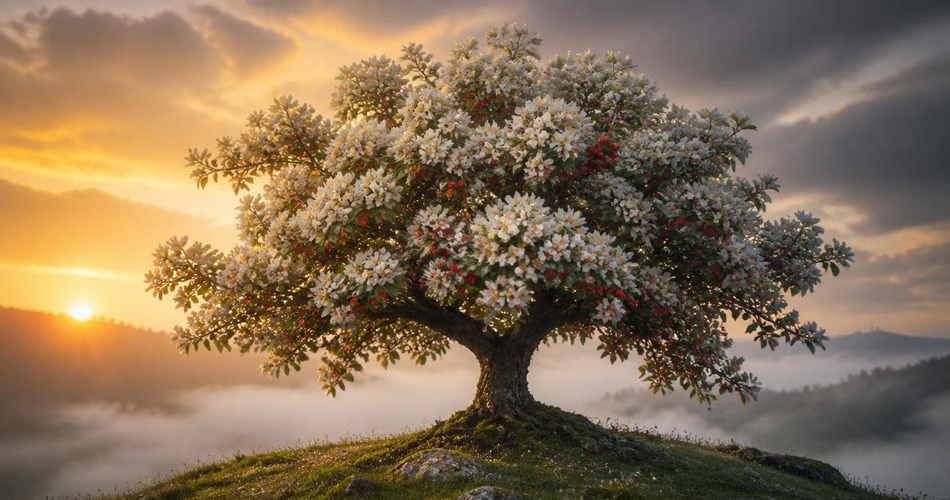
Hawthorn carries a dual symbolism of benevolence and danger. Its white or pink flowers, which appear in May, represent purity, love, and the arrival of summer. The tree’s sharp thorns symbolize protection — both physical and spiritual — and have been used to ward off evil spirits. In Celtic tradition, hawthorn is known as the “fairy tree” and marks the boundary between this world and the Otherworld. It also symbolizes hope, marriage, and the union of masculine and feminine principles, as seen in the maypole rituals associated with Beltane.
Positive and Negative Meanings of Hawthorn
Positive associations: Hawthorn is a symbol of protection, love, fertility, and renewal. Its blossoms are linked to May Day celebrations, representing new life and romantic union. In folklore, hawthorn branches were hung over doorways to keep evil spirits out, and the wood was believed to bring good luck and prosperity.
Negative meanings: Despite its protective qualities, hawthorn also carries a sinister reputation. Cutting down a hawthorn tree is said to bring misfortune, and bringing its blossoms indoors is considered bad luck — often associated with illness or death. The tree is closely tied to fairy lore, and sleeping under a hawthorn was believed to lead to enchantment or abduction by fairies.
History and Origins of Hawthorn Symbolism
The symbolic roots of hawthorn run deep in European history. In ancient Greece, hawthorn was used in wedding ceremonies and as a symbol of hope, but its thorns also featured in the crown of the crucified Christ in Christian tradition, giving it a dual nature. The Celts regarded the hawthorn as one of the most sacred trees, tied to the fairy realm and used in Beltane fires. During the Middle Ages, hawthorn hedges were planted as natural barriers around farms and sacred sites, reinforcing its meaning of boundary and protection. The phrase “to go a-Maying” originally involved gathering hawthorn branches, linking the tree to spring fertility rites that predate Christianity.
Hawthorn Symbolism in Different Cultures
In Celtic culture, the hawthorn is the fairy tree, often found at the center of a ring fort or as a lone tree in a field. It was believed to host gatherings of the sidhe (fairies), and disturbing it could bring curses. The tree was also central to Beltane celebrations, where a hawthorn branch served as the maypole. In Greek mythology, hawthorn was associated with the god of marriage, Hymen, and its flowers were used in wedding crowns. The Romans also saw it as a symbol of protection and placed branches over cradles. In Christian symbolism, the hawthorn is linked to the Crown of Thorns, representing suffering and sacrifice, while its white blossoms symbolize the purity of the Virgin Mary. In Chinese culture, hawthorn (the fruit) is used in traditional medicine and symbolizes health and harmony.
Spiritual Meaning of Hawthorn
Spiritually, hawthorn is considered a gateway plant that opens the heart and the senses to the spiritual realm. It is used in meditation to connect with the energies of nature and the fairy world. Many believe that hawthorn can help release emotional pain and foster a sense of protection during spiritual journeys. In Wiccan and neo-pagan practices, the tree is honored as a source of grounding and boundary-setting, allowing practitioners to create sacred space. Its association with the month of May makes it a symbol of transition and the blossoming of new spiritual insights.
Hawthorn in Myths and Folklore
No tree in European folklore is more closely tied to the fairy realm than the hawthorn. Lone hawthorn trees — especially those growing in hedgerows — are often called “fairy bushes” and are left undisturbed by farmers out of fear of retaliation. In Irish myth, the síogaí live beneath such trees, and anyone who cuts one down may be cursed with bad luck or illness. The tree also appears in the legend of the Holy Thorn of Glastonbury, which — according to tradition — sprang from the staff of Joseph of Arimathea and blooms twice a year, at Christmas and Easter. This story links hawthorn to rebirth and the Christian miracle, blending pagan and Christian symbolism.
Hawthorn in Dreams
Dreaming of a hawthorn tree often reflects a time of transition, love, or spiritual encounter. The sharp thorns may indicate a need for protection or caution in a situation, while the blossoms suggest new beginnings and romantic prospects. A withered hawthorn in a dream can point to lost love or missed opportunities. Because of the tree’s fairy associations, dreaming of a hawthorn may also indicate contact with the unconscious or the hidden realms of the psyche.
Common Dream Scenarios
- Seeing hawthorn in full bloom: Represents happiness, a joyful union, or the fulfillment of a wish. It may also signal a romantic period ahead.
- Being pricked by a hawthorn thorn: Warns of betrayal, hidden dangers, or the need to be more cautious with someone close.
- Cutting down a hawthorn tree: Suggests you are about to break a long-standing tradition or make an irreversible change. In folklore, this act brings bad luck, so the dream may urge reconsideration.
- Walking through a hawthorn hedge: Indicates you are passing through a difficult boundary or entering a new phase of life. It symbolizes the transition from one emotional or spiritual state to another.
- Wearing a hawthorn crown or garland: Points to marriage, partnership, or a commitment ceremony. It reflects purity of intention and protective love.
Hawthorn in Superstitions and Omens
- Bringing hawthorn flowers indoors: Widespread belief that this brings death or serious illness into the house. This superstition may arise from the scent of the blossoms, which is often compared to the smell of decay.
- May Day hawthorn gathering: In many parts of Britain, gathering hawthorn on May Day was considered lucky and protective, but only if done before sunrise and without harming the tree.
- Lone hawthorn trees in fields: Farmers traditionally avoid plowing near them, as they are believed to be fairy meeting places. Removing one is thought to cause a curse on the land.
- Hawthorn as a threshold guardian: Planting a hawthorn at the entrance of a home is said to keep witches, evil spirits, and bad luck away—a practice dating back to ancient Rome.
- Hawthorn and lightning: The tree is believed to attract lightning, so standing under one during a storm is considered dangerous both physically and superstitiously.
Hawthorn Tattoo Meaning
Hawthorn tattoos are chosen for their protective symbolism and connection to nature. A design featuring the tree’s white flowers often represents purity and a love that is both romantic and spiritual. A hawthorn branch with thorns may symbolize resilience or a difficult but necessary boundary in one’s life. In Celtic-inspired tattoos, the hawthorn is a sign of connection to ancestry and the fairy world, making it popular among those who follow pagan or nature-based spiritual paths. The red hawthorn berry (haw) is also used in tattoos as a symbol of health, vitality, and the cycle of seasons.
Meanings of Different Hawthorn Types and Colors
The common hawthorn (Crataegus monogyna) typically has white blossoms and red berries. White flowers represent innocence, love, and new beginnings. Pink-flowering varieties (such as Crataegus laevigata ‘Paul’s Scarlet’) add a layer of passion and romance to the symbolism. The deep red of the berries — the “haws” — is associated with life force, vitality, and the blood-red connection to the heart (hawthorn is also a well-known herbal remedy for heart health). The double-flowered forms are often linked to abundance and the richness of May celebrations. In heraldry and folk art, a hawthorn sprig with thorns and flowers is a symbol of vigilance and hope.
Frequently Asked Questions About Hawthorn
Q: What does a hawthorn tree symbolize?
A: Hawthorn symbolizes protection, fertility, love, and the boundary between the physical world and the spiritual realm. It is also associated with hope and new beginnings due to its May blossoms.
Q: Is hawthorn good or bad luck?
A: It is both. Hawthorn branches are considered protective and lucky when used as a charm, but bringing its blossoms indoors is widely regarded as bad luck — often linked to illness or death in European folklore.
Q: Why is hawthorn associated with fairies?A: In Celtic and British folklore, lone hawthorns are believed to be fairy trees, serving as meeting places for the sidhe. Disturbing them risks incurring the wrath of the fairy folk, leading to misfortune or enchantment.
Q: What does dreaming of hawthorn mean?
A: Dreaming of hawthorn typically indicates a time of transition, romantic possibility, or the need for protection. The specific details — blossoms, thorns, or the tree itself — affect the precise interpretation.
Q: Can hawthorn be used in wedding symbolism?
A: Yes, hawthorn has a long history in marriage rites. In ancient Greece, its flowers were used in wedding crowns, and the maypole — traditionally made of hawthorn — is a central symbol of May Day festivities celebrating union and fertility.
Related Symbols
- Maypole
- Beltane
- Thorns (crown of thorns)
- Rowan (also protective, associated with fairies)
- White flowers (purity, love)
- Blackthorn (winter counterpart, more ominous symbolism)
- Fairy tree