Briefly
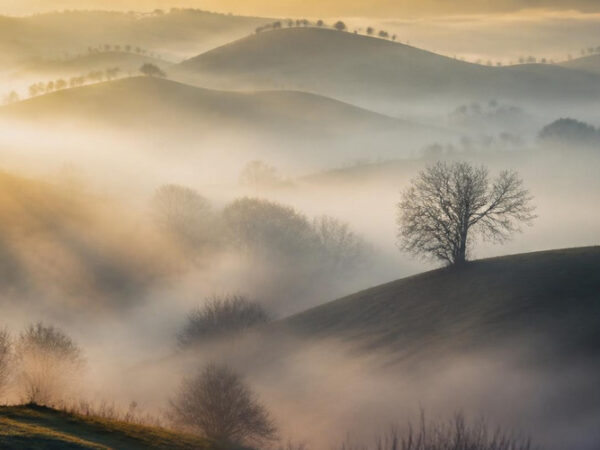
Haze is an atmospheric phenomenon that reduces visibility, often caused by fine particles of dust, smoke, or moisture suspended in the air. Symbolically, haze represents obscurity, uncertainty, and the blurring of boundaries between the visible and the hidden. It can evoke feelings of mystery, ambiguity, and transition, suggesting that clarity is temporarily suspended. In many contexts, haze carries both positive connotations of gentle concealment and negative associations with confusion or danger.
What Does Haze Symbolize?
Haze primarily symbolizes obscurity and the veil between what is known and unknown. It suggests a state of partial visibility, where outlines are softened and details are indistinct. This can represent uncertainty in decision-making, the fog of memory, or the ambiguity of future events. Haze also embodies transition—a liminal space between clarity and blindness, day and night, or reality and imagination.
In a broader sense, haze can symbolize mystery and the allure of the unseen. It invites contemplation and introspection, as the obscured view forces the observer to rely on other senses or intuition. At the same time, haze may signify pollution or environmental degradation, linking it to themes of human impact on nature and the loss of pristine clarity.
Positive and Negative Meanings
Positive associations: Haze can be seen as a gentle filter that softens harsh realities, creating a dreamlike or romantic atmosphere. In photography and art, haze adds depth and mood, evoking nostalgia or tranquility. Spiritually, it may represent the mystery of the divine, where truth is not immediately apparent but requires patient seeking.
Negative meanings: Haze often signifies confusion, disorientation, and lack of clarity. It can symbolize deception—whether self-deception or being misled by others—as well as pollution and environmental harm. In practical terms, haze reduces visibility and can pose hazards in travel or navigation, linking it to danger and uncertainty.
History and Origins of the Symbolism
The symbolic use of haze dates back to ancient times, where atmospheric phenomena were often imbued with spiritual or mythological meaning. In many cultures, fog, mist, and haze were seen as thresholds between worlds—places where gods, spirits, or ancestors might appear. The word “haze” itself may derive from Old English hasu, meaning gray or ashen, reflecting its visual quality.
In Mesoamerican mythology, the term tlahuelpuchi in Nahuatl can mean “haze” or “glowing haze,” and is associated with a mythological entity—a type of witch or shape-shifter. This connection highlights the perception of haze as a supernatural phenomenon, linked to transformation and hidden power. The ambiguity of haze made it a natural symbol for the mysterious and the liminal in pre-Columbian belief systems.
During the Romantic era in Europe, haze and mist became popular motifs in art and literature, representing the sublime—a blend of awe, beauty, and terror. Painters like J.M.W. Turner used atmospheric haze to evoke emotion and the vastness of nature, while poets such as John Keats employed misty imagery to convey melancholy and the transient nature of life.
Symbolism in Different Cultures
In Japanese culture, haze (kasumi) is often associated with spring and the transient beauty of cherry blossoms. It appears in traditional poetry and art as a symbol of impermanence and gentle melancholy. The hazy atmosphere is seen as a natural veil that enhances the aesthetic of mono no aware—the bittersweet awareness of the passing of things.
In Chinese philosophy, haze can be linked to the concept of qi (vital energy) and the idea that the world is composed of subtle energies that are not always visible. Hazy landscapes in Chinese ink painting represent the harmony between heaven and earth, where the indistinct suggests the infinite and the spiritual.
In European folklore, haze and mist were often seen as portals to the Otherworld. In Celtic mythology, a bank of mist might conceal the entrance to the realm of the sidhe (fairy folk). Travelers who entered such haze could find themselves in a different time or place, symbolizing the boundary between ordinary reality and the supernatural.
The Nahuatl association of haze with the tlahuelpuchi—a figure that can transform into an animal or a ball of fire—underscores the idea of haze as a cover for malevolent or transformative forces. This reflects a broader cross-cultural theme: haze as a medium through which change, danger, or magic can occur.
Spiritual Meaning
Spiritually, haze represents the veil between the material and the spiritual worlds. It suggests that divine truths are not always clear and require faith or inner vision to perceive. In meditation and mindfulness practices, haze can symbolize the state of being between waking and dreaming, where insights may arise from the subconscious.
Some traditions view haze as a purifying or transitional element—like the smoke from incense that carries prayers upward. It can also represent the cloud of unknowing, a concept in Christian mysticism where the seeker embraces the darkness of not-knowing as a path to deeper union with God. Haze thus becomes a symbol of spiritual humility and the acceptance of mystery.
In Myths and Folklore
In Mesoamerican mythology, the tlahuelpuchi is a type of witch often associated with haze. The name itself can translate to “glowing haze” or “haze of the south.” These beings were believed to transform into animals or balls of fire and to travel through the air, using haze as a cover for their activities. This myth links haze to transformation, danger, and the supernatural.
In Norse mythology, mist and haze are associated with Niflheim, the realm of fog and cold, which is one of the nine worlds. Niflheim represents primordial darkness and obscurity, the source of mist that veils the world. Haze here symbolizes the unknown and the chaotic forces that precede creation.
In Celtic folklore, a sudden haze or mist might indicate the presence of fairies or the approach of a supernatural event. It was considered both protective and treacherous—offering concealment from enemies but also leading travelers astray. This duality reflects the ambiguous nature of haze as both a blessing and a curse.
In Dreams
Dreaming of haze often reflects a state of uncertainty or confusion in waking life. The dreamer may feel lost, unable to see a clear path forward, or grappling with ambiguous emotions. Haze in dreams can also indicate that important information is being hidden or that the dreamer is avoiding a difficult truth.
Alternatively, a hazy dreamscape might suggest a need for introspection. The haze could represent the subconscious mind, where thoughts and memories are not fully formed. It may encourage the dreamer to explore their inner world and trust their intuition rather than relying solely on logic.
Common Dream Scenarios
- Walking through haze: Represents navigating a period of uncertainty or transition in life. The dreamer may be seeking clarity or a sense of direction.
- Haze lifting: Symbolizes the resolution of confusion or the emergence of truth after a period of doubt. It can be a positive sign of insight or revelation.
- Being lost in haze: Indicates feelings of being overwhelmed or unable to make decisions. It may reflect anxiety about the future or a lack of control.
- Haze surrounding a person or object: Suggests that something is being concealed or not fully understood. It might point to hidden motives or secrets.
- Haze with a sense of peace: Can represent a meditative state or a desire to escape from harsh realities. It may indicate a need for rest and retreat.
In Superstitions and Omens
In some folk traditions, a sudden haze or mist was considered an omen of change—either good or bad depending on the context. For example, a haze rolling in from the sea might herald a storm or a shift in fortune. In agricultural societies, a lingering haze could be seen as a sign of poor air quality or impending drought, linking it to practical concerns about harvest and health.
In maritime superstitions, haze was often viewed with caution, as it could obscure hazards or lead ships astray. Sailors might interpret a haze as the breath of sea spirits or a warning from the ocean. Conversely, a light haze at dawn might be seen as a blessing, softening the sun’s rays and promising fair weather.
In Art and Literature
Haze appears prominently in the works of the Romantic painter J.M.W. Turner, who used atmospheric effects to convey emotion and the sublime. Paintings such as The Fighting Temeraire (1839) employ a hazy, golden light to evoke nostalgia and the passage of time, blurring the lines between the real and the ideal. Turner’s use of haze became a signature technique for expressing the transient and the spiritual.
In literature, haze is a recurring motif in the poetry of John Keats, particularly in his odes. In Ode to a Nightingale, the poet describes a “drowsy numbness” and a “haze” that separates him from the world, symbolizing the longing for escape from pain and the desire for transcendence. The haze here represents both the beauty and the melancholy of the imagination.
In modern fiction, haze often sets the mood for mystery or suspense. For instance, in Stephen King’s novel The Mist (1980), a supernatural mist conceals deadly creatures, turning a natural phenomenon into a symbol of fear and the unknown. The haze becomes a barrier between safety and danger, reflecting the characters’ psychological isolation.
Frequently Asked Questions
Q: What does haze symbolize in a spiritual context?
A: In spirituality, haze symbolizes the veil between the material and spiritual realms, representing mystery, the need for faith, and the acceptance of not-knowing as a path to deeper understanding.
Q: Is haze always a negative symbol?
A: No, haze can have positive associations such as romance, mystery, tranquility, and the softening of harsh realities. Its meaning depends on context and cultural interpretation.
Q: What is the connection between haze and the tlahuelpuchi?
A: In Nahuatl, the word tlahuelpuchi can mean “haze” and refers to a mythological witch or shape-shifter. This links haze to transformation, concealment, and supernatural power in Mesoamerican belief.
Q: How is haze used in art?
A: Artists like J.M.W. Turner used haze to create mood, depth, and a sense of the sublime. Haze can evoke nostalgia, mystery, or the passage of time in visual art.
Q: What does it mean to dream of haze?
A: Dreaming of haze often reflects confusion, uncertainty, or a need for introspection. It may indicate that the dreamer is navigating a transitional period or avoiding a difficult truth.
Related Symbols
- Fog – A denser form of atmospheric obscurity, often symbolizing confusion or the unknown.
- Mist – Similar to haze but usually associated with moisture; represents mystery and the boundary between worlds.
- Smoke – Often linked to transformation, purification, or concealment, as in incense or smoke signals.
- Clouds – Can symbolize obscurity, transience, or divine presence, depending on context.
- Twilight – The time of day when haze is common; represents transition, ambiguity, and the liminal.