Briefly
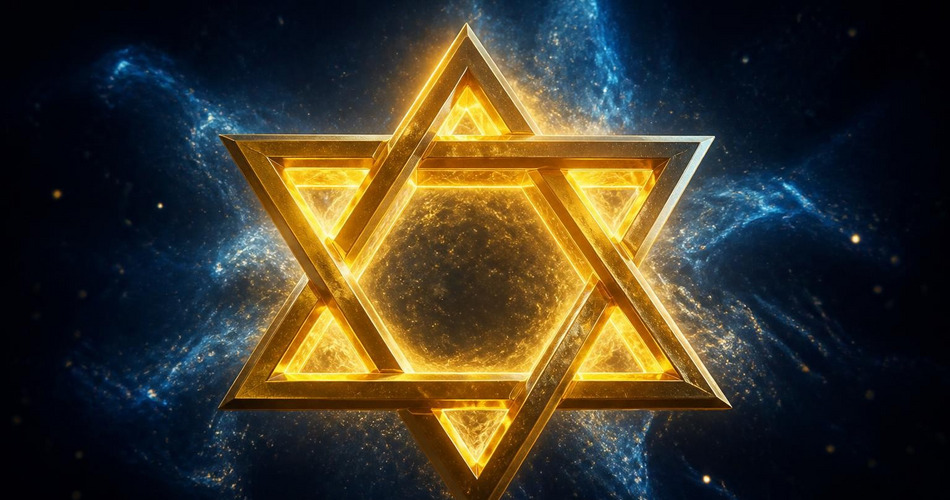
The hexagram, a six-pointed star formed by two interlocking equilateral triangles, is a powerful geometric symbol found across multiple cultures and spiritual traditions. It most commonly represents the union of opposites — such as fire and water, male and female, or heaven and earth — and serves as an emblem of balance, protection, and divine harmony. The symbol is central to Judaism as the Star of David, appears in Islamic mysticism as the Seal of Solomon, and in Hinduism as the Shatkona, where it embodies the integration of Shiva and Shakti. Its enduring presence in religion, alchemy, and modern culture underscores its universal appeal as a sign of unity and cosmic order.
What Does the Hexagram Symbolize?
The hexagram is fundamentally a symbol of integration. The upward-pointing triangle often represents the masculine, the spiritual, or fire; the downward-pointing triangle represents the feminine, the material, or water. When interlocked, they indicate a perfect balance and interdependence of these forces. Beyond polarity, the hexagram symbolizes divine protection, the connection between the human and the divine, and the harmonious union of the earthly and the celestial. In many traditions, it is also a talisman for warding off evil and attracting positive energy.
Positive and Negative Meanings
Positive associations: The hexagram is overwhelmingly seen as a positive symbol. It stands for harmony, unity, and the reconciliation of opposites. In spiritual contexts, it represents the integration of body, mind, and spirit, and serves as a protective emblem that brings balance and stability. In Judaism, the Star of David is a cherished sign of Jewish identity and faith, while in Hinduism, the Shatkona denotes the creative union of masculine and feminine principles.
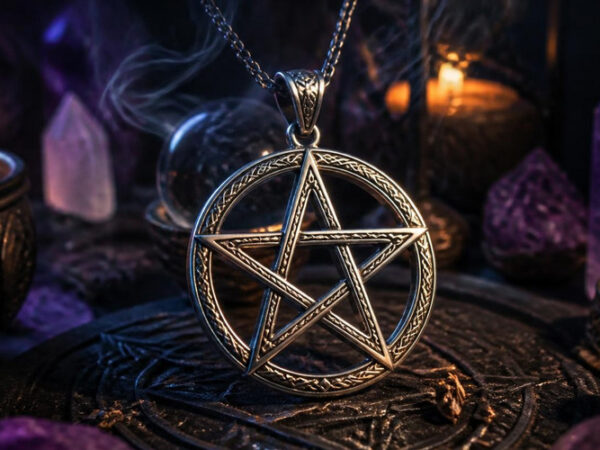
Negative meanings: Because the hexagram has been adopted by some occult and esoteric groups, it has occasionally been misunderstood or associated with negative forces, particularly when inverted. However, the upright hexagram itself carries no inherently negative meaning in most traditions. Its use in certain magical practices does not detract from its widespread positive symbolism, though some may misinterpret it as a symbol of sorcery or devil worship — a confusion often stemming from its resemblance to the inverted pentagram.
History and Origins of Hexagram Symbolism
The hexagram is an ancient symbol with roots dating back thousands of years. One of the earliest known appearances is in Indian art, where it is found in temples and manuscripts as the Shatkona, a symbol of the Hindu god Vishnu or the union of Shiva and Shakti. It also appears in ancient Chinese texts and on Jewish artifacts from the Second Temple period. The symbol gained prominence in Judaism during the Middle Ages, when it was known as the “Shield of David” (Magen David), though it only became widely adopted as a Jewish symbol in the 19th century. In Islamic tradition, the hexagram is called the Seal of Solomon, believed to have been a signet ring that granted King Solomon power over demons and animals. Throughout history, alchemists used the hexagram to represent the union of the four classical elements (fire, water, air, earth) and the quintessence.
Hexagram Symbolism in Different Cultures
In Judaism, the hexagram — the Star of David — is the most recognizable symbol of Jewish identity. It appears on the flag of Israel, on synagogues, and in Jewish ceremonial objects. It is said to represent God’s protection over Israel, akin to the shield of King David. While its exact origins are debated, it became a universal emblem of Judaism in the 19th century, partly as a counterpart to the Christian cross.
In Islam, the hexagram is known as the Seal of Solomon (Khatam Sulayman). It is used in Islamic art and architecture, often as a decorative motif, and is associated with wisdom, authority, and divine assistance. The seal is said to have been engraved on a ring that gave Solomon control over supernatural beings, symbolizing his God-given dominion.
In Hinduism, the hexagram appears as the Shatkona, a symbol of the union of Shiva (the upward triangle) and Shakti (the downward triangle). It represents the creative force of the universe and the balance between the male and female aspects of divinity. It is often used in yantras and in rituals to invoke harmony and prosperity.
In Western esotericism and alchemy, the hexagram is a key symbol representing the union of opposites (solve et coagula), the integration of the four elements, and the philosopher’s stone. It is used in ceremonial magic for protection, invoking spirits, and creating sacred space.
Spiritual Meaning of the Hexagram
Spiritually, the hexagram signifies the interconnection of all aspects of existence. It represents the descent of spirit into matter and the ascent of matter back to spirit, creating a continuous flow of energy. This symbol encourages balance between the physical and spiritual worlds, reminding the seeker that true enlightenment comes from integrating, not separating, opposing forces. In meditation, the hexagram is used as a focus for achieving equilibrium and accessing higher states of consciousness. Its six points are sometimes linked to the six days of creation in Judaism, with the center representing the Sabbath — a point of rest and unity.
Hexagram in Myths and Folklore
The most prominent mythological association is the Seal of Solomon. According to Jewish and Islamic folklore, King Solomon possessed a magical signet ring engraved with a hexagram, which gave him the power to command demons, speak with animals, and control the wind. This story appears in the Talmud, the Quran, and later in the “Testament of Solomon,” a pseudepigraphical work. The seal became a symbol of wisdom, authority, and divine protection. In European folklore, the hexagram was sometimes used as a protective symbol against witches and evil spirits, often inscribed on houses or amulets.
In Indian mythology, the Shatkona is associated with the god Vishnu and is often depicted in yantras used for worship and meditation. It is also found in Buddhist and Jain art, representing the cosmic harmony and the meeting of the human and divine.
Hexagram in Dreams
Dreaming of a hexagram is not extremely common, but when it appears, it often signals a need for balance or integration in the dreamer’s life. The symbol may represent the reconciliation of conflicting aspects of the personality — such as logic and emotion, or ambition and contentment. It can also indicate divine guidance or protection, especially if the dreamer has spiritual inclinations. The context and colors of the hexagram in the dream can provide further insight.
Common Dream Scenarios
- Seeing a bright golden hexagram: Often interpreted as a sign of spiritual awakening, blessing, or a period of harmony ahead.
- A broken or incomplete hexagram: May suggest a lack of balance or unresolved conflict in relationships or within oneself.
- Drawing or creating a hexagram: Indicates a conscious effort to bring order and unity to one’s life, or a need to establish boundaries.
- A hexagram spinning or moving: Could represent the dynamic interplay of forces in your life, or the need to adapt to change while maintaining equilibrium.
Hexagram in Superstitions and Omens
In various folk traditions, the hexagram is considered a powerful protective omen. It is often drawn over doorways or on amulets to ward off evil, much like the hamsa or the evil eye charm. Some believe that wearing a hexagram talisman brings good luck, financial stability, or spiritual insight. Conversely, an inverted hexagram — though rare — may be seen as a symbol of imbalance or negative energies in certain superstitious interpretations. Overall, the hexagram is overwhelmingly viewed as a favorable sign in folk belief.
Hexagram in Art and Literature
The hexagram appears in a wide range of artistic and literary works. In religious art, it is featured in medieval Jewish manuscripts, Islamic geometric patterns, and Hindu yantras. The flag of Israel, designed in 1948, prominently displays the Star of David in blue on a white background, making the hexagram a national symbol. In literature, the symbol appears in works such as “The Lesser Key of Solomon” (a 17th-century grimoire) and in Umberto Eco’s novel “Foucault’s Pendulum,” where it is discussed in the context of occult symbolism. In film and television, the hexagram is often used to denote magic or mystery, as seen in movies like “The Exorcist” (where it appears on amulets) and in the television series “Supernatural,” where it is used in protective rituals. These uses highlight its enduring role as a symbol of hidden knowledge and supernatural power.
Hexagram Tattoo Meaning
Hexagram tattoos are popular for those who wish to express spiritual balance, cultural heritage, or personal transformation. For many, a Star of David tattoo is a statement of Jewish pride and faith. Others choose the hexagram for its esoteric meanings — representing the union of opposites, protection, or the integration of mind, body, and spirit. The design can be simple black lines or elaborate with colors and additional elements like flowers, moons, or runes. In recent years, the hexagram has also been adopted by those interested in pagan or Wiccan paths as a symbol of harmony and protection. Placement is often on the chest, wrist, or back, where it can serve as a personal talisman.
Meanings of Different Types, Colors, or Variations
- Interlocking gold triangles: Often represents divine light, honor, and spiritual wealth; common in religious contexts.
- Blue hexagram: Associated with the sky, truth, and protection; the Star of David on the Israeli flag is blue.
- Red hexagram: Symbolizes passion, life force, and the fire element; may indicate creative energy or transformation.
- Hexagram with a dot in the center: Represents the source of creation, the primordial point, or the unity of all dimensions.
- Inverted hexagram: Rarely used, but when it appears, it can signify a reversed flow of energy or a focus on the material world; sometimes used in occult contexts.
Frequently Asked Questions
Q: What is the difference between a hexagram and the Star of David?
A: The Star of David is a specific cultural and religious name for the hexagram as used in Judaism. While all Stars of David are hexagrams, not every hexagram is called a Star of David; the hexagram is the geometric figure itself.
Q: Is the hexagram the same as the Seal of Solomon?
A: The Seal of Solomon is another term for the hexagram, particularly in Islamic and occult traditions. It often carries additional meanings related to King Solomon’s legendary wisdom and power.
Q: Does the hexagram have any connection to the devil?
A: No, the upright hexagram is not a symbol of Satanism. This confusion sometimes arises from its use in magic and its resemblance to the inverted pentagram, which is associated with certain occult groups.
Q: What does the hexagram mean in alchemy?
A: In alchemy, the hexagram represents the union of the four elements (fire, water, air, earth) and the philosopher’s stone, symbolizing perfection and the integration of opposites.
Related Symbols
- Pentagram – A five-pointed star symbolizing the five elements and magical protection; often confused with the hexagram.
- Star of David – The Jewish name for the hexagram, a national and religious emblem.
- Seal of Solomon – The Islamic and esoteric version of the hexagram, associated with wisdom and dominion over spirits.
- Shatkona – The Hindu hexagram representing the union of Shiva and Shakti.
- Octagram – An eight-pointed star symbolizing regeneration and celestial harmony in various traditions.
- Hexafoil – A six-petaled rosette symbol in architecture and folk magic, related to the hexagram in protective functions.