
Briefly
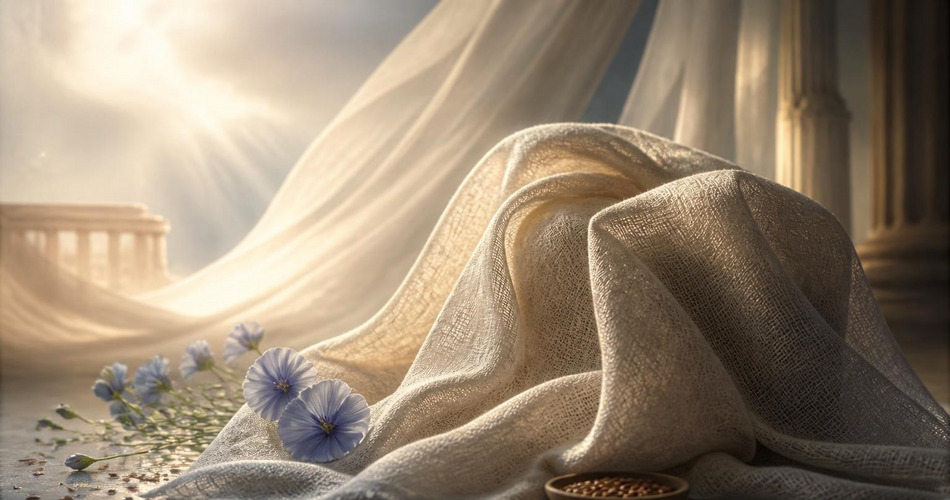
Linen, made from flax fibers, is one of humanity’s oldest textiles, valued for its coolness, strength, and natural luster. Its symbolism is deeply tied to purity, simplicity, and durability. Across cultures and religions, linen represents righteousness, cleanliness, and a connection to the earth. It is also associated with death and rebirth through its use in burial shrouds, as well as with luxury and status when woven into fine garments.
What Does Linen Symbolize?
Linen primarily symbolizes purity, simplicity, and naturalness. Its bright white color and smooth texture evoke cleanliness and freshness, making it a fabric often chosen for religious vestments, altar cloths, and bridal wear. Linen is also associated with strength and durability due to the long fibers of flax, which are stronger than cotton. Through its use in Egyptian mummy wrappings, linen carries meanings of rebirth and eternity. In everyday life, it symbolizes a return to basics, eco-consciousness, and authenticity.
Positive and Negative Meanings
Positive associations: Linen is valued for its cooling effect, breathability, and natural antibacterial properties, making it a symbol of comfort and health. It represents sustainability and a connection to nature, as flax grows easily without heavy chemical inputs. In many cultures, wearing linen signifies modesty, righteousness, and spiritual purity, especially in religious contexts where it is prescribed for priests and sacred spaces.
Negative meanings: Linen wrinkles easily and requires careful ironing, which can symbolize the constant effort needed to maintain perfection or virtue. Its association with austerity and simplicity may also be interpreted as plainness or lack of ornamentation. Historically, coarse linen was worn by the poor and in monastic settings, reinforcing ideas of humility and self-denial that might be viewed as oppressive.
History and Origins of Linen Symbolism
Linen cultivation dates back to ancient Egypt, where flax was grown along the Nile and linen was used for clothing, fishing nets, and burial shrouds. Egyptians prized linen for its whiteness and purity, often reserving it for priests and the pharaoh. The earliest linen found in Swiss lake dwellings dates to the Neolithic period. In the Bible, linen appears frequently as a fabric of righteousness – the High Priest’s vestments were made of fine linen, and the Book of Revelation describes the bride of Christ dressed in fine linen. The word ‘linen’ itself comes from the Latin ‘linum,’ related to ‘line’ and ‘linseed.’ Its historical association with cleanliness and ritual purity shaped its enduring symbolism.
Linen Symbolism in Different Cultures
In ancient Egypt, linen was considered more important than wool for ritual purposes; it was used to wrap mummies to ensure safe passage to the afterlife, symbolizing rebirth. In Judaism, the Torah commands that priests wear linen garments, and the garment of the High Priest (ephod) was made of linen, symbolizing holiness. Christianity adopted linen for altar cloths and vestments, representing the purity of Christ. In Greece and Rome, linen was associated with lightness and comfort, worn in hot climates. In India, though less common, fine linen was a trade good associated with luxury. In Irish folklore, flax was considered a lucky plant; keeping flax seeds in the home brought prosperity. Overall, linen consistently symbolizes cleanliness, spiritual integrity, and a humble yet strong character.
Spiritual Meaning of Linen
Spiritually, linen represents purity of heart and righteousness. In many religious traditions, only linen garments are permissible for sacred ceremonies because they are believed to be free from animal origin and thus less ‘polluting.’ The white color of natural linen is often equated with divine light, truth, and moral uprightness. Meditating while wearing linen or sleeping on linen sheets is thought to enhance clarity and spiritual attunement. The fiber’s natural origin and biodegradable properties also align with concepts of returning to the earth, symbolizing the cycle of life, death, and rebirth.
Linen in Myths and Folklore
While linen does not dominate mythologies as much as gold or iron, it appears in several tales. In Greek mythology, the goddess Athena is said to have taught the art of weaving flax to women, making linen a gift of civilization and skill. In Eastern European folklore, flax is associated with luck and protection. In some Baltic traditions, linen sheets were used to cover the dead to guide the soul safely. There is also a widespread superstition that carrying a piece of linen cloth on a journey brings protection against accidents. In Irish legend, the sight of a flax field in bloom was considered a blessing, promising a year of plenty.
Linen in Dreams
Dreaming of linen often reflects themes of cleanliness, order, and renewal. Fresh white linen suggests a fresh start, integrity, or a desire for spiritual purity. Torn or soiled linen may indicate guilt, shame, or unresolved emotions. Wearing linen in a dream can signify confidence in one’s moral stature. Linen sheets or clothing ironed perfectly may represent the need for perfection or control, while rumpled linen can signify relaxation and comfort. Dreams of washing linen point to the process of cleansing guilt or starting over.
Linen in Superstitions and Omens
- Spilling wine on linen was considered a bad omen, as wine stains are difficult to remove from the absorbent fabric.
- A torn linen cloth in a wedding dress was believed to bring marital strife.
- In some European traditions, sleeping on linen sheets on St. John’s Eve was thought to reveal one’s future spouse in a dream.
- Giving linen as a gift was believed to protect the recipient from evil spirits, especially when the linen was handwoven.
- Burning flax stems was thought to ward off witches and evil influences during harvest rites.
These superstitions underscore linen’s role as a protective and purifying material in folk belief.
Linen in Art and Literature
Linen appears in numerous literary and artistic works as a symbol of virtue and purity. In the Bible, Proverbs 31:22 describes a virtuous woman who ‘makes coverings for herself; her clothing is fine linen and purple,’ linking linen with righteousness and nobility. In Revelation 19:8, the bride of Christ is clothed in fine linen, representing the righteous acts of the saints. In Shakespeare’s ‘The Merchant of Venice’, Portia’s description of a suitor includes the line ‘His skin is like linen, white and fine.’ In visual art, Renaissance painters often dressed saints and the Virgin Mary in white linen robes to symbolize their purity. The Egyptian Book of the Dead depicts the deceased wearing white linen as they approach the scales of justice. In modern literature, linen frequently appears as a marker of simplicity and honest living, such as in Louisa May Alcott’s ‘Little Women’ where the March family’s simple linen garments reflect their humble but noble life.
Frequently Asked Questions
Q: What does wearing linen symbolize?
A: Wearing linen symbolizes purity, humility, and connection to nature. It is often chosen for religious and spiritual practices due to its natural and simple qualities.
Q: Why is linen used in burial shrouds?
A: Linen’s association with purity and its natural, breathable fibers made it ideal for wrapping bodies in many cultures. In Egyptian tradition, linen mummy wrappings were believed to preserve the body for the afterlife.
Q: Is linen mentioned in the Bible?
A: Yes, linen is mentioned over 100 times in the Bible. It symbolizes righteousness, purity, and holiness, especially in the garments of priests and the description of the virtuous woman.
Q: What is the difference between linen and cotton symbolism?
A: Linen carries stronger connotations of purity, durability, and antiquity, while cotton symbolizes comfort and everyday practicality. Linen is often seen as more formal and sacred.
Related Symbols
- Flax – the plant from which linen is made, symbolizing fertility and transformation.
- Cotton – a softer fiber associated with comfort and simplicity.
- White – the dominant color of linen, representing purity and new beginnings.
- Wool – a contrasting fiber associated with warmth and animal sacrifice.
- Thread – the basic element of weaving, symbolizing life’s connections.