Briefly
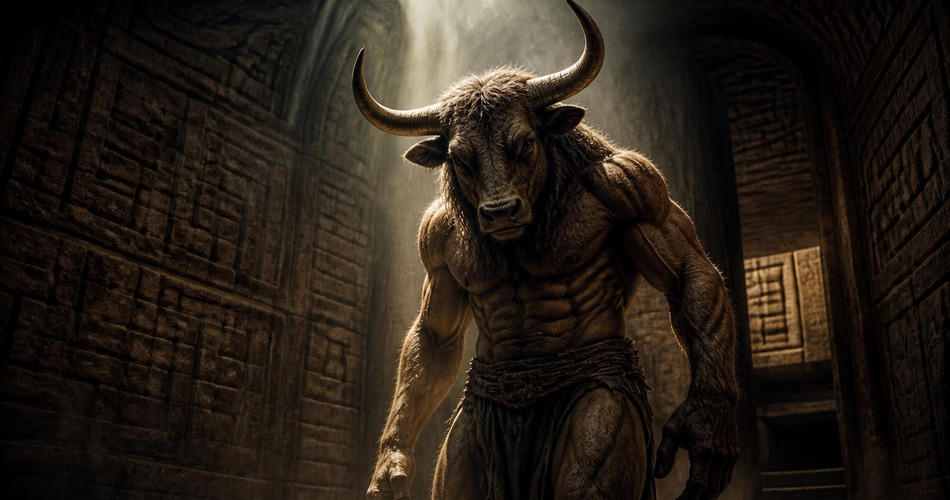
The Minotaur, a half-man, half-bull creature from Greek mythology, symbolizes the primal, instinctual forces within the human psyche and the consequences of unchecked desire. Its story, centered on the Labyrinth and the hero Theseus, represents a journey into the subconscious to confront one’s own inner monsters. The Minotaur embodies the tension between civilization and savagery, order and chaos. Its meaning often revolves around the struggle to overcome personal demons and achieve self-mastery.
What Does the Minotaur Symbolize?
The Minotaur is a powerful symbol with multiple layers of meaning. At its core, it represents the shadow self—the repressed, instinctual, and often violent aspects of human nature that society seeks to control. Born from Queen Pasiphaë’s unnatural union with a sacred bull, the Minotaur also embodies the consequences of transgression and the monstrous results of defying natural or divine laws. The Labyrinth, where the creature was confined, symbolizes the complex and confusing path one must navigate to confront and integrate these hidden parts of the self. The Minotaur’s death at the hands of Theseus signifies the triumph of reason, order, and courage over raw, untamed instinct.
The creature further symbolizes the destructive potential of power and the guilt that can arise from one’s origins or actions. In a broader sense, the Minotaur stands for any overwhelming, consuming obsession or fear that a person must face to find resolution. Its dual nature—human intellect combined with animal ferocity—highlights the constant internal battle between civilized behavior and primal urges.
Positive and Negative Meanings of the Minotaur
Positive associations: The Minotaur is not purely negative. It symbolizes the raw, untamed power and vitality that, when understood and channeled, can be a source of immense strength. Facing the Minotaur in myth mirrors the psychological process of confronting one’s deepest fears, leading to personal growth, resilience, and a stronger sense of self. The creature can also represent the hidden potential within the subconscious, the creative and instinctual energy that, when integrated, enriches the conscious personality.
Negative meanings: Primarily, the Minotaur represents the destructive, consuming nature of uncontrolled instincts, aggression, and base desires. It symbolizes the monstrous aspects of the human psyche that can lead to violence, obsession, and self-destruction when left unchecked. The creature is also a symbol of shame, isolation, and the penalties for unnatural acts or transgressions. Being trapped with the Minotaur in the Labyrinth illustrates feelings of being overwhelmed by inner turmoil, ignorance, or madness.
History and Origins of the Minotaur Symbolism
The Minotaur’s origins lie in ancient Greek myth, specifically the story of King Minos of Crete. According to the myth, Minos prayed to Poseidon for a sign to support his claim to the throne, and the god sent a magnificent white bull from the sea. Minos was supposed to sacrifice the bull in Poseidon’s honor, but he instead kept it, angering the god. As punishment, Poseidon caused Minos’s wife, Pasiphaë, to fall in love with the bull. She conceived and gave birth to the Minotaur—a creature with the body of a man and the head of a bull. King Minos, ashamed and fearing the creature, commissioned the architect Daedalus to build the Labyrinth, an inescapable maze, to contain the Minotaur.
The historical context of this myth is tied to the Minoan civilization (c. 2000–1400 BCE) centered on Crete. The Minoans held the bull in high esteem, engaging in bull-leaping rituals depicted in frescoes and art. The myth may reflect older, pre-Greek religious practices involving a bull cult or the ritual sacrifice of humans to appease a bull-headed deity. The story also serves as an origin tale for the Athenian tribute to Crete, explaining the power dynamic between the two regions. Over centuries, the Minotaur’s symbolism has evolved, becoming a rich allegory for inner conflict, the horrors of war, and the struggle for psychological wholeness, particularly through modern interpretations such as those by psychoanalysts like Carl Jung, who saw the Minotaur as an archetype of the shadow.
Minotaur Symbolism in Different Cultures
While the Minotaur is most famously a figure of Greek mythology, its symbolic essence appears in various forms across cultures. The concept of a hybrid creature, part human and part animal, is a universal motif representing the boundary between the civilized and the wild, the divine and the earthly. For instance, ancient Mesopotamian mythology features the lamassu, a protective deity with a human head, bull’s body, and bird’s wings, which guards thresholds and represents strength and protection rather than chaotic instinct.
In Indian mythology, the narasimha (half-man, half-lion) is an avatar of Vishnu that destroys a demon, symbolizing the triumph of good over evil and the divine power that protects order. Similarly, the Egyptian god Horus, with a falcon head, and the goddess Sekhmet, with a lioness head, represent divine power and kingship but are not cast as monsters to be vanquished. The Minotaur’s specific role as a hidden, dangerous entity that must be overcome is unique to the Greek narrative, yet it echoes in folklore around the world where heroes must enter dark places to defeat a beast or the beast within themselves. The Minotaur has also been interpreted in modern contexts as a symbol of the oppressed or the marginalized, and in feminist readings, as a tragic figure representing the monstrous offspring of patriarchal violence and unnatural desire.
Spiritual Meaning of the Minotaur
In a spiritual context, the Minotaur represents the shadow self—the part of the psyche that houses repressed fears, traumas, and instinctual drives. Spiritual traditions often see the journey through the Labyrinth as a metaphor for the path to self-realization or enlightenment. Confronting the Minotaur is not about destruction but about understanding and integrating these shadow aspects. This process leads to wholeness and spiritual maturity. The Minotaur can also symbolize the need for sacrifice—letting go of old, destructive patterns to make way for spiritual rebirth.
Many spiritual seekers view the Labyrinth as a tool for meditation and introspection, where the Minotaur represents the ultimate test of faith and inner strength. The creature’s containment in the maze suggests that our own inner monsters are often kept at bay by our own complex mental and emotional structures. Facing the Minotaur spiritually means accepting the darkness within as a necessary part of the self, not as an enemy to be annihilated, but as a force to be understood and transformed.
Minotaur in Myths and Folklore
The primary myth of the Minotaur is central to Greek mythology and unfolds as part of the hero cycle of Theseus. The story begins with King Minos of Crete, who, after offending Poseidon, is cursed with the birth of the Minotaur. To contain the monster, Daedalus builds the Labyrinth. As punishment for the death of his son Androgeus in Athens, Minos demands a tribute of seven young men and seven young women from Athens every nine years, to be thrown into the Labyrinth to be devoured by the Minotaur.
Theseus, son of King Aegeus of Athens, volunteers to be one of the tributes, with the intention of killing the Minotaur. Upon arriving in Crete, he meets Princess Ariadne, Minos’s daughter, who falls in love with him. She gives him a ball of thread—Ariadne’s thread—to help him navigate the Labyrinth and find his way back. Theseus enters the maze, finds the Minotaur, and kills it, using the thread to escape. He then flees Crete with Ariadne. This myth has been interpreted in countless ways: as a story of young love and betrayal, a political allegory for the subjugation of Athens by Crete, and a psychological drama of the hero’s confrontation with the monstrous aspects of his own psyche. The Minotaur itself appears in later folklore only rarely as a distinct figure, but its archetype appears in tales of man-eating monsters, hidden labyrinths, and the hero’s quest.
Minotaur in Dreams
Dreaming of a Minotaur often signals that the dreamer is facing a situation or an inner conflict that feels overwhelming and inescapable. The creature may represent a repressed fear, a difficult life challenge, or a temptation that the dreamer is battling. The Labyrinth setting of the dream symbolizes confusion, complexity, or a feeling of being trapped in a problem without a clear solution. The Minotaur in dreams usually appears during periods of intense stress, moral dilemma, or personal transformation.
From a Jungian perspective, the Minotaur is a potent manifestation of the shadow archetype, embodying qualities the dreamer has denied or rejected. These dreams often serve as a call to confront these hidden aspects rather than avoid them. While frightening, such dreams can be highly constructive, indicating that the dreamer has the potential to integrate their shadow and achieve greater psychological balance. The specific feelings and actions in the dream—whether one is hiding, fighting, or even understanding the creature—provide important clues to the dreamer’s waking life challenges.
Common Minotaur Dream Scenarios
- Being chased by a Minotaur: This suggests the dreamer is fleeing from a problem or fear they need to confront. It often indicates avoidance of a difficult issue.
- Killing a Minotaur: Represents successfully overcoming a major obstacle or inner demon. It can symbolize a triumph over fear, addiction, or a challenging period.
- Being the Minotaur: Points to the dreamer feeling monstrous or out of control, perhaps due to anger, aggression, or shame. It may also indicate untapped power and a need for self-acceptance.
- Lost in a Labyrinth with a Minotaur: Reflects a sense of confusion and powerlessness in a complex real-life situation. The dreamer feels trapped and unsure of how to proceed.
- A friendly or peaceful Minotaur: Suggests the dreamer is beginning to integrate their shadow self or is in the process of accepting their impulsive or untamed nature.
- Feeding the Minotaur: May indicate that the dreamer is indulging fears, feeding a negative habit, or giving power to destructive emotions.
Minotaur in Art and Literature
The Minotaur has been a potent figure in art and literature for centuries, often serving as a symbol of the darker aspects of human nature. In literature, the creature appears prominently in Dante Alighieri’s Inferno (c. 1308–1321), where it guards the Seventh Circle of Hell, representing the violent against others. Dante emphasizes its rage and animalistic nature. In modern literature, the Minotaur is a central metaphor in Jorge Luis Borges’s story The House of Asterion (1947), which retells the myth from the perspective of the Minotaur himself, portraying him as lonely and misunderstood, and the Labyrinth as his entire world. This story humanizes the monster and challenges the reader’s sympathies.
In visual art, the Minotaur was a frequent subject for the Spanish painter Pablo Picasso. He used the Minotaur as a symbol of violence, lust, and the artist’s own inner turmoil, particularly in his Minotauromachy (1935) etching, which shows a blind Minotaur being led by a girl with a candle, a powerful image of the struggle between brutality and innocence. The Minotaur’s image continues to appear in fantasy and horror genres, representing everything from a tragic monster to a pure embodiment of bestial violence.
Frequently Asked Questions
Q: What does the Minotaur represent in Greek mythology?
A: In Greek mythology, the Minotaur represents the result of unnatural desire and divine punishment. It symbolizes the monstrous consequences of defying the gods and the wild, untamed forces of nature and instinct that must be contained.
Q: Is the Minotaur a symbol of something positive?
A: Yes, while often seen as negative, the Minotaur can also symbolize raw, primal strength and the hidden potential of the subconscious. Overcoming it represents triumph over personal fears and inner demons.
Q: What does the Labyrinth symbolize in the Minotaur myth?
A: The Labyrinth symbolizes the complex, confusing, and often frightening journey into the subconscious mind. It represents the challenges one must face to confront and integrate their shadow self or to solve a seemingly intractable problem.
Q: How is the Minotaur used in modern dream interpretation?
A: In dream interpretation, the Minotaur represents a strong, often overwhelming, aspect of the dreamer’s own personality—the shadow self. Dreaming of it suggests a need to confront repressed fears, anger, or guilt.
Q: What is the Minotaur’s connection to the bull in ancient Minoan culture?
A: The myth likely has roots in Minoan civilization, which held the bull as a sacred symbol of power, fertility, and strength. The Minotaur may have originally been a Minoan bull-headed deity that was later demonized by the Greeks.
Related Symbols
- Labyrinth – The maze that contains the Minotaur; symbolizes a complex journey.
- Theseus – The hero who slays the Minotaur; represents reason, courage, and the conscious mind.
- Ariadne’s Thread – Represents guidance and the solution to a complex problem.
- Shadow Self (Archetype) – The psychological concept of the repressed aspects of the personality.
- Hybrid Creatures – Shared symbolism of dual nature across cultures.
- Bull – Represents strength, fertility, and untamed power.