Briefly
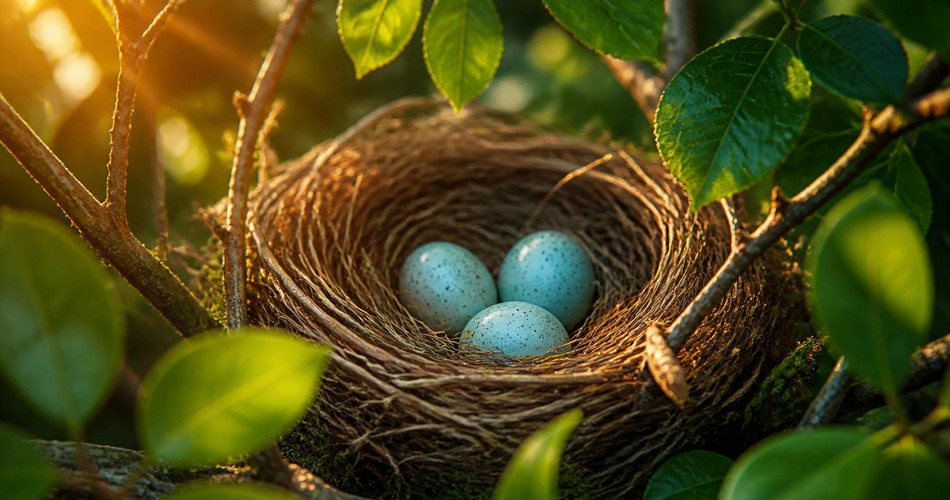
A nest is a structure built by birds and some other animals to house eggs and young, but its symbolic meaning extends far beyond biology. Universally, a nest represents home, safety, nurturing, and the cycle of life. It embodies the idea of a protected space where new life begins and grows, often symbolizing family bonds, maternal care, and the comfort of belonging. At the same time, nests can signify effort, construction, and the rewards of diligent work.
What Does Nest Symbolize?
The nest is one of the most potent symbols of home and sanctuary. It evokes feelings of warmth, security, and intimacy. Because nests are built to shelter eggs and hatchlings, they are closely tied to concepts of motherhood, fertility, and new beginnings. The act of building a nest also symbolizes patience, persistence, and the careful creation of a safe environment. In a broader sense, a nest can represent the foundation of a family or community, a place where individuals are nurtured and prepared to venture out into the world.
Positive and Negative Meanings
Positive associations: Nests are overwhelmingly positive symbols of protection, comfort, and domestic bliss. They represent the loving care of parents, the innocence of youth, and the promise of growth. A nest can also symbolize a fresh start, as in the phrase “empty nest” when children leave home, marking a new phase of life.
Negative meanings: On the darker side, a nest can imply entrapment or overprotection, where one is unwilling to leave a comfortable but limiting environment. An abandoned or destroyed nest symbolizes loss, failed hopes, or the end of a family cycle. In some contexts, a “nest” of negative things (e.g., a nest of vipers) suggests hidden danger or corruption.
History and Origins of Nest Symbolism
The nest has been a meaningful symbol since ancient times. Early humans observed birds building nests and associated this behavior with care for offspring and the changing seasons. In many prehistoric cultures, nests were seen as gifts from nature, providing eggs for food and feathers for tools. The symbolism of the nest as a sacred space for new life appears in early agricultural societies, where it was linked to fertility goddesses and the cycle of planting and harvest. Over centuries, the nest became a universal emblem of the home, appearing in proverbs, fables, and religious texts across the world.
Nest Symbolism in Different Cultures
In Chinese culture, the nest symbolizes family unity and the continuity of the lineage. A swallow’s nest under the eaves is considered a sign of good fortune and prosperity. In Native American traditions, nests are often seen as symbols of community and cooperation, with the eagle’s nest representing strength and vision. Celtic symbolism views the nest as a place of spiritual rebirth and connection to the Otherworld. In Christianity, the nest can represent the Church as a refuge for souls, and the bird building its nest is a metaphor for Christ providing shelter. In African folklore, the weaverbird’s elaborate nest is a symbol of skill, creativity, and the importance of a well-built home.
Spiritual Meaning of Nest
Spiritually, a nest signifies a safe haven for the soul. It is a reminder to create a nurturing inner space for personal growth and reflection. The nest also represents the divine feminine, the womb of creation, and the protective energy of the universe. In meditation, visualizing a nest can help one feel grounded, secure, and connected to the cycle of life. The nest’s circular shape often symbolizes wholeness and the eternal return, echoing the idea that life continuously renews itself.
Nest in Myths and Folklore
Nests appear in myths as places of origin and transformation. In Greek mythology, the phoenix builds a nest of aromatic twigs that ignites, allowing the bird to be reborn from its ashes—a powerful symbol of resurrection and renewal. In Norse mythology, the world tree Yggdrasil is sometimes depicted as a nest for the eagle and the hawk, representing the interconnectedness of all realms. In folklore, finding a bird’s nest with eggs is often considered a lucky omen, foretelling abundance and new opportunities. Conversely, disturbing a nest is believed to bring bad luck or misfortune, reflecting the sacredness of the home.
Nest in Dreams
Dreaming of a nest often relates to themes of home, family, and emotional security. A nest filled with eggs or baby birds can symbolize new projects, creative ideas, or the desire to nurture something. An empty nest may indicate feelings of loneliness or the completion of a phase in life, such as children leaving home. A damaged or destroyed nest in a dream can point to fears of losing one’s safety net or a disrupted family situation.
Common Dream Scenarios
- Finding a nest with eggs: Represents potential, new beginnings, and the need to protect your ideas.
- An empty nest: Suggests a transition, such as children growing up or a project ending.
- Building a nest: Indicates you are creating a stable foundation for yourself or your family.
- A nest with baby birds: Reflects nurturing instincts, care for dependents, or a creative project coming to life.
- Destroyed or fallen nest: Warns of instability, loss, or a threat to your home life.
Nest in Superstitions and Omens
- Finding a nest on your property: Often considered a sign of good luck and prosperity, especially if it contains eggs.
- A swallow building a nest under your eaves: In many cultures, this is a blessing, bringing happiness and protection to the home.
- Disturbing a nest: Believed to bring bad luck, especially if eggs are broken.
- An empty nest in winter: A natural omen of the cycle of life and the promise of spring’s return.
- Seeing a nest with a single egg: Sometimes interpreted as a sign of a new beginning or a unique opportunity.
Nest in Art and Literature
Nests appear frequently in art and literature as symbols of home and belonging. In painting, Vincent van Gogh’s The Bird’s Nest (1885) depicts a simple nest with eggs, emphasizing the beauty of humble, everyday life. In poetry, John Clare’s poem The Nest (1835) lovingly describes a bird’s home, celebrating nature’s craftsmanship. In literature, Susan Glaspell’s play The Nest (1922) uses the nest as a metaphor for domestic entrapment and the desire for freedom. More recently, Kenneth Oppel’s novel The Nest (2015) explores themes of family and protection through a fantastical story about a wasp nest. These works show the nest as a versatile symbol, capable of representing both safety and confinement.
Nest Tattoo Meaning
A nest tattoo commonly symbolizes family, home, and the protective bond between parents and children. It can also represent personal growth and the creation of one’s own safe space. Often combined with birds or eggs, the design emphasizes themes of new beginnings, fertility, and nurturing. For some, a nest tattoo serves as a reminder of the importance of building a strong foundation in life.
Meanings of Different Types of Nests
- Bird’s nest: The most common symbol, representing home, family, and the cycle of life.
- Eagle’s nest: Symbolizes strength, vision, and high aspirations, as eagles build their nests on cliffs.
- Wasp nest: Often carries negative connotations of hidden danger, aggression, or a toxic environment.
- Empty nest: Represents transition, the end of a chapter, or the freedom that comes after children leave home.
- Nest with eggs: Emphasizes potential, fertility, and the promise of new life.
Frequently Asked Questions
Q: What does a nest symbolize in the Bible?
A: In the Bible, nests often symbolize God’s protection and provision, as in Psalm 84:3 where the sparrow finds a home. They can also represent the security of the righteous.
Q: Is a nest a good luck symbol?
A: Yes, in many cultures finding a nest is considered a sign of good fortune, especially if it contains eggs. It is associated with abundance, fertility, and a blessed home.
Q: What does it mean when you dream of a nest with baby birds?
A: This dream often reflects your nurturing side, indicating that you are caring for something new—whether a project, relationship, or personal growth. It can also signify a need to protect your loved ones.
Q: What is the spiritual meaning of an empty nest?
A: An empty nest spiritually represents a period of transition, letting go, and the completion of a cycle. It can also symbolize the freedom and new opportunities that come after a phase of intense caregiving.
Related Symbols
- Bird – The builder and inhabitant of the nest, symbolizing freedom and spirit.
- Egg – Represents potential, new life, and the contents of the nest.
- Tree – Often the foundation for a nest, symbolizing growth and stability.
- Home – The broader concept of shelter and belonging.
- Motherhood – The nurturing aspect embodied by the nest.