Briefly
The olive branch is one of the most enduring symbols of peace, reconciliation, and victory in human history. Its association with harmony dates back to ancient Mediterranean civilizations, where it was used in diplomacy, religious rites, and athletic competitions. Today, the olive branch remains a powerful visual shorthand for the desire to end conflict and extend goodwill, appearing in national emblems, protest art, and personal tattoos alike.
What Does the Olive Branch Symbolize?
The olive branch primarily symbolizes peace and the cessation of hostility. Offering an olive branch is a universally recognized gesture of reconciliation—a willingness to forgive past wrongs and build a new, more cooperative relationship. Beyond peace, the olive branch also stands for victory without violence. In ancient Greece, victorious athletes were crowned with wreaths of wild olive, linking the branch to honor achieved through fair competition. Additionally, the olive tree’s ability to regenerate after harsh conditions gives the branch meanings of renewal, hope, and endurance. Because the olive tree yields fruit for centuries, the branch can also symbolize abundance and prosperity in some contexts.
Positive and Negative Meanings
Positive associations: The olive branch is overwhelmingly a positive emblem. It represents genuine peace, the resolution of feuds, and the triumph of diplomacy over warfare. It carries connotations of hope for a better future, especially after periods of strife. In personal relationships, offering an olive branch signifies humility and a desire to mend a broken bond.
Negative meanings: In rare contexts, the olive branch can be misinterpreted as a sign of weakness or surrender, especially by those who see peace initiatives as concessions. Some critics have used the phrase “olive branch” ironically to describe empty gestures or false peace—a pretense of goodwill while hostilities continue. However, this cynical reading is far less common in historical and cultural usage.
History and Origins of the Olive Branch Symbolism
The symbolic link between the olive branch and peace likely began in ancient Greece. According to myth, the goddess Athena competed with Poseidon for patronage of the city that would become Athens. Athena offered the first olive tree, which the city’s founders took as a gift of peace and prosperity, securing her victory. In historical practice, Greek envoys and heralds carried olive branches to signal their peaceful intentions during negotiations.
Roman culture adopted the same symbolism. Roman ambassadors would present olive branches as tokens of good faith, and poets like Virgil used the branch as a metaphor for peace. The Roman emperor Augustus often depicted the olive branch on coins to celebrate the Pax Romana (Roman Peace), a golden age of stability after centuries of war. This coinage helped spread the symbol across the empire.
In the Judeo-Christian tradition, the olive branch gained immense significance through the story of Noah in the Book of Genesis. After the Great Flood, Noah released a dove, which returned with a freshly plucked olive leaf in its beak. The leaf signaled that the waters had receded and that life was beginning anew. This narrative firmly associated the olive branch with God’s promise of peace and the end of divine punishment.
Symbolism of the Olive Branch in Different Cultures
In ancient Greek culture, the olive branch was a badge of diplomatic immunity and a symbol of the goddess Athena’s patronage. Olive wreaths were awarded to victors at the Olympic Games, connecting the branch to athletic excellence and peace among competing city-states.
Roman culture continued the Greek tradition but expanded it into a political tool. The olive branch appeared on imperial monuments and coins, visually commemorating treaties and the cessation of wars. The phrase “extend the olive branch” became a Roman idiom for making a peace overture.
In Christianity, the olive branch is most powerfully associated with the Holy Spirit and the promise of salvation. The dove with an olive branch remains a central icon of peace, especially in modern depictions of the Holy Spirit. The branch also appears in liturgical art and as a symbol of martyrdom in early Christian contexts—martyrs were sometimes portrayed holding olive branches to indicate their peaceful triumph over death.
In Jewish tradition, the olive tree (and by extension its branch) is a recurring symbol of peace, blessing, and divine favor. The olive oil used for anointing kings and priests came from olive trees, and the branch itself appears in prophetic visions of future peace, such as Zechariah’s image of two olive trees representing God’s anointed ones.
In Islamic art and culture, the olive tree is called “blessed” in the Qur’an (Surah 24:35), and its oil is a symbol of light and divine guidance. While the branch alone is less prominent than the tree, it shares the peace symbolism found in broader Near Eastern traditions.
Spiritual Meaning of the Olive Branch
Spiritually, the olive branch represents the peace that comes from divine reconciliation. It is often used in meditation and prayer to invoke calmness, forgiveness, and a release from anger. In many spiritual traditions, the olive branch is a reminder that true peace begins within the individual and then radiates outward to heal relationships and communities. Its association with the Holy Spirit in Christianity also gives it a dimension of spiritual rebirth and purification.
The Olive Branch in Myths and Folklore
The most famous myth involving the olive branch is the contest of Athena and Poseidon. In Ovid’s Metamorphoses, Athena struck the ground with her spear and instantly produced an olive tree, offering the Athenians a gift that would bring peace and economic stability. The city chose Athena, and olive trees became sacred to her.
In Roman folklore, the olive branch was said to have protective properties. Wreaths of olive were hung on doors to ward off evil spirits and bring good fortune. This practice merged with later Christian customs, where olive branches were blessed on Palm Sunday and kept in homes to guard against storms and misfortune.
In modern folklore, “to hold out an olive branch” remains a popular idiom meaning to make a peace offering, appearing in countless stories, films, and speeches.
The Olive Branch in Dreams
Dreaming of an olive branch often carries positive connotations. It may signal the resolution of a long-running conflict in the dreamer’s waking life—perhaps a family feud, a workplace dispute, or an inner turmoil. The dreamer might be subconsciously ready to forgive or to seek reconciliation. An olive branch offered to the dreamer suggests that another person is ready to make amends. A broken or withered olive branch could indicate that peace efforts have stalled or that distrust remains. If the dreamer is the one holding the branch, it may encourage them to take the first step toward healing.
Common Dream Scenarios
- Offering an olive branch: You are prepared to apologize or initiate peace talks, even if you feel vulnerable.
- Receiving an olive branch: Someone is reaching out to you with goodwill; consider accepting their gesture.
- Carrying a wilting olive branch: A peace effort is failing or your own capacity for forgiveness is being tested.
- Planting an olive tree with branches: You are investing in long-term peace, building something sustainable.
- Crowning someone with an olive wreath: Recognition or victory achieved through honorable means awaits you or the person crowned.
The Olive Branch in Superstitions and Omens
In Mediterranean folk belief, finding an olive branch on one’s doorstep was considered a good omen, promising the end of a quarrel or the arrival of a guest who would bring peace. Carrying a small olive branch in a pocket was said to protect the bearer from envious people and negative energy. In some traditions, an olive branch hung above a marriage bed was believed to ensure harmony between spouses. Conversely, dropping an olive branch accidentally was seen as a sign that a truce might be broken if not followed up immediately with sincere words.
The Olive Branch in Art and Literature
One of the most iconic artistic uses of the olive branch is Pablo Picasso’s 1949 lithograph Dove of Peace, used for the World Peace Congress in Paris. The dove carries an olive branch in its beak, directly referencing the biblical story of Noah and creating a modern emblem for global peace movements. The image has been reproduced on posters, banners, and stamps worldwide.
In literature, the olive branch appears in Virgil’s Aeneid as a token of peace extended by Aeneas to King Latinus. In Shakespeare’s Henry V, the king declares that he comes “not to make war, but to offer peace,” and the olive branch is invoked throughout the play as a symbol of just authority. More recently, J.R.R. Tolkien used the motif in The Lord of the Rings when the White Tree of Gondor is replaced with a sapling, echoing the olive branch’s themes of renewal and peace after war.
In visual art, ancient Greek pottery often depicts Athena holding an olive branch alongside her spear, blending war and peace. Renaissance painters like Botticelli included olive branches in works such as Primavera to signify the peaceful abundance of spring. The olive branch also appears on the Great Seal of the United States, where the eagle’s right talon clutches an olive branch (while the left holds arrows), symbolizing the nation’s preference for peace.
Tattoo Meaning of the Olive Branch
As a tattoo, the olive branch is chosen by people who have experienced or advocate for peace, either in their own lives or in the broader world. A single branch with leaves can represent a personal commitment to nonviolence or a milestone in overcoming conflict. Couples sometimes get matching olive branch tattoos to symbolize enduring love and reconciliation after hard times. When combined with a dove, the tattoo carries strong Christian or spiritual overtones. The branch may also be tattooed as a memorial to a loved one who fought for peace, or as a reminder to stay calm in stressful situations.
Meanings of Different Types or Variations of Olive Branch
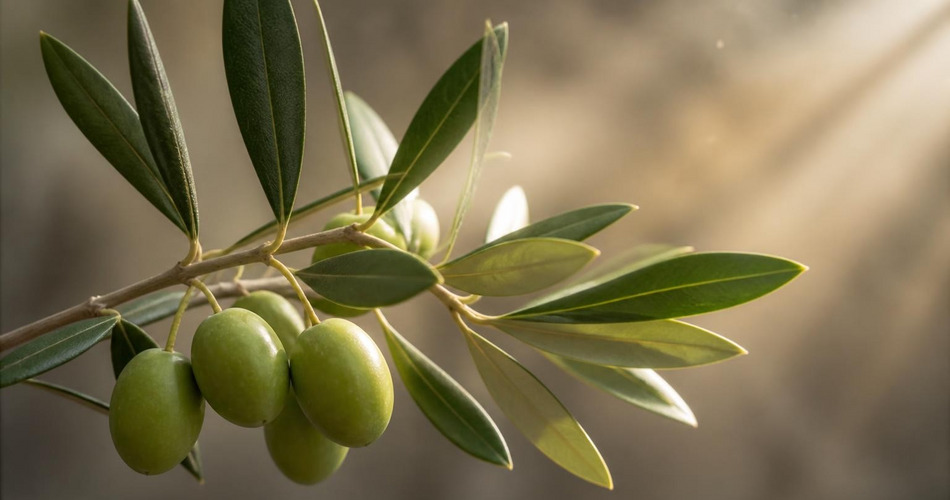
While the olive branch itself is the primary symbol, variations in depiction can shift its nuance. A leafy green branch full of leaves emphasizes vitality and active peace. A wreath or crown of olive branches specifically celebrates victory and achievement, as in athletic or academic honors. A branch with ripe olives adds the meaning of abundance and prosperity, linking peace to material well‑being. In many emblems, the branch is shown with the dove, reinforcing the biblical narrative and the divine origin of peace. In modern minimalist tattoo or logo designs, the branch may be reduced to a few stylized leaves and a stem, still carrying the same core symbolism.
Frequently Asked Questions About the Olive Branch
Q: What does the olive branch symbolize?
A: The olive branch is a universal symbol of peace, reconciliation, victory, hope, and renewal. It represents the desire to end conflict and extend goodwill.
Q: Where did the olive branch peace symbol originate?
A: Its origins lie in ancient Greece, where envoys carried olive branches as a sign of peaceful intent, and in the myth of Athena giving the olive tree to Athens. The Biblical story of Noah’s dove with an olive leaf later reinforced it as a divine promise of peace.
Q: What does it mean when someone “holds out an olive branch”?
A: It means they are making a gesture of peace or reconciliation—offering to end a quarrel and start fresh.
Q: Is the olive branch used in modern symbols?
A: Yes. It appears on the Great Seal of the United States, the flag of the United Nations, and many peace movement logos. It is also a popular tattoo design.
Q: Does the olive branch ever have a negative meaning?
A: Rarely. It can be seen as a sign of weakness or as an empty gesture, but these interpretations are not traditional and depend on cynical contexts.
Q: What is the difference between an olive branch and a palm branch?
A: While both symbolize peace, the olive branch is more specifically tied to reconciliation and victory, whereas the palm branch often represents triumph, martyrdom, and eternal life in Christian tradition.
Related Symbols
- Dove: Often depicted with an olive branch, the dove symbolizes the Holy Spirit and peace directly from the Noah story.
- Olive tree: The tree itself stands for longevity, fertility, and divine blessing.
- Peace sign: A modern geometric symbol for peace, used in activism.
- White flag: A universal truce signal, less historically rich than the olive branch.
- Laurel wreath: Closely related, used in ancient Greece and Rome for victory and honor.
- Palm branch: In Christianity, a symbol of victory and eternal peace.