
Briefly
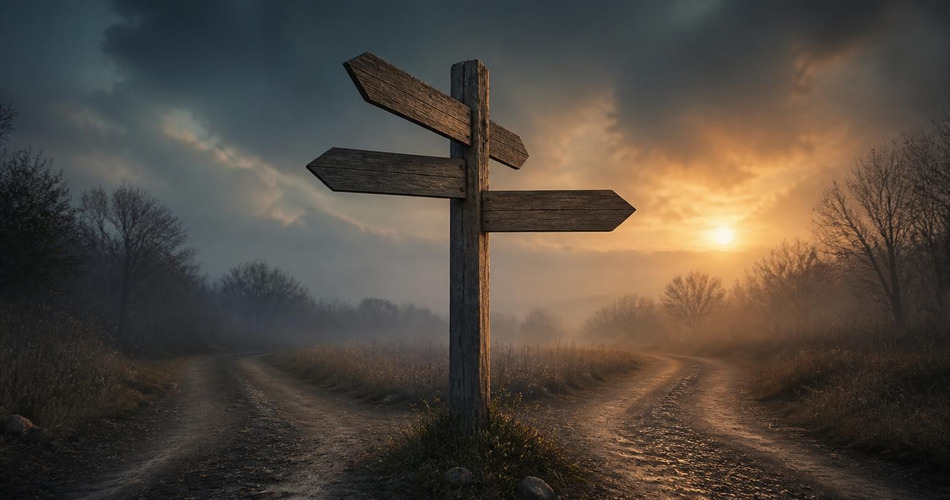
A crossroads is a physical intersection where two or more roads meet, but symbolically it represents a point of decision, change, and potential. Across cultures and centuries, the crossroads has been understood as a liminal space—a threshold between the known and the unknown, the ordinary and the extraordinary. It embodies the tension between choice and fate, offering both opportunity and danger. Whether in mythology, folklore, or personal dreams, the crossroads calls attention to moments that shape the direction of a life or a journey.
What Does Crossroads Symbolize?
At its core, the crossroads symbolizes choice. It is the place where a traveler must decide which path to take, and that decision carries consequences. This makes the crossroads a powerful emblem of free will, personal responsibility, and the turning points that define a person’s story. It also represents transition and transformation—the moment before a new direction is taken, when the old path is left behind and a new one begins.
Beyond individual choice, crossroads have long been associated with the meeting of different worlds. In many traditions, they are seen as a point where the physical and spiritual realms intersect, making them potent sites for ritual, magic, and encounters with supernatural beings. This dual nature—both practical and mystical—gives the crossroads a rich, layered symbolism that resonates in everything from ancient myth to modern storytelling.
Positive and Negative Meanings of Crossroads
Positive associations: Crossroads are often seen as opportunities for growth, new beginnings, and self-discovery. They mark the chance to change one’s life, to choose a better path, or to embrace a fresh start. In spiritual contexts, a crossroads can be a place of empowerment where one gains clarity or makes a pact that leads to success or knowledge.
Negative meanings: The same intersection can symbolize confusion, indecision, and the anxiety of making the wrong choice. In folklore, crossroads are notoriously dangerous—haunted by spirits, demons, or tricksters who lure travelers into trouble. They can represent a moral or existential crisis, a point where one might sell their soul for worldly gain, as in the legend of Robert Johnson. The negative side of crossroads speaks to the fear of being lost, both literally and metaphorically.
History and Origins of Crossroads Symbolism
The symbolism of crossroads is ancient, rooted in the practical reality of travel and trade. In pre-modern societies, crossroads were natural meeting points where people from different regions exchanged goods, ideas, and stories. They were also places where travelers faced real danger—bandits, wild animals, or getting lost. This mix of opportunity and peril gave rise to the symbolic weight they carry.
Archaeological evidence shows that crossroads were sometimes marked with shrines, stones, or trees, indicating their spiritual significance. In ancient Greece, for example, small heaps of stones called hermaia were placed at crossroads to honor Hermes, the god of travelers and boundaries. The Romans similarly erected statues of Janus, the two-faced god of beginnings and transitions, at crossroads. These early practices show that the crossroads was already understood as a threshold between realms, a place where the ordinary rules of the world might bend.
Crossroads Symbolism in Different Cultures
In Greek mythology, the goddess Hecate was closely associated with crossroads. She was often depicted with three faces or three bodies, representing the three paths that meet at a crossroads. Hecate was a goddess of magic, ghosts, and the night, and offerings were left at crossroads to seek her favor or protection. This connection reinforced the idea of the crossroads as a liminal, dangerous space where the living could interact with the dead or the divine.
In Roman culture, the god Janus presided over doorways, gates, and crossroads. His two faces looking in opposite directions symbolized the ability to see both past and future, making him a fitting deity for moments of transition. Crossroads were often decorated with images of Janus, and the first month of the year, January, is named after him, emphasizing the crossroads-like nature of the new year.
In African American folklore, the crossroads became a powerful symbol of choice and transformation, particularly in the story of the blues musician Robert Johnson. According to legend, Johnson met the devil at a crossroads and traded his soul for musical mastery. This tale, which may have roots in West African traditions about crossroads spirits like Eshu or Legba, has become a central myth in American music and culture. It captures the crossroads as a place of ultimate bargaining—where one can gain extraordinary talent but at a great price.
In Hinduism, crossroads are considered inauspicious and are often avoided at night, as they are believed to be gathering places for restless spirits. Rituals may be performed at crossroads to appease these spirits or to send away negative energies. Similarly, in many European folk traditions, crossroads were used as sites for burying suicides or criminals, as the intersection was thought to confuse the soul and prevent it from returning to haunt the living.
Spiritual Meaning of Crossroads
Spiritually, a crossroads is a liminal space—a threshold between the material world and the unseen. It is a place where the veil between realities is thin, making it ideal for meditation, prayer, or magical workings. In various esoteric traditions, crossroads are used for casting spells, leaving offerings, or performing rituals that require a neutral ground between worlds.
The spiritual meaning also extends to personal growth. Encountering a crossroads in a spiritual sense often signals that a person is at a pivotal moment in their life. It is a call to reflect, to make a conscious choice, and to take responsibility for the direction of one’s path. The crossroads does not dictate the outcome; it simply presents the options. This makes it a symbol of empowerment and accountability in spiritual practice.
Crossroads in Myths and Folklore
Crossroads appear in myths and folklore around the world as places of encounter with supernatural beings. In Greek myth, Oedipus kills his father at a crossroads, setting the tragic events of his life in motion. This story highlights the crossroads as a site where fate and free will collide—Oedipus’s choice to fight the stranger (his father) leads to the fulfillment of a prophecy he tried to avoid.
In Slavic folklore, the crossroads is where one might meet a rusalka or a leshy, spirits that can either help or harm travelers. In Japanese folklore, the kitsune (fox spirit) is said to appear at crossroads to trick or test people. The common thread is that crossroads are places of heightened spiritual activity, where the rules of the ordinary world do not fully apply.
The most famous crossroads myth in modern times is the story of Robert Johnson, which has been retold in songs, books, and films. The legend likely draws on older African and African American beliefs about crossroads spirits like Papa Legba, who guards the gateway between the human and spirit worlds. In this tradition, the crossroads is not just a place of danger but also of potential—a site where one can negotiate with the divine or the diabolical.
Crossroads in Dreams
Dreaming of a crossroads often reflects a real-life decision or period of uncertainty. The dream may present a literal fork in the road, a four-way intersection, or a confusing network of paths. The emotional tone of the dream—fear, excitement, hesitation—can indicate the dreamer’s feelings about the choices they face.
In dream interpretation, a crossroads can symbolize a need to make a choice, often one that will have long-term consequences. It may also represent a fear of making the wrong decision or a desire to avoid change. The condition of the crossroads—clear or overgrown, well-lit or dark—can provide additional clues about the dreamer’s state of mind.
Common Dream Scenarios Involving Crossroads
- Standing at a crossroads with no signposts: This suggests confusion or a lack of guidance in waking life. The dreamer may feel they lack the information needed to make a good decision.
- Choosing one path over another: This often reflects a recent or impending choice. The dream may replay the anxiety or relief associated with that decision.
- A crossroads that leads to dead ends: This can indicate that the dreamer feels trapped or that their options are not as open as they seem.
- A crowded crossroads: This may symbolize social pressure or the influence of others on the dreamer’s decisions.
- Meeting a figure at a crossroads: This could represent a mentor, a temptation, or a part of the dreamer’s own psyche offering guidance or warning.
Crossroads in Superstitions and Omens
- Burying objects at a crossroads: In many folk traditions, burying a coin, a bone, or a written wish at a crossroads is believed to bring luck or to seal a pact with supernatural forces.
- Meeting a black cat at a crossroads: In some European superstitions, this is considered bad luck, especially if the cat crosses the path.
- Crossroads as haunted places: Because crossroads are liminal, they are often thought to be where ghosts, spirits, or demons linger. Travelers are advised to avoid them after dark.
- Making a wish at a crossroads: Some traditions hold that if you stand at a crossroads at midnight and make a wish, it will come true—but only if you do not look back.
- Spitting at a crossroads: In parts of Eastern Europe, spitting at a crossroads is a way to ward off evil spirits or bad luck.
Crossroads in Art and Literature
The crossroads has been a recurring motif in literature and art, often used to dramatize moments of decision. In Sophocles’ Oedipus Rex, the crossroads is the site of the fateful encounter between Oedipus and his father, Laius. This scene underscores the theme of fate versus free will and has been analyzed for centuries as a turning point in the tragedy.
In American literature, Robert Frost’s poem “The Road Not Taken” (1916) is often interpreted as a meditation on choices and their consequences. Although the poem describes a diverging path in a yellow wood rather than a literal crossroads, it captures the same spirit of decision and reflection that crossroads symbolize.
In music, the blues legend “Cross Road Blues” by Robert Johnson (1936) has become an iconic representation of the crossroads myth. The song’s lyrics and the story behind it have inspired countless covers, references, and adaptations in films like Crossroads (1986) and O Brother, Where Art Thou? (2000). The film Crossroads itself tells a story of a young guitarist who seeks to escape a deal made at a crossroads, directly drawing on the Johnson legend.
In visual art, the crossroads appears in works by artists such as Paul Gauguin, who painted The Vision After the Sermon (1888) showing a group of Breton women at a crossroads after a sermon, with the biblical scene of Jacob wrestling an angel superimposed. The crossroads here serves as a threshold between the mundane and the divine.
Crossroads Tattoo Meaning
A crossroads tattoo often symbolizes a pivotal moment in the wearer’s life—a decision that changed their direction. It can represent personal transformation, the courage to choose, or the acceptance of fate. Some people get crossroads tattoos to commemorate a major life change, such as a career shift, a move, or a recovery from addiction. The design may include a single path splitting into two, a four-way intersection, or a more elaborate scene with a figure standing at the center.
In some tattoo traditions, a crossroads is combined with other symbols like a moon, a raven, or a musical note to emphasize the mystical or artistic aspect of the choice. The tattoo can also serve as a reminder that life is full of forks in the road and that every choice matters.
Meanings of Different Types of Crossroads
- Four-way crossroads: The most common type, representing a full range of choices. It is often associated with the four cardinal directions and the idea of balance or completeness.
- Three-way crossroads (Y-shaped): This shape is particularly linked to Hecate and the triple goddess. It suggests a choice between three options, often with a spiritual or magical connotation.
- Crossroads with a central marker: A stone, tree, or statue at the center can indicate a sacred or significant meeting point, emphasizing the crossroads as a place of ritual.
- Overgrown or abandoned crossroads: This can symbolize neglected choices, missed opportunities, or a path that has been forgotten.
Frequently Asked Questions about Crossroads
Q: What does a crossroads symbolize in dreams?
A: In dreams, a crossroads typically symbolizes a decision or a turning point in the dreamer’s waking life. It may reflect feelings of uncertainty, the need to choose, or the anticipation of change.
Q: Why are crossroads considered haunted?
A: Crossroads are seen as liminal spaces where the boundary between the living and the dead is thin. Many cultures believe that spirits, ghosts, or demons gather there, especially at night, making them places of both danger and supernatural power.
Q: What is the origin of the crossroads myth in blues music?
A: The myth is most famously associated with blues musician Robert Johnson, who allegedly sold his soul to the devil at a crossroads in exchange for guitar skills. The story likely has roots in West African traditions about crossroads spirits like Eshu or Legba.
Q: How can a crossroads be used in spiritual practice?
A: Some practitioners use crossroads for meditation, offerings, or rituals that require a neutral or liminal space. It is considered a potent place for spells involving change, protection, or communication with spirits.
Q: What is the difference between a crossroads and a fork in the road?
A: A crossroads is an intersection of two or more roads, while a fork is a single path that splits into two. Both symbolize choice, but the crossroads often carries stronger connotations of meeting, exchange, and supernatural encounter.
Related Symbols
- Path – The road itself, representing the journey of life.
- Fork in the road – A more specific symbol of a binary choice.
- Threshold – A liminal space similar to a crossroads, marking a transition.
- Doorway – Another symbol of passage between states or worlds.
- Bridge – Represents connection and crossing over, often a transition point.
- Intersection – A modern equivalent, still carrying the idea of meeting and choice.

