Briefly
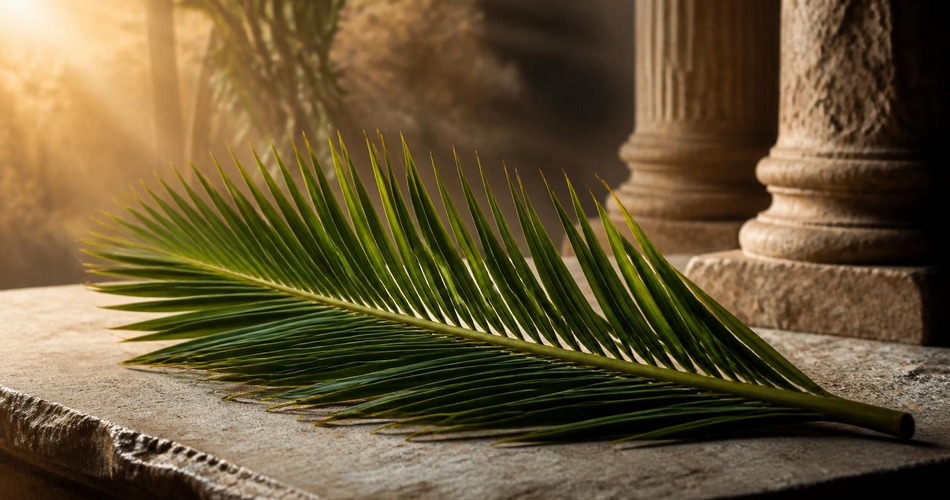
The palm frond is one of the oldest and most widely recognized symbols of victory, peace, and renewal. In the ancient Mediterranean world it crowned triumphant athletes and generals, while in Judaism, Christianity, and Islam it has marked festivals, holy days, and the promise of spiritual reward. The frond also carries practical meanings of resilience and survival, since palm trees thrive in harsh desert climates. From classical Roman coins to modern Palm Sunday processions, the palm frond remains a compact emblem of triumph over adversity, hope, and new beginnings.
What Does the Palm Frond Symbolize?
At its core, a palm frond symbolizes victory — the victory of the righteous, the successful athlete, the triumphant army, or the soul that overcomes its trials. In Jewish tradition, the lulav, the closed palm frond used during Sukkot, is one of the four species waved as part of the festival, and it remains an emblem of joy and divine blessing.
Because palm fronds were costly and exotic in northern climates, they also came to represent honor and distinction. In the Roman world, victorious generals wore palm branches or had them embroidered on their garments, and the image of the palm was stamped on coins as a mark of imperial success. The early Christians adopted the same imagery and transferred it from military triumph to the spiritual victory achieved by martyrs and by Christ himself.
In warmer regions where date palms and coconut palms are everyday trees, the frond also carries practical associations: shade, food, woven baskets, thatch, and a general sign of life in an arid landscape. The tree gives generously and survives drought, so the frond has come to mean providence, protection, and resilience as well.
Positive and Negative Meanings
Positive associations: The palm frond is overwhelmingly seen as a good symbol. It stands for triumph, honor, virtue, and lasting peace. It represents the victory of life over death, of spring over winter, and of hope over despair. In many cultures it is a blessing brought into homes and churches, a sign of welcome for honored guests, and a reminder that even the harshest circumstances can produce beauty and fruit.
Negative meanings: Negative meanings of the palm frond are rare and mostly tied to irony or reversal. In the Bible, the crowds waved palm branches when Jesus entered Jerusalem, yet within days he was crucified, so the frond can also evoke the fickleness of public acclaim and the gap between earthly celebration and deeper spiritual reality. In some folk traditions, a palm frond left in a house too long or hung without proper blessing was thought to gather dust and spiritual staleness, needing to be replaced each year.
History and Origins of Palm Frond Symbolism
The symbolic use of palm leaves dates back thousands of years. In ancient Egypt, the palm was associated with the moon god Iah and with the concept of time; notched palm stems were used as calendars, and the tree was planted at temples as a sign of eternal life because it kept producing new shoots from the same trunk.
In ancient Greece and Rome, the palm became a standard emblem of victory. Winners at the Olympic Games and other Panhellenic contests were given a palm branch along with a wreath, and the Latin phrase palma came to mean both the tree and the idea of winning. Roman generals in their triumphs carried or displayed palms, and the image was often engraved on sarcophagi to indicate the deceased had won the race of life.
Jewish tradition also shaped later meanings. The Torah instructs that on the first day of Sukkot the people shall take branches of palm trees along with other species, and the palm remained a national symbol of Judea. Palm fronds appear on ancient Jewish coins, including those minted during the Bar Kokhba revolt, where the palm symbolized the land itself and the hope of restoration.
In the early Christian church, the palm was added to the iconography of martyrs and saints. It was shown on grave markers in the Roman catacombs, where it communicated a simple message: this person died in faith and has won the true crown of victory. The festival of Palm Sunday, which begins Holy Week in Western Christianity, grew from the Gospel account of Jesus entering Jerusalem as crowds spread palm branches before him.
Palm Frond Symbolism in Different Cultures
In Christianity, the palm frond is the defining symbol of Palm Sunday. Congregations receive blessed palm leaves, often woven into crosses, to recall Christ’s entry into Jerusalem. The ashes used on Ash Wednesday are traditionally made by burning the previous year’s palms, creating a powerful link between triumph and mortality. In many Catholic, Orthodox, and Protestant churches, the palm speaks of peace and Christ’s kingship, and it appears throughout Holy Week as a contrast to the suffering of the cross that follows.
In Judaism, the palm frond — called lulav — is one of the four species used during the festival of Sukkot. The lulav is bound together with myrtle and willow branches and waved in six directions during the holiday prayers, acknowledging God’s sovereignty over creation. The palm’s straight spine and unfailing greenness have also made it a symbol of the righteous person, who remains upright and fruitful even in difficult times.
In Islam, the date palm is mentioned multiple times in the Quran. Mary is said to have shaken a palm tree to provide dates during the labor of Jesus, and the palm became a sign of divine provision and hospitality. In many Muslim cultures, palm fronds are still used to decorate homes and mosques during religious celebrations, and the tree is closely tied to desert survival and generosity.
In ancient Mesopotamian and Persian culture, the date palm was one of the most important trees, providing food, shelter, and building material. The palm was associated with the goddess Ishtar and later with ideas of abundance and sacred kingship. Palm motifs decorated temples and palaces, and the image of the tree of life was often drawn as a stylized palm.
In East and Southeast Asia, the coconut palm and palmyra palm have their own symbolic roles. The coconut palm is called the “tree of life” because nearly every part of it is useful, and palm leaves are used in temple festivals, weddings, and as offering plates. The palmyra palm is treated as sacred in parts of India and Sri Lanka, where its leaves are used for writing manuscripts; the very word for a traditional palm-leaf manuscript carries the frond into the realm of knowledge and scripture.
Spiritual Meaning of the Palm Frond
The spiritual meaning of the palm frond is centered on triumph of the soul. In Christian iconography, the palm branch given to martyrs is not a reward for physical strength but for faithfulness under pressure. It says that the one who endures hardship without abandoning their values has achieved the only victory that lasts.
In Jewish spiritual thought, the palm frond of Sukkot represents both the human body and the ideal human being. Rabbinic commentary observes that the lulav has taste but no scent, the etrog has scent but no taste, and the other species vary too; together they represent different kinds of Jews who must be bound as one. The palm’s own role in this teaching is to stand for those whose actions, like its sweet dates, are good, and whose upright form suggests integrity.
Across many traditions, the evergreen frond is a natural symbol of eternity because it does not wither quickly like other leaves. This is why palms appear so often in funerary art and in texts about the afterlife. The image of the palm says that death is not the end but a gate to a different kind of victory, one that is already won by the faithful.
Palm Frond in Myths and Folklore
In Greek mythology, the palm was linked to the god Apollo, who was born on the island of Delos beneath a palm tree. The palm became a marker of his sanctuary and a sign of his victory over the serpent Python. Palm branches were used in processions at festivals such as the Pythian Games, where they honored the god’s victory and the winners of the contests.
In ancient Egyptian mythology, the palm tree was said to have given birth to the god Thoth, the deity of writing and wisdom, which connected the palm to sacred knowledge. The palm’s many fronds also made it a symbol of the goddess Hathor, who was sometimes called the Lady of the Sycamore and the Date Palm, and the tree was planted near tombs to nourish the deceased in the afterlife.
In Christian folklore, the palm appears in stories about saints and pilgrims. A widespread legend says that when Mary, the mother of Jesus, died, the apostles found her tomb empty except for a palm branch she had received from an angel. In folk tradition, blessed palm fronds were placed in fields to protect crops, hung over doors to keep evil away, and thrown into bonfires during storms to stop lightning. Palm Sunday branches were often kept in the house for a full year until they were burned for ashes or replaced with fresh ones.
In Jewish folklore, the lulav is sometimes seen as a weapon or a symbol of triumph over spiritual enemies. The Talmud contains passages about shaking the lulav against hostile forces, and the Sukkot ritual developed in many communities into a public demonstration of faith and hope.
Palm Frond in Dreams
Dreams featuring palm fronds are generally considered fortunate, drawing on a store of traditional dream interpretation that goes back to ancient times. In classical dream books, seeing a palm or receiving a palm branch was read as a sign of honor, success, or a favorable resolution to a difficult matter. Because the palm is durable and stays green, it could point to good health, the growth of a project, or the end of a long struggle.
The palm frond in a dream is best understood through the feelings it produces and the actions around it. A perfect green frond suggests vitality and victory. A dried or broken frond may indicate that a celebration has passed, a promise is fading, or a season of effort has come to its natural close.
Common Palm Frond Dream Scenarios
- Receiving a palm frond from someone — a sign of recognition, honor, or an invitation to take part in a joyful event.
- Walking on a path covered with palm fronds — often read as a sign that your efforts are being recognized and that a period of honor or reward is near.
- Holding a palm frond in a procession — connected with religious or public ceremony, suggesting you are about to take on a more visible role in your community.
- Seeing a withered or burned palm frond — may point to a missed opportunity, the end of a celebration, or the need to renew your spiritual life.
- Weaving a palm frond into a cross — reflects a combination of faith and suffering, reminding the dreamer that victory often follows pain.
- A palm tree with an abundance of fronds and fruit — a symbol of prosperity, stability, and long life in many traditional interpretations.
Superstitions and Omens Involving Palm Fronds
Blessed palm is among the most common folk charms in Christian countries. On Palm Sunday, the leaves are blessed by a priest and then taken home, where they are tucked behind crucifixes, hung above doorways, or placed in window frames. The custom is rooted in the belief that the palm, having been blessed, carries the protection of the Church into ordinary life.
In many parts of Europe, people believed that a palm frond burned during a thunderstorm would deflect lightning, and that carrying a piece of palm in the pocket would keep the wearer safe while traveling. In some rural areas, farmers would bury a fragment of palm in the first furrow of the season to ask for a good harvest. The same symbolism of new life made palm leaves a common ingredient in folk medicine, where they were burned and mixed with water or oil as a remedy against various ailments.
One widespread warning is that a palm frond should never be treated as ordinary trash. Since it has been blessed, it should be burned or returned to the earth respectfully. In this way, the palm carries a small devotion: once dedicated to sacred purpose, it cannot be thrown away like any other leaf.
Palm Frond in Art and Literature
The palm branch appears in the Bible in the Book of Revelation, where the great multitude stands before the throne of God “clothed with white robes, and palms in their hands” (Revelation 7:9). This image fixed the palm as a symbol of redeemed humanity and shaped countless paintings, mosaics, and stained glass windows.
In art, the palm is a standard attribute of Christian martyrs. In medieval and Renaissance paintings, a martyr is almost always shown holding a palm frond, making the palm legible to viewers without words as a declaration of sacrifice and victory. Examples include Fra Angelico’s frescoes at the convent of San Marco in Florence and the many panels of the Maestà by Duccio in the Siena Cathedral. In each case, the palm tells the viewer that the figure is not merely suffering but has overcome the world.
In poetry and prose, the palm often appears as a sign of spiritual or moral triumph. John Bunyan uses pilgrim imagery in The Pilgrim’s Progress where the Celestial City is reached by those who have carried their cross; the iconographic tradition behind the text is the same one that gives the palm to the faithful. More directly, the palm is prominent in the English hymn “Ride On, Ride On in Majesty!” and in countless Passiontide hymns that retell the Palm Sunday story. In the poetry of the Islamic world, the date palm is a frequent image of generosity, beauty, and the sustaining power of the divine, appearing in the works of Persian poets such as Saadi and Hafez.
The American poet William Carlos Williams wrote a late collection called Pictures from Brueghel, named for the painter Pieter Bruegel the Elder, whose work The Triumph of Death includes a small but telling palm motif in its crowded landscape of decay. The contrast is the point: the palm is a fragile sign of life and victory in a world overcome by death.
Palm Frond Tattoo Meaning
Palm frond tattoos are chosen for their connection to victory, peace, and survival. A simple palm branch can stand for a personal triumph, the memory of a difficult period that was overcome, or a hope for reconciliation. Because the palm combined with a cross appears so often in religious art, people with a Christian background often use it as a compact statement of faith and renewal.
In contemporary design, the palm frond is also linked to tropical relaxation and travel. A palm leaf tattoo can be a light way of expressing a love of the sea, the sun, or a place that holds fond memories. This does not cancel the older meanings; it simply gives the frond a second life as a personal emblem of freedom and ease. Costumers often pair palm fronds with sunsets, ocean waves, flowers, or birds to create a scene of calm and endurance together.
Meanings of Different Types and Variations
- Date palm frond — the classic frond of religious symbolism; associated with abundance, hospitality, and the deserts of the Middle East.
- Coconut palm frond — the “tree of life” frond; connected with tropical survival, community, and practical provision.
- Palmyra palm frond — sacred in parts of South Asia; used for writing and temple ceremonies, representing knowledge and tradition.
- Weaved palm crosses — made from Palm Sunday fronds; signify the sacrifice of Christ and the union of victory with suffering.
- Golden or gilded palm frond — a decorative representation of eternal victory, often used in churches and funerary art.
Frequently Asked Questions
Q: What does a palm frond symbolize in the Bible?
A: In the Bible, palm fronds symbolize victory, peace, and the honor given to a victorious king. They appear at Jesus’ entry into Jerusalem and in Revelation as a sign of the redeemed saints.
Q: Why are palm fronds burned on Ash Wednesday?
A: The palms blessed on Palm Sunday are traditionally burned and ground into ashes for the next Ash Wednesday, reminding believers that glory is temporary and that all people are mortal.
Q: What does the palm frond mean in Judaism?
A: In Judaism, the palm frond, or lulav, is one of the four species used during Sukkot and symbolizes righteousness, joy, and the unity of the Jewish people.
Q: What does a palm frond tattoo mean?
A: A palm frond tattoo generally means victory, peace, renewal, or a personal triumph, and in a Christian context it represents a saint’s faith and sacrifice.
Q: Is a palm frond a symbol of peace?
A: Yes. Though the olive branch is more common as a peace symbol, the palm frond also stands for peace, especially peace won through struggle or given as a divine gift.
Related Symbols
- Olive Branch — a stronger and more widely recognized emblem of peace.
- Laurel Wreath — a similar sign of victory, especially in sports and military contexts.
- Palm Sunday Cross — woven from palm fronds and representing the sacrifice of Christ.
- Tree of Life — often imagined or depicted with palm-like leaves across cultures.
- Lulav and Etrog — the palm frond together with the citron, used in the Jewish festival of Sukkot.