
Briefly
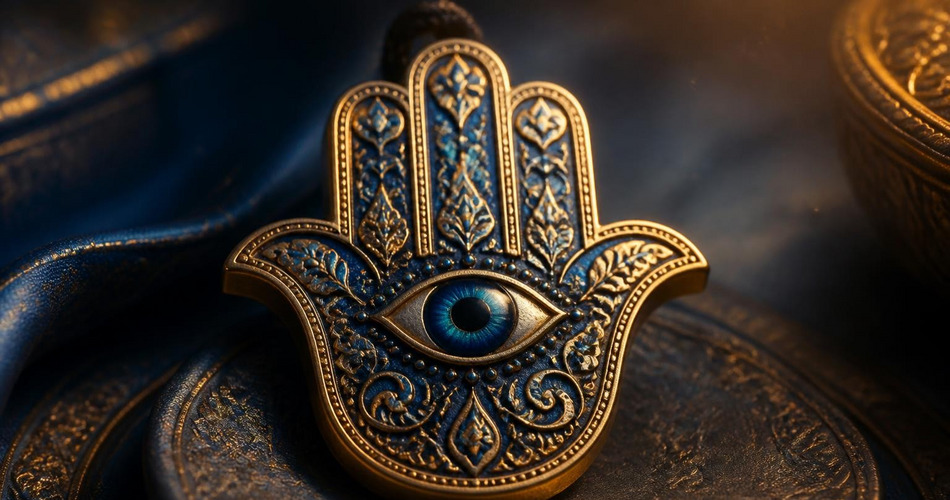
The Hamsa Hand is an ancient amulet shaped like an open right hand, widely used across the Middle East and North Africa as a symbol of protection against the evil eye and negative forces. It is believed to bring good fortune, blessings, and strength to its wearer, while also serving as a reminder of spiritual presence and divine safeguarding. The symbol appears in Jewish, Islamic, and Christian traditions under different names, yet its core meaning — defense against harm — remains remarkably consistent. Today it is worn as jewelry, hung in homes, and tattooed on the body by people of various backgrounds who value its protective power and cultural beauty.
What Does the Hamsa Hand Symbolize?
The Hamsa Hand primarily symbolizes protection — specifically from the evil eye, envy, and ill will. The open palm is understood as a gesture of defense, warding off harmful influences before they can reach the wearer. Beyond its defensive role, the hamsa represents blessings, power, and strength. In many traditions, the hand is also linked to divine favor, acting as a reminder that a higher presence watches over the person who carries it.
Because the hamsa is shared by multiple religious and cultural groups, it carries layers of meaning. For some, it is a purely spiritual emblem tied to faith and prayer. For others, it functions as a protective charm or an item of jewelry chosen more for its aesthetic appeal than its religious significance. The five fingers of the hand can represent various ideas depending on the tradition, including the five pillars of Islam, the five books of the Torah, or simply the human hand as an instrument of action and blessing.
The hamsa’s association with good fortune makes it a popular gift for newborns, newlyweds, and people beginning new chapters in life. Its enduring popularity speaks to a universal human desire for safety and the wish to extend protection to those we love.
Positive and Negative Meanings
Positive associations: The hamsa is overwhelmingly positive in its symbolism. It represents protection, good luck, happiness, health, and fortune. The hand gesture is believed to attract positive energy and deflect harmful intent, making it a reassuring presence in homes and on the body. It also symbolizes unity across cultures, as people of different faiths share and respect this icon. For many, the hamsa evokes a sense of safety, spiritual connection, and continuity with ancestral traditions.
Negative meanings: Negative meanings attached to the hamsa are relatively few and tend to arise from misunderstandings or cultural appropriation concerns. Some conservative religious commentators have objected to the hamsa as a superstitious talisman, arguing that relying on an amulet rather than divine will is inappropriate. Others have noted that when the hamsa is used as a trendy ornament without awareness of its cultural and spiritual roots, it can feel disrespectful to the traditions that originated it. These negative associations stem largely from how the symbol is used rather than from any inherent darkness or malice within its meaning.
History and Origins of the Hamsa Hand Symbolism
The origins of the hamsa hand trace back thousands of years to the ancient Middle East. The symbol has been found in the ruins of Carthage and in artifacts from ancient Mesopotamia, where the open hand was already associated with protection and divine blessing. In prehistoric cave art, handprints often signified presence and power, and this ancient association likely carried forward into later amulet traditions.
The hand has long been linked to female deities in the ancient world. In some interpretations, the hamsa is connected to Tanit, the Phoenician and Carthaginian goddess of fertility and protection. Carved amulets in the shape of hands were worn by women and children to ward off harm — a practice that continued through the centuries and became embedded in the folk customs of Jewish, Muslim, and Christian communities across North Africa and the Levant.
The name “hamsa” comes from the Semitic root for “five,” reflecting the five fingers of the hand. In Jewish tradition, it is often called the Hand of Miriam, honoring the sister of Moses; in Islamic contexts, it is known as the Hand of Fatima, after the daughter of the Prophet Muhammad. These names demonstrate how the same visual symbol was absorbed into different faiths, each attaching its own spiritual meaning while preserving the ancient protective function.
Hamsa Hand Symbolism in Different Cultures
In Jewish culture, the hamsa is frequently called the Hand of Miriam and is associated with protection, strength, and the presence of God. It is common to see the hamsa in Jewish homes, on jewelry, and as part of wedding or birth ceremonies. Some Jewish communities traditionally hang a hamsa above the doorway to guard the household and its inhabitants.
In Islamic culture, the hamsa is known as the Hand of Fatima, weighing in as a symbol of patience, loyalty, and faith. While some Islamic scholars have debated the permissibility of using amulets, the hamsa remains widespread in everyday life across the Middle East and North Africa, particularly as jewelry and home decoration. Its use reflects the blend of folk belief and religious practice common in the region.
In Christian and broader Mediterranean traditions, the hamsa is sometimes interpreted as the hand of God, symbolizing divine protection and blessing. In Mediterranean folk culture, the hamsa also functions as a general anti-evil-eye charm, hung in cars, nurseries, and shops. Across all these cultures, the message is surprisingly consistent: the open hand opposes the envious glance and protects the vulnerable.
Spiritual Meaning of the Hamsa Hand
The spiritual meaning of the hamsa centers on the belief that the hand acts as a channel for divine protection. The open palm is seen as both a receiver of blessings and a shield against negative energy. Raising the hand outward mirrors a common gesture of stopping or warding something off — in spiritual terms, stopping harm before it takes effect.
The hamsa’s association with prayer and meditation adds another spiritual layer. When worn as an amulet, it serves to remind the wearer of their faith and of the protective power they believe in. The symbol’s use in sacred spaces such as homes, places of worship, and burial sites further supports its role as a bridge between the physical and spiritual worlds. For many, the hamsa is less about superstition and more about mindfulness — an outward sign of inner conviction.
Finally, the hamsa’s five fingers can be understood spiritually as a symbol of the five senses, encouraging the wearer to live with awareness. The eye often found in the center of the palm is meant to represent divine watchfulness — a reminder that one is seen and cared for, even when alone.
Hamsa Hand in Myths and Folklore
The most prominent folklore associated with the hamsa is its role as a defense against the evil eye. The evil eye is a widespread belief in the Mediterranean and Middle East that envy or malicious staring can cause misfortune, illness, or even death. The hamsa is thought to catch the gaze of the envious person and return it — a protective mechanism that has made the symbol ubiquitous in regions where evil-eye beliefs are strong.
Folklore also connects the hamsa to legends of Fatima, the daughter of the Prophet Muhammad. According to one popular tale, Fatima was preparing dinner when her husband brought home a new wife. So shocked and heartbroken was Fatima that she dropped the spoon and continued stirring the pot with her bare hand, burning herself — but feeling no pain due to her emotional distress. The hamsa, named after her, has since represented patience, loyalty, and acceptance of fate.
In Jewish folklore, Miriam’s hand is sometimes associated with protection during childbirth. The belief that the amulet could guard mothers and newborns made it a standard gift at Jewish births. Over time, these stories have merged in the popular imagination, making the hamsa a cross-cultural emblem of maternal care, endurance, and steadfast belief.
Hamsa Hand in Dreams
Dreams featuring the hamsa hand are generally interpreted as positive signs connected to safety and reassurance. When the hamsa appears in a dream, it may reflect the dreamer’s desire for protection or serve as a confirmation that they are on the right path. The symbol often surfaces during periods of anxiety, transition, or uncertainty — times when the subconscious seeks a shield.
Because the hamsa is an object of cultural significance, its meaning in a dream can vary according to the dreamer’s background and personal relationship with the symbol. For someone raised in a tradition that uses the hamsa, it might evoke memory, family, and heritage. For others, it could signify a more general need for security or spiritual guidance. Context matters: where the hamsa appears, who gives it, and what the dreamer feels while seeing it all shape the interpretation.
Common Hamsa Dream Scenarios
- Receiving a hamsa as a gift: This often symbolizes that the dreamer is being watched over by someone — a loved one or a higher power — and that unexpected support is on the way.
- Wearing a hamsa: Wearing the symbol in a dream may suggest that the dreamer is actively protecting themselves, building emotional defenses, or entering a phase of self-empowerment.
- An eye inside the hamsa: Since many hamsas feature an eye at the center, this scenario points to heightened awareness, being seen, or the need to examine something in life more closely.
- A broken or falling hamsa: This could indicate doubt about protection, fear of vulnerability, or a sense that one’s defenses are failing during a difficult time.
- Hanging a hamsa on a wall: Placing the hamsa in a home within a dream often relates to domestic security, family harmony, or the desire to create a safe haven.
Hamsa Hand in Superstitions and Omens
The hamsa sits firmly within the family of protective amulets used against the evil eye. In countries such as Turkey, Egypt, Morocco, and Israel, the symbol is everywhere — on doorways, car mirrors, bracelets, and necklaces. Placing a hamsa above an entrance is a common superstitious practice meant to intercept negative energy before it enters the home.
According to popular belief, the hamsa is most effective when given as a gift rather than purchased for oneself. The intention behind the gesture matters: a hamsa given with love and the wish to protect carries more power than one bought casually. Some traditions suggest wearing the hamsa facing outward so it can deflect harm, while others say it should face inward to keep blessings close.
Colors and materials are also thought to affect the hamsa’s protective potency. Blue, the color most associated with protection in Mediterranean cultures, is a favorite choice for hamsa charms because blue is itself believed to repel the evil eye. Silver and gold are common metals, each carrying its own associations with purity or solar energy.
Hamsa Hand in Art and Literature
The hamsa is one of the most enduring visual motifs in Middle Eastern decorative art. It appears in intricate gold jewelry, ceramic tiles, woven textiles, and illuminated manuscripts across the Islamic and Jewish worlds. In many examples, the hand is embellished with floral patterns, Hebrew or Arabic inscriptions, or a central eye — blending the symbol of protection with an appreciation for ornamental beauty.
Contemporary artists continue to draw on the hamsa as a motif for works exploring identity, migration, and cultural memory. The symbol’s ability to bridge Jewish and Muslim worlds makes it a compelling subject for writers and artists reflecting on shared heritage. In modern jewelry design and home decor, the hamsa has moved beyond its regional origins to become a globally recognized design element, although its protective meaning is often less emphasized in purely decorative uses.
In literature, the hamsa frequently appears as a meaningful family heirloom or cultural marker, handed down between generations and carrying the weight of history and protection. Its presence in these stories underscores its role as a tangible link between the past and the present.
Hamsa Hand Tattoo Meaning
Getting a hamsa hand tattoo is a deeply personal choice, often motivated by a desire for protection or a connection to one’s cultural roots. The placement of the tattoo matters to many wearers — a hamsa on the wrist or forearm keeps the symbol visible, serving as a constant reminder of safety and intent. On the back of the hand, the hamsa can mirror the natural gesture of warding off harm.
Hamsa tattoos frequently incorporate additional protective imagery, such as the evil eye, lotus flowers, or sacred geometry. These elements deepen the tattoo’s meaning, layering spiritual or aesthetic significance onto the base symbol. Because the hamsa is inherently versatile, it can be rendered in minimalist line work, bold traditional style, or elaborately detailed realism, allowing each wearer to express their own understanding of the symbol.
As with wearing a hamsa amulet, many people believe that a hamsa tattoo is most meaningful when it represents a genuine intention — whether that intention is protection, remembrance, or honoring one’s heritage. The tattoo becomes a permanent form of the ancient amulet’s promise: an ever-present guardian.
Meanings of Different Hamsa Variations
While the basic form of the hamsa remains consistent — an open right hand with the fingers together — variations carry subtle differences in emphasis and intended use.
- Hamsa with an eye: The eye at the center of the palm is the most common decorative addition. It serves as a reinforced defense against the evil eye, providing both protection and vigilance.
- Hamsa with finger pointing up: Some renderings stretch one finger upward, blending the hamsa with a gesture of authority or warning. This design is sometimes favored to enhance the protective or commanding aspect of the symbol.
- Hamsa with engraved names or prayers: Hamsas featuring the names of Fatima or Miriam, or carrying verses from scripture, are common in religious households and are treated as amulets with a stronger devotional charge.
- Blue hamsa: Blue hamsas, especially those made of blue glass or enamel, combine the hand’s protective nature with blue’s traditional power to repel the evil eye.
- Hamsa with fish or other motifs: In some interpretations, the hamsa is paired with fish motifs — also viewed as immune to the evil eye in Mediterranean folklore — for doubled protective strength.
Frequently Asked Questions
Q: What does the hamsa hand mean in general?
A: The hamsa hand generally means protection, good fortune, strength, and defense against negativity. It is an ancient symbol most commonly associated with warding off the evil eye.
Q: Is the hamsa a religious symbol?
A: The hamsa carries religious significance in Islamic and Jewish traditions — where it is known as the Hand of Fatima and Hand of Miriam — but it also exists as a folk symbol used across Mediterranean cultures regardless of formal religious adherence.
Q: Which direction should a hamsa face?
A: Some traditions hold that the hamsa should face upward to catch and deflect negative energy, while others say it should face downward to pour blessings onto the wearer. Both orientations are widely used.
Q: Is the hamsa hand the same as the evil eye?
A: No, the hamsa and the evil eye are separate symbols, though they are closely connected. The hamsa is the protective amulet; the evil eye is the harmful force it protects against. Often an eye is depicted within the hamsa as a reinforcing element.
Q: Can anyone wear the hamsa hand?
A: Yes. The hamsa is worn by people of many faiths and backgrounds as a symbol of protection and cultural heritage. The key is to wear it with respect and awareness of its origins.
Related Symbols
- Evil Eye — the primary threat the hamsa defends against
- Eye of Providence — shares the motif of a protective, watchful eye
- Nazar (Turkish Eye Bead) — a blue glass amulet with similar protective powers
- Menorah — another common protective and religious symbol in Jewish tradition
- Hand of Fatima / Hand of Miriam — alternate names for the same hamsa symbol in Islamic and Jewish traditions
- Lotus Flower — a common accompaniment to hamsa tattoos, symbolizing purity and spiritual growth


