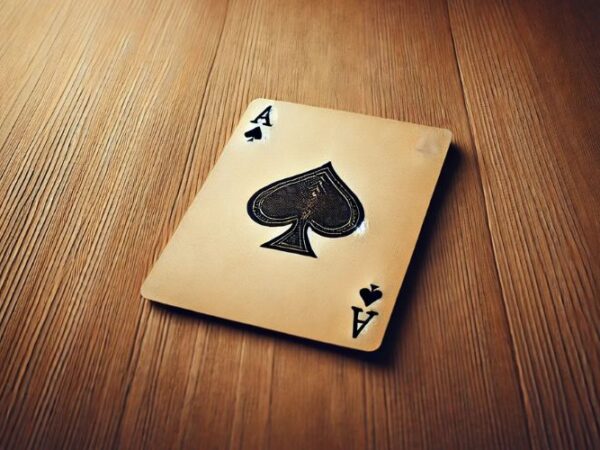
Briefly
Playing cards are a deck of 52 cards divided into four suits — Hearts, Diamonds, Clubs, and Spades — along with court cards and jokers. They universally symbolize chance, fate, and the interplay between luck and strategy. As tools for games, divination, and storytelling, they represent the unpredictable journey of life and the choices that define it.
What Does Playing Card Symbolize?
Playing cards function as a microcosm of society and the forces of fate. The four suits are widely interpreted as representing the four seasons, the four classical elements, or the four estates of medieval society: Hearts (clergy and emotion), Spades (military and death), Diamonds (merchants and wealth), and Clubs (peasantry and work). The numerical cards from Ace to Ten represent the unfolding journey of life, from potential and beginnings to completion and culmination. The court cards embody archetypal human roles: the King represents authority and mastery, the Queen represents nurturing and wisdom, and the Jack represents youth and service. The Joker stands apart as the ultimate wild card, symbolizing chaos, limitless potential, and the trickster spirit.
Positive and Negative Meanings
Positive associations: Playing cards represent opportunity, strategic thinking, and social connection. They are tools for divination and self-reflection, offering a framework for understanding fate and personal choices. In games, they build camaraderie and sharpen the mind.
Negative meanings: They are strongly tied to gambling addiction, deception, and moral hazard. The Ace of Spades and other specific cards carry superstitions of bad luck, death, and misfortune. Cards have historically been condemned as the “Devil’s Picturebook” for their association with idleness and vice.
History and Origins of the Symbolism
The earliest known playing cards originated in China during the Tang dynasty (618–907 AD), where they were used for games similar to dominoes. They spread westward along trade routes, reaching Europe through the Islamic world, specifically Mamluk Egypt, by the 14th century. Early European decks featured suits like Cups, Swords, Coins, and Polo-sticks, which evolved into the French suits of Hearts, Spades, Diamonds, and Clubs around the 15th century. The standard 52-card deck became the global norm, while the Joker was added in the 19th century for the game of Euchre. This long journey across cultures imbued the cards with layers of symbolic meaning, blending Eastern philosophies with Western medieval hierarchies and Renaissance mysticism.
Playing Card Symbolism in Different Cultures
In Europe, the standard French suits became dominant, heavily influencing cartomancy and occult traditions. The German deck features suits of Hearts, Bells, Acorns, and Leaves, reflecting a more agrarian and folkloric worldview. In India, the Dasavatara Ganjifa features round cards depicting the ten incarnations of Vishnu, blending religious iconography with gameplay. Japan developed Hanafuda, or flower cards, which use intricate floral imagery to represent months and seasons rather than numbers and suits. Across these cultures, the core function of the deck as a tool for chance, strategy, and storytelling remains remarkably consistent, adapting its symbolism to local values and beliefs.
Spiritual Meaning of Playing Cards
The spiritual meaning of playing cards is deeply tied to the concept of fate versus free will. Cartomancy, or fortune telling with cards, treats the deck as a mirror to the subconscious and a tool for understanding life’s patterns. The act of shuffling and dealing is seen as a metaphor for the random distribution of life’s challenges and opportunities. The Fool archetype, represented by the Joker, is a key spiritual symbol, representing the soul’s journey into the unknown, unburdened by expectation. Meditating on a specific card or suit can offer insight into one’s emotional state, material concerns, or spiritual path.
Playing Cards in Myths and Folklore
Playing cards are steeped in folklore and legend. The “Dead Man’s Hand” is a famous combination of Aces and Eights, said to be the hand held by Wild Bill Hickok when he was murdered. The “Suicide King” refers to the King of Hearts, who appears to be stabbing himself in the head in many decks, a result of a misinterpretation of the original design where the axe was lost in translation. The “One-Eyed Jacks” refer to the Jacks in many decks that are drawn in profile, showing only one eye. Puritans once called cards the “Devil’s Picturebook” due to their association with gambling and idleness, cementing their rebellious and dangerous reputation in folk culture.
Playing Cards in Dreams
Playing cards in dreams often symbolize the dreamer’s perception of luck, risk, and decision-making. The specific cards that appear can offer insight into the dreamer’s subconscious feelings about a situation. A dream featuring a deck of cards may indicate that the dreamer is contemplating a major choice or feels that their fate is in the hands of chance.
Common Dream Scenarios
- Dreaming of a specific card (e.g., the Ace of Spades) often relates to a major life change or a perceived threat, while the Ace of Hearts may signal a new romance.
- Dreaming of losing a card game can symbolize feelings of inadequacy, fear of failure, or a lack of control in waking life.
- Dreaming of a Joker may represent a need for spontaneity, a trickster figure in one’s life, or a desire to break the rules.
- Dreaming of a complete deck can symbolize wholeness, potential, and the many paths available to the dreamer.
Playing Cards in Superstitions and Omens
The Ace of Spades is the most superstitiously charged card, often called the “Death Card” and associated with bad luck, especially in wartime. Dropping a deck of cards is considered unlucky unless the deck is immediately shuffled to confuse bad spirits. The Four of Clubs is sometimes called the “Devil’s Bedpost” and is considered an unlucky card in some traditions. In contrast, the Ace of Hearts is widely seen as a very lucky card, symbolizing the home and love. A crooked dealer or a marked card is a classic symbol of deception and unfair play in folklore.
Playing Cards in Art and Literature
Playing cards have a rich presence in art and literature. In Lewis Carroll’s Alice’s Adventures in Wonderland, the Queen of Hearts and her card soldiers represent arbitrary authority and the absurdity of rigid social rules. Alexander Pushkin’s short story “The Queen of Spades” revolves around the obsessive pursuit of wealth and the supernatural power of a secret card combination. Paul Cézanne’s series of paintings The Card Players depicts peasants absorbed in a game, symbolizing quiet contemplation and the simplicity of rural life. In modern pop culture, the Joker in Batman uses a playing card as his calling card, embodying chaos and anarchy.
Playing Card Tattoo Meaning
Playing card tattoos are popular symbols of luck, risk, and identity. A specific suit can represent a person’s profession or personality, such as a Spade for a soldier or a Heart for a romantic. The Joker tattoo often signifies a rebellious or unpredictable nature. A Royal Flush tattoo (King, Queen, and Jack of the same suit) represents power and completeness. The Ace of Spades is one of the most common card tattoos, often chosen as a symbol of survival, mortality, or a love of risk. Gamblers may get a full hand tattooed, such as the Dead Man’s Hand, to show their connection to the lifestyle and its dangers.
Meanings of Different Playing Cards
The Joker card is the most distinctive variation, representing the trickster, the wild card, and the potential for both chaos and liberation. Regional variations like the German deck (Hearts, Bells, Acorns, Leaves) or the Italian deck (Cups, Swords, Coins, Clubs) offer different symbolic frameworks. The Ace is universally the most powerful number card, symbolizing the beginning and the end, singularity, and pure potential. The King is the ultimate symbol of authority, while the Queen represents dignity and intuition. The Jack is the messenger or servant, often representing the youthful aspect of the self.
Frequently Asked Questions
Q: What does the Ace of Spades symbolize?
A: It is widely known as the “death card” in superstition, symbolizing bad luck, fate, or transformation. However, in cartomancy, it can also represent new beginnings, challenges, or the element of air.
Q: Why is a deck of cards 52 cards?
A: The most common explanation is that the 52 cards correspond to the 52 weeks in a year, with the four suits representing the four seasons and the 13 cards per suit representing the 13 lunar cycles in a season.
Q: What does the Joker card mean in symbolism?
A: The Joker represents the trickster archetype, chaos, unpredictability, and the ability to adapt to any situation. It is the wild card that can take on any value or role.
Q: What do the four suits of playing cards represent?
A: Hearts symbolize love and emotions, Spades represent conflict and challenges, Diamonds stand for wealth and material concerns, and Clubs signify growth, work, and luck.
Related Symbols
- Tarot Cards – The direct ancestor of modern playing cards, used primarily for divination and spiritual insight.
- Dice – Another tool of chance and gambling, symbolizing fate and randomness.
- Dominoes – A game of tiles with a similar history of social play and superstition.
- Roulette Wheel – A symbol of pure chance, risk, and the casino environment.
- Chess – A strategic game representing life’s battles, contrasting the luck-based nature of cards.