Briefly
A relic is an object surviving from an earlier time, often revered for its connection to a sacred person, event, or tradition. Relics carry deep symbolic weight as tangible links to the past, embodying memory, authenticity, and spiritual power. They are found in many cultures and religions, serving as focal points for devotion, pilgrimage, and historical continuity. While relics inspire faith and reverence, they can also attract controversy over authenticity and commodification.
What Does Relic Symbolize?
At its core, a relic symbolizes connection — a physical bridge between the present and a revered past. Whether a fragment of a saint’s bone, a piece of the True Cross, or a personal item of a historical figure, the relic is believed to carry the essence or blessing of its origin. This makes it a powerful symbol of continuity, sacred presence, and authenticity. Relics also represent memory, preserving the legacy of individuals or events that shaped religious or cultural identity. In many traditions, they are seen as vessels of spiritual power or grace, capable of mediating between the human and the divine.
Positive and Negative Meanings of Relics
Positive associations: Relics are often regarded as sources of blessing, healing, and protection. Pilgrims travel great distances to venerate relics, seeking spiritual favors or miraculous interventions. They reinforce community identity and historical continuity, and can inspire devotion and faith. In secular contexts, historical relics connect people to their heritage, fostering a sense of belonging and education.
Negative meanings: Relics can also attract criticism for fostering superstition, idolatry, or commercial exploitation. The medieval trade in fake relics — such as pieces of the True Cross sold in vast quantities — highlights the potential for fraud and manipulation. Relics may become objects of unhealthy obsession or divisive claims of authenticity, leading to conflict rather than unity.
History and Origins of Relic Symbolism
The veneration of relics dates back to ancient times. In early Christianity, the remains of martyrs were treasured and placed beneath altars, symbolizing the victory of faith over death. By the 4th century, the cult of relics had spread widely, with churches competing to acquire fragments of saints’ bodies or objects associated with Christ and the apostles. The Council of Trent (1545–1563) affirmed the legitimacy of relic veneration while condemning abuses. In Buddhism, relics of the Buddha — such as his cremated remains or personal belongings — were enshrined in stupas and became objects of pilgrimage. Similarly, in Islam, relics of the Prophet Muhammad (e.g., his cloak, hair, or footprint) are preserved and honored. The symbolic power of relics thus has deep roots in the human desire to touch the sacred across many faiths.
Relic Symbolism in Different Cultures
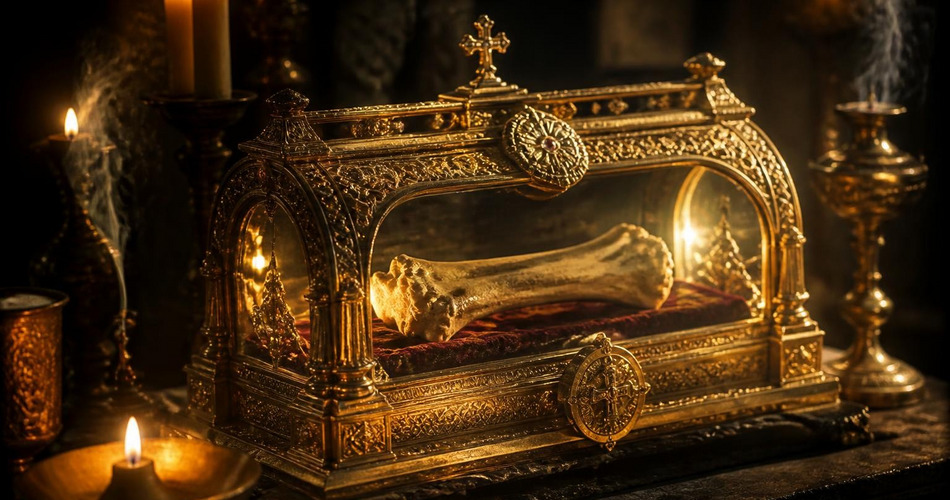
In Christianity, relics are classified into three types: first-class (body parts of a saint), second-class (items owned or used by a saint), and third-class (objects touched to a first-class relic). They are central to Catholic and Orthodox piety, often housed in ornate reliquaries and carried in processions. In Buddhism, relics (sarira) of the Buddha and enlightened masters are enshrined in stupas and pagodas, symbolizing the Buddha’s eternal presence and the path to enlightenment. In Hinduism, relics such as the footprints of deities or saints are venerated, and the ashes of holy individuals are often immersed in sacred rivers. In Islam, relics of the Prophet are kept in the Topkapi Palace in Istanbul and other locations, serving as symbols of prophetic blessing and authority. Secular cultures also revere historical relics — from the Rosetta Stone to Apollo 11 artifacts — as tangible links to pivotal moments in human history.
Spiritual Meaning of Relics
Spiritually, relics are seen as conduits of divine energy or blessing. For believers, touching or being near a relic can facilitate prayer, healing, or a sense of closeness to the holy person. Relics are often used in rituals of blessing, protection, and intercession. They remind the faithful of the transcendence of the spirit over death and the continuity of grace across generations. In many traditions, the relic is not worshiped itself but honored as a vessel through which the sacred is made manifest. This spiritual symbolism reinforces the idea that the material world can carry and transmit spiritual power.
Relics in Myths and Folklore
Relics appear prominently in myths and folklore as objects of quest and power. The Holy Grail, the cup used by Jesus at the Last Supper, is perhaps the most famous legendary relic, symbolizing divine grace and the ultimate spiritual quest. Arthurian legends recount knights seeking the Grail, a journey of purification and enlightenment. Other legendary relics include the Spear of Destiny (the lance that pierced Christ’s side), believed to confer invincibility on its possessor, and the Shroud of Turin, which some believe to be Jesus’s burial cloth. In folklore, relics such as saints’ bones or fragments of the True Cross were often credited with miraculous powers — healing the sick, protecting communities from disaster, or ensuring victory in battle. These stories reflect the deep human longing for tangible connections to the divine and the heroic.
Relics in Dreams
Dreaming of a relic can symbolize a desire for connection with the past, a search for meaning, or a need for spiritual grounding. The relic in a dream may represent hidden knowledge, ancestral heritage, or unresolved issues from history. Because relics are often associated with sacredness, such dreams might indicate a call to explore one’s faith or values. However, dream interpretation is highly personal and context-dependent; no universal meaning applies. If a relic appears in a dream, consider what it is — a religious object, a family heirloom, or an ancient artifact — and how it makes you feel. This can offer clues to its personal significance.
Common Dream Scenarios
- Finding a relic: May indicate a discovery of hidden talents, forgotten memories, or spiritual insights.
- Losing a relic: Could reflect fears of losing connection to one’s roots, faith, or identity.
- Venerating a relic: Suggests a need for reverence, humility, or seeking guidance from the past.
- A fake or broken relic: Might symbolize disillusionment, deception, or a need to question established beliefs.
Relics in Superstitions and Omens
Relics have long been associated with superstitions and omens. In medieval Europe, carrying a relic was thought to protect against evil spirits, illness, and accidents. Relics were also used in divination practices, such as drawing lots or casting bones to seek guidance. Some believed that relics could bring good luck in travel, warfare, or childbirth. Conversely, mishandling or disrespecting a relic was considered a bad omen, inviting misfortune or divine punishment. Even today, some people keep small relics or holy medals as protective charms. These superstitions underscore the enduring belief that relics carry a tangible spiritual charge that can influence daily life.
Relics in Art and Literature
Relics have inspired countless works of art and literature. In visual art, medieval and Renaissance painters often depicted reliquaries and the veneration of relics in altarpieces and manuscripts. The Shroud of Turin has been a subject of both artistic representation and scientific debate. In literature, Umberto Eco’s novel The Name of the Rose revolves around a lost manuscript and the power of forbidden knowledge, touching on relic-like objects. Dan Brown’s The Da Vinci Code features the Holy Grail as a central relic, blending history and fiction. In film, the Indiana Jones series (e.g., Raiders of the Lost Ark) portrays relics as powerful, dangerous artifacts sought by both heroes and villains. These examples show how relics continue to capture the imagination as symbols of mystery, power, and the quest for truth.
Frequently Asked Questions
Q: What is the difference between a relic and an artifact?
A: While both are objects from the past, a relic typically carries religious or spiritual significance, whereas an artifact may be any object of historical or archaeological interest without necessarily being venerated.
Q: Are relics still important today?
A: Yes, relics remain central to many religious traditions, especially Catholicism, Orthodox Christianity, and Buddhism. They also hold cultural and historical importance in museums and heritage sites.
Q: Can relics have negative effects?
A: In folklore, mishandling relics could bring bad luck or divine punishment. Historically, the trade in fake relics has led to skepticism and criticism.
Related Symbols
- Reliquary — the container that houses a relic, itself often ornate and symbolic.
- Shrine — a sacred place where relics are kept and venerated.
- Pilgrimage — the journey to visit relics, symbolizing spiritual quest.
- Icon — a religious image that also serves as a focus of devotion.
- Amulet — an object believed to offer protection, similar to the protective use of relics.