Briefly
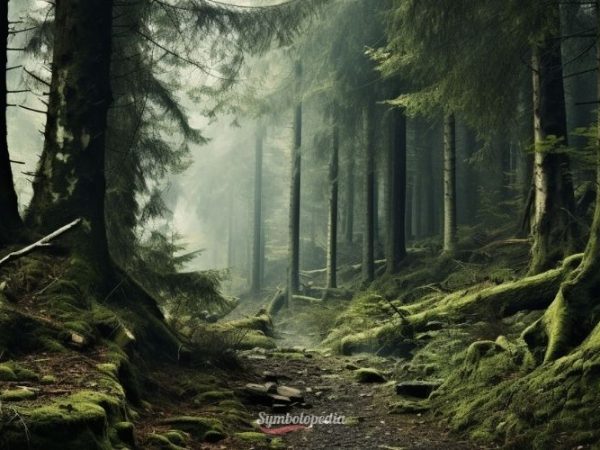
A sacred grove is a natural wooded area set apart for religious or spiritual purposes. Throughout history and across cultures, these groves have symbolized a threshold between the human world and the divine, a place of sanctuary, mystery, and renewal. They represent the sacredness of nature itself, often associated with deities, ancestors, and rituals of purification and transformation.
What Does Sacred Grove Symbolize?
The sacred grove is a powerful symbol of the connection between the earthly and the spiritual. As a deliberately preserved or venerated cluster of trees, it embodies the idea that divinity can be encountered within the natural world. The grove’s enclosed, shaded space creates a sense of separation from everyday life, making it a symbol of retreat, contemplation, and initiation.
Sacred groves also symbolize life, fertility, and abundance. Trees are living beings that grow, bear fruit, and provide shelter, and a grove amplifies these qualities. In many traditions, the grove is seen as a source of wisdom, healing, and oracular guidance—a place where the voice of the divine can be heard through rustling leaves or the movement of animals.
Additionally, the sacred grove represents protection and preservation. By declaring a grove sacred, communities ensured its trees were never cut and its wildlife was safe from hunting. This act of setting land apart symbolizes the need to honor and safeguard the natural world as a manifestation of the sacred.
Positive and Negative Meanings
Positive associations: The sacred grove is overwhelmingly seen as a positive symbol. It evokes peace, spiritual insight, healing, and harmony with nature. It is a place where one can find clarity, receive blessings, and feel the presence of the divine. The grove’s seclusion offers a refuge from the chaos of daily life, making it a symbol of inner peace and renewal.
Negative meanings: In some contexts, the sacred grove can carry an aura of danger or taboo. Because it is a liminal space—neither fully wild nor fully civilized—it can be associated with forbidden knowledge, rites that are secret or frightening, and encounters with unpredictable spirits. Entering a sacred grove without proper respect or permission was often believed to bring misfortune, illness, or divine punishment.
History and Origins of Sacred Grove Symbolism
The practice of venerating sacred groves dates back to prehistoric times and is documented in many ancient cultures. In Europe, the Celts, Greeks, Romans, and Germanic tribes all maintained sacred groves. The Greek historian Tacitus described the groves of the Germanic peoples as places where no human footprint was allowed and where rituals were conducted in deep silence. The Romans had the lucus, a grove dedicated to a deity, often marked by a stone altar or a statue.
In the ancient Near East, sacred groves were associated with the goddess Asherah and were planted near altars. The Hebrew Bible mentions “groves” (Asherim) that were condemned by prophets because they were sites of pagan worship. In India, sacred groves known as devarakadus or orans have been preserved for centuries, dedicated to local deities and spirits. These groves are among the oldest forms of conservation, demonstrating that the symbolism of the sacred grove has deep roots in humanity’s relationship with the natural world.
Sacred Grove Symbolism in Different Cultures
In Celtic tradition, sacred groves were central to Druidic practice. The oak, in particular, was revered, and mistletoe growing on oaks was cut with golden sickles in elaborate rituals. These groves were places of judgment, education, and spiritual ceremony. The word “druid” itself may derive from a term meaning “oak-knower.”
In Greek and Roman religion, sacred groves were dedicated to specific gods. The grove of Dodona was home to the oracle of Zeus, where priests interpreted the rustling of oak leaves. The grove of Diana at Nemi, known as the “Golden Bough” grove, was the site of a mysterious priesthood where a runaway slave could become king by breaking a branch and killing the current priest. This grove became famous through Sir James Frazer’s work The Golden Bough.
In Hinduism, sacred groves are called dev van or sarnas and are dedicated to village deities. They are protected by local communities and serve as reservoirs of biodiversity. Trees like the banyan, peepal, and neem are often planted in these groves and are considered sacred in their own right.
In Shinto, the sacred grove (shinrabansho) is an integral part of shrine architecture. The chinju no mori, or guardian forest, surrounds Shinto shrines and is believed to house kami (spirits). These groves are never cut and are maintained as pristine natural spaces that connect the shrine to the divine.
Spiritual Meaning of Sacred Grove
Spiritually, the sacred grove represents a portal to the divine. Its enclosed, quiet atmosphere encourages meditation and introspection. Many people today still seek out natural groves for spiritual retreat, feeling that the presence of ancient trees fosters a sense of connection to something greater than themselves.
The grove also symbolizes the cycle of life, death, and rebirth. Trees shed leaves and regrow them, and the grove as a whole undergoes seasonal changes that mirror human spiritual journeys. In this sense, the sacred grove is a symbol of renewal and eternal life—a place where the soul can be refreshed and transformed.
Sacred Grove in Myths and Folklore
Sacred groves appear frequently in world mythology. In Greek myth, the Garden of the Hesperides was a sacred grove where golden apples grew, guarded by a dragon. Heracles was tasked with retrieving these apples as one of his labors. The grove of Persephone at Enna in Sicily was said to be the place where Hades abducted her, marking the origin of the seasons.
In Norse mythology, the grove of the world tree Yggdrasil is a sacred space where the gods hold their council. The tree itself is an ash, and its three roots extend to different realms. The well of Urd, where the Norns weave fate, lies at its base, making the grove a symbol of destiny and cosmic order.
In Celtic folklore, sacred groves were believed to be inhabited by fairies, spirits, and other supernatural beings. To cut a tree in such a grove was to invite disaster. Stories tell of people who disturbed these groves and suffered illness, madness, or death. These tales reinforced the taboo and protected the groves from exploitation.
Sacred Grove in Dreams
Dreaming of a sacred grove often carries deep symbolic meaning. The grove can represent the subconscious mind—a hidden, fertile place where insights and emotions grow. Walking into a grove in a dream may signify a journey into one’s inner self, seeking wisdom or healing.
A dream of a sacred grove can also indicate a need for solitude and spiritual renewal. If the dreamer feels peaceful in the grove, it suggests a harmonious connection with their inner nature. If the grove feels dark or threatening, it may point to repressed fears or unresolved issues that need to be confronted.
Common Dream Scenarios
- Walking through a sunlit sacred grove: Represents clarity, spiritual awakening, and a positive period of growth.
- Getting lost in a sacred grove: Suggests confusion, uncertainty, or feeling overwhelmed by spiritual or emotional matters.
- Finding a hidden altar or statue in the grove: Indicates a discovery of personal truth or a message from the unconscious.
- Cutting down a tree in the grove: Warns against disrespecting nature or ignoring one’s spiritual responsibilities.
- Being chased in a sacred grove: Reflects anxiety about confronting deep-seated fears or taboo subjects.
Sacred Grove in Superstitions and Omens
Superstitions surrounding sacred groves are widespread. In many cultures, it is considered bad luck to cut a tree from a sacred grove. Such an act is believed to bring misfortune, illness, or even death to the perpetrator and their family. Even today, some communities in India and Africa maintain taboos against entering certain groves on specific days or without proper offerings.
Omens associated with sacred groves often involve animals or natural phenomena. Hearing a specific bird call within the grove might be seen as a message from ancestors. Finding a fallen branch or a dead animal could be interpreted as a warning. Conversely, seeing a deer or a white bird in the grove is often considered a positive omen, signifying blessings or protection from the spirits.
Sacred Grove in Art and Literature
Sacred groves have inspired numerous works of art and literature. In literature, the most famous treatment is Sir James Frazer’s The Golden Bough (1890), which opens with a detailed description of the sacred grove of Diana at Nemi. This work profoundly influenced modern anthropology and symbolism. In J.R.R. Tolkien’s The Lord of the Rings, the forest of Lothlórien functions as a sacred grove—a timeless, enchanted wood protected by the elf queen Galadriel, where time flows differently and the trees are imbued with memory and power.
In painting, the French artist Nicolas Poussin created “The Sacred Grove” (also known as “The Realm of Flora”) in the 17th century, depicting a mythological landscape with figures from Ovid’s Metamorphoses. The grove serves as a setting for transformation and divine encounters. The Pre-Raphaelite painter John William Waterhouse also frequently depicted sacred groves in works like “The Soul of the Rose” and “The Lady of Shalott,” using trees and enclosed natural spaces to evoke mystery and longing.
Frequently Asked Questions
Q: What is a sacred grove?
A: A sacred grove is a natural wooded area that has been set aside for religious or spiritual purposes. It is often protected by taboos and used for rituals, meditation, or as a dwelling place for deities or spirits.
Q: Why were sacred groves considered sacred?
A: They were seen as places where the divine could be encountered directly. The trees, silence, and separation from everyday life created an atmosphere conducive to worship, prophecy, and spiritual renewal.
Q: Are there still sacred groves today?
A: Yes, sacred groves exist in many parts of the world, especially in India, Japan, West Africa, and parts of Europe. They are often preserved by local communities and are important for both cultural heritage and biodiversity.
Q: What does dreaming of a sacred grove mean?
A: Dreaming of a sacred grove often symbolizes a journey into the subconscious, a need for spiritual retreat, or a connection with nature and inner wisdom. The specific details of the dream can provide further insight.
Related Symbols
- Forest – A larger, wilder version of the grove, symbolizing mystery and the unknown.
- Tree of Life – Represents cosmic order, growth, and connection between worlds.
- Oak – A common sacred tree, symbolizing strength, endurance, and divinity.
- Temple – A man-made sacred space, often mirroring the grove’s function as a place of worship.
- Sanctuary – A place of refuge and protection, both physical and spiritual.