Briefly
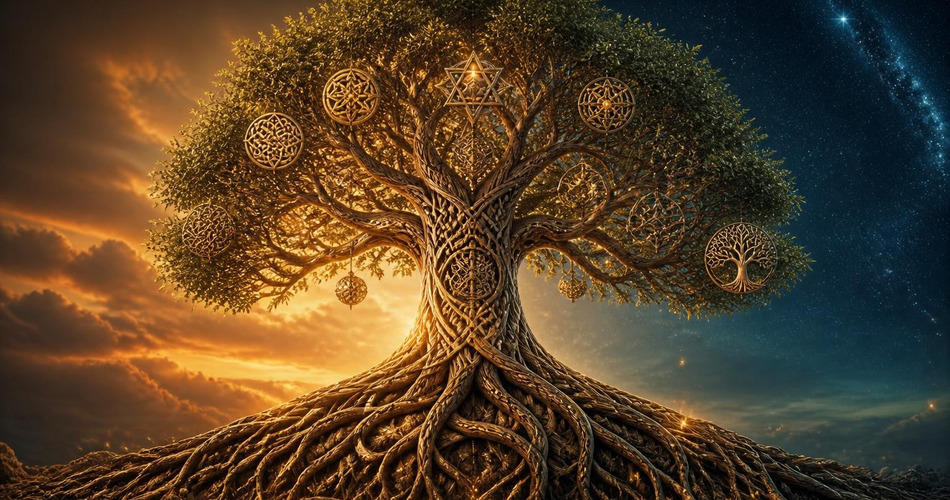
The Tree of Life is a universal symbol found in many cultures, religions, and mythologies around the world. It represents the interconnectedness of all life, linking the heavens, the earth, and the underworld. Often depicted as a large, flourishing tree with deep roots and spreading branches, it embodies growth, strength, renewal, and the cycle of life, death, and rebirth. This symbol conveys the idea that all living things are part of a single, vast network of existence.
What Does the Tree of Life Symbolize?
The Tree of Life primarily symbolizes interconnectedness and the unity of all life. Its roots reach deep into the earth, its trunk stands in the present world, and its branches stretch toward the sky, representing the connection between the physical and spiritual realms. It also signifies growth, both personal and collective, as a tree grows slowly but persistently over time. Additionally, the Tree of Life often symbolizes immortality or eternal life, as many traditions view it as a source of life that never truly dies. In a family context, it can represent ancestry, lineage, and the bonds between generations.
Positive and Negative Meanings
Positive associations: The Tree of Life is generally a positive symbol. It stands for strength, stability, wisdom, fertility, abundance, and endless renewal. It is a symbol of hope and resilience, showing that life continues even after difficult seasons. In many spiritual practices, it represents a path to enlightenment and a connection to the divine.
Negative meanings: While rare, the Tree of Life can also carry negative connotations when its imagery is twisted. A dying or uprooted Tree of Life might symbolize destruction, loss of connection, or the end of a lineage. In some interpretations, the tree’s vast reach can also suggest overextension or the burden of carrying too many responsibilities. However, these darker aspects are not typical in mainstream symbolism.
History and Origins of the Tree of Life Symbolism
The Tree of Life is one of the oldest and most enduring symbols in human history. It appears in the ancient cultures of Mesopotamia, Egypt, and the Indus Valley. In the Assyrian reliefs, sacred trees were often depicted flanked by winged genies. The ancient Egyptians saw the sycamore fig as a tree of life, and the goddess Nut was sometimes shown as a tree offering food and water to the dead. In the Hebrew Bible, the Tree of Life stood in the Garden of Eden as a source of eternal life. The concept also appears in the Kabbalistic tradition as the Etz Chaim, a diagram of ten sefirot that map the divine emanations and the path to spiritual understanding. Norse mythology features Yggdrasil, the World Tree, which is not exactly the Tree of Life but shares many characteristics, linking the nine worlds. The symbol has persisted through the ages, appearing in art, religion, and philosophy across continents.
Tree of Life Symbolism in Different Cultures
In Christianity, the Tree of Life appears in the Book of Genesis and the Book of Revelation, representing eternal life and God’s provision. In Jewish mysticism, the Kabbalistic Tree of Life is a central symbol for the structure of creation and the path to God. In Buddhist tradition, the Bodhi tree under which the Buddha attained enlightenment can be seen as a tree of life, symbolizing wisdom and spiritual awakening. The Celtic tradition reveres trees as sacred and often depicts a stylized tree of life (Crann Bethadh) as a symbol of harmony and balance between the natural and supernatural worlds. In many African cultures, the baobab tree is considered a tree of life, providing food, water, and shelter. The Maya and Aztec civilizations had their own versions of a world tree, often depicted as a ceiba or a cross, connecting the underworld, the earthly realm, and the heavens.
Spiritual Meaning of the Tree of Life
Spiritually, the Tree of Life represents a map of the cosmos and the human soul. In Kabbalah, each of the ten sefirot on the tree corresponds to a divine attribute and a stage of spiritual growth. Meditating on the Tree of Life is believed to help individuals understand their place in the universe and their relationship with the divine. In many New Age spiritualities, the Tree of Life symbolizes personal growth, grounding, and spiritual ascent. It is also associated with chakras, with the roots representing the root chakra and the crown being the crown chakra. The tree’s ability to absorb sunlight, water, and nutrients mirrors the spiritual practice of taking in wisdom and transforming it into inner strength.
Tree of Life in Myths and Folklore
In Norse mythology, Yggdrasil is the immense ash tree that holds the nine worlds. It is guarded by the Norns, who water it from the Well of Urd. Its roots reach into different realms, and it is home to various creatures, including the eagle and the dragon Níðhöggr. In Celtic folklore, the crann bethadh (tree of life) was often a large oak at the center of a tribe’s territory; cutting it down was considered a final act of conquest. In Mesopotamian myth, the tree of life was guarded by deities and associated with the sacred date palm. The Hindu concept of the Kalpavriksha is a wish-fulfilling divine tree, often identified with the banyan tree, that grants desires. These myths emphasize the tree as a source of life, protection, and divine connection.
Tree of Life in Dreams
Dreaming of a Tree of Life often indicates personal growth, stability, and a sense of being connected to something greater than oneself. A healthy, flourishing tree suggests a period of prosperity and well-being. Conversely, a withered or broken tree may point to feelings of disconnection, stagnation, or fear of mortality. The specific details of the dream, such as the color of the leaves or the presence of fruit, can provide further nuance. Dreams of climbing the Tree of Life may symbolize spiritual ambition or a desire for higher knowledge.
Common Dream Scenarios about Trees of Life
- Seeing a lush, green Tree of Life: Represents vitality, abundance, and positive growth in your life.
- A tree with exposed roots: May indicate a need to reconnect with your foundation or family origins.
- Climbing the tree: Suggests ambition, spiritual ascent, or a desire to gain a higher perspective.
- A tree that is dead or falling: Could symbolize loss, end of a cycle, or fear of change.
- Fruit on the tree: Often signifies rewards, success, or the fruition of your efforts.
Tree of Life in Superstitions and Omens
In various folk traditions, planting a tree of life near a home is thought to bring good luck, protect against evil spirits, and ensure the family’s prosperity. In some cultures, it is considered bad luck to cut down a large, old tree that is seen as a tree of life, as it may anger nature spirits. In Celtic regions, the hawthorn tree (often seen as a fairy tree) was avoided for cutting, and a tree growing on a sacred site was believed to grant wishes. Dreaming of a tree falling might be seen as an omen of a family death, while dreaming of a tree blooming out of season might herald unexpected good fortune.
Tree of Life in Art and Literature
The Tree of Life has inspired countless works of art and literature. A famous artistic depiction is Gustav Klimt’s 1909 painting The Tree of Life, a swirling, golden mosaic-like composition that blends the tree with feminine figures and symbols of regeneration. In literature, the Tree of Life appears in the Bible (Genesis 2:9, Revelation 22:2) as a symbol of eternal life and divine presence. J.R.R. Tolkien’s The Silmarillion features the Two Trees of Valinor, Telperion and Laurelin, which give light to the world and are later destroyed, only to be reborn in the form of the Sun and Moon. In the film Avatar (2009), the Tree of Souls serves as a neural network connecting all life on Pandora and a conduit to ancestors. These examples show how the Tree of Life continues to be a rich source of creative exploration, representing both the fragility and the persistence of life.
Tree of Life Tattoo Meaning
The Tree of Life is a popular tattoo motif because of its deep and varied meanings. People choose it to symbolize their connection to family, their personal growth, or their spiritual beliefs. The roots often represent family origins, the trunk stands for the present self, and the branches point to future aspirations or a connection to the divine. A Tree of Life tattoo can be designed in many styles, from minimalist black lines to elaborate Celtic knots or Norse-inspired Yggdrasil. It often includes additional elements like birds (freedom), leaves (growth), or fruits (abundance). The tattoo serves as a permanent reminder of one’s values and life journey.
Meanings of Different Types or Variations of the Tree of Life
Variations of the Tree of Life symbol carry subtle differences in meaning. The Kabbalistic Tree of Life focuses on divine emanations and spiritual pathwork. The Yggdrasil of Norse mythology emphasizes the interconnectedness of all realms and the cyclical nature of time. The Celtic Tree of Life (Crann Bethadh) is often drawn with intertwined branches and roots, symbolizing the unity of opposing forces and the eternal cycle of life. The Bodhi tree (the sacred fig under which Buddha attained enlightenment) represents wisdom and inner peace. The Tree of Life in the Bible is specifically about eternal life and is linked to the promise of redemption. Each cultural variant adds local flavor while preserving the core theme of life, connection, and transcendence.
Frequently Asked Questions about the Tree of Life
Q: What does the Tree of Life symbolize in a relationship?
A: In relationships, the Tree of Life symbolizes a deep, rooted connection that grows stronger over time, with each partner supporting the other’s growth. It represents commitment, shared ancestry, and the nurturing of love.
Q: Is the Tree of Life a religious symbol?
A: Yes, it appears in many religions including Christianity, Judaism (Kabbalah), Buddhism, and Hinduism, often as a symbol of divine connection, wisdom, or eternal life.
Q: What is the difference between the Tree of Life and the World Tree?
A: The Tree of Life typically emphasizes life, immortality, and spiritual growth, while the World Tree (like Yggdrasil) is a cosmic axis that physically supports the universe. However, the two concepts overlap significantly in many cultures.
Q: Can the Tree of Life be used as a gift?
A: Absolutely. Jewelry, artwork, or garden trees symbolizing the Tree of Life are common gifts for housewarmings, weddings, or new babies, conveying wishes for growth, stability, and a long life.
Related Symbols
- Yggdrasil – Norse World Tree, closely related to the Tree of Life concept
- Bodhi Tree – the fig tree of enlightenment in Buddhism
- Kalpavriksha – the wish-fulfilling tree in Hindu mythology
- Tree of Knowledge – the other tree in the Garden of Eden, representing moral choice
- Wheel of Life – Buddhist symbol of cyclic existence