Briefly
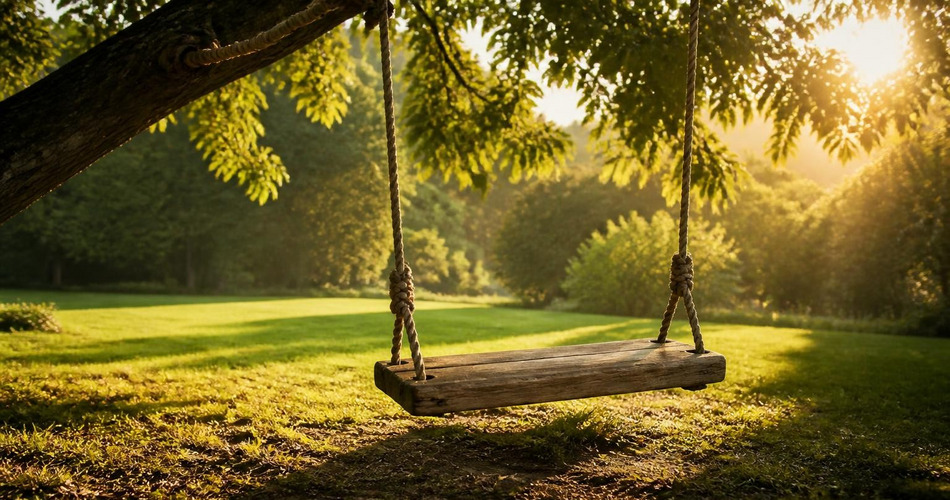
The swing is a universal symbol of childhood, freedom, and the gentle rhythm of life. Its back-and-forth motion captures the human experience of emotional highs and lows, transition, and the delicate balance between control and surrender. Found in playgrounds, gardens, and cultural rituals, the swing evokes nostalgia, joy, and the carefree spirit of letting go. At the same time, it can represent instability, risk, or the uncertainty of change. Across art, literature, and dreams, the swing remains a powerful emblem of both innocence and life’s cyclical nature.
What Does the Swing Symbolize?
The swing primarily symbolizes freedom and release. The act of swinging — propelling oneself through the air — mirrors the desire to break free from constraints, whether physical, emotional, or social. It embodies joy, playfulness, and the simple pleasures of childhood. The rhythmic motion also suggests the cyclical patterns of life, such as the changing seasons, emotional moods, or the passage of time. In a broader sense, the swing represents a temporary escape from gravity and responsibility, offering a moment of weightlessness and perspective.
Additionally, swings symbolize balance and duality. The movement requires coordination between effort and release, pushing and pulling. This reflects the need for equilibrium in life — between work and rest, giving and receiving, or hope and fear. The swing also stands as a metaphor for emotional vulnerability: each forward motion carries a risk of falling, yet the reward is the thrill of flight.
Positive and Negative Meanings of the Swing
Positive associations: Swings evoke feelings of nostalgia, innocence, and pure joy. They represent a return to simpler times, freedom from adult responsibilities, and the ability to find happiness in small moments. Swinging also symbolizes emotional release and the courage to let go of control, trusting the natural rhythm of life. In many cultures, swinging during festivals is believed to bring good luck, fertility, or spiritual cleansing.
Negative meanings: The swing can also signify instability, unpredictability, and vulnerability. The back-and-forth motion may represent emotional turmoil, indecision, or being stuck in repetitive cycles. For some, the swing evokes fear of losing control or the risk of falling — physically or metaphorically. In dreams, a broken or stuck swing often points to unresolved issues, stagnation, or suppressed emotions that need attention.
History and Origins of Swing Symbolism
The swing has ancient roots, appearing in rituals and celebrations across civilizations. In ancient Greece, the festival of Aiora (the Swing Festival) was held to honor Erigone, daughter of Icarius. Young women swung on ropes hung from trees as a purification rite and to commemorate the myth. This early connection links swinging to themes of death, rebirth, and atonement.
In India, the tradition of Jhulan Yatra (swing festival) celebrates the love between Krishna and Radha. Swings decorated with flowers are part of temple rituals, symbolizing divine playfulness and the joy of spiritual union. Similarly, in Chinese culture, swinging during the Qingming Festival was believed to ward off evil spirits and bring good health. These historical practices show that the swing has long been more than a child’s pastime — it is a tool for spiritual and social expression.
Swing Symbolism in Different Cultures
In many European traditions, swinging was part of spring and May Day celebrations, symbolizing fertility and the awakening of nature. Young couples would swing together as a courtship ritual, believing the height of the swing predicted the success of the harvest. In Scandinavia, swings were sometimes placed on graves or near burial sites, representing the soul’s journey between worlds.
In Latin America, swings made from vines or ropes appear in indigenous ceremonies, used to induce trance states or communicate with spirits. The rhythmic motion was believed to alter consciousness and facilitate shamanic journeys. Across these diverse cultures, the swing consistently represents a threshold — a space between earth and sky, the physical and the spiritual.
Spiritual Meaning of Swinging
Spiritually, swinging is often seen as a metaphor for the soul’s journey. The upward arc represents aspiration, spiritual growth, and connection to the divine, while the downward motion signifies return to the earthly realm. The pause at the highest point — that fleeting moment of weightlessness — symbolizes enlightenment or a glimpse of transcendence. In meditation practices, visualizing a swing can help cultivate a sense of letting go and trusting the natural flow of life.
The swing also embodies the principle of yin and yang, the balance of opposites. Each swing forward requires an equal pull back, teaching that joy and sorrow, gain and loss, are interconnected. This duality resonates with spiritual traditions that emphasize acceptance of life’s rhythms rather than resistance to them.
Swings in Myths and Folklore
One of the most enduring myths involving swings is the Greek story of Erigone. After her father Icarius was killed, Erigone hanged herself from a tree. The gods turned her into the constellation Virgo, and the festival of Aiora was established to honor her. Swinging during this festival was a ritual reenactment of her fate, blending grief with purification.
In Indian mythology, Krishna is often depicted swinging on a vine or decorated swing, surrounded by gopis (cowherd girls). This image symbolizes divine love, play (lila), and the blissful nature of the universe. Swinging here is not an escape but an expression of cosmic joy. In Slavic folklore, swinging too high or at forbidden times was believed to attract malevolent spirits, reflecting the swing’s association with liminal spaces.
Swings in Dreams
Dreams about swings often relate to emotional states and life transitions. The motion and condition of the swing provide clues to the dreamer’s inner world. Swinging high and freely suggests a sense of liberation, joy, or progress. A swing that moves jerkily or feels stuck may indicate emotional blocks or resistance to change. Falling from a swing in a dream can symbolize fear of failure, loss of control, or a sudden shift in circumstances.
Dreaming of an empty, moving swing may reflect feelings of absence, nostalgia, or a desire to reconnect with simpler times. The context — whether the dreamer is alone or with others — also matters. Swinging with someone often points to a shared emotional journey or relationship dynamics.
Common Dream Scenarios
- Swinging high up: Represents ambition, freedom, and a desire to rise above challenges. It also warns against overconfidence.
- A broken or rusty swing: Suggests unresolved issues from the past, neglected joy, or a feeling that something once loved is no longer safe.
- Falling off a swing: Reflects fear of losing control, a sudden setback, or the end of a carefree phase in life.
- An empty swing moving in the wind: Evokes nostalgia, remembrance of childhood, or a sense that someone is missing from your life.
- Pushing someone on a swing: Indicates a supportive role, nurturing a relationship, or encouraging another person’s growth.
Swings in Art and Literature
The swing appears in some of the most iconic works of Western art. Jean-Honoré Fragonard’s 1767 painting The Swing (also known as The Happy Accidents of the Swing) epitomizes the Rococo era’s playful sensuality. A young woman in a pink dress swings high above her lover, who hides in the bushes, while her shoe flies off — a symbol of liberated desire and the thrill of risk. The painting captures the swing’s connection to pleasure, flirtation, and the carefree spirit of the aristocracy.
In literature, Robert Louis Stevenson’s poem The Swing from A Child’s Garden of Verses (1885) celebrates the simple joy of swinging: “How do you like to go up in a swing, / Up in the air so blue?” The poem uses the swing as a symbol of childhood wonder and the pure delight of movement. More recently, in film, the swing often appears in scenes of childhood nostalgia or pivotal emotional moments (e.g., the swing in The Sandlot, symbolizing innocent friendship).
Tattoo Meaning of Swings
Swing tattoos are not extremely common but carry deep personal meaning for those who choose them. A swing tattoo typically represents a longing for innocence, a connection to one’s childhood, or a reminder to embrace freedom and playfulness. The design often includes a tree branch, a rope, and the seat, sometimes with a figure or empty. An empty swing tattoo can symbolize a lost loved one or a past phase of life, evoking nostalgia and memory.
Some incorporate flowers or stars to emphasize the beauty of fleeting moments. A swing tattoo on the wrist or ankle suggests mobility and lightness, while a larger piece on the back or shoulder emphasizes the idea of lifting burdens and rising above difficulties. The swing’s motion is sometimes depicted in motion lines to convey ongoing change and vitality.
Meanings of Different Types of Swings
- Playground swing: The most common image, symbolizing childhood joy, community, and the transition from carefree play to adult responsibility.
- Porch swing: Represents relaxation, domestic comfort, and the gentle passage of time. Often linked to southern hospitality and quiet reflection.
- Garden swing / rope swing: Connotes adventure, freedom, and connection to nature. The rope swing over water is a classic emblem of summer and youthful daring.
- Ceremonial swing (festival swing): Used in cultural and religious rituals, symbolizing spiritual purification, divine play, and the union of earthly and divine realms.
- Swingset with multiple swings: Emphasizes sharing, social bonds, and the dynamics of childhood friendships and sibling relationships.
Frequently Asked Questions
Q: What does a swing symbolize in dreams?
A: In dreams, a swing often represents emotional ups and downs, freedom, or the desire to escape from routine. The condition of the swing indicates how the dreamer is handling change or emotional balance.
Q: Is swinging a spiritual practice in any culture?
A: Yes, swinging is part of several spiritual traditions. In India’s Jhulan Yatra, swinging is a devotional act honoring Krishna. In ancient Greece, it was a purification ritual. Some shamanic cultures use rhythmic swinging to alter consciousness.
Q: Why do swings appear in so many Renaissance paintings?
A: Swings in Renaissance and Rococo art often symbolized the fleeting nature of pleasure, the cycle of life, and the intersection of earthly desire and heavenly aspiration. Fragonard’s The Swing is the most famous example.
Q: Are there any negative superstitions about swings?
A: In some European folklore, swinging at midnight or on certain holy days was thought to attract evil spirits or bring bad luck. An empty, moving swing was sometimes seen as an omen of death or departure.
Related Symbols
- Hammock – Relaxation, suspension, and the in-between state
- Pendulum – Rhythm, time, and the certainty of return
- See-saw – Balance, partnership, and the ebb and flow of give-and-take
- Ferris wheel – Cyclical joy, elevation, and collective experience
- Wings – Freedom, flight, and spiritual aspiration