Briefly
Macaws are among the most recognizable and vivid birds in the world, known for their striking plumage, high intelligence, and strong social bonds. In symbol systems around the globe, particularly in the cultures of Central and South America where they are native, macaws represent freedom, communication, and the vibrant energy of the tropics. Their ability to mimic human speech also associates them with vocal expression and the power of words, while their long lifespan and monogamous pairings link them to endurance and loyalty. At the same time, their loud calls and brilliant colors can serve as warnings or expressions of dominance, giving the macaw a dual nature as both a beautiful and formidable presence.
What Does Macaw Symbolize?
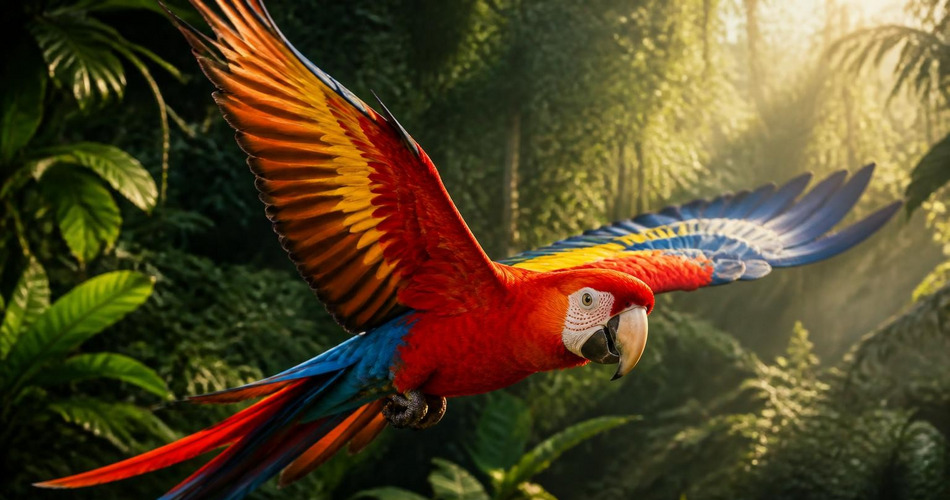
The macaw is first and foremost a symbol of freedom and the untamed spirit of the wild. Its ability to soar across vast rainforests and its reliance on open, healthy habitats tie the bird to themes of independence, exploration, and environmental awareness. Macaws are also highly social creatures, living in flocks and maintaining lifelong pair bonds, which makes them emblematic of communication, community, and fidelity. Their capacity for vocal mimicry—especially within species such as the blue-and-gold macaw—reinforces their association with speech, language, and the transmission of ideas. Furthermore, the brilliant, mixed colors of macaw feathers (scarlet, gold, blue, green) connect the bird to the sun, the sky, and the lush abundance of the tropical forest, making it a living embodiment of vitality and natural beauty.
Positive and Negative Meanings of Macaw
Positive associations: Macaws are widely seen as symbols of joy, creativity, and self-expression. Their dazzling colors inspire feelings of enthusiasm and optimism. Their intelligence and problem-solving abilities make them icons of wisdom and learning. In many indigenous traditions, macaw feathers are sacred and used in ceremonies to invoke the sun or to represent the voice of the gods, thus giving the bird a spiritual dimension of enlightenment and connection to higher realms.
Negative meanings: On the darker side, the macaw’s loud, raucous calls can be interpreted as disruptive or aggressive, symbolizing conflict or arrogance. In some folklore, the macaw’s ability to speak is seen as a trickster trait, suggesting deception or gossip. The bird’s association with the exotic and the wild may also carry connotations of being untamable or dangerous, especially in narratives where humans attempt to control nature and are harmed by it.
History and Origins of Macaw Symbolism
The symbolic roots of the macaw lie deep in the ancient civilizations of Mesoamerica and Amazonia. The Maya, for instance, revered the scarlet macaw (Ara macao) as a messenger of the sun god. Macaw feathers were prized for headdresses, shields, and royal regalia, symbolizing power, divinity, and the ruler’s connection to the cosmos. In Aztec culture, macaw feathers (called quetzalli, though also used for other colorful birds) were traded as luxury goods and worn by nobility. The macaw’s natural habitat—the rainforest canopy—also linked it to the intermediary zone between earth and sky, further cementing its role as a bridge between the human and spiritual worlds. Over time, as European explorers encountered macaws, the birds became exotic symbols of the New World, appearing in menageries and still-life paintings as emblems of the distant, rich landscapes of the Americas.
Macaw Symbolism in Different Cultures
In indigenous South American cultures, the macaw is often a totem of the sun and of vibrant life. The Kayapó people of the Amazon use macaw feathers in ceremonial body paint and headdresses, associating the bird with warrior status and spiritual power. In the Andes, the Inca considered the macaw (especially the military macaw) a symbol of the sun’s fire and of royalty. Among the Tupi-Guarani groups, macaws appear in myths as helpers or adversaries of heroes, frequently representing the untamed forces of nature. In modern Western cultures, macaws are popular as pets and symbols of tropical paradise; they often appear in advertisements, films like Rio, and as logos for brands that wish to convey color, energy, or exoticism. The bird’s endangered status in the wild has also turned it into a symbol of conservation and the fragility of biodiversity.
Spiritual Meaning of Macaw
Spiritually, the macaw carries an energy of empowerment, communication, and vibrancy. Its bright colors are seen as a reminder to embrace one’s true colors and speak one’s truth without fear. In shamanic traditions, the macaw feather is used in healing ceremonies to clear blockages and invite warmth and light. The macaw’s strong family bonds also symbolize the importance of community and partnership on the spiritual path. Meditating on the macaw can help a person access their own inner voice and express it clearly, while also remaining open to social connections. The bird’s long life—up to 50 years in captivity—links it to longevity and accumulated wisdom.
Macaw in Myths and Folklore
Macaws feature prominently in South American myths. In a well-known Maya creation story from the Popol Vuh, the macaw named Vucub Caquix (Seven Macaw) appears as a boastful, false sun who claims to be both sun and moon. He is eventually defeated by the Hero Twins, Humahpu and Xbalanque, using a blowgun and trickery. This myth positions the macaw as a figure of pride and false authority, but also as an important player in the cosmic order. In Amazonian folklore, macaws are sometimes considered the guardians of the rainforest; one Kayapó legend tells how the first macaw was created from the ashes of a great fire, giving it its red and orange feathers. In Brazil, some tribes believe that macaws carry the souls of the dead to the afterlife, due to their perceived link between earth and sky.
Macaw in Dreams
Dreaming of a macaw often points to a need for self-expression or a reminder to embrace one’s individuality. The bird’s loud call may symbolize a message the dreamer is not hearing in waking life. Alternatively, the macaw’s bright colors can indicate a period of creativity and joy approaching. If the macaw is caged, it may represent feelings of restriction or a desire for freedom. Because dream interpretation is highly subjective and only widely established meanings are covered here, these are the most commonly reported associations. A macaw that is speaking in a dream might suggest that the dreamer needs to pay attention to the words of others or to speak up themselves.
Common Dream Scenarios with Macaw
- Seeing a flying macaw: A symbol of liberation, high aspirations, and a clear path forward. It may indicate that you are about to break free from a limiting situation.
- A caged macaw: Represents suppressed desires or a lack of freedom. You may feel trapped in a job, relationship, or social role.
- A talking macaw: Points to gossip, important news, or a message from your subconscious. It can also mean you need to be more careful with your own words.
- A macaw with missing or dull feathers: May indicate a loss of vitality or self-worth, possibly due to illness or neglect.
- A flock of macaws: Highlights community, collaboration, and social dynamics. It can be a positive sign of support or a warning about group pressure.
Macaw in Superstitions and Omens
In some parts of South America, seeing a macaw flying in a certain direction is considered an omen of good luck—especially if it flies toward the sun. In contrast, in parts of Brazil, a macaw that lands on a house is sometimes thought to announce a birth or a death, depending on its color (red for life, black for death—though truly black macaws are rare). Among indigenous groups, it is considered unlucky to harm a macaw, as doing so might anger the spirits of the forest. In Western superstition, owning a macaw is sometimes associated with eccentricity or wealth, and a talking macaw repeating a phrase can be seen as a sign that the phrase carries special meaning.
Macaw in Art and Literature
Macaws have appeared in art for centuries, from pre-Columbian pottery and murals (such as the Mayan murals at Bonampak where scarlet macaw feathers adorn dancers) to European still-life paintings of the 17th century. In modern times, macaws feature prominently in the works of the Mexican painter Frida Kahlo, who owned a pet macaw and included it in several self-portraits, such as Self-Portrait with Monkey and Parrot (1942), where the bird symbolizes both wildness and fidelity. In literature, Gabriel García Márquez’s novel One Hundred Years of Solitude includes a scene with a macaw that represents the exotic isolation of the fictional town Macondo. The animated film Rio (2011) personifies a blue macaw named Blu, using the bird to explore themes of freedom, adaptation, and conservation.
Macaw Tattoo Meaning
A macaw tattoo is a popular choice for those who wish to express individuality, vivid personality, and a love of freedom. The design often incorporates the bird’s brilliant red, blue, and yellow feathers, making it a striking visual statement. Macaw tattoos can also symbolize the wearer’s connection to nature, tropical heritage, or South American ancestry. For some, the bird represents overcoming adversity, as macaws are survivors that adapt to threats such as deforestation. The tattoo’s meaning can shift depending on the pose: a flying macaw suggests liberation, while a perched macaw may indicate pride and watchfulness. Because macaws are monogamous, a pair of macaws is sometimes chosen to symbolize enduring love and partnership.
Meanings of Different Macaw Colors
Macaws come in several color variants, each carrying its own layer of symbolism:
- Scarlet Macaw (red, yellow, blue): Red is associated with passion, life force, and the sun; yellow with joy and abundance; blue with calm and spiritual insight. This combination makes the scarlet macaw a powerful totem of vitality, warmth, and balance.
- Blue-and-Gold Macaw: Blue represents communication, aspiration, and intellect, while gold symbolizes wisdom and wealth. This macaw is often linked to self-expression and the ability to speak eloquently.
- Green-Winged Macaw (red with green wings): The green adds elements of growth, nature, and healing. This bird suggests a grounded yet vibrant energy, connecting heart (red) and earth (green).
- Hyacinth Macaw (deep blue): The largest macaw, its solid blue color evokes depth, mystery, and the sky. It is a symbol of transcendence, loyalty, and inner peace.
Frequently Asked Questions about Macaw Symbolism
Q: What does a macaw symbolize in love?
A: A macaw symbolizes fidelity and strong partnership because they mate for life. In tattoos or gifts, they represent committed love and lasting affection.
Q: Is a macaw considered a good luck charm?
A: In many South American cultures, macaw feathers are used in rituals to attract positive energy and prosperity. However, specific superstitions vary; sometimes a macaw crossing your path is a sign of opportunity.
Q: What does it mean if a macaw talks in your dream?
A: It often suggests that you need to pay attention to a message from your subconscious or from someone close to you. It can also be a reminder to use your own voice more boldly.
Q: Why is the macaw important to the Maya?
A: The Maya linked the scarlet macaw to the sun god and used its feathers in royal and religious regalia. The bird also appears in their creation myth, the Popol Vuh, as a powerful cosmic figure.
Q: Are macaw tattoos culturally sensitive?
A: While macaw designs are not inherently sacred, using feathers or styles derived from indigenous cultures should be approached respectfully, especially in areas where macaw feathers traditionally hold spiritual significance.
Related Symbols
- Parrot: General symbol of mimicry and tropical vibrancy.
- Toucan: Another rainforest bird symbolizing communication and exotic beauty.
- Quetzal: Sacred bird of Mesoamerica, associated with freedom and wealth.
- Eagle: Symbol of power and vision, but with more martial connotations.
- Feather: Universal symbol of truth, lightness, and spiritual ascent.