Briefly
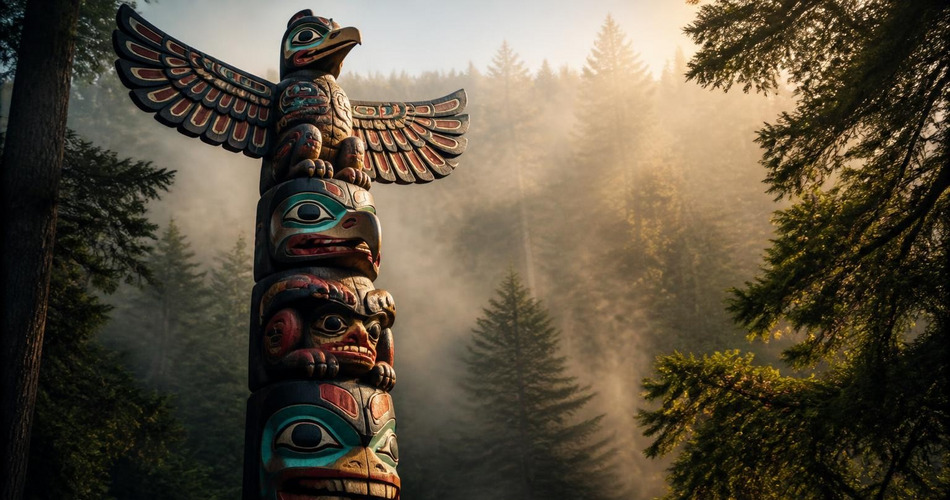
Totem poles are monumental carvings created by Indigenous peoples of the Pacific Northwest Coast, including the Haida, Tlingit, and Kwakwaka’wakw nations. They serve as visual narratives that record family histories, clan lineages, significant events, and spiritual beliefs. Each carved figure — whether an animal, spirit, or human form — carries specific meanings, making the pole a complex emblem of identity, heritage, and social status. Beyond their cultural roots, totem poles have come to symbolize connection to nature, ancestral wisdom, and the enduring power of storytelling.
What Does a Totem Pole Symbolize?
A totem pole is much more than a carved wooden column; it is a symbolic language in itself. The figures are arranged in a deliberate order, each one contributing to a larger narrative. The pole can represent a family’s lineage, with the bottom figure often being the most recent ancestor and the top figure the founder or a powerful guardian spirit. The animals and beings depicted are not mere decorations — they embody traits such as bravery, wisdom, cunning, or nurturing, acting as spiritual guides for the clan.
The placement of figures also carries meaning. For example, a raven at the top might signify a connection to the sky world or a story of creation, while a bear lower down could represent physical strength and the earth. The pole’s height and complexity often reflect the prestige of the family or clan that commissioned it. In this way, the totem pole serves as a public declaration of identity, rights, and achievements, visible to the entire community and visitors alike.
Positive and Negative Meanings
Positive associations: Totem poles are widely seen as symbols of strength, unity, and cultural pride. They represent the enduring connection between people, nature, and the spiritual world. They are also viewed as protectors, standing watch over villages and homes, and as repositories of ancestral knowledge and wisdom.
Negative meanings: Because totem poles are so closely tied to specific Indigenous cultures, their widespread reproduction and display in non-Indigenous contexts can be problematic. To some, they symbolize cultural appropriation or the commercialization of sacred traditions. Historically, the suppression of potlatch ceremonies and the removal of poles during colonial times also imbue them with associations of loss and displacement.
History and Origins of the Totem Pole Symbolism
The carving of totem poles is an ancient practice among the Indigenous peoples of the Pacific Northwest Coast, with origins that long predate European contact. The word “totem” itself comes from the Ojibwe term “odoodem,” referring to a kinship group or clan, though the carving tradition is distinct to the coastal nations. Early poles were likely smaller, but with the introduction of metal tools from European traders in the 18th and 19th centuries, carving became more elaborate, allowing for the creation of the towering poles seen in historical photographs.
Contrary to a common misconception, totem poles were never religious idols or objects of worship. Instead, they functioned as civic monuments and ceremonial markers. They were often raised during potlatches — grand gatherings where clans celebrated important events such as marriages, births, or the passing of a chief. The poles were living records, and when they decayed, they were allowed to return to the earth rather than being preserved, reflecting a worldview that embraces natural cycles.
Totem Pole Symbolism in Different Cultures
For the Indigenous cultures of the Pacific Northwest, totem poles are deeply embedded in social and spiritual life. Each nation has its own carving style and storytelling conventions. The Haida, for example, are known for their bold, dramatic forms, while the Tlingit often use more intricate, symmetrical designs. The figures on a pole can be read by those who understand the cultural context, but the same animal may have different meanings across nations. The wolf, for instance, is often a symbol of loyalty and intelligence among the Tlingit, while among the Kwakwaka’wakw it is linked to the sea and the hunt.
Outside this region, totem poles have been adopted more loosely as symbols of Indigenous identity and resilience across North America. They are sometimes used in public art and educational displays to represent a general connection to Native American heritage. However, this broader usage can obscure the specific cultural origins and meanings, which is why many Indigenous communities emphasize the importance of understanding the poles within their original context.
Spiritual Meaning of Totem Poles
Spiritually, a totem pole is a bridge between the human world and the world of spirits and ancestors. The figures carved into the pole are often seen as spiritual guides or protectors, each offering its unique gifts. The thunderbird, for example, is a powerful supernatural being associated with storms and the sky, believed to bring protection and spiritual power. The raven, in contrast, is a transformer and trickster, whose stories explain the creation of the world and the origins of natural phenomena.
For the people who commission and raise a pole, the act itself is a spiritual practice. The selection of the tree, the carving process, and the raising ceremony are all accompanied by rituals and prayers, infusing the pole with intention and meaning. The pole then stands as a continual reminder of the unseen forces that shape human life and the importance of maintaining harmony with them.
Totem Poles in Myths and Folklore
The myths and folklore associated with totem poles are vast, as each figure often represents a character from a clan’s oral history. Raven, for example, appears in countless stories across the Pacific Northwest as a creator and a deceiver. One well-known tale involves Raven stealing the sun and releasing it into the sky, bringing light to the world. A totem pole featuring Raven might commemorate this story, serving as a pictorial reminder of the clan’s connection to that mythic event.
Other common figures include the killer whale, a symbol of family and travel; the eagle, a messenger to the creator; and the frog, which is often associated with transformation and prosperity. These figures are not merely illustrations but are meant to be “read” by those who know the stories. The pole thus acts as a mnemonic device, preserving myths and histories in a public and enduring form.
Totem Pole Symbolism in Dreams
Dreaming of a totem pole can carry multiple meanings, often relating to identity, heritage, and inner strength. For a person with Indigenous ancestry, it might be a call to connect with their roots and learn about their family history. For others, it may symbolize the need to acknowledge their own “spiritual ancestors” or to reflect on the values they have inherited from their family and community.
The specific figures on the pole in the dream can also offer clues. A bear might represent a need for courage and grounding, while an eagle could suggest the need for a higher perspective on a situation. The condition of the pole is also significant — a new, sturdy pole suggests stability and growth, while a decaying or fallen pole might indicate a feeling of disconnection from one’s heritage or a warning to attend to neglected traditions.
Common Dream Scenarios
- Watching a totem pole being raised: This often symbolizes the beginning of a significant personal or community project, a celebration of achievement, or the restoration of family honor.
- Carving a totem pole: This can reflect a desire to tell your own story, establish your identity, or work through a process of self-creation and personal growth.
- A totem pole with a broken or missing figure: This may point to feelings of loss or a sense that part of your heritage or family story has been forgotten or fractured.
- Standing at the base of a very tall totem pole: This might evoke feelings of awe or humility in the face of a great challenge, or indicate a respect for the wisdom and endurance of your ancestors.
- A totem pole speaking to you: This rare and powerful dream image suggests that your subconscious or spiritual guides are communicating an important message that requires your attention.
Totem Poles in Superstitions and Omens
In the cultures that create them, totem poles are not typically associated with “superstition” as the term is commonly understood, but they do hold omen-like significance in specific contexts. The raising of a pole is an auspicious event, often believed to bring good fortune and blessings to the community. A pole that decays or falls is not usually seen as a bad omen, but rather as a natural part of the pole’s life cycle, akin to the passing of an elder. However, in some stories, the inappropriate treatment of a pole — such as vandalism or disrespect — is said to bring misfortune upon the perpetrator, emphasizing the pole’s role as a guardian of cultural sanctity.
Totem Poles in Art and Literature
While the original totem poles are functional cultural objects, they have also inspired artists and writers far beyond their region of origin. In visual art, the forms and motifs have been influential in the development of the broader Pacific Northwest Coast art style. Modern carvers like Bill Reid and Robert Davidson are celebrated for their totem poles, which are displayed in museums and public spaces worldwide, such as the famous poles in Stanley Park in Vancouver — which are actually replicas of historical poles, showing how these works have become symbols of the city and the region.
In literature, totem poles often appear as symbols of mystery, heritage, and the unknown in novels and stories set in the Pacific Northwest. They are frequently used as landmarks or as objects that carry the weight of history and cultural memory. For example, in many adventure or mystery novels, a totem pole might serve as a hiding place for a clue or as a marker of an ancient site. This usage, while sometimes romanticized, reflects the powerful hold that these majestic carvings have on the popular imagination.
Tattoo Meaning of Totem Poles
Totem pole tattoos are a popular way for people to express their connection to nature, their family heritage, or their personal values. Often, a tattoo will feature a specific animal figure rather than a full pole, allowing the wearer to align themselves with the qualities of that being — for example, a wolf for loyalty, an eagle for vision, or a salmon for determination and provision. The vertical arrangement of multiple figures in a tattoo can represent the different aspects of a person’s life or the various ancestors they wish to honor.
It is important to note, however, that totem pole designs are culturally significant, and many Indigenous artists and communities ask that people outside these cultures use them with respect and understanding. Getting a totem pole tattoo is often seen as a commitment to learning about the symbolism behind the figures, rather than just an aesthetic choice.
Meanings of Different Totem Pole Types and Figures
There are several types of totem poles, each with its own specific purpose and symbolism. Heraldic poles display a family or clan’s crests and are placed in front of their home. Memorial poles are carved in honor of a deceased person and often include a figure representing their clan. Mortuary poles contain the remains of the deceased in a carved box at the top. Welcome poles are placed at the shoreline to greet visitors, and shame poles were used (historically) to publicly ridicule a person or group who had acted improperly.
The individual figures also carry established meanings:
- Eagle: Power, authority, and the ability to see the larger picture.
- Raven: Trickster, creator, and transformer; brings light and knowledge.
- Bear: Strength, courage, and maternal care.
- Wolf: Loyalty, intelligence, and the spirit of the pack.
- Killer Whale: Family, protection, and travel; a guardian of the sea.
- Frog: Transformation, prosperity, and adaptability.
- Thunderbird: Supernatural power, the sky, and spiritual might.
- Beaver: Hard work, skill, and building a stable home.
Frequently Asked Questions
Q: Are totem poles religious objects?
A: No, totem poles are not religious idols or objects of worship. They are civic monuments that record clan histories, stories, and social status, though they do hold spiritual significance for the communities that create them.
Q: What do the colors on a totem pole mean?
A: Traditional colors include red, black, blue, and white, often derived from natural pigments. Red is associated with life and power, black with the spirit world, and blue with the sky, while white can represent purity or the light of the world.
Q: How long does it take to carve a totem pole?
A: Traditional carving can take many months, depending on the size and complexity of the pole. The process involves selecting a suitable tree, often Western Red Cedar, and working with specialized tools to create the intricate figures.
Q: Why are totem poles still made today?
A: Totem poles are still carved by Indigenous artists to celebrate cultural revival, mark significant events, and honor ancestors. They are also created as commissioned artwork for museums and public spaces to educate the public about indigenous heritage.
Related Symbols
- Heraldry: Like European coats of arms, totem poles use animals and symbols to represent family lineage and status.
- Petroglyphs: Ancient stone carvings that also record stories and spiritual beliefs.
- Spirit Animals: Personal guides whose traits one might embody, similar to the figures on a pole.
- Other Carved Masks: Ceremonial masks from the same cultures, used in dances and rituals.
- Symbolic Trees: The World Tree or Axis Mundi, representing a connection between different realms.