
Briefly
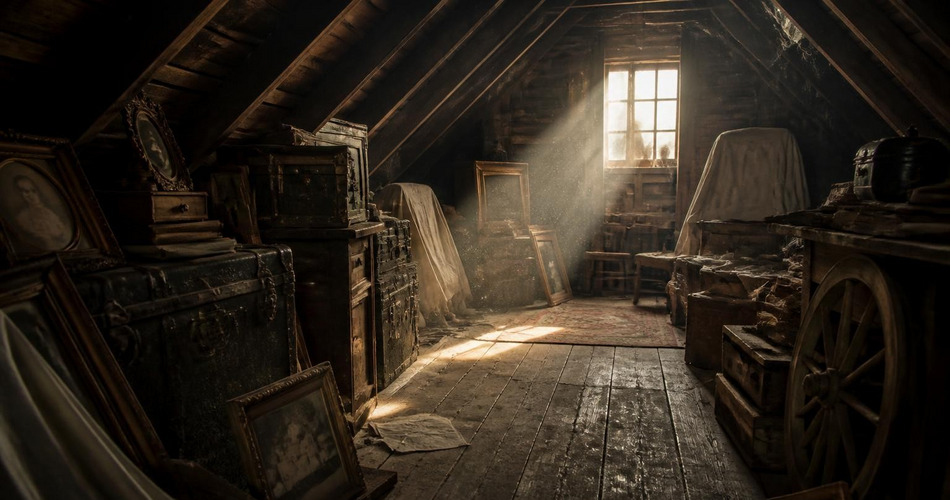
The attic is a powerful symbol of the mind, memory, and the hidden aspects of the self. It represents the repository of the past, where forgotten memories, family secrets, and old identities are stored. As a space that is neither fully part of the living quarters nor entirely separate, the attic embodies transition, potential, and the unknown. It can symbolize both the treasures of personal history and the burdens of unresolved issues, making it a complex symbol of introspection and discovery.
What Does the Attic Symbolize?
At its core, the attic symbolizes the unconscious mind or the hidden self. Just as attics are often cluttered with forgotten objects, they represent the accumulation of memories, experiences, and emotions that are not part of daily conscious awareness. The attic is a place of storage, but also of potential—old items can be rediscovered, repurposed, or understood anew, mirroring the process of psychological reflection and growth.
Attics also symbolize secrets and the past. Because they are out of sight, they can hide family histories, personal traumas, or cherished keepsakes. Finding something in an attic often implies uncovering a truth or a forgotten part of one’s life. This makes the attic a symbol of revelation, where what was hidden comes to light.
Additionally, the attic represents transition and liminality. It sits at the top of the house, between the lived-in floors and the roof, between the domestic and the outside world. This in-between quality gives the attic an association with change, potential, and the threshold between the known and the unknown.
Positive and Negative Meanings of the Attic
Positive associations: Attics can symbolize nostalgia, cherished memories, and the preservation of family history. They are places where valuable heirlooms, photographs, and letters are kept, connecting generations. The act of exploring an attic can represent self-discovery, healing, and the integration of past experiences into a fuller sense of identity.
Negative meanings: Attics are also associated with neglect, decay, and the weight of the past. They can represent repressed memories, unresolved trauma, or secrets that cause shame or fear. A dark, dusty attic may symbolize mental stagnation, isolation, or the fear of confronting what has been hidden.
History and Origins of Attic Symbolism
The symbolic meaning of attics is closely tied to the architectural and social history of houses. In many cultures, attics were practical spaces for storage, often used to keep items that were no longer needed but not yet discarded. This functional role naturally led to the attic being seen as a repository for the past—both physical objects and, by extension, memories and secrets.
In literature and folklore, attics have long been depicted as mysterious, sometimes eerie spaces. The Victorian era, with its fascination for the occult and the hidden, frequently used attics as settings for secrets, ghosts, or forgotten family members. The famous story of “The Yellow Wallpaper” (1892) by Charlotte Perkins Gilman features an attic-like setting that symbolizes the protagonist’s mental confinement and hidden struggles.
As houses evolved, attics became less common in modern architecture, but their symbolic resonance persisted. They remain a potent metaphor in psychology, where the “attic of the mind” is a common phrase for the subconscious or long-term memory.
Attic Symbolism in Different Cultures
In Western cultures, the attic is often seen as a place of mystery and hidden history. It appears in Gothic literature and horror films as a space where family secrets are kept, and where characters confront the darker aspects of their past. The phrase “skeletons in the closet” has a close parallel in the idea of secrets hidden in the attic.
In Japanese culture, attics are less common due to architectural differences, but the concept of a hidden storage space (such as a “nando” or storehouse) carries similar symbolic weight. These spaces are associated with preservation of family treasures and ancestral connections, but also with the potential for hidden shame or forgotten obligations.
In many indigenous cultures, elevated spaces like attics or lofts are considered closer to the spiritual realm. They may be used for storing sacred objects or for rituals, symbolizing a connection between the earthly and the divine. The attic’s height gives it an association with higher perspective, wisdom, and spiritual insight.
Spiritual Meaning of the Attic
Spiritually, the attic represents the higher self or the seat of intuition and inner wisdom. Because it is the highest point in a house, it can symbolize a place of clarity, vision, and connection to the divine. Meditating on the attic as a symbol may encourage introspection and the exploration of one’s inner world.
At the same time, the attic can represent the shadow self—the parts of the psyche that are hidden or rejected. Spiritual growth often involves “cleaning out the attic,” or confronting and integrating these hidden aspects to achieve wholeness. This process is akin to the Jungian concept of individuation, where one must face the unconscious to become a fully realized individual.
Attic in Myths and Folklore
Attics appear in folklore as places where spirits or supernatural beings dwell. In European folk traditions, attics were sometimes believed to be haunted by the ghosts of ancestors or by household spirits like the brownie or hobgoblin, which could be benevolent or mischievous. These stories reflect the attic’s role as a boundary space between the domestic world and the unknown.
In some folktales, attics hide magical objects or portals to other worlds. The idea of finding a hidden door or a magical item in an attic is a common motif in children’s literature, such as in C.S. Lewis’s “The Lion, the Witch and the Wardrobe” (though the wardrobe is in a spare room, the concept of a hidden passage in an upper room is similar). These tales use the attic as a symbol of adventure and the discovery of hidden potential.
Attic in Dreams
Dreaming of an attic often relates to the unconscious mind and the need to explore one’s past. The state of the attic in the dream—whether it is tidy, cluttered, dark, or bright—can offer clues about the dreamer’s emotional state and relationship with their history.
An attic in a dream may represent forgotten talents, unresolved issues, or aspects of the self that have been neglected. Exploring an attic in a dream can be a sign that the dreamer is ready to confront the past or uncover hidden truths. Conversely, a locked or inaccessible attic may indicate resistance to self-examination or fear of what might be found.
Common Dream Scenarios Involving Attics
- Finding something valuable in an attic: This often symbolizes discovering a hidden talent, a forgotten memory, or a solution to a problem. It suggests that the dreamer has untapped resources within themselves.
- A dark or frightening attic: Represents repressed fears, secrets, or unresolved trauma. The dream may be urging the dreamer to face these issues to find peace.
- Cleaning or organizing an attic: Indicates a desire to declutter one’s mind, let go of the past, or make sense of one’s memories. It can be a positive sign of personal growth and healing.
- Being trapped in an attic: Suggests feeling stuck in the past or overwhelmed by old emotions. It may reflect a situation where the dreamer feels unable to move forward.
- A bright, welcoming attic: Symbolizes clarity, wisdom, and a positive connection to one’s history. It may indicate that the dreamer has integrated their past and is at peace with it.
Attic in Superstitions and Omens
- In some European traditions, an attic was considered a place where spirits could enter the home, and it was common to keep a window or door slightly open to allow spirits to pass through without causing trouble.
- Finding a bird trapped in an attic was sometimes seen as an omen of death or a message from the spirit world, depending on the culture.
- In parts of rural America, it was believed that an attic should never be completely empty, as that would invite bad luck or leave the house vulnerable to negative energies.
- Some superstitions hold that an attic should not be renovated or disturbed without proper rituals, especially if it contains old family items, to avoid disturbing the spirits of ancestors.
Attic in Art and Literature
Attics have been used in literature and art as potent symbols of memory, secrecy, and psychological depth. In Charlotte Brontë’s Jane Eyre (1847), the attic of Thornfield Hall is where the madwoman Bertha Mason is hidden, symbolizing repressed passion, madness, and the dark secrets of the household. This iconic use of the attic has influenced countless later works.
In Anne Frank’s The Diary of a Young Girl (1947), the attic (or the “Secret Annex”) becomes a symbol of hope, confinement, and the resilience of the human spirit during the Holocaust. The attic is both a physical hiding place and a metaphor for the inner world of a young girl coming of age under extreme circumstances.
In visual art, the attic appears in works like The Attic (1923) by Edward Hopper, which depicts a solitary figure in a sparse attic room, evoking themes of isolation, introspection, and the passage of time. The painting’s quiet, contemplative mood reflects the attic’s association with solitude and reflection.
Frequently Asked Questions
Q: What does it mean if I dream about an attic?
A: Dreaming of an attic often symbolizes your unconscious mind, hidden memories, or aspects of your past that need attention. The condition of the attic and your actions within the dream provide further clues about your emotional state and readiness to confront the past.
Q: Is an attic a positive or negative symbol?
A: The attic can be both positive and negative. Positively, it represents preserved memories, hidden treasures, and potential for self-discovery. Negatively, it can symbolize repressed secrets, decay, and the burden of the past. The context determines its meaning.
Q: What does an attic represent in literature?
A: In literature, attics often represent hidden secrets, the unconscious mind, or the past. They are used as settings for revelation, confinement, or psychological exploration, as seen in works like Jane Eyre and The Diary of a Young Girl.
Q: Why are attics associated with ghosts?
A: Attics are associated with ghosts due to their role as storage spaces for old, forgotten items and their liminal position between the domestic and the unknown. In folklore, they are seen as places where spirits might dwell or where the boundary between worlds is thin.
Related Symbols
- Basement – The basement symbolizes the subconscious, primal instincts, and hidden fears, contrasting with the attic’s association with memory and the past.
- Stairs – Stairs represent transition, progress, and the journey between different levels of consciousness, often connecting the attic to the rest of the house.
- Closet – A closet symbolizes secrets, hidden aspects of the self, and the act of concealing, similar to the attic but on a smaller, more personal scale.
- House – The house as a whole symbolizes the self, with each room representing different aspects of personality or life stages; the attic is the part associated with memory and higher perspective.
- Key – A key symbolizes access, discovery, and the unlocking of secrets, often used in stories about attics to represent revealing hidden truths.