
Briefly
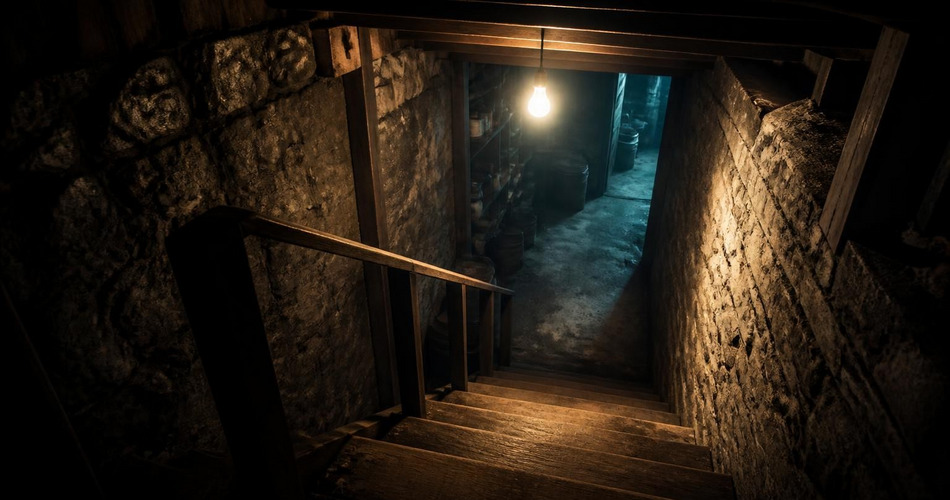
A basement is a part of a house that lies below ground level, and its symbolism draws on this physical position. Because it is hidden from view, the basement is commonly linked to the unconscious mind, repressed memories, and aspects of the self that are not openly displayed. At the same time, a basement supports the entire structure above it, making it a symbol of foundation, stability, and inner strength. Depending on context, it can represent both a safe retreat and a place of fear or confinement.
What Does a Basement Symbolize?
The basement is a powerful architectural symbol because it combines the idea of being underground with the idea of being part of a home. In many cultures, the home is a metaphor for the self, with its upper floors representing conscious, public life and its lower levels representing what is private, instinctual, or forgotten. A basement therefore often symbolizes the unconscious, hidden memories, secrets, and the raw material of the psyche.
Because the basement carries the weight of the floors above, it also symbolizes strength, support, and foundations. Just as a house relies on its basement for structural integrity, a person may rely on hidden reserves of resilience or deeply rooted beliefs without always being aware of them. The basement can represent the groundwork of identity, family history, or personal values that are not immediately visible.
Basements are also associated with storage. They hold things that are not needed every day but are considered worth keeping. In symbolic terms, this can translate to unused talents, old knowledge, or emotions that have been put aside. A basement can thus symbolize latent potential — something that has not yet been brought into the light.
Positive and Negative Meanings of Basement Symbolism
Positive associations: A basement can mean protection, particularly during storms or other dangers. It can offer a cool, quiet place for storage, work, or recreation. In dream interpretation and literary symbolism, descending into a basement is often seen as a chance to confront what is hidden and integrate it into waking life. The basement’s role as a foundation also gives it positive meanings of stability, security, and hidden strength.
Negative meanings: Basements can also represent fear, darkness, and confinement. They are often imagined as places where dangers lurk, such as pests, mold, or intruders. In psychological symbolism, a basement can stand for repressed memories, unresolved trauma, or the “shadow” self — the parts of a person that are denied or ignored. A damp, cluttered, or decaying basement can symbolize neglect, emotional decay, or the weight of things left unexamined.
History and Origins of Basement Symbolism
The symbolic meaning of the basement is rooted in the practical history of buildings. Underground spaces have been used for storage, shelter, and religious purposes for thousands of years. In ancient times, caves and cellars were places to keep food cool, hide from enemies, or bury the dead. These uses gave underground spaces an early association with both survival and mystery.
In residential architecture, basements became common in the 19th and 20th centuries, especially in regions with cold winters or limited space. As houses gained furnaces, laundry rooms, and storage areas, the basement became a functional part of the home. Its hidden nature made it a natural setting for stories about secrets, crime, and the supernatural.
The psychological interpretation of basements grew out of the work of early psychoanalysts, particularly Sigmund Freud and Carl Jung. Jung used the image of a house to describe the human psyche, with the upper stories representing consciousness and the cellar representing the personal unconscious. This idea influenced not only psychology but also art, literature, and popular culture, cementing the basement as a symbol of the hidden mind.
Basement Symbolism in Different Cultures
In European and North American traditions, the basement is often associated with the unknown. This can be seen in the many horror stories and urban legends that involve basements, such as tales of monsters or ghosts living below the house. The basement is the part of the home that is least often seen, and therefore it becomes a screen onto which fears are projected.
In some Indigenous traditions of North America, underground spaces such as kivas or sweat lodges have sacred meanings. They are places of ritual, healing, and connection to ancestors or the earth. While these are not domestic basements, they show a cultural pattern in which the underground is a place of spiritual depth rather than fear.
In Japanese culture, the idea of the basement or cellar is less prominent in traditional architecture, but the concept of hidden or underground spaces appears in folklore. Stories about yokai or spirits dwelling in dark, neglected places share similarities with Western basement tales. More broadly, the underground in many Asian cultures can symbolize the underworld or the realm of ancestors, as seen in festivals like the Chinese Ghost Festival.
Spiritual Meaning of the Basement
Spiritually, the basement is often seen as the lowest point of the house, making it a symbol of the earth, the body, and the root chakra in traditions influenced by Hindu and New Age thought. The root chakra, or Muladhara, is associated with survival, stability, and grounding — themes that align naturally with the basement’s role as a foundation.
In a spiritual reading, encountering a basement in a dream or meditation can mean that a person is being called to “go within” and examine the foundations of their life. It may be a prompt to confront fears, release old patterns, or discover hidden resources. The basement is a place of stillness and darkness, which can be seen not as an absence of light but as a condition for deep reflection.
Some spiritual traditions view the cellar or underworld as a place of death and rebirth. The descent into the basement can parallel the hero’s journey, in which a person must face difficulty or darkness before emerging transformed. This pattern appears in myth and religion, where underworld journeys often bring wisdom or power.
Basement in Myths and Folklore
In myths and folklore, the basement is not usually a separate category, but it belongs to the larger symbolism of the underworld, the cave, and the burial chamber. The Greek myth of Persephone and Hades takes place in an underworld that was sometimes imagined as a dark, cavernous realm beneath the earth. The Norse underworld of Hel is similarly underground. These stories establish the idea that what is below the surface is connected to death, secrets, and hidden powers.
Folktales often feature cellars as places of danger or transformation. In the Grimm tale “The Juniper Tree,” the young boy is murdered and his flesh is placed in a pot and cooked in a kind of underground or kitchen setting, and his soul is later reborn as a bird. The cellar in such stories represents a hidden space where terrible acts can occur out of sight.
In more recent folklore and urban legend, the basement appears in stories like “The Babysitter” or in internet tales about people living secretly in the walls or basements of a house. These modern myths rely on the same symbolic logic: the basement is a place where the ordinary rules of visibility and safety do not apply.
Basement in Dreams
In dream interpretation, basements frequently represent the dreamer’s unconscious mind. A dream about a basement can occur when the dreamer is processing memories, emotions, or desires that have been pushed out of awareness. The condition of the basement — clean or dirty, bright or dark, empty or cluttered — is often read as a reflection of the dreamer’s psychological state.
Descending a staircase into a basement in a dream can symbolize a journey into the self. It may indicate a willingness to confront difficult truths or a need to integrate shadow aspects. Conversely, being trapped in a basement may symbolize feeling overwhelmed by repressed emotions or by circumstances that seem inescapable.
Basement dreams are not always negative. A finished, comfortable basement can symbolize untapped potential, hobbies, or a private space for relaxation. Finding a new room in a basement dream can represent discovering hidden talents or new perspectives.
Common Basement Dream Scenarios
- Finding a new or hidden room in the basement — often symbolizes discovering untapped potential or a part of yourself you have ignored.
- Being chased or hiding in a basement — can represent running from a fear or an issue that has been unresolved in waking life.
- A flooded basement — may symbolize being overwhelmed by emotions or by the unconscious; water often stands for feeling submerged in feeling.
- A dark and scary basement — a common image for confronting the shadow self or an unknown aspect of your own mind.
- A clean, finished basement — often suggests that you are comfortable exploring your inner world or making use of your innate resources.
- Being locked in a basement — can indicate feelings of being trapped by a situation, habit, or memory you have not dealt with.
Basement in Superstitions and Omens
In folk superstition, the basement has a reputation for being unlucky or haunted. This is partly because it is dark, damp, and difficult to see into — qualities that make it easy to imagine as a hiding place for malevolent spirits. In some traditions, a previously buried home or a house built over something disturbing is said to bring bad luck, and the basement is often the focal point of such beliefs.
Some superstitions advise against opening a basement door or descending the stairs at night, as it might wake something that should remain asleep. Others suggest that a cluttered basement attracts negative energy or that keeping it clean helps keep the home and family safe. While these beliefs vary, they all reflect the basement’s symbolic role as the boundary between the known home and the unknown earth beneath it.
Basement in Art and Literature
The basement appears in many works of fiction as a place of confrontation and revelation. In Charlotte Perkins Gilman’s short story “The Yellow Wallpaper,” the protagonist is confined in a room in a large house, and while it is not strictly a basement, the oppressive, hidden field of the increasingly mad narrator connects to the symbolism of being trapped in a lower, unseen part of a domestic space. A more direct example is the film The People Under the Stairs (1991), which literalizes the idea of people hidden in a basement.
In Psycho (1960), Alfred Hitchcock creates one of the most famous cinematic versions of the basement — or rather the cellar — where the final revelation takes place. Norman Bates’s mother is revealed to be a figure hidden in the house’s lowest space, and the descent into the basement becomes a descent into the main character’s disturbed mind. Similarly, in The Silence of the Lambs, the character Buffalo Bill keeps his victims in a pit, a dark hole that underscores his own psychological imprisonment.
In literature, the basement is often used as a metaphor for social or economic foundations. In George Orwell’s Down and Out in Paris and London, the narrator works in café kitchens and hotel basements, showing the hidden labor that supports the visible world. More recently, the novel The House Next Door by Anne Rivers Siddons uses the idea of a house that exerts a malevolent influence, with its basement serving as a site of buried history.
Basement Tattoo Meaning
While basements are not a common tattoo subject, when they do appear, they are usually part of a larger design that emphasizes hidden depth, secrets, or the subconscious. A tattoo of a staircase leading down into darkness can symbolize a personal journey into the unknown or a commitment to confront one’s shadows. A literal basement scene might represent a significant memory or feeling tied to a particular home or childhood experience.
In tattoo culture, houses and buildings are often used to represent the self. A basement element in such a design can therefore indicate the parts of a person that are not obvious to the outside world. It can also be a symbol of resilience, suggesting that a person has strong foundations that are not immediately visible.
Frequently Asked Questions About Basement Symbols
Q: What does it mean when you dream about a basement?
A: Dreaming of a basement often points to the unconscious mind. The condition and action in the dream — such as being trapped, finding a room, or being chased — can reveal what you are processing or avoiding in waking life.
Q: Is a basement a negative symbol?
A: No, not always. A basement can represent stability, protection, and hidden strength. The negative meanings of fear, repression, and danger appear when the basement is dark, decaying, or used as a hiding place for something harmful.
Q: Why are basements associated with horror?
A: Basements are hidden, often dark, and outside the daily life of the home. They are ideal settings for things that are “not supposed to be seen,” which is why horror stories frequently use them for secrets, monsters, and buried truths.
Q: What is the psychological meaning of a basement?
A: In psychoanalytic tradition, especially after Carl Jung’s house metaphor for the psyche, a basement represents the personal unconscious — the level of the self that is below conscious awareness and holds repressed or forgotten material.
Q: What does a basement mean in a spiritual context?
A: Spiritually, the basement often symbolizes grounding, the root chakra, and the descent inward. It is a space for confronting fears and discovering the foundations of one’s life, which can be a transformative experience.
Related Symbols
- Attic — the upper counterpart, associated with intellect, memory, and the conscious mind.
- Cellar — a similar underground space, specifically linked to storage and survival.
- Stairs and staircases — represent movement between the conscious and unconscious levels of a home.
- Cave — a natural underground space with similar solitude, mystery, and transformational symbolism.
- Tunnel — another passageway below the surface, often signifying the unconscious or a hidden transition.
- Underworld — the mythic realm below the earth, paralleling the basement’s symbolism of death, rebirth, and hidden powers.