Briefly
A manuscript is a handwritten document, often of historical, literary, or religious importance. As a symbol, it represents the preservation of knowledge, the authenticity of human thought, and the tangible connection to the past. Manuscripts embody both the fragility of ideas and the enduring power of the written word, standing as testaments to craftsmanship, dedication, and the transmission of culture across generations.
What Does Manuscript Symbolize?
Manuscripts symbolize knowledge and wisdom passed down through generations. They are physical evidence of human intellect, creativity, and the desire to record and share ideas. A manuscript also signifies authenticity—unlike printed or digital copies, a handwritten manuscript carries the unique mark of its creator, including personal flourishes, corrections, and marginal notes that reveal the process of thought.
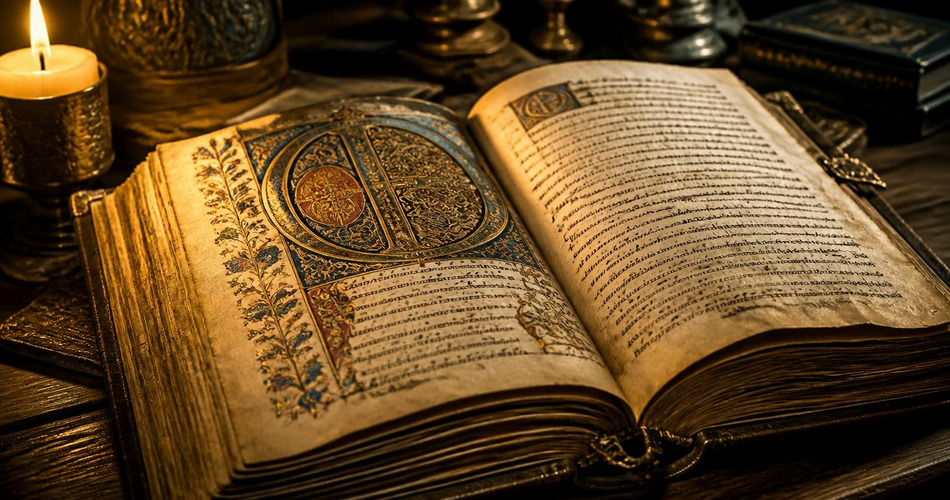
Furthermore, manuscripts represent preservation. They are deliberate efforts to safeguard information against loss, decay, or censorship. In many contexts, a manuscript is a symbol of authority, especially when it contains sacred laws, royal decrees, or foundational texts of a culture. The care invested in creating illuminated manuscripts—with intricate illustrations and calligraphy—also elevates the manuscript as a work of art and devotion.
Positive and Negative Meanings
Positive associations: Manuscripts are revered as treasures of human heritage. They symbolize wisdom, learning, and the continuity of culture. Owning or discovering a manuscript can represent intellectual wealth, a link to ancestors, or a key to hidden knowledge. In literature, a manuscript often serves as a plot device that unlocks secrets or reveals truth.
Negative meanings: On the darker side, a manuscript can symbolize secrecy, forbidden knowledge, or the burden of hidden truths. A lost or destroyed manuscript represents the fragility of memory and the irreversible loss of culture. Manuscripts can also be associated with obsession—the relentless pursuit of a perfect text or the hoarding of rare documents. In fiction, a cursed or dangerous manuscript may bring misfortune to its reader.
History and Origins of Manuscript Symbolism
The symbolic weight of manuscripts stems from their historical role as primary carriers of knowledge before the printing press. Ancient civilizations—Egyptian papyrus scrolls, Chinese bamboo slips, Indian palm-leaf manuscripts—all treated written documents as sacred or authoritative objects. The medieval European scriptorium, where monks painstakingly copied texts by hand, imbued manuscripts with an aura of religious devotion and scholarly discipline.
The illuminated manuscript in particular became a symbol of divine beauty and human reverence. Works like the Book of Kells (c. 800 AD) and the Lindisfarne Gospels (c. 715 AD) are not merely texts but masterpieces of art, symbolizing the fusion of faith, art, and learning. With the advent of printing in the 15th century, manuscripts transitioned from everyday tools to rare, collectible artifacts, enhancing their symbolic association with uniqueness and authenticity.
Manuscript Symbolism in Different Cultures
In Western culture, the manuscript is closely tied to the Bible and other religious texts. The Dead Sea Scrolls, discovered in the mid-20th century, symbolize the survival of ancient faith through fragile parchment. In Judaism, the Torah scroll is a sacred manuscript treated with utmost reverence, symbolizing the covenant between God and the people.
In Islamic culture, the Quran was originally transmitted orally and later compiled into manuscripts. Calligraphic Quranic manuscripts are revered as artistic and spiritual objects, symbolizing the beauty of divine revelation. In East Asia, handwritten scrolls—whether Buddhist sutras, Chinese classics, or Japanese poetry—represent the harmony of brushwork and meaning, embodying the scholar’s path.
Indigenous cultures also hold manuscript-like records, such as the Maya codices, which are painted bark-paper books that encode astronomical, ritual, and historical knowledge. These manuscripts symbolize the intellectual achievements of pre-Columbian civilizations and the tragic loss of many due to colonial destruction.
Spiritual Meaning of Manuscripts
Spiritually, a manuscript can represent the Word of God or divine instruction. Sacred manuscripts are often treated as living entities—blessed, carried in processions, and kept in ornate containers. The act of copying a sacred manuscript is itself a spiritual practice, a form of meditation and devotion. In many traditions, the manuscript is a conduit between the human and the divine, a tangible anchor for faith.
On a personal level, a manuscript in a spiritual context may symbolize one’s own life story or soul’s journey. The idea of a “book of life” appears in several religions, where one’s deeds are recorded in a heavenly manuscript. This concept underscores the manuscript as a symbol of accountability and divine memory.
Manuscript in Myths and Folklore
Folklore often features manuscripts as objects of mystery and power. Legends of lost manuscripts—such as the fabled Book of Thoth in Egyptian mythology, which contained spells to understand the secrets of the universe—portray manuscripts as keys to forbidden knowledge. In European folklore, the Necronomicon (though fictional) has become a modern myth: a manuscript so dangerous that reading it can summon evil forces.
Another recurring motif is the self-writing manuscript, where a book writes itself or reveals hidden truths to its reader. This appears in tales like “The Manuscript Found in Saragossa” by Jan Potocki, where a discovered manuscript contains interlocking stories that blur reality and fiction. Such myths emphasize the manuscript’s power to captivate and transform those who engage with it.
Manuscript in Dreams
Dreaming of a manuscript often relates to communication, hidden knowledge, or unfinished business. A manuscript may appear as a symbol of one’s personal story or a message from the subconscious. Finding a manuscript in a dream can indicate a discovery of forgotten talents or insights. Losing or destroying a manuscript might reflect fears of failure, loss of memory, or an inability to express oneself.
Because dream interpretation is highly personal and not universally standardized, these meanings should be considered as common associations rather than fixed rules. The condition of the manuscript—old, new, clear, illegible—can provide additional clues about the dreamer’s state of mind.
Common Dream Scenarios
- Finding an old manuscript: Suggests uncovering hidden talents, ancestral knowledge, or a solution to a long-standing problem.
- Writing a manuscript: Reflects a desire to organize thoughts, leave a legacy, or communicate something important.
- Losing or burning a manuscript: Indicates fear of failure, loss of identity, or the destruction of one’s efforts.
- Reading a mysterious manuscript: Represents a quest for truth or the need to decode a confusing situation in waking life.
Manuscript in Superstitions and Omens
Superstitions surrounding manuscripts are rare but exist in specific contexts. In some traditions, dropping a sacred manuscript is considered a bad omen, requiring purification rituals. Finding an old manuscript in an attic or library is sometimes seen as a sign of good fortune, suggesting that hidden wisdom will soon be revealed. Conversely, a manuscript that cannot be read—due to decay, illegible handwriting, or a unknown language—may be viewed as an omen of confusion or a warning against pursuing forbidden knowledge.
Manuscript in Art and Literature
Manuscripts play a prominent role in literature and art as symbols of mystery, authority, and the search for truth. In Umberto Eco’s novel The Name of the Rose (1980), a medieval monastery’s library holds a lost manuscript of Aristotle’s Poetics that becomes the center of a murder mystery. The manuscript symbolizes the dangerous allure of forbidden knowledge and the conflict between faith and reason.
In The Manuscript Found in Saragossa (1805) by Jan Potocki, a discovered manuscript contains a nested series of tales that challenge the protagonist’s perception of reality. The manuscript itself becomes a symbol of the layered nature of storytelling and truth. The Voynich Manuscript, a real undeciphered codex from the 15th century, has inspired countless works of fiction and art, representing the ultimate enigma—a text that resists interpretation.
In visual art, illuminated manuscripts like the Book of Kells are studied for their intricate symbolism and decorative motifs. Contemporary artists often reference manuscript forms to comment on the fragility of knowledge in the digital age.
Manuscript Tattoo Meaning
Manuscript tattoos are not as common as other literary symbols, but they hold meaning for writers, scholars, and those who value the written word. A tattoo of a manuscript page can symbolize a love of literature, a dedication to preserving history, or a personal connection to a specific text. Often, the tattoo features a favorite quote or a passage from a sacred or meaningful manuscript, rendered in calligraphic style. It can also represent the wearer’s own life story as a “work in progress.”
Meanings of Different Types of Manuscripts
- Illuminated manuscript: Symbolizes divine beauty, devotion, and the union of art and faith. Often associated with religious reverence.
- Scroll manuscript: Represents antiquity, continuity, and the unfolding of knowledge. Scrolls are often linked to ancient wisdom and prophecy.
- Codex manuscript: The early book form, symbolizing structure, portability, and the organization of knowledge. The codex became the standard for Christian scripture.
- Palimpsest: A manuscript where original text has been scraped off and reused, symbolizing hidden layers, erased history, and the palimpsest of memory.
Frequently Asked Questions
Q: What does a manuscript symbolize in literature?
A: In literature, a manuscript often symbolizes hidden knowledge, a quest for truth, or the power of storytelling. It can be a plot device that drives the narrative, representing secrets, authority, or the fragility of history.
Q: Is a manuscript a symbol of authenticity?
A: Yes, because a manuscript is a unique, handwritten document that bears the direct mark of its creator. It contrasts with mass-produced copies, making it a symbol of originality and personal expression.
Q: What is the spiritual meaning of a manuscript?
A: Spiritually, a manuscript can represent divine revelation, sacred law, or the recording of one’s deeds in a heavenly book. It is a tangible link between the human and the divine.
Q: Can a manuscript be a negative symbol?
A: Yes, a manuscript can symbolize forbidden knowledge, secrecy, or the burden of a hidden truth. In some stories, cursed manuscripts bring misfortune to their owners.
Related Symbols
- Scroll: An ancient form of manuscript, often associated with prophecy and sacred texts.
- Book: A broader symbol of knowledge, learning, and narrative.
- Codex: The early bound book, symbolizing structured knowledge and portability.
- Quill: The tool used to write manuscripts, symbolizing creativity and the written word.
- Library: A collection of manuscripts and books, symbolizing accumulated wisdom and cultural memory.
- Palimpsest: A reused manuscript, symbolizing hidden layers and erased histories.