Briefly
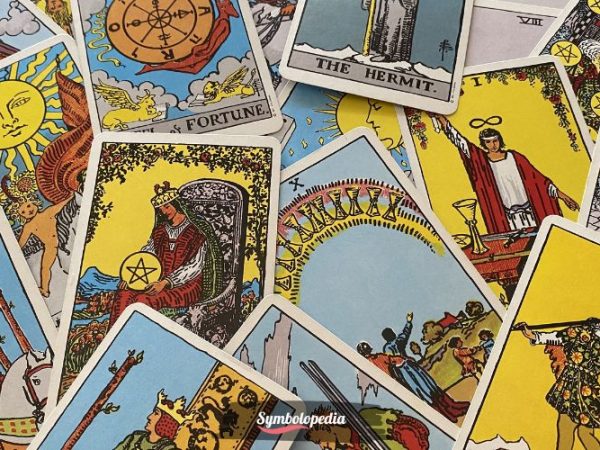
Tarot cards are a deck of 78 cards used primarily for divination and self-reflection. The deck is divided into the Major Arcana (22 cards representing major life themes and archetypal forces) and the Minor Arcana (56 cards reflecting everyday situations, divided into four suits: Wands, Cups, Swords, and Pentacles). Each card carries layered symbolic imagery—colors, numbers, figures, and objects—that together create a narrative tool for exploring the past, present, and potential futures. While tarot originated as a playing card game in 15th-century Europe, its modern symbolic meaning is deeply tied to esoteric traditions, psychological archetypes, and personal growth.
What Does Tarot Card Symbolize?
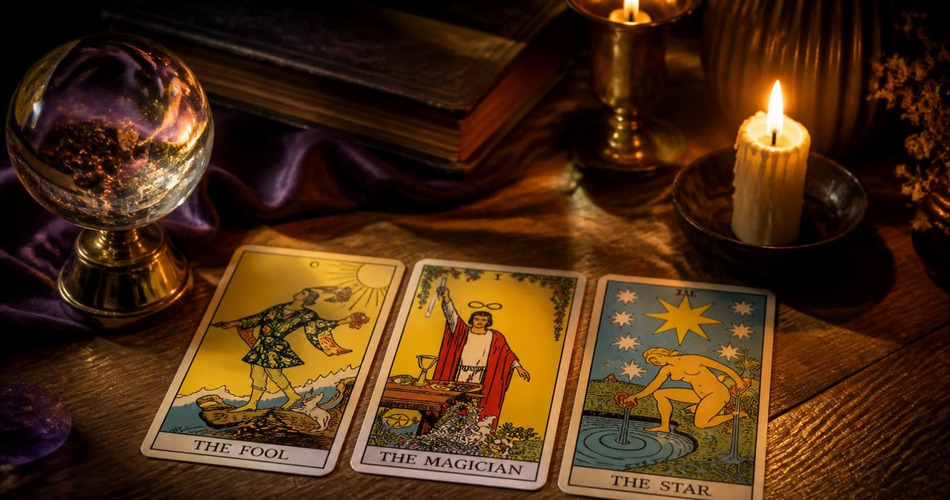
Tarot cards symbolize the journey of life and the interplay between fate and free will. The Major Arcana traces a spiritual path from The Fool (innocence, beginnings) through trials, triumphs, and transformations to The World (completion, unity). Each card in this sequence represents a stage of human development—such as The Magician (skill and will), The High Priestess (intuition), Death (transformation), and The Sun (joy and success). The Minor Arcana, meanwhile, symbolizes the daily challenges and opportunities that shape our experience. The four suits correspond to different realms: Wands (creativity, passion, action), Cups (emotions, relationships, intuition), Swords (thought, conflict, truth), and Pentacles (material world, work, health). Together, the deck symbolizes a holistic map of human consciousness and the cycles of change.
Positive and Negative Meanings
Positive associations: Tarot cards can symbolize clarity, guidance, self-awareness, and empowerment. A reading may reveal hidden strengths, confirm a path, or offer reassurance during uncertainty. Cards like The Star (hope, inspiration) or the Ten of Cups (emotional fulfillment) are seen as auspicious signs. The act of consulting tarot encourages reflection and can foster a deeper connection with one’s intuition and inner wisdom.
Negative meanings: Certain cards are traditionally viewed as challenging or ominous, such as The Tower (sudden upheaval, destruction of false structures), Death (endings, transformation), or the Ten of Swords (painful conclusion, betrayal). These cards symbolize crises, loss, or obstacles that force growth. In a reading, they often indicate areas of life requiring attention, acceptance, or change rather than literal doom. The negative interpretations are balanced by the understanding that even difficult cards carry the potential for renewal and learning.
History and Origins of Tarot Card Symbolism
The earliest known tarot decks appeared in northern Italy in the mid-15th century, created for aristocratic families as playing cards for a game called tarocchi. These early decks (such as the Visconti-Sforza deck) featured allegorical illustrations—trump cards with figures like The Emperor, The Pope, and The Wheel of Fortune—that already carried symbolic meanings drawn from medieval Christian morality and classical mythology. The symbolic layer deepened in the 18th and 19th centuries when occultists like Antoine Court de Gébelin and Eliphas Lévi linked tarot to Egyptian mysteries, Kabbalah, and alchemy. The Rider-Waite-Smith deck (1909), designed by Arthur Edward Waite and illustrated by Pamela Colman Smith, became the most influential modern deck, embedding explicit esoteric symbols—such as the astrological and Hebrew letter correspondences—into each card. This deck established the now-standard imagery for the Minor Arcana as well, transforming tarot from a game into a comprehensive symbolic system for divination and psychological exploration.
Tarot Card Symbolism in Different Cultures
While tarot originated in Europe, its symbolism has been adapted and reinterpreted worldwide. In the West, tarot is central to the esoteric traditions of Hermeticism, Thelema, and modern Neopaganism. The Thoth deck (created by Aleister Crowley and Lady Frieda Harris) incorporates Egyptian, Hindu, and alchemical symbols, reflecting a global syncretism. In Latin America, tarot is often blended with folk Catholicism and Santería, where cards are used for spiritual guidance alongside other divination methods. In Japan, tarot has been integrated into popular culture and manga, with decks featuring anime-style art that reimagines the traditional symbols through a contemporary lens. Despite these variations, the core symbolic structure—the Fool’s journey, the four suits, and the archetypal figures—remains recognizable across cultures, making tarot a flexible tool for universal storytelling and introspection.
Spiritual Meaning of Tarot Cards
In spiritual contexts, tarot cards are seen as a mirror of the soul and a means of connecting with higher guidance. The deck is often used in meditation, where a single card is drawn as a focus for contemplation. The Major Arcana, in particular, is interpreted as a map of spiritual initiation—each card representing a lesson or trial on the path to enlightenment. For example, The Hermit symbolizes inner seeking and solitude, while Judgment represents a call to awaken and integrate past experiences. The four suits correspond to the four elements (Wands = Fire, Cups = Water, Swords = Air, Pentacles = Earth), grounding the spiritual symbolism in the natural world. Many practitioners believe that tarot readings can reveal karmic patterns, soul contracts, and the influence of unseen forces, though the emphasis remains on personal insight and empowerment rather than fatalism.
Tarot Cards in Myths and Folklore
Tarot has accumulated a rich body of myths and folklore over centuries. One persistent legend claims that tarot originated in ancient Egypt, with the cards encoding the lost wisdom of the god Thoth—a theory popularized by Court de Gébelin but lacking historical evidence. Another widespread belief associates tarot with the Romani people (often called “Gypsies”), who were thought to have brought the cards from the East; in reality, Romani fortune-tellers adopted tarot after it was already established in Europe. The figure of the “Gypsy fortune-teller” reading tarot cards became a staple of Western folklore, appearing in literature and film. Additionally, certain cards have acquired superstitious reputations: The Death card is frequently feared by those unfamiliar with its symbolic meaning of transformation, and The Hanged Man is sometimes misinterpreted as a sign of doom rather than surrender and new perspective. These myths contribute to tarot’s mystique but often obscure its original symbolic intent.
Tarot Cards in Dreams
Dreaming of tarot cards often reflects the dreamer’s engagement with intuition, decision-making, or hidden knowledge. A tarot deck appearing in a dream may symbolize a need for guidance or a desire to understand life’s patterns. The specific cards seen can carry meanings similar to their waking interpretations: for instance, dreaming of The Lovers might indicate a relationship crossroads, while The Tower could signal anxiety about sudden change. Common dream scenarios include finding a missing card, having a reading done by a mysterious figure, or seeing cards scattered on a table. These dreams often occur during periods of uncertainty or personal transformation, when the subconscious uses the familiar symbolic language of tarot to process complex emotions and choices.
- Dreaming of drawing The Fool: suggests a new beginning or a leap of faith in waking life.
- Dreaming of the Death card: often represents an ending or major transition, not literal death.
- Dreaming of a reversed card: may indicate blocked energy or a need to reconsider a situation.
- Dreaming of a full tarot spread: implies a desire for clarity or a subconscious attempt to organize thoughts.
Tarot Cards in Superstitions and Omens
Tarot cards have attracted numerous superstitions, especially among those who use them for fortune-telling. Some believe that a deck should never be bought for oneself—it must be given as a gift to be effective. Others insist that cards should be stored in a silk cloth or a special box to preserve their energy. The Death card is often considered an omen of literal death by the superstitious, despite its symbolic meaning of transformation. Similarly, the Three of Swords (heartbreak) and Ten of Swords (ruin) are sometimes viewed as “bad luck” cards. In some traditions, a reader will not allow a client to touch the deck, fearing that negative energy could taint the reading. These superstitions, while not central to tarot’s symbolic system, reflect the deep cultural aura of mystery that surrounds the cards.
Tarot Cards in Art and Literature
Tarot cards have inspired countless works of art and literature. One of the most famous literary references appears in T.S. Eliot’s poem The Waste Land (1922), where a clairvoyant named Madame Sosostris reads tarot cards, including the “drowned Phoenician Sailor” (likely the Drowned Man card) and the “Hanged Man.” Eliot used the cards to evoke themes of fate, death, and spiritual desolation. In film, the 1998 movie The Red Violin features a tarot reading that foreshadows the violin’s tragic journey through history. The visual arts have also embraced tarot: the Surrealist painter René Magritte owned a tarot deck, and the contemporary artist Niki de Saint Phalle created her own colorful tarot garden in Tuscany. The Rider-Waite-Smith deck itself is a work of art, with Pamela Colman Smith’s illustrations influencing generations of artists and illustrators. Tarot’s rich symbolism continues to appear in graphic novels, video games, and fashion, demonstrating its enduring appeal as a source of creative inspiration.
Tarot Card Tattoo Meaning
Tarot card tattoos are popular for their rich symbolic potential and personal significance. Common choices include The Fool, representing a new beginning or a carefree spirit; Death, symbolizing transformation and rebirth; The Moon, for mystery and intuition; and The Star, for hope and guidance. Many people choose a card that reflects a pivotal moment in their life or a desired trait. The imagery can be rendered in traditional Rider-Waite style, minimalist linework, or elaborate neo-traditional designs. Some opt for the entire Major Arcana as a sleeve, while others select a single card as a talisman. The tattoo’s meaning is deeply personal, often serving as a reminder of a lesson learned, a path chosen, or a connection to the mystical.
Meanings of Different Tarot Decks and Variations
While the core symbolism of tarot remains consistent, different decks emphasize various aspects. The Rider-Waite-Smith deck is the most widely used, with clear, storybook-style illustrations that make the symbolism accessible. The Thoth deck (Crowley-Harris) incorporates astrological, alchemical, and Egyptian symbols, offering a more complex and esoteric interpretation. The Marseille deck is an older style with simpler, medieval-inspired pips (numbered cards without scenic illustrations), leaving more room for intuitive reading. Modern decks like the Wild Unknown (animal-themed) and the Light Seer’s Tarot (diverse, inclusive imagery) reinterpret traditional symbols for contemporary audiences. Each deck’s artwork influences the nuance of the reading, but the underlying archetypes—the Fool, the Magician, the Empress, etc.—remain constant across variations.
Frequently Asked Questions
Q: What is the difference between Major Arcana and Minor Arcana?
A: The Major Arcana consists of 22 cards that represent major life themes and spiritual lessons, while the Minor Arcana has 56 cards divided into four suits that reflect everyday situations and challenges.
Q: Can tarot cards predict the future?
A: Tarot is not considered a precise predictive tool by most practitioners; rather, it offers guidance, insight, and reflection on potential outcomes based on current energies and choices.
Q: Do I need to be psychic to read tarot?
A: No. Tarot reading is a skill that can be learned through study of the symbols, practice, and developing intuition. Many people use tarot for personal growth without claiming psychic abilities.
Q: Why is the Death card not actually about death?
A: In tarot symbolism, Death represents transformation, endings, and new beginnings—not physical death. It signifies the closing of one chapter to make way for another.
Related Symbols
- Oracle cards – similar divination tool but with more flexible decks and themes
- Playing cards – historical ancestor of tarot, used for games and fortune-telling
- Runes – another symbolic divination system with ancient origins
- I Ching – Chinese divination method using hexagrams
- Astrology – often integrated with tarot symbolism, especially in the Thoth deck