
Briefly
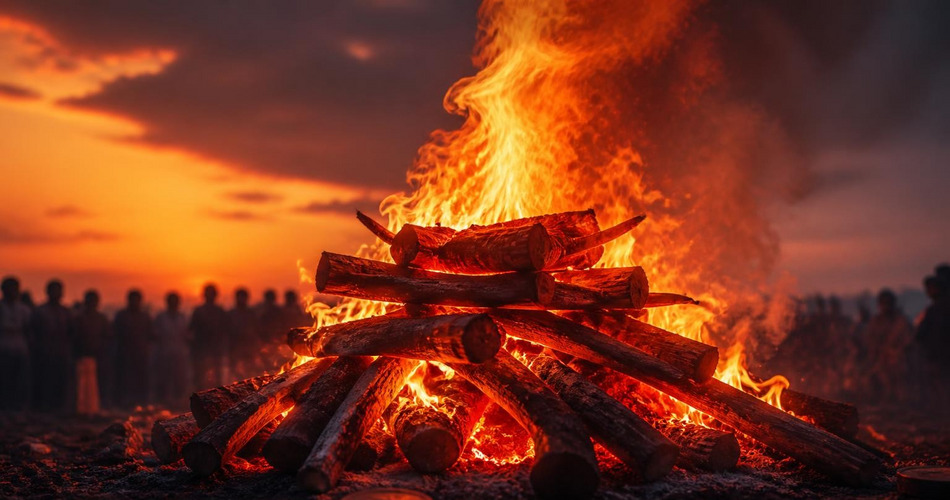
A funeral pyre is a structure, typically built from wood, upon which a deceased person’s body is cremated. It symbolizes the final passage from life to death, the purification of the physical form through fire, and the liberation of the soul. Across civilizations, the pyre represents both the destruction of the mortal remains and the hope of spiritual rebirth or ascension to a higher realm.
What Does Funeral Pyre Symbolize?
The funeral pyre is a powerful symbol of transformation. Fire consumes the body, reducing it to ashes, which visually represents the dissolution of earthly attachments and the beginning of a new spiritual state. It also signifies purification—the belief that flames cleanse the soul of impurities, preparing it for the afterlife. In many traditions, the pyre is a bridge between the physical world and the spiritual, a final ritual that releases the spirit from its mortal vessel. Additionally, the pyre embodies sacrifice: the offering of the body back to the elements, often accompanied by prayers and chants that guide the soul onward.
Positive and Negative Meanings of Funeral Pyre
Positive associations: The funeral pyre is seen as a means of liberation, where the soul is freed from the cycle of rebirth or earthly suffering. It represents renewal, as fire transforms the body into ashes that may be scattered or returned to nature. For many, it is a sacred act of devotion, honoring the deceased and ensuring a peaceful transition. The pyre also symbolizes courage in facing death with dignity and ritual.
Negative meanings: The pyre can evoke fear, grief, and the finality of death. It is a stark reminder of mortality and the destruction of the physical self. In some contexts, forced cremation or the use of pyres in mass deaths (e.g., during plagues or wars) carries connotations of violence and loss. The image of a burning pyre may also be associated with punishment or sacrifice in negative folklore.
History and Origins of Funeral Pyre Symbolism
The practice of cremation on a pyre dates back thousands of years. In ancient Greece, heroes like Patroclus were honored with elaborate pyres, as described in Homer’s Iliad. The Romans used pyres for both common citizens and emperors, often incorporating symbolic offerings. In Hinduism, the funeral pyre (known as chita) has been central to cremation rites for millennia, believed to be the vehicle that carries the soul to the afterlife through the god Agni. Viking cultures built ship-shaped pyres for chieftains, symbolizing a journey across the sea to the afterlife. These historical practices imbued the pyre with meanings of status, heroism, and spiritual passage.
Funeral Pyre Symbolism in Different Cultures
In Hinduism, the funeral pyre is a sacred ritual. Fire (Agni) is considered a divine messenger that consumes the body and transports the soul to its next existence. The eldest son typically lights the pyre, and prayers are recited to guide the soul. The ashes are often scattered in the Ganges River, symbolizing return to the cosmic cycle. In Buddhist traditions, cremation on a pyre is common, especially for monks, representing detachment from the physical world and the impermanence of life. The Buddha himself was cremated, and his relics were distributed. In Norse culture, the pyre on a ship or boat was a means to send the deceased to Valhalla or the realm of the gods, emphasizing a heroic journey. Ancient Greek pyres were often accompanied by funeral games and offerings, reflecting the belief that the soul needed a proper send-off to the underworld. Roman pyres sometimes included the burning of possessions, symbolizing the deceased’s status in the afterlife.
Spiritual Meaning of Funeral Pyre
Spiritually, the funeral pyre represents the soul’s release from the cycle of birth and death. The flames are seen as a purifying force that burns away karma and earthly attachments, allowing the spirit to ascend to a higher state. In many traditions, the pyre is a focal point for prayer and meditation, helping the living to accept death as a natural transition. The smoke rising from the pyre is often interpreted as the soul’s journey upward, carrying the essence of the deceased toward the divine. This symbolism underscores the belief that death is not an end but a transformation.
Funeral Pyre in Myths and Folklore
In Greek mythology, the funeral pyre of Patroclus in Homer’s Iliad is a key scene. Achilles builds a grand pyre and sacrifices animals and captives to honor his friend, highlighting the pyre as a symbol of grief, honor, and the cost of war. In Norse mythology, the god Baldr is cremated on a ship pyre, with his wife Nanna joining him, representing love and sacrifice. The Hindu epic Ramayana includes the trial by fire (Agni Pariksha) where Sita enters a pyre to prove her purity, though this is not a funeral pyre but a symbolic ordeal. In Beowulf, the hero’s body is cremated on a pyre atop a cliff, and his ashes are buried in a barrow, symbolizing the end of an era and the preservation of legacy. These stories reinforce the pyre’s role as a threshold between worlds.
Funeral Pyre in Dreams
In dream interpretation, a funeral pyre often symbolizes a major life transition or the need to let go of something—a relationship, habit, or identity. It may reflect feelings of grief, fear of change, or a desire for purification. Seeing a pyre in a dream can also indicate that the dreamer is undergoing a process of inner transformation, burning away old patterns to make room for new growth. The context of the dream—whether the pyre is peaceful or violent—can influence its meaning.
Funeral Pyre in Art and Literature
Funeral pyres appear in numerous works of art and literature. In Homer’s Iliad, the pyre of Patroclus is described in vivid detail, emphasizing the ritual’s emotional and symbolic weight. In Beowulf, the hero’s cremation pyre is a central scene, with the Geats building a towering pyre and lamenting his death. In J.R.R. Tolkien’s The Lord of the Rings, Denethor’s self-immolation on a pyre in the Hallows of Minas Tirith symbolizes his despair and refusal to accept defeat. In visual art, Jacques-Louis David’s painting The Funeral of Patroclus (1778) depicts the pyre scene, and the Bayeux Tapestry includes a funeral pyre for King Edward the Confessor. In film, the pyre scene in The Lord of the Rings: The Return of the King (2003) visually captures the ritual’s dramatic power. These examples show the pyre as a potent symbol of honor, sacrifice, and the passage between life and death.
Funeral Pyre Tattoo Meaning
While less common than other symbols, a funeral pyre tattoo can represent a personal transformation, the memory of a loved one, or a philosophical acceptance of mortality. It may be chosen by those who have experienced a profound loss or a major life change. The image of flames consuming a pyre can symbolize purification, rebirth, or the release of past burdens. In some cases, it is combined with other elements like phoenixes or ships to emphasize renewal or journey.
Frequently Asked Questions About Funeral Pyre
Q: What is the purpose of a funeral pyre?
A: A funeral pyre is used for cremation, the ritual burning of a deceased person’s body. It serves to dispose of the remains while symbolizing the soul’s release and purification through fire.
Q: Why is fire used in funeral pyres?
A: Fire is seen as a purifying and transformative element. It consumes the physical body, allowing the soul to be freed from earthly ties. In many religions, fire is a divine force that carries the soul to the afterlife.
Q: Which cultures use funeral pyres?
A: Funeral pyres are historically used in Hinduism, Buddhism, ancient Greek and Roman cultures, Norse traditions, and some indigenous practices. Today, cremation on a pyre is still common in parts of India and Nepal.
Q: Is a funeral pyre the same as cremation?
A: Cremation is the process of burning a body, while a funeral pyre is the specific structure (usually wood) on which the body is placed for cremation. The term often implies a traditional, open-air ritual.
Related Symbols
- Cremation – The broader practice of burning the deceased, of which the pyre is a key element.
- Fire – The element of transformation, purification, and destruction central to the pyre.
- Phoenix – A mythical bird that rises from ashes, echoing the pyre’s theme of rebirth.
- Sacrifice – The offering of the body or possessions on the pyre, symbolizing devotion.
- Death – The ultimate transition that the pyre facilitates.
- Rebirth – The spiritual renewal that follows the destruction of the physical form.