Briefly
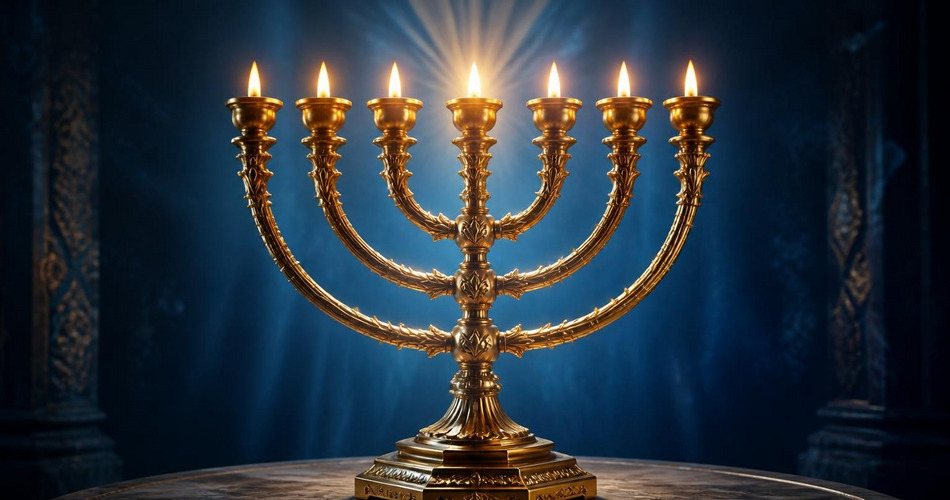
The Menorah is a seven-branched lampstand that serves as one of the oldest and most recognizable symbols of Judaism. It represents divine light, wisdom, and the presence of God, connecting the physical and spiritual worlds. In Jewish tradition, the Menorah symbolizes the burning bush, the Tree of Life, and the eternal light of the Temple in Jerusalem. Its seven branches are often linked to the seven days of creation, the seven classical planets, or the seven spiritual attributes in Kabbalistic thought.
What Does the Menorah Symbolize?
The Menorah primarily symbolizes light — not just physical illumination but spiritual enlightenment and divine presence. In the Hebrew Bible, God commands Moses to construct a lampstand with seven lamps, to be placed in the Tabernacle and later in the Temple. This light represents God’s constant guidance and the spread of His wisdom to the world. The Menorah’s seven branches are also interpreted as representing the seven days of the week, with the central stem often associated with the Sabbath, a day of spiritual focus. Additionally, the Menorah is a symbol of Jewish resilience — its image appears on the Arch of Titus in Rome, where it was carried as spoils after the destruction of the Second Temple, yet it endures as a national emblem of the modern State of Israel.
Positive and Negative Meanings
Positive associations: The Menorah is overwhelmingly a positive symbol. It stands for light overcoming darkness, wisdom, holiness, and the continuity of the Jewish people. It evokes the miracle of Hanukkah, where a single day’s oil burned for eight days, reinforcing themes of faith, perseverance, and divine intervention. The Menorah also represents spiritual growth, as its branches seem to reach upward like a tree, symbolizing aspiration toward God.
Negative meanings: In some contexts, the Menorah can evoke the painful memory of the Temple’s destruction and the dispersion of the Jewish community. Its depiction on the Arch of Titus, while a symbol of triumph for ancient Rome, is a reminder of loss and exile for Jewish people. However, these associations are not intrinsic to the Menorah itself but to historical events.
History and Origins of Menorah Symbolism
The Menorah’s origins are biblical, described in detail in the Book of Exodus (Exodus 25:31-40). God instructs Moses to make a lampstand of pure gold, with a central stem and six branches — three on each side — adorned with almond blossoms, buds, and flowers. This original Menorah was placed in the Tabernacle, the portable sanctuary used by the Israelites during their wanderings. It later stood in the Temple in Jerusalem, where it was kept lit continuously. The menorah was among the items taken by the Romans when they destroyed the Second Temple in 70 CE, an event commemorated on the Arch of Titus. Despite this, the Menorah remained a symbol of Jewish identity and was adopted as the emblem of the State of Israel in 1948, solidifying its transition from a specifically religious object to a national and cultural icon.
Menorah Symbolism in Jewish Culture
Within Judaism, the Menorah holds profound religious and cultural significance. It is a central symbol of the holiday of Hanukkah, which commemorates the rededication of the Second Temple after the Maccabean revolt. The Hanukkah menorah, or hanukkiah, has nine branches — eight for the eight nights of the miracle and one for the helper candle (shamash). This is distinct from the seven-branched Temple menorah. The Menorah is also a common motif in synagogue decoration, Jewish art, and ceremonial objects. It appears on the coat of arms of Israel, where it is flanked by olive branches, echoing the vision of peace and learning. In this cultural context, the Menorah symbolizes Jewish continuity, faith, and the enduring light of tradition.
Spiritual Meaning of the Menorah
Spiritually, the Menorah represents the divine light that dispels ignorance and evil. In Kabbalah, the mystical tradition of Judaism, the seven branches correspond to the seven lower sefirot (divine attributes) on the Tree of Life, each channeling a different aspect of God’s energy into the world. The central stem is associated with the sefirah of Tiferet (beauty or balance), which harmonizes the others. Lighting the menorah is an act of worship that acknowledges God’s presence and seeks spiritual illumination. The burning oil symbolizes the soul, which gives life to the body, and the flame rising upward represents the soul’s longing to return to its source. Thus, the Menorah serves as a tool for meditation and connection with the divine.
Menorah in Myths and Folklore
While the Menorah itself is not a figure of myth, it appears in several Jewish legends. One such legend tells that the original menorah was hidden by faithful priests before the Temple’s destruction, along with the Ark of the Covenant and other sacred vessels. It is said to be concealed in a secret location, waiting to be rediscovered in the messianic age. Another folktale describes the menorah’s light as having miraculous properties — never going out, even when the oil ran low, a theme later echoed in the Hanukkah miracle. These stories reinforce the Menorah’s symbolic role as a vessel of divine power and continuity.
Menorah in Dreams
Dreaming of a menorah can carry various meanings depending on the context. In general, it may symbolize a search for spiritual light, wisdom, or guidance. For someone connected to Jewish tradition, it might represent faith, heritage, or a need to reconnect with religious roots. A broken or dim menorah could indicate a period of doubt or spiritual darkness, while a brightly lit one suggests hope, clarity, and divine blessing. As with all dream symbols, personal associations and experiences strongly influence interpretation.
Menorah in Art and Literature
The Menorah is a frequent subject in Jewish art and has appeared in numerous notable works. In the Hebrew Bible, the detailed description in Exodus inspired countless artistic renditions. The Arch of Titus in Rome (c. 81 CE) features a famous bas-relief of the menorah being carried by Roman soldiers, which has become an iconic image of the Temple’s destruction. In Renaissance art, the menorah sometimes appears in paintings of the Presentation of Jesus at the Temple, symbolizing the Jewish context of the scene. In modern literature, the menorah appears in works such as The Menorah: A Historical and Artistic Study by Judith Baskin, which examines its iconography. It is also a central motif in Chaim Potok’s novel The Chosen, where it represents Jewish tradition and family legacy.
Meanings of Different Types of Menorahs
The seven-branched menorah and the nine-branched Hanukkah menorah (hanukkiah) have distinct meanings. The seven-branched menorah, as described in the Torah, is associated with the divine order of creation and the light of God. It is used in synagogues as a decorative symbol but is not lit today. The nine-branched hanukkiah is specifically for Hanukkah and celebrates the miracle of the oil. Each night, another candle is lit, symbolizing the increasing light of faith and the spread of holiness. The two types are often confused, but they serve different ritual and symbolic purposes.
Frequently Asked Questions
Q: What is the difference between a menorah and a hanukkiah?
A: A menorah traditionally has seven branches and was used in the Temple, while a hanukkiah has nine branches (eight candles plus a helper candle) and is used for Hanukkah celebrations.
Q: Why does the menorah have seven branches?
A: The seven branches are often linked to the seven days of creation, with the central branch representing the Sabbath. They also symbolize the seven planets known in antiquity, the seven lights of wisdom, or the seven sefirot in Kabbalah.
Q: Is the menorah only a Jewish symbol?
A: While the menorah is primarily a Jewish symbol, it also appears in Christian art as a symbol of the Jewish roots of Christianity and occasionally in secular contexts as a representation of Israel or Jewish culture.
Q: Why is the menorah on the coat of arms of Israel?
A: The menorah was chosen as the central emblem for the State of Israel because of its historical and religious significance as a symbol of Jewish continuity and the Temple. It represents the nation’s connection to its ancient heritage.
Related Symbols
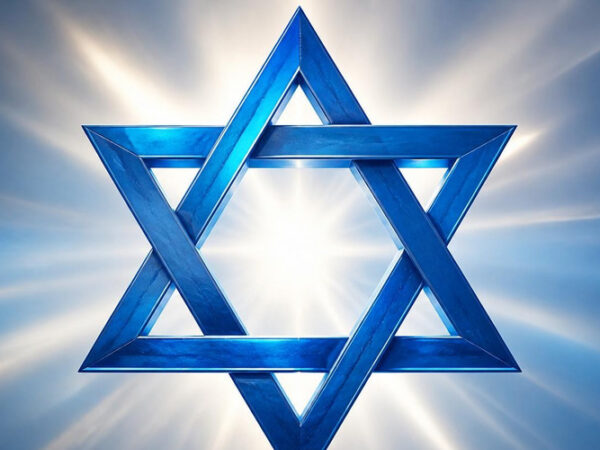
- Star of David — another primary Jewish symbol representing divine protection and Jewish identity
- Hanukkiah — the nine-branched menorah used for Hanukkah
- Eternal Light (Ner Tamid) — a lamp that hangs above the ark in synagogues, symbolizing God’s eternal presence
- Burning Bush — a biblical symbol of God’s presence and revelation, connected to the menorah’s light
- Tree of Life — the menorah’s branching form evokes a tree, representing life, wisdom, and spiritual growth