Briefly
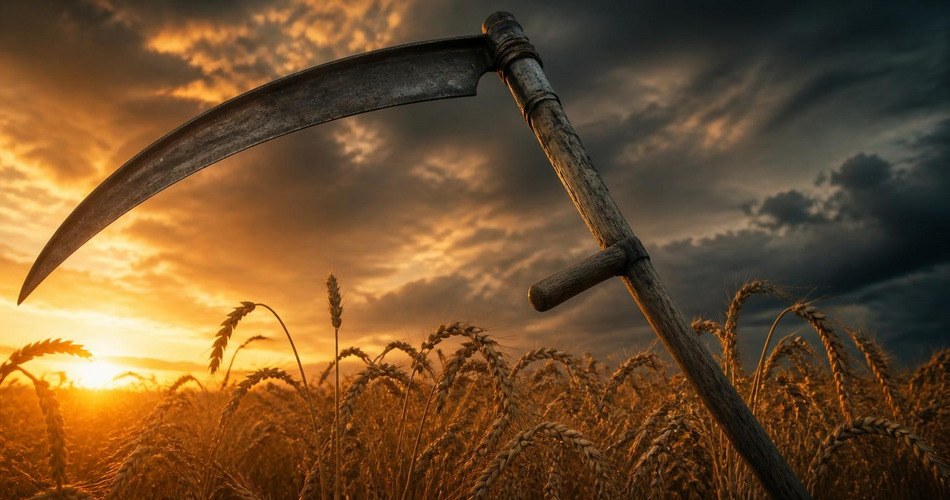
The scythe is a farming tool used for cutting grain or grass, but over centuries it has evolved into a powerful symbol of death, time, and the harvest of life. Its curved blade represents the cycle of life and death, and it is most famously associated with the Grim Reaper, who uses it to reap souls. The scythe also symbolizes hard work, agricultural abundance, and the rewards of labor, giving it a dual nature that spans both positive and negative meanings.
What Does the Scythe Symbolize?
The scythe symbolizes the end of a cycle—whether that be the harvest season, a phase of life, or life itself. Its sharp, sweeping blade suggests a decisive cut, separating what is ripe from what is not. This makes it an emblem of judgment and inevitability. At the same time, the scythe is a tool of creation: by cutting down the old, it makes way for new growth. Thus, it embodies both destruction and renewal.
In agricultural contexts, the scythe represents prosperity and the fruits of hard labor. It is a reminder that effort yields reward. In spiritual and mythological contexts, it often signifies the transition between worlds, serving as a bridge between the living and the dead.
Positive and Negative Meanings
Positive associations: The scythe is linked to abundance, harvest, and the successful completion of work. It symbolizes reaping what one has sown, whether in farming or in life. It can also represent the natural cycle of seasons and the promise of renewal after an ending.
Negative meanings: The scythe is most commonly associated with death, destruction, and the end of life. It evokes fear of mortality and the unknown. As a symbol of time’s relentless march, it reminds us that no one can escape the final harvest.
History and Origins of the Scythe Symbolism
The scythe has been used as a farming implement since ancient times, with evidence of its use in Neolithic Europe. Its symbolic connection to death emerged prominently in medieval Europe, where personifications of Death—often called the Grim Reaper—were depicted carrying a scythe. This imagery drew directly from agriculture: just as a farmer cuts down grain, Death cuts down lives. The Greek god Cronus (sometimes conflated with Chronos, the personification of time) was also shown with a scythe, linking the tool to the passage of time and the cyclical nature of existence.
Scythe Symbolism in Different Cultures
In Western culture, the scythe is overwhelmingly tied to death and the Grim Reaper. In Slavic folklore, the scythe appears as a weapon against evil spirits, used by folk heroes to cut down supernatural threats. In Hinduism, the goddess Kali is sometimes depicted wielding a scythe-like weapon, symbolizing the destruction of evil and the ego. In East Asian agricultural societies, the scythe remains primarily a tool of harvest, with less supernatural association.
Spiritual Meaning of the Scythe
Spiritually, the scythe represents the transition from one state of being to another—most notably from life to death, but also from ignorance to knowledge or from suffering to peace. It is a symbol of karmic harvest: the idea that one reaps what they have sown. In esoteric traditions, the scythe can signify the cutting away of illusions or attachments, clearing the way for spiritual growth.
The Scythe in Myths and Folklore
The most famous mythological figure associated with the scythe is the Grim Reaper, a personification of Death that emerged in 14th-century Europe during the Black Death. In Greek mythology, Cronus used a scythe to castrate his father Uranus, an act that separated the sky from the earth and initiated a new cosmic order. In various European folk tales, the scythe is used by death figures to collect souls, often appearing in cautionary stories about the inevitability of mortality.
The Scythe in Dreams
Dreaming of a scythe often reflects anxieties about change, endings, or mortality. It can also symbolize the need to cut away something unnecessary in one’s life—a relationship, habit, or belief. The context of the dream matters: a scythe in a field may indicate fruitful work, while one held by a cloaked figure may point to fear of death.
Common Dream Scenarios
- Seeing a scythe in a field: Suggests upcoming rewards for hard work or the completion of a project.
- Holding a scythe: Indicates a desire to take control of a situation or to make a decisive cut in your life.
- A scythe wielded by a dark figure: Often represents fear of death or a major life transition that feels threatening.
- A rusted or broken scythe: May symbolize missed opportunities or the inability to finish something important.
The Scythe in Superstitions and Omens
In some European folk traditions, finding a scythe or seeing one in a dream was considered an omen of death, especially if the blade was sharp. Conversely, in agricultural communities, a well-maintained scythe was seen as a good luck charm for a bountiful harvest. Some superstitions held that a scythe hung above a door could ward off evil spirits, drawing on its power as a tool that cuts through negative forces.
The Scythe in Art and Literature
The scythe appears in numerous works of art and literature. In Albrecht Dürer’s woodcut The Four Horsemen of the Apocalypse, Death is depicted riding with a scythe, symbolizing the plague. In literature, John Milton’s pastoral elegy Lycidas refers to the “scythe of time” cutting down youth. Terry Pratchett’s Discworld series features Death as a character who carries a scythe, often with humorous and philosophical undertones. In film, Ingmar Bergman’s The Seventh Seal famously portrays Death as a cloaked figure with a scythe, playing chess with a knight. These examples cement the scythe as a lasting symbol of mortality and the passage of time.
Scythe Tattoo Meaning
Scythe tattoos are popular in both traditional and modern tattoo art. They often symbolize an acceptance of mortality, a reminder to live fully, or a connection to agricultural roots. The scythe can be paired with other symbols like hourglasses, skulls, or roses to emphasize themes of time, death, and beauty. Some wear the scythe as a symbol of transformation, marking a major life change or the end of a difficult period.
Frequently Asked Questions
Q: What does a scythe symbolize in a dream?
A: In dreams, a scythe often represents endings, change, or the need to cut something out of your life. It can also signify the harvest of your efforts or fear of death.
Q: Why is the Grim Reaper depicted with a scythe?
A: The scythe is a farming tool used to harvest crops, so it was adopted as a symbol of Death reaping souls. This imagery became widespread in medieval Europe during plagues.
Q: Is the scythe a positive or negative symbol?
A: The scythe has both positive and negative meanings. Positively, it represents harvest, abundance, and renewal. Negatively, it symbolizes death, destruction, and inevitability.
Q: What is the difference between a scythe and a sickle?
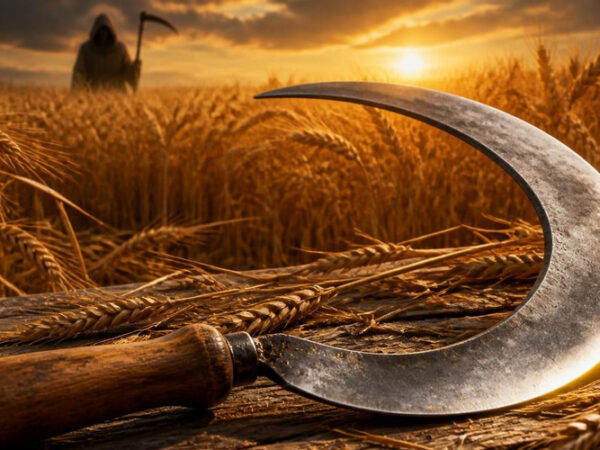
A: A scythe has a long handle and a curved blade used for cutting grass or grain while standing. A sickle is smaller with a short handle, used with one hand. Both are harvest tools, but the scythe is more associated with death symbolism.
Related Symbols
- Sickle – a smaller harvest tool, often paired with a hammer in communist symbolism.
- Hourglass – symbolizes the passage of time, often paired with the scythe in depictions of Death.
- Skull – a common companion to the scythe in memento mori art.
- Harvest – the agricultural cycle that the scythe directly represents.
- Grim Reaper – the personification of Death who wields the scythe.