Briefly
Beetles are among the most diverse and resilient creatures on Earth, and their symbolism reflects that endurance. Across many cultures, beetles represent transformation, persistence, and protection. The ancient Egyptians famously revered the scarab beetle as a symbol of rebirth and the sun’s daily journey. In modern contexts, beetles often appear as totems of hard work, adaptability, and the ability to overcome obstacles. Their hard exoskeleton and methodical movements also link them to ideas of defense and steady progress.
What Does the Beetle Symbolize?
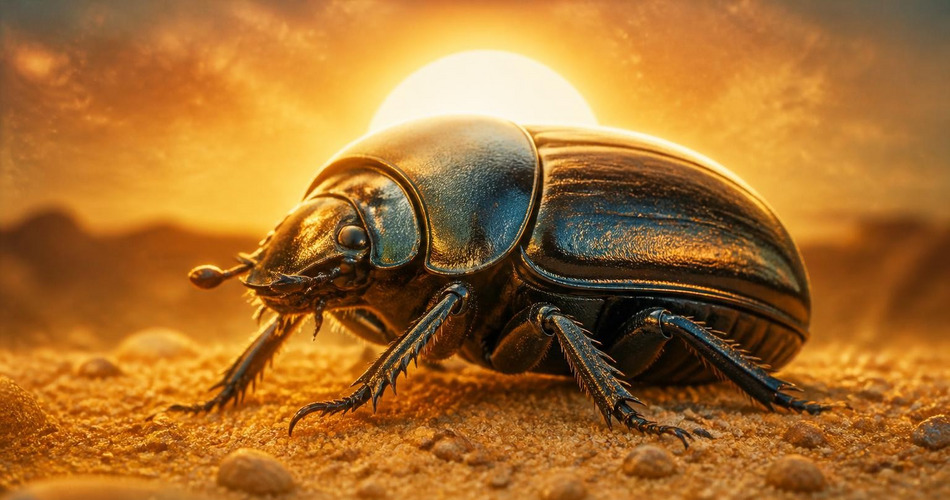
The beetle is a powerful symbol of transformation because of its complete metamorphosis from egg to larva to pupa to adult. This life cycle mirrors personal growth, change, and the potential for renewal. Beetles also symbolize persistence; they are known for their determination and ability to push through barriers, often rolling dung balls far larger than themselves. This behavior has made the dung beetle a symbol of perseverance and resourcefulness.
Additionally, beetles are associated with protection. Their hard outer shell, or elytra, acts as armor, making them a natural emblem of defense and security. In many traditions, carrying a beetle amulet or image is believed to ward off harm. The beetle’s connection to the earth—many species live in soil or decaying matter—links it to grounding, stability, and the cycles of life and death.
Positive and Negative Meanings
Positive associations: Beetles are widely seen as symbols of resilience, hard work, and adaptability. They remind us that steady effort can overcome great challenges. The scarab beetle’s link to the sun and rebirth brings messages of hope, renewal, and spiritual growth. In some cultures, beetles are considered good luck charms, especially when they appear unexpectedly.
Negative meanings: Because some beetles are pests that damage crops or stored goods, they can also represent destruction, decay, or unwanted persistence. In dreams or superstitions, a beetle might symbolize a nagging problem or a situation that refuses to go away. Their association with dung and decomposition can also evoke feelings of disgust or remind us of life’s less pleasant aspects.
History and Origins of Beetle Symbolism
The most famous historical beetle symbol is the Egyptian scarab (Scarabaeus sacer). Ancient Egyptians observed the dung beetle rolling a ball of dung across the ground and likened it to the sun god Khepri pushing the sun across the sky. Scarab amulets were placed over the heart of the deceased to ensure rebirth in the afterlife. This symbolism dates back to the Old Kingdom (c. 2686–2181 BCE) and persisted for millennia.
In ancient Greece and Rome, beetles were sometimes associated with protection and were used in amulets. The Greek word for beetle, kantharos, appears in art and mythology. Pliny the Elder wrote about the medicinal use of beetles. In many indigenous cultures worldwide, beetles appear in creation stories and as totems representing the earth’s fertility and the importance of small creatures in maintaining ecological balance.
Beetle Symbolism in Different Cultures
In ancient Egypt, the scarab beetle was a sacred symbol of the sun, creation, and resurrection. Scarab amulets were worn by the living for protection and placed with the dead to guide them through the underworld. The scarab’s six legs were thought to correspond to the six directions (north, south, east, west, up, down), representing the universe.
In Native American traditions, beetles are often seen as symbols of persistence and hard work. Some tribes view the beetle as a teacher of patience and the importance of completing tasks step by step. The Hopi people include beetle images in their kachina dolls and ceremonies, honoring the insect’s role in pollination and soil health.
In Chinese culture, beetles are less prominent than other insects, but the stag beetle is sometimes associated with strength and protection. In European folklore, ladybugs (a type of beetle) are considered good luck, especially when they land on a person. The common name “ladybug” itself references the Virgin Mary, linking the beetle to divine protection.
Spiritual Meaning of the Beetle
Spiritually, the beetle is a guide for transformation. Its life cycle encourages individuals to embrace change and trust the process of growth. The beetle’s connection to the earth makes it a grounding totem, helping people stay rooted while undergoing personal evolution. In shamanic traditions, the beetle spirit animal is called upon for protection during journeys and for strength to overcome obstacles.
Beetles also symbolize the importance of inner strength. Their hard exterior reminds us that we can develop resilience and boundaries to protect our inner selves. The dung beetle’s habit of rolling a ball of dung—transforming waste into a source of life—teaches that even difficult or unpleasant experiences can be turned into nourishment and growth.
Beetle in Myths and Folklore
The scarab beetle is central to Egyptian mythology. The god Khepri, depicted as a scarab or a man with a scarab head, was believed to roll the sun across the sky each day, die at sunset, and be reborn at dawn. This myth made the scarab a powerful symbol of eternal life and resurrection.
In Greek mythology, the beetle appears in the story of the hero Hercules, who was sometimes associated with a beetle-shaped constellation. The Greek poet Aesop included beetles in his fables, such as “The Beetle and the Eagle,” which teaches a lesson about humility and the power of the small.
In African folklore, the dung beetle is often a trickster figure or a symbol of cleverness. Some stories tell how the beetle outwits larger animals through persistence and intelligence. In Aboriginal Australian mythology, beetles appear in dreamtime stories as creators or transformers of the landscape.
Beetle in Dreams
Dreaming of a beetle often relates to themes of persistence and transformation. The beetle may appear when the dreamer is facing a difficult situation that requires steady effort to resolve. It can also signal a period of personal growth or a need to protect oneself from external pressures.
The context of the dream matters greatly. A beetle crawling on the dreamer might indicate a nagging issue that needs attention. A beetle flying could represent freedom from a burden. Because beetles are associated with the earth, they may also ground the dreamer, reminding them to stay practical and focused.
Common Beetle Dream Scenarios
- Seeing a beetle on the ground: Suggests a need to pay attention to small details or to ground yourself in reality.
- A beetle crawling on your body: May indicate an annoyance or persistent problem that you cannot ignore.
- A flying beetle: Can symbolize liberation from a heavy responsibility or a new perspective.
- Killing a beetle: Might represent overcoming an obstacle or ending a persistent issue.
- A giant beetle: Could reflect a fear that has grown out of proportion or a challenge that feels overwhelming.
- Many beetles: Often points to a swarm of small problems or a sense of being overwhelmed by daily tasks.
Beetle in Superstitions and Omens
Across cultures, beetles appear in various superstitions. In many parts of Europe, a ladybug landing on you is considered good luck, and killing one is thought to bring misfortune. In some traditions, a beetle entering the home is a sign of good news or a visitor on the way.
In contrast, certain beetles are seen as omens of decay or bad luck, especially if they appear in large numbers. The deathwatch beetle, which makes a tapping sound, was once believed to foretell death. In agricultural societies, an infestation of crop beetles was seen as a punishment or a sign of imbalance in nature.
Beetle in Art and Literature
One of the most famous literary uses of a beetle is in Franz Kafka’s novella The Metamorphosis (1915), where the protagonist Gregor Samsa wakes up transformed into a giant insect, often interpreted as a beetle. This story uses the beetle to explore themes of alienation, identity, and the dehumanizing effects of modern life.
In ancient Egyptian art, scarab beetles appear on amulets, seals, and jewelry. The scarab was a common motif in tomb paintings and papyrus scrolls, symbolizing the sun’s journey and the promise of rebirth. Modern artists have also used beetle imagery to comment on transformation and resilience, such as in the works of surrealist painter Salvador Dalí, who incorporated beetle forms into some of his dreamlike compositions.
Beetle Tattoo Meaning
Beetle tattoos are chosen for their rich symbolic meanings. A scarab beetle tattoo often represents rebirth, protection, and the cycle of life. It is a popular design for those who have undergone a major transformation or who seek strength in difficult times.
Other beetle tattoos, such as the stag beetle or ladybug, carry distinct meanings. A stag beetle tattoo may symbolize strength and fighting spirit, while a ladybug tattoo is often associated with luck, love, and innocence. The beetle’s hard shell can also represent resilience and the ability to shield oneself from harm.
Meanings of Different Beetle Types and Colors
- Scarab beetle: Rebirth, protection, sun energy, eternal life.
- Ladybug (ladybird beetle): Good luck, love, protection, happiness.
- Stag beetle: Strength, competition, courage, defense.
- Dung beetle: Persistence, transformation, resourcefulness, grounding.
- Jewel beetle (buprestid): Beauty, iridescence, hidden value, allure.
- Black beetle: Mystery, the unknown, hidden strength, shadow work.
- Green beetle: Growth, nature, healing, renewal.
- Gold beetle: Wealth, success, spiritual illumination.
Frequently Asked Questions about Beetle Symbolism
Q: What does it mean when a beetle lands on you?
A: In many traditions, a beetle landing on you is considered a sign of good luck or a message to pay attention to your surroundings. It may also indicate that you need to be more persistent or grounded in your current endeavors.
Q: Is a beetle a good omen?
A: Generally, beetles are seen as positive omens, especially scarabs and ladybugs. They can symbolize protection, transformation, and the arrival of new opportunities. However, context matters: a beetle infestation might be a warning about neglect or imbalance.
Q: What is the spiritual meaning of a beetle?
A: Spiritually, the beetle represents transformation, resilience, and the ability to turn challenges into growth. It encourages you to trust the process of change and to protect your inner self while navigating life’s difficulties.
Q: What does a beetle symbolize in the Bible?
A: Beetles are mentioned in the Bible as unclean insects (Leviticus 11:22-23). They are not given positive symbolic meaning in Judeo-Christian scripture, unlike in Egyptian or other traditions.
Related Symbols
- Scarab – Ancient Egyptian symbol of rebirth and protection.
- Butterfly – Transformation and metamorphosis.
- Dragonfly – Change, adaptability, and self-realization.
- Ant – Hard work, perseverance, and community.
- Turtle – Protection, longevity, and groundedness.
- Ladybug – Good luck, love, and protection.