Briefly
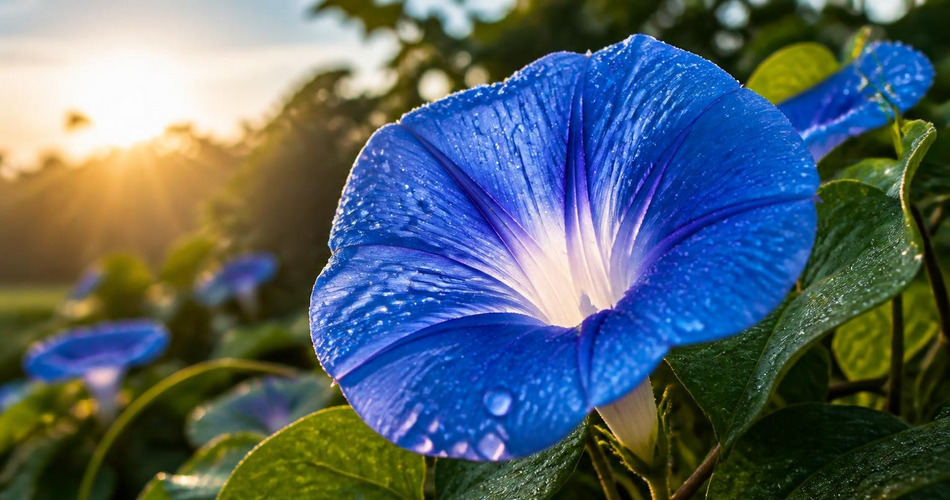
The morning glory is a flower that opens at dawn and closes by midday, making it a powerful symbol of transience, renewal, and the fleeting nature of life. Its brief but vibrant bloom has come to represent affection, unrequited love, and the beauty of a single day. Across cultures, the morning glory also carries meanings of rebirth, spirituality, and the promise of a new beginning, while its climbing vines suggest connection and growth.
What Does Morning Glory Symbolize?
Morning glory symbolism centers on the flower’s unique daily cycle. The most prominent meanings include transience — the idea that beauty and life are short-lived — and renewal, since the flower returns each morning. It also symbolizes affection, especially love that is not returned or that lasts only a short time. In many traditions, the morning glory represents the balance between life and death, as well as spiritual awakening and the dawn of consciousness.
Positive and Negative Meanings
Positive associations: Morning glory is widely seen as a symbol of hope, new beginnings, and the promise of a fresh start each day. Its bright, trumpet-shaped blossoms evoke joy, optimism, and the beauty of the present moment. The flower’s ability to bloom anew each morning also ties it to themes of resilience and renewal.
Negative meanings: Because the flowers wilt by afternoon, morning glory can also represent mortality, the brevity of life, and unfulfilled love. In some contexts, it is associated with lost opportunities or the pain of a love that fades too quickly. The plant’s invasive growth habit in certain regions has also led to negative connotations of entanglement or suffocation.
History and Origins of Morning Glory Symbolism
The morning glory has been cultivated for centuries, with its symbolic meanings evolving across different cultures. In ancient China, the flower was linked to the story of the Cowherd and the Weaver Girl, where it represented the fleeting meeting of two lovers. In Japan, the morning glory (asagao) was introduced from China and became a beloved motif in art and poetry during the Edo period. Its name literally means “morning face,” reflecting its association with the dawn. In the Victorian era, the language of flowers assigned the morning glory the meaning of “affection” and “unrequited love,” often given as a message of longing.
Morning Glory Symbolism in Different Cultures
In Japanese culture, the morning glory is a symbol of summer and is celebrated in festivals. It appears frequently in haiku and ukiyo-e prints, where its short-lived bloom is a reminder of the impermanence of life (mono no aware). In Chinese folklore, the flower is associated with the Qixi Festival (Chinese Valentine’s Day), representing the one day each year when two star-crossed lovers meet. In Aztec culture, the morning glory species Ipomoea purpurea was used in religious rituals for its psychoactive properties, linking it to spiritual visions and communication with the divine. In Victorian England, the morning glory was a popular symbol in floral arrangements, conveying messages of affection or the bittersweet nature of love.
Spiritual Meaning of Morning Glory
Spiritually, the morning glory is often seen as a symbol of awakening and the soul’s journey toward enlightenment. Its daily cycle of opening at dawn and closing at dusk mirrors the process of spiritual rebirth and the cyclical nature of existence. Some traditions view the flower as a reminder to live in the present moment and appreciate the beauty of each day. The climbing nature of the vine also represents the soul’s ascent toward higher consciousness or connection with the divine.
Morning Glory in Myths and Folklore
In Chinese mythology, the morning glory is central to the legend of the Cowherd and the Weaver Girl. The two lovers are separated by the Milky Way and allowed to meet only once a year, on the seventh day of the seventh lunar month. The morning glory is said to bloom on that day, symbolizing their brief reunion. In Japanese folklore, the flower is sometimes associated with spirits of the dead, as its short life mirrors the fleeting visit of a soul. In some European folk traditions, morning glory vines were believed to offer protection when planted near doorways, warding off evil spirits.
Morning Glory in Dreams
Dreaming of morning glory often reflects themes of transience, new beginnings, or unresolved emotions. The flower’s appearance in a dream may be a reminder to appreciate the present moment or to let go of something that has faded. Because the blooms are so short-lived, they can also symbolize a relationship or opportunity that is passing quickly.
Common Dream Scenarios
- Seeing a morning glory in full bloom: Represents joy, hope, and a fresh start. It may indicate that a new phase in life is beginning.
- A wilting or closed morning glory: Suggests missed opportunities, the end of a relationship, or feelings of loss.
- Planting morning glory seeds: Symbolizes nurturing a new project or relationship that will require patience and care.
- A vine of morning glory covering a wall: Can indicate feeling overwhelmed or entangled in a situation, or conversely, a sense of protective embrace.
Morning Glory in Superstitions and Omens
In some folk traditions, morning glories are considered lucky when they bloom abundantly, as they are believed to attract positive energy and abundance. However, because the flowers close by afternoon, some superstitions hold that seeing a morning glory wilt early is an omen of disappointment or a short-lived romance. In parts of Europe, it was once thought that picking a morning glory could bring rain, while in other regions the plant was used in love divination rituals.
Morning Glory in Art and Literature
The morning glory has been a recurring subject in Japanese art, particularly in ukiyo-e woodblock prints by artists such as Katsushika Hokusai and Utagawa Hiroshige, who captured its delicate beauty in seasonal studies. In poetry, the haiku master Matsuo Bashō wrote verses that used the morning glory to evoke the fleeting nature of life. In Victorian floral dictionaries, such as Kate Greenaway’s The Language of Flowers (1884), the morning glory is listed with the meaning “affection” or “unrequited love.” The flower also appears in modern literature, for example in the novel The Morning Glory by LaVyrle Spencer, where it symbolizes enduring love and hope.
Morning Glory Tattoo Meaning
As a tattoo, the morning glory often represents a celebration of life’s fleeting beauty, a reminder to live fully in the present. It can also symbolize a love that was brief but meaningful, or a personal transformation. The climbing vine is sometimes inked to represent growth, connection, or a journey toward spiritual awakening. Because of its association with dawn, a morning glory tattoo may also signify new beginnings or overcoming a dark period.
Meanings of Different Morning Glory Colors
- Blue morning glory: Symbolizes tranquility, spirituality, and the vastness of the sky. Often associated with calm and inner peace.
- Purple morning glory: Represents royalty, mystery, and spiritual awareness. It can also signify deep affection or admiration.
- White morning glory: Stands for purity, innocence, and new beginnings. Commonly used in celebrations of fresh starts.
- Pink morning glory: Conveys gentle love, romance, and sweetness. Often given as a token of affection.
- Red morning glory: Associated with passion, strong emotions, and the intensity of love, but also the pain of unrequited feelings.
Frequently Asked Questions
Q: What does a morning glory symbolize in love?
A: In the language of flowers, morning glory often represents unrequited love or affection that is not returned. However, it can also symbolize the beauty of a brief but intense romantic connection.
Q: Is morning glory a symbol of death?
A: Not directly, but because its blooms last only a single day, the morning glory is often associated with mortality and the fleeting nature of life. In some cultures, it is connected to spirits and the afterlife.
Q: What does it mean if you dream of morning glory?
A: Dreaming of morning glory typically relates to themes of transience, new beginnings, or the need to appreciate the present moment. The specific context of the dream (blooming, wilting, etc.) can refine the interpretation.
Q: Are morning glories considered lucky?
A: In many folk traditions, yes. Abundant blooms are seen as a sign of good fortune and positive energy. However, some superstitions view wilting flowers as an omen of disappointment.
Related Symbols
- Lotus: Also symbolizes rebirth and spiritual awakening, but with a longer-lasting bloom.
- Dandelion: Represents transience and wishes, similar to the fleeting nature of morning glory.
- Sunflower: Shares the association with the sun and daily cycles, but symbolizes adoration and longevity.
- Iris: Often linked to messages and communication, as morning glory is in the language of flowers.
- Vine: The climbing habit of morning glory connects it to symbols of growth, entanglement, and connection.