Briefly
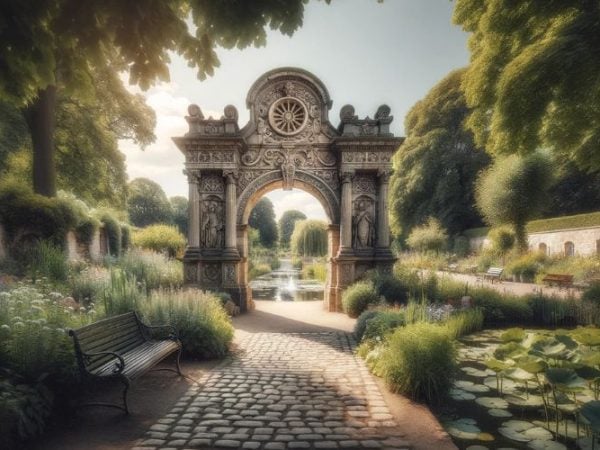
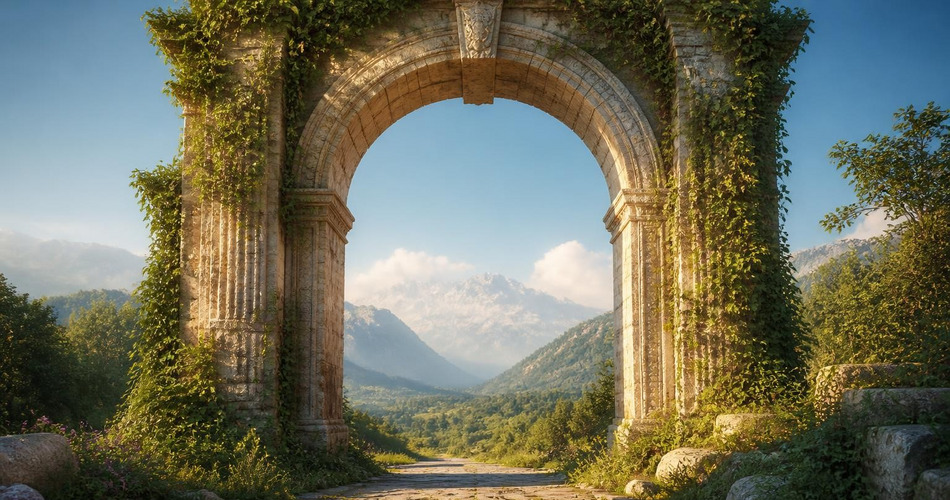
An archway is a structural element that frames a passage from one space to another, making it a powerful symbol of transition, threshold, and transformation. Throughout history, archways have been used to mark entrances to sacred places, celebrate victories, and signify honor. They represent both a physical and metaphorical gateway, often associated with new beginnings, protection, and the crossing of boundaries. In architecture, the arch itself is a feat of engineering that distributes weight and endures, so it also symbolizes strength and permanence.
What Does Archway Symbolize?
Archways primarily symbolize a threshold — a point of transition between two states, places, or phases of life. Passing under an archway can represent moving from the ordinary to the sacred, from ignorance to knowledge, or from one stage of life to another. The arch’s curved shape also evokes the sky or heavens, linking it to celestial realms and spiritual ascent. In many cultures, archways are seen as protective symbols, warding off evil and blessing those who enter. They also convey victory and achievement, as seen in triumphal arches built to commemorate military successes.
Positive and Negative Meanings
Positive associations: Archways are often seen as welcoming and protective. They mark entrances to homes, temples, and cities, offering a sense of safety and invitation. As symbols of transition, they encourage growth, new opportunities, and personal transformation. Triumphal arches celebrate honor, glory, and accomplishment.
Negative meanings: In some contexts, an archway can represent an irreversible passage or a point of no return, evoking anxiety about change. A broken or decaying archway may symbolize decline, lost glory, or failed ambitions. In dreams, an archway that is blocked or collapsing can indicate obstacles or fear of moving forward.
History and Origins of Archway Symbolism
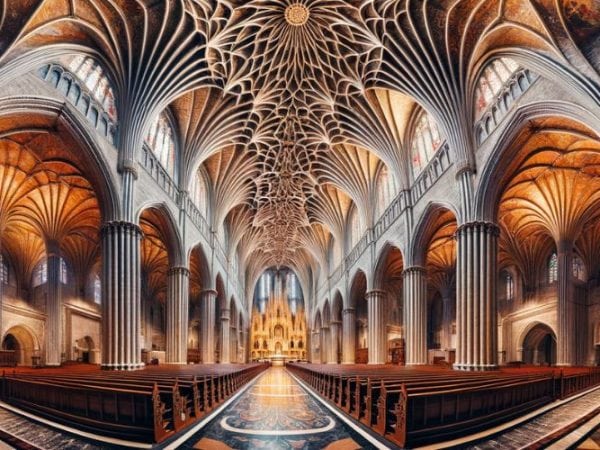
The arch as an architectural form dates back to ancient Mesopotamia and was perfected by the Romans, who used it extensively in aqueducts, bridges, and monumental gates. The triumphal arch became a powerful symbol of Roman military might and imperial authority. Early Christian basilicas incorporated arched doorways to signify the entrance to a sacred space, a tradition carried into Gothic cathedrals with pointed arches that draw the eye upward. In Islamic architecture, the horseshoe arch and pointed arch became distinctive features of mosques, symbolizing the connection between earth and heaven. The symbolic use of archways thus has deep roots in engineering, religion, and political power.
Archway Symbolism in Different Cultures
In Roman culture, the triumphal arch was a permanent monument to a general’s victory, often adorned with reliefs depicting conquests. Passing through it was a ritual of honor. In Chinese architecture, the paifang (archway) was erected to commemorate virtuous individuals or events and served as a gateway to important sites. In Hindu and Buddhist traditions, the torana (ceremonial archway) marks the entrance to a sacred precinct and is often elaborately carved with symbols of prosperity and protection. In European medieval cathedrals, the arched portal was carved with scenes from the Bible, teaching the faithful as they entered. Each culture adapts the archway’s form to express local values of honor, spirituality, and community.
Spiritual Meaning of Archway
Spiritually, an archway represents a gateway between the material and the divine. In many traditions, passing through an arch is a ritual act of purification or initiation. The arch’s curve mirrors the dome of the sky, suggesting a connection to higher consciousness. In feng shui, an arched doorway is considered auspicious, channeling positive energy (chi) into a space. Some spiritual practices use archways in meditation as symbols of moving from one state of awareness to another, or as portals to inner realms.
Archway in Myths and Folklore
In Greek mythology, the entrance to the underworld was often depicted as a cave or an archway, guarded by Cerberus. The Rainbow Bridge in Norse mythology (Bifröst) is a kind of archway connecting Midgard to Asgard. In folklore, passing under an archway made of natural stone or a horseshoe arch was believed to bring good luck and protect against evil spirits. Wedding arches, often made of flowers or branches, symbolize the couple’s passage into married life. These stories reinforce the archway as a liminal space where ordinary rules may be suspended.
Archway in Dreams
Dreaming of an archway often relates to transition and choice. The dreamer may be approaching a significant life change or facing a decision. A well-lit, open archway suggests positive opportunities and a clear path forward. A dark or narrow archway can indicate uncertainty or fear of the unknown. The condition of the archway — whether it is solid, crumbling, or ornate — provides clues about the dreamer’s confidence and readiness for change.
Common Dream Scenarios
- Walking through an archway: Represents entering a new phase of life, such as a new job, relationship, or personal growth.
- Seeing a broken archway: May symbolize a missed opportunity or a barrier to progress.
- An archway that leads to a bright light: Often interpreted as a spiritual awakening or a positive transformation.
- Being unable to pass through an archway: Suggests feelings of being stuck or blocked in waking life.
- Multiple archways: Indicates many choices or paths ahead, requiring careful decision.
Archway in Superstitions and Omens
In some European traditions, passing under a low archway or a stone arch was thought to cure certain ailments or bring good fortune. Brides and grooms often walk through an arch of swords or flowers to bless the marriage. In Japan, torii gates (a type of archway) mark the entrance to Shinto shrines and are considered sacred boundaries; passing through them purifies the visitor. Conversely, an archway that collapses unexpectedly was seen as an omen of misfortune or the end of an era. These beliefs highlight the archway’s role as a marker of sacred or significant spaces.
Archway in Art and Literature
In art, archways are frequently used to frame figures or create depth, as in Renaissance paintings like Raphael’s The School of Athens, where the arched architecture emphasizes the grandeur of the scene. In literature, archways often appear as symbolic gateways. In Dante’s Divine Comedy, the entrance to Hell is described as a gate with an arch, marking the point of no return. In modern fantasy, such as J.R.R. Tolkien’s The Lord of the Rings, the Argonath (the Pillars of the Kings) forms a monumental archway that signals entry into a new realm. These examples show how archways function as narrative devices that signal transition and significance.
Archway Tattoo Meaning
An archway tattoo often symbolizes a personal threshold or a significant life change. It can represent overcoming obstacles, entering a new chapter, or honoring a journey. Some people choose an archway design with specific cultural motifs, such as a Roman triumphal arch for victory, or a torii gate for spiritual protection. The tattoo may also incorporate other elements like flowers or vines to emphasize growth and beauty. Placement on the body can reflect the idea of a gateway — for example, on the back or arm to suggest moving forward.
Meanings of Different Types of Archways
- Roman triumphal arch: Symbolizes victory, honor, and military achievement.
- Gothic pointed arch: Associated with spirituality, aspiration, and medieval cathedrals.
- Horseshoe arch: Common in Islamic architecture, representing unity and the divine.
- Torii gate (Japanese archway): Marks the transition from the mundane to the sacred.
- Natural stone arch: Represents endurance, natural beauty, and the passage of time.
- Wedding arch: Symbolizes the union of two people and the start of a shared journey.
Frequently Asked Questions
Q: What does an archway symbolize in a dream?
A: In dreams, an archway typically symbolizes a transition, a new beginning, or a choice between paths. The condition of the archway can indicate how ready you feel for change.
Q: Why are archways used in weddings?
A: Wedding arches symbolize the threshold the couple crosses together into married life. They also represent protection and blessing, framing the couple as they begin their union.
Q: What is the spiritual meaning of an archway?
A: Spiritually, an archway is a gateway between the earthly and the divine. It can represent initiation, purification, and the passage into a higher state of consciousness.
Q: Are archways considered good luck?
A: In many cultures, passing under an archway is considered auspicious, especially if the arch is part of a sacred site or a wedding ceremony. It is believed to bring blessings and ward off evil.
Related Symbols
- Door: Both are thresholds, but a door can be closed while an archway remains open, emphasizing passage.
- Bridge: Like an archway, a bridge connects two points and symbolizes transition.
- Gateway: A broader term for any entrance; archways are a specific type of gateway.
- Portal: Often used in fantasy and spiritual contexts to denote a passage between worlds.
- Window: While a window frames a view, an archway frames a passage.