Briefly
Church bells are among the most recognizable symbols of Christian worship, serving as audible markers of faith, community, and time. Their ringing calls believers to prayer, marks sacred moments such as weddings and funerals, and once served practical purposes like warning of danger or signaling the hours. Beyond their religious function, church bells have acquired layers of symbolic meaning: they represent the voice of God, the passage of time, and the connection between heaven and earth. In folklore and superstition, bell sounds are believed to ward off evil spirits or foretell events, while in dreams they often carry messages of spiritual awakening or urgent calls to attention.
What Does Church Bell Symbolize?
At its core, the church bell symbolizes a call—a summons to gather, to pray, or to pay attention. In Christianity, the bell’s sound is often interpreted as the voice of God calling the faithful to worship, reminding them of their spiritual duties, and marking the rhythms of the liturgical day. The bell also symbolizes community: its ringing unites a congregation across distances, creating a shared auditory experience that binds people together in faith and celebration.
Additionally, church bells symbolize transition. They announce births (baptisms), unions (weddings), and deaths (funerals), marking the major passages of human life. The tolling of a bell can signify mourning or alarm, while peals of joy accompany festivities. In a broader sense, the bell represents the intersection of the divine and the mundane, a tangible sound that bridges the earthly and the spiritual.
Positive and Negative Meanings
Positive associations: Church bells are overwhelmingly associated with hope, faith, and communal joy. Their ringing calls the faithful to worship, celebrates weddings and holidays, and fosters a sense of belonging. The sound of bells can also provide comfort, reminding listeners of God’s presence and the continuity of tradition. In many cultures, bell ringing is believed to purify the air, dispel evil, and bring blessings.
Negative meanings: The same bells can carry somber connotations. A slow, steady tolling—the death knell—announces a passing and evokes grief. Bells rung in alarm warn of danger, such as fire or invasion, and can instill fear. In some superstitions, a bell that rings on its own is considered an omen of misfortune or death. The sound of a church bell may also be associated with judgment or divine warning, reminding listeners of their mortality and moral accountability.
History and Origins of Church Bell Symbolism
The use of bells in Christian worship dates back to at least the 5th century, with early references in the writings of St. Paulinus of Nola, who is credited with introducing bells to church services in Italy. By the early Middle Ages, bells had become standard fixtures in European churches, cast from bronze and hung in towers. Their symbolic meaning grew alongside their practical function: bells were blessed by clergy, given names, and often inscribed with prayers or dedications. The ritual of bell consecration included anointing with holy oil, washing, and incensing, transforming the bell into a sacred object believed to have protective and spiritual power.
Throughout the medieval period, church bells served as community timekeepers, marking the canonical hours of prayer and the start of the workday. They also acted as a public address system, conveying news, warnings, and calls to assembly. This dual role—sacred and civic—cemented the bell’s symbolism as a voice that transcends the purely religious, embedding it deeply in the social fabric of European life.
Church Bell Symbolism in Different Cultures
While church bells are most strongly associated with Christianity, their symbolism varies across cultures and denominations. In Orthodox Christianity, bells are often rung with a distinctive rhythm and are believed to carry prayers upward, acting as a bridge between the faithful and heaven. In Roman Catholic and Anglican traditions, bells are rung during the consecration of the Eucharist to signal the most sacred moment of the Mass. Protestant churches, particularly those with a Reformed heritage, sometimes use bells more sparingly, focusing on their call to worship rather than their sacramental role.
Outside of Christianity, similar bell symbolism appears in other religions. In Buddhism, temple bells and gongs are used to mark time, call monks to meditation, and ward off negative energies. In Shinto, bells are rung to attract the attention of kami (spirits) during prayers. These parallels highlight a universal human impulse to use sound as a means of connecting with the divine, though the specific meanings of church bells remain rooted in Christian theology and practice.
Spiritual Meaning of Church Bell
Spiritually, the church bell is understood as a voice of God that calls individuals to awareness, repentance, and devotion. Its sound penetrates the silence of everyday life, interrupting routine and inviting reflection. For many believers, hearing a church bell is a reminder to pause, pray, and realign with spiritual priorities. The bell’s tone is often described as clear, pure, and resonant, qualities that symbolize truth, divine order, and the eternal nature of the soul.
In Christian mysticism, the bell’s ringing is sometimes associated with the angelic realm, believed to join the voices of angels in praising God. The bell’s shape—a hollow vessel that amplifies sound—can be seen as a symbol of the human heart, which, when emptied of self, becomes a channel for divine expression. The act of ringing itself symbolizes the proclamation of faith, echoing the Great Commission to spread the Gospel to all nations.
Church Bell in Myths and Folklore
Church bells feature prominently in European folklore, where they are often credited with supernatural powers. One widespread belief holds that bell ringing can drive away storms, lightning, and evil spirits. In medieval times, bells were rung during thunderstorms to protect the community, a practice rooted in the idea that the consecrated metal and holy sound repel demonic forces. Similarly, bells were thought to break the power of witches and to protect crops from blight.
Legends also tell of bells that ring on their own, usually as a portent of death or disaster. For example, the story of the “Bell of St. Mary’s” in various English towns claims that the bell tolls without human hand before the death of a prominent parishioner. In some traditions, a bell that cracks or falls is seen as a bad omen. These tales reflect the deep emotional resonance of the bell’s sound, which can evoke both comfort and dread.
Church Bell in Dreams
Dreaming of a church bell often carries spiritual or emotional significance. The sound of a bell in a dream may represent a call to action or a reminder of neglected duties, especially those related to faith or personal integrity. It can also symbolize a moment of clarity or awakening, as if the dreamer is being summoned to pay attention to an important truth.
The condition and context of the bell in the dream modify its meaning. A clear, melodious bell suggests harmony, good news, or divine favor, while a cracked or silent bell may indicate missed opportunities, spiritual stagnation, or unresolved grief. The dreamer’s own feelings—peace, urgency, fear—are key to interpretation.
Common Dream Scenarios Involving Church Bells
- Hearing a distant church bell: Often interpreted as a call to reconnect with one’s spiritual roots or to seek guidance from a higher power.
- Ringing a church bell yourself: May symbolize a desire to make your voice heard, to share a message, or to take an active role in your community.
- A bell that rings without a ringer: Can represent an unexpected event, a sudden realization, or a message from the subconscious that demands attention.
- A broken or silent bell: Often reflects feelings of spiritual emptiness, loss of faith, or a sense that something important is missing in life.
- A bell tolling slowly (death knell): May indicate grief, the end of a phase, or a need to let go of the past.
Church Bell in Superstitions and Omens
Superstitions surrounding church bells are numerous and vary by region. One common belief is that a bell that rings at an unusual hour, especially at midnight, foretells a death in the community. In some places, it is considered unlucky to count the number of bell tolls, as doing so might invite misfortune. Conversely, hearing a bell while making a wish is thought to make the wish come true, especially if the bell rings three times.
Another widespread superstition holds that a bell that has fallen from its tower or cracked during ringing is a sign of divine displeasure or impending calamity. In maritime communities, the sound of a church bell carried over water was sometimes believed to lure ships to safety or, in darker tales, to lead them astray. These beliefs underscore the bell’s role as a powerful symbol of fate and divine intervention.
Church Bell in Art and Literature
Church bells appear in numerous works of literature and art, often as symbols of time, mortality, or spiritual awakening. One of the most famous literary references is in John Donne’s meditation “No Man Is an Island,” which includes the line “never send to know for whom the bell tolls; it tolls for thee.” This phrase, later used as the title of Ernest Hemingway’s novel For Whom the Bell Tolls, underscores the bell as a reminder of human interconnectedness and the inevitability of death.
In poetry, Edgar Allan Poe’s “The Bells” uses the sound of bells—including church bells—to evoke a range of emotions, from joy to terror, illustrating the bell’s power to signify both celebration and alarm. In visual art, church bells appear in paintings of village scenes, such as those by Pieter Bruegel the Elder, where the bell tower often serves as a focal point of community life. In film, the ringing of church bells frequently accompanies scenes of weddings, funerals, or moments of spiritual revelation, reinforcing their symbolic weight.
Church Bell Tattoo Meaning
A church bell tattoo often represents faith, remembrance, or a personal connection to a specific church or community. For some, it symbolizes a call to spiritual devotion or a reminder of a significant life event, such as a wedding or baptism. The bell may be depicted alone, with a clapper, or as part of a larger religious composition. Its sound is implied, making the tattoo a visual representation of an auditory experience—a permanent echo of faith. In some designs, a cracked bell can symbolize loss or a broken promise, while a bell with a clear, open mouth suggests hope and openness to divine guidance.
Meanings of Different Types of Church Bells
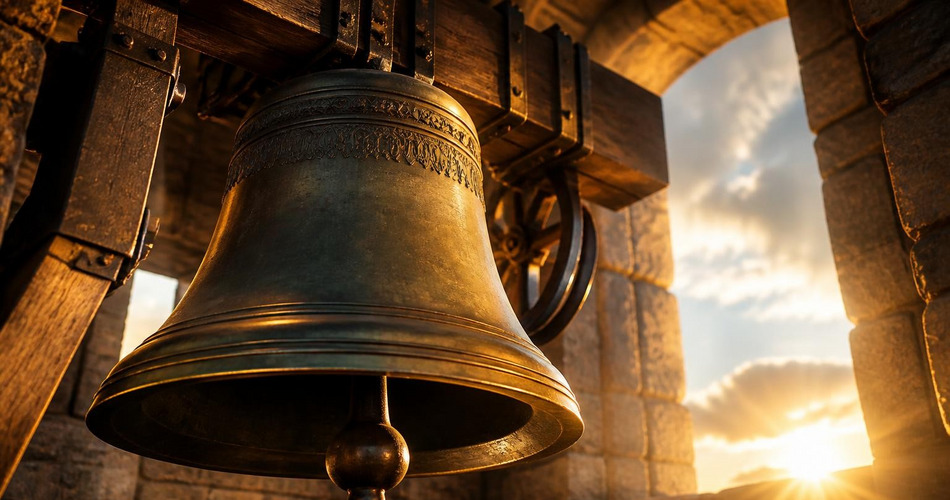
Not all church bells are identical, and variations in size, tone, and use carry distinct meanings. A large tower bell is the most iconic, symbolizing the voice of the church reaching out to the entire community. Its deep, resonant tone is associated with authority, permanence, and the gravity of sacred events. A smaller sanctus bell, rung during the Eucharist, signifies the moment of transubstantiation and is linked to mystery and reverence. Handbells, used in some traditions for musical performances, emphasize harmony, precision, and collective effort. The number of bells in a peal also matters: a single bell may represent unity, while a chime of multiple bells suggests celebration and complexity.
Frequently Asked Questions
Q: Why do church bells ring at noon and 6 p.m.?
A: These times often correspond to the Angelus prayer, a Catholic devotion recalling the Annunciation. The bell call invites the faithful to pause and pray, marking the hours with spiritual reflection.
Q: What does it mean when a church bell rings at midnight?
A: In folklore, a bell ringing at midnight is often considered an omen of death or disaster. In practice, some churches ring bells at midnight on New Year’s Eve to welcome the new year.
Q: Can a church bell be used for protection?
A: Historically, bells were believed to ward off evil spirits, storms, and plagues. The consecrated metal and holy sound were thought to have protective power, a belief reflected in many folk traditions.
Related Symbols
- Cross – The central symbol of Christianity, often displayed alongside bells in church architecture.
- Steeple – The tower that houses the bell, pointing heavenward and symbolizing aspiration.
- Angelus – The prayer associated with the ringing of bells at specific times of day.
- Gong – A similar sound-making instrument used in Eastern religions for meditation and ritual.
- Hourglass – Like the bell, a symbol of the passage of time and the call to mindfulness.