Briefly
Bamboo is a fast-growing grass that has become one of the most revered symbols in East Asian cultures, representing resilience, flexibility, integrity, and personal growth. Its hollow stem, straight posture, and ability to bend without breaking have inspired philosophical and moral reflections for centuries. In art, literature, and spiritual practice, bamboo often signifies purity, strength, and good fortune, making it a universal emblem of endurance and adaptability.
What Does Bamboo Symbolize?
Bamboo symbolizes a cluster of interrelated virtues. At its core, it stands for resilience—the ability to withstand storms and pressure while remaining upright. Because bamboo bends in strong winds without snapping, it also represents flexibility and adaptability, teaching that yielding can be a form of strength. The plant’s rapid growth and evergreen nature link it to renewal, youth, and vitality. Additionally, its straight, hollow culms are often interpreted as symbols of honesty, humility, and an open mind. In many traditions, bamboo embodies the ideal of the virtuous person: upright, strong yet pliable, and free of arrogance.
Beyond personal qualities, bamboo carries social and spiritual connotations. It is frequently associated with longevity, as it lives for many years and regenerates quickly after cutting. In feng shui, bamboo is believed to attract positive energy and good luck. In Japanese culture, bamboo is a symbol of prosperity and a guardian against evil. Across Asia, it appears in rituals, festivals, and daily life as a sign of harmony between nature and humanity.
Positive and Negative Meanings
Positive associations: Bamboo is overwhelmingly positive in its symbolism. It represents resilience, flexibility, integrity, and humility—qualities that are admired across cultures. It also stands for growth, renewal, and vitality due to its fast growth and evergreen leaves. In Chinese culture, bamboo is one of the “Three Friends of Winter” along with pine and plum, symbolizing perseverance in adversity. It is also a symbol of peace, as the plant’s gentle rustling in the wind is thought to calm the mind. In Japan, bamboo is a sign of prosperity and is used in Shinto rituals to purify spaces.
Negative meanings: While rare, bamboo can carry negative connotations in certain contexts. Its aggressive, rapid growth is sometimes seen as invasive, representing a lack of control or the spread of unwanted influence. In some folk tales, bamboo is associated with stubbornness—because it is hard to cut or remove, or with emptiness, as its hollow interior can be interpreted as superficiality if taken too literally. However, these meanings are minor and usually contextual, not intrinsic to the plant’s overall symbolic reputation.
History and Origins of the Symbolism
The symbolism of bamboo has deep roots in ancient East Asian civilizations. In China, bamboo has been cultivated for thousands of years, and its earliest symbolic references appear in classical poetry and philosophical texts. The Confucian scholar Su Shi (1037–1101) famously wrote that “one can live without meat, but not without bamboo,” reflecting the plant’s importance in daily life and moral thought. During the Tang and Song dynasties, bamboo became a common subject in ink painting, where artists used it to convey scholarly virtues. The Chinese character for bamboo, 竹 (zhú), appears in many idioms that emphasize resilience and moral integrity.
In Japan, bamboo was introduced from China and quickly adopted into Shinto and Buddhist traditions. The Japanese word for bamboo, take, appears in numerous proverbs. For example, “Bamboo that bends is stronger than oak that resists” captures the idea of flexibility as a survival strategy. Japanese gardens and tea ceremonies often feature bamboo to create a sense of tranquility. In India, bamboo, known as bans, is associated with the god Krishna, who is said to play a bamboo flute, linking the plant to divine music and love.
Bamboo also holds significance in other Asian cultures, such as in Korea and Vietnam, where it symbolizes loyalty and endurance. In many rural regions, bamboo has always been a practical resource for building, tools, and paper, so its symbolism is tied to sustenance and survival. Over time, these practical and spiritual meanings merged, giving bamboo a multifaceted symbolic identity that endures today.
Symbolism in Different Cultures
Across East Asia, bamboo carries distinct yet overlapping meanings. In China, bamboo is one of the “Three Friends of Winter” together with pine and plum, representing resilience in adversity. It is also a symbol of scholarly integrity because it bends but never breaks, mirroring the ideal of a gentleman who remains upright despite hardship. In Chinese art, bamboo is often depicted in ink wash paintings, with artists like Zheng Xie (Zheng Banqiao) using it to express moral clarity.
In Japan, bamboo is a symbol of prosperity, strength, and protection. During the New Year, kadomatsu decorations made of pine and bamboo are placed at entrances to welcome ancestors and good fortune. Bamboo groves are considered sacred spaces in some Shinto traditions, and the famous bamboo forests of Arashiyama in Kyoto are a testament to its spiritual aura. The Japanese folktale “The Tale of the Bamboo Cutter” (Taketori Monogatari) tells of a mysterious princess found inside a glowing bamboo stalk, highlighting bamboo as a vessel of the supernatural.
In other Asian cultures, bamboo is similarly revered. In Korea, bamboo symbolizes loyalty and fidelity, and it appears in the national emblem alongside hibiscus. In Vietnam, bamboo represents the resilience of the Vietnamese people, as seen in the national image of the bamboo village. Beyond Asia, bamboo has gained recognition in the West as a symbol of sustainability and eco-friendliness, often used in environmental campaigns due to its rapid growth and renewable nature.
Spiritual Meaning
In spiritual contexts, bamboo embodies qualities that align with inner peace and enlightenment. Its hollow interior is often interpreted as a symbol of an empty mind—one that is open to wisdom and free from ego. Buddhist traditions sometimes use bamboo as a reminder of non-attachment, as its hollowness signifies a lack of selfishness. The plant’s straight, upward growth points to spiritual ascension, while its ability to survive harsh conditions reflects perseverance on the spiritual path.
In Feng Shui, bamboo is a powerful tool for channeling positive energy. Lucky bamboo, a variety of Dracaena sanderiana, is frequently used in homes and offices to attract wealth, health, and harmony. The number of stalks has specific meanings: two stalks bring love, three stalks bring happiness and longevity, five stalks bring wealth, and six stalks bring good luck. Bamboo is also believed to dispel negative energy and provide protective barriers when placed near entrances or windows.
In Shintoism, bamboo is used in rituals to purify and ward off evil. The sound of bamboo wind chimes is thought to cleanse the air and the mind. In meditation, visualizing a bamboo grove can help cultivate flexibility and calmness. Thus, bamboo serves not only as a physical plant but as a spiritual guide toward balance and resilience.
In Myths and Folklore
Bamboo appears in numerous myths and folktales across Asia, often as a source of wonder and moral teaching. One of the most famous is the Japanese tale “The Tale of the Bamboo Cutter,” where a bamboo stalk shines and reveals a tiny princess named Kaguya-hime. She grows into a beautiful woman and captivates a prince, but eventually returns to the moon. This story highlights bamboo as a magical, otherworldly vessel, linking it to the celestial realm.
In Chinese folklore, bamboo is associated with filial piety and devotion. The story of Meng Zong, a filial son, tells how he prayed and wept beside a bamboo grove in winter, and bamboo shoots emerged from the frozen ground so his stepmother could have soup. The tale emphasizes that bamboo responds to virtue, growing even in impossible conditions. Another legend involves the scholar-poet Li Bai, who is said to have seen the moon’s reflection in a bamboo tube, inspiring his poetry.
Bamboo also features in creation myths. In some Southeast Asian cultures, bamboo is believed to contain the first human beings. For instance, in the Hmong creation story, humans emerge from a bamboo shell. In Philippine mythology, the first man and woman came from a bamboo stem. These myths underline bamboo’s role as a source of life and connection to the divine.
In Dreams
Dreaming of bamboo often carries positive messages related to personal growth, resilience, and success. The imagery of healthy, tall bamboo in a dream suggests that the dreamer is on a solid path, growing steadily toward their goals. It may also indicate that you possess the flexibility needed to overcome obstacles in your waking life. If the bamboo is bending in a storm, the dream could be urging you to adapt rather than resist change. Alternatively, cutting bamboo in a dream may represent a need to remove stale aspects of your life or to break through limitations.
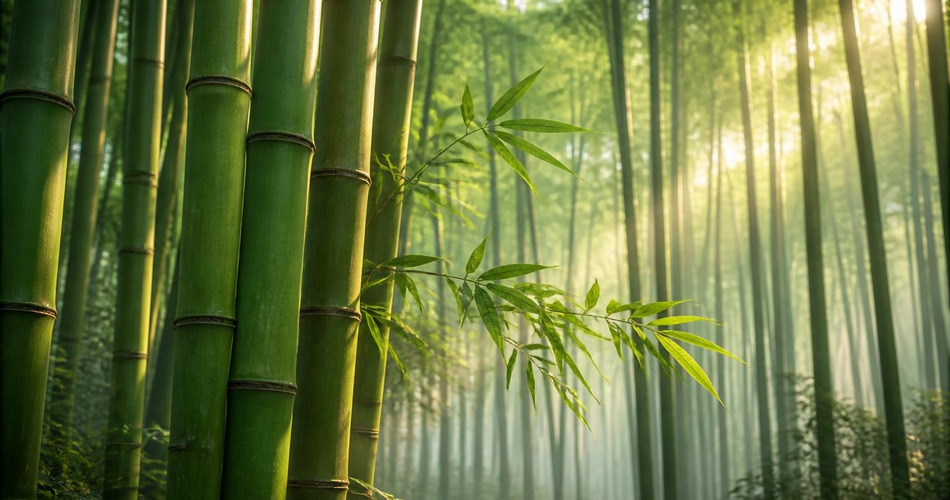
Bamboo dreams are also linked to feelings of peace and harmony, especially if the dreamer sees a bamboo grove or forest. Such dreams may reflect a desire for tranquility or a reminder to connect with nature. Since bamboo is a fast-growing plant, dreams about it can symbolize rapid progress, newly emerging opportunities, or the flourishing of a creative project. However, if the bamboo appears withered or broken, it could indicate exhaustion or a warning against being too rigid.
Common Dream Scenarios
- Growing bamboo: Symbolizes personal development, career advancement, or spiritual evolution.
- Bending bamboo: Represents the need for flexibility in handling a difficult situation.
- Cutting bamboo: May indicate a decision to eliminate obstacles or to take control of a situation.
- Bamboo forest: Suggests a peaceful, protected state of mind, but can also hint at feeling lost if the forest is dense and you are alone.
- Broken bamboo: Warns of fragility, burnout, or a situation that may require careful handling.
In Superstitions and Omens
Bamboo is steeped in superstitions that vary by region. In many Chinese households, placing bamboo in the home is believed to bring good luck and drive away evil spirits. The practice of giving lucky bamboo, especially with an even number of stalks, is common during Lunar New Year. A bamboo plant that thrives indoors is considered an omen of prosperity; if it withers, it may signal upcoming difficulties. In Japan, bamboo clappers or rattles are used in folk rituals to scare away bad luck.
In some cultures, the sound of wind rustling through bamboo is thought to carry prayers to the heavens. Conversely, if a bamboo grove is cut down, it is said to bring misfortune to the owner. Bamboo flowering, which occurs rarely and often at the end of a cycle, has been traditionally interpreted as an omen of famine or disaster in some parts of Asia, though this is a practical warning because bamboo flowering can lead to rat plagues and crop damage. Overall, bamboo superstitions are predominantly positive, reinforcing its reputation as a protective and auspicious plant.
In Art and Literature
Bamboo has been a central motif in Asian art for centuries. In Chinese ink painting, bamboo is one of the “Four Gentlemen” (plum, orchid, chrysanthemum, and bamboo) and is considered a symbol of integrity and moral purity. Artists such as Zheng Xie (Zheng Banqiao) dedicated themselves to painting bamboo, imbuing it with a sense of elegance and resilience that resonated with Confucian ideals. In Japanese art, bamboo appears in ukiyo-e prints and garden designs, often evoking a sense of calm and impermanence.
In literature, bamboo is a recurring symbol. The Japanese classic “The Tale of the Bamboo Cutter” is one of the earliest proto-science fiction stories and uses bamboo as a conduit to the celestial realm. In Chinese poetry, bamboo is praised by poets like Bai Juyi and Su Shi, who wrote about its constancy and vitality. In film, Ang Lee’s “Crouching Tiger, Hidden Dragon” features a memorable bamboo forest fight, where the characters’ martial arts movements among bamboo stalks symbolize flexibility, grace, and the balance between strength and gentleness. In contemporary literature, bamboo often appears as a metaphor for resilience in the face of adversity, as seen in works about Asian culture and diaspora.
Tattoo Meaning
Bamboo tattoos are popular among those who resonate with its symbolism of strength, resilience, and personal growth. A bamboo tattoo can be designed as a single stalk, a grove, or combined with other symbols like a dragon or koi fish. It often represents the wearer’s ability to bend without breaking, to endure hardships while remaining true to their principles. In Chinese and Japanese tattoo art, bamboo is frequently paired with animals like tigers or snakes to add layers of meaning, such as bravery or wisdom.
Because bamboo is an evergreen plant, its tattoo can signify eternal life and perseverance. Some people choose bamboo to symbolize humility, since the plant’s hollow stem is a reminder to stay open to new ideas. The color of the tattoo matters too: green bamboo emphasizes growth and vitality, while black or gray bamboo may convey a more timeless, simplistic aesthetic. Regardless of style, a bamboo tattoo serves as a permanent reminder of one’s inner strength and adaptability.
Meanings of Different Types, Colors, or Variations
Bamboo varieties carry specific symbolic nuances. Lucky bamboo (Dracaena sanderiana), although not a true bamboo, is a popular indoor plant associated with feng shui and good fortune. The number of stalks, their arrangement, and the type of vase influence its meaning: two stalks for love, three for happiness, five for wealth, and eight for abundance. Black bamboo (Phyllostachys nigra) is often seen as a symbol of strength and protection due to its dark, sturdy culms. Golden bamboo (Phyllostachys aurea) represents prosperity and vitality, its hue echoing wealth and the sun.
In terms of color symbolism, bamboo’s natural green signifies growth, harmony, and renewal. Yellow bamboo may suggest warmth and energy, while dried or brown bamboo can symbolize the passage of time or nostalgia. In art, bamboo is often painted in black ink (sumi-e), highlighting the plant’s form rather than color, which underscores its essence—simplicity and elegance. These variations allow bamboo to adapt to different symbolic messages, making it a versatile emblem in both traditional and modern contexts.
Frequently Asked Questions
Q: What does bamboo symbolize in Feng Shui?
A: In Feng Shui, bamboo is believed to attract positive energy, luck, and prosperity. Lucky bamboo is often placed in homes and offices to bring good fortune and protect against negative influences, with the number of stalks carrying specific meanings.
Q: Is bamboo a sign of good luck?
A: Yes, bamboo is widely considered a symbol of good luck, especially in East Asian cultures. Giving bamboo as a gift is a gesture of goodwill, and having bamboo indoors is thought to invite success and harmony.
Q: What does bamboo mean in Japanese culture?
A: In Japan, bamboo represents strength, purity, and prosperity. It is used in Shinto rituals, New Year decorations, and is a common motif in art and architecture, symbolizing both flexibility and endurance.
Q: Can bamboo represent love?
A: In some contexts, bamboo can symbolize love, particularly lucky bamboo with two stalks, which is believed to attract romantic relationships. In Chinese culture, bamboo is also associated with fidelity and lasting unions.
Q: What is the spiritual meaning of bamboo?
A: Spiritually, bamboo embodies humility, openness, and non-attachment. Its hollow stem reminds practitioners to empty their minds of ego, and its straight, upward growth encourages spiritual progression and resilience on the path to enlightenment.
Related Symbols
- Pine – shares the “Three Friends of Winter” symbolism of endurance and resilience.
- Plum blossom – also part of the “Three Friends,” representing hope and perseverance in harsh conditions.
- Orchid – another of the “Four Gentlemen,” symbolizing refinement and integrity.
- Lotus – a symbol of purity and spiritual growth, similar to bamboo’s association with an open mind.
- Koi fish – often paired with bamboo in tattoos, representing strength and perseverance.
- Dragon – in East Asian symbolism, dragon and bamboo together signify power and flexibility.