Briefly
A coffin is a container that holds a deceased person’s body for burial or cremation. It symbolizes the finality of death, the transition from life to whatever comes next, and the human need to honor and remember the dead. Across cultures, coffins also represent fear of mortality, respect for the departed, and the mystery of the afterlife.
What Does the Coffin Symbolize?
The coffin is first and foremost a symbol of death. It marks the physical end of a person’s life and the separation of the soul from the body. At the same time, it represents transition — the journey from the world of the living to the realm of the dead or to an afterlife. In many traditions, the coffin is seen as a vessel that carries the spirit to its next destination.
Beyond death, the coffin symbolizes respect and honor. The care taken in constructing and decorating a coffin reflects the value placed on the deceased. It also stands for finality: once the coffin is closed and buried, there is no returning. This finality can evoke both grief and acceptance.
In a broader sense, the coffin can represent the mystery of what lies beyond death. It is a tangible object that confronts the living with the unknown, prompting reflection on mortality and the meaning of life.
Positive and Negative Meanings
Positive associations: The coffin is often linked to peace and rest. It provides a dignified container for the body, allowing loved ones to say goodbye and begin the grieving process. In religious contexts, the coffin symbolizes the hope of resurrection or rebirth, as the body is laid to rest in anticipation of a new life. It can also represent the completion of a life journey and the release from earthly suffering.
Negative meanings: The coffin is primarily associated with fear and loss. It evokes the terror of death, the pain of separation, and the decay of the physical body. In superstition, seeing a coffin is considered an omen of death or misfortune. The closed coffin can also symbolize confinement and the end of all possibilities, reinforcing the finality of death.
History and Origins of Coffin Symbolism
The use of coffins dates back thousands of years. Ancient Egyptians created elaborate sarcophagi to protect the mummified body and house the soul in the afterlife. These coffins were often decorated with spells and images to guide the deceased. In ancient China, coffins were made from precious woods and considered a symbol of filial piety — children would provide the best coffin they could afford for their parents.
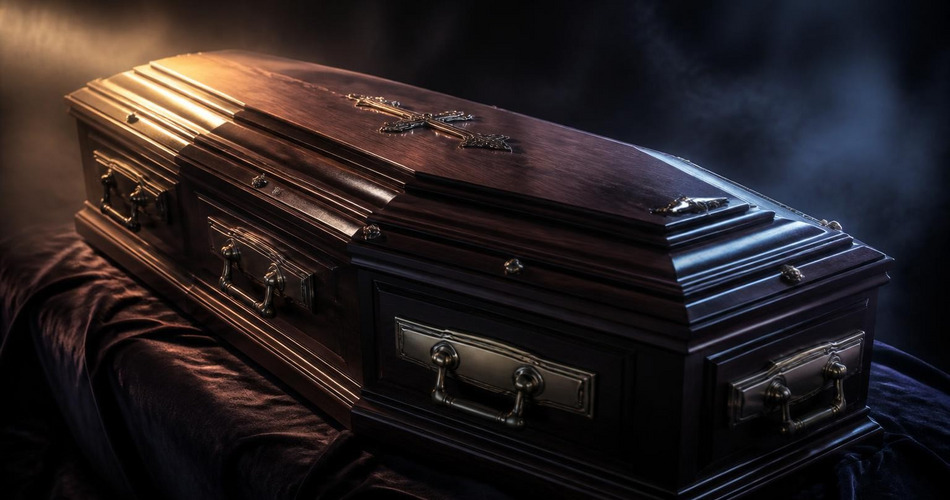
In medieval Europe, coffins were simple wooden boxes, but over time they became more ornate, reflecting social status. The shape of the coffin — wider at the shoulders and narrower at the feet — is thought to mimic the human body and is sometimes called a «toe-pincher» coffin. This design became symbolic of the body’s final resting place.
The symbolism of the coffin has evolved with burial practices. In some cultures, coffins are replaced by shrouds or urns, but the coffin remains a powerful universal symbol of death and transition.
Coffin Symbolism in Different Cultures
In Western cultures, the coffin is typically a rectangular or hexagonal box used for burial. It is often associated with Christian funeral rites, where it represents the temporary resting place of the body until the resurrection. Black or dark colors are common, symbolizing mourning and solemnity.
In Chinese culture, coffins are traditionally made from wood and are often red or gold, colors associated with good fortune and the afterlife. The coffin is seen as a «house» for the deceased, and its quality reflects the family’s respect. Elaborate funerals with expensive coffins are considered a way to ensure the deceased’s comfort in the next world.
In African traditions, coffins can be highly symbolic. Among the Ga people of Ghana, fantasy coffins are carved in shapes representing the deceased’s occupation or interests — a fish for a fisherman, a car for a driver. These coffins celebrate the life of the person and are believed to help the spirit transition.
In ancient Egypt, the sarcophagus was not just a container but a protective shell for the mummy, inscribed with spells from the Book of the Dead. It symbolized the eternal journey and the hope of rebirth.
Spiritual Meaning of the Coffin
Spiritually, the coffin represents the threshold between life and death. It is the last physical vessel for the body before the soul departs. Many believe that the coffin helps the spirit let go of the material world and begin its journey. In some traditions, prayers or rituals are performed over the coffin to guide the soul.
The coffin also symbolizes humility. Regardless of wealth or status in life, everyone ends up in a coffin. This equality in death reminds the living of the transient nature of existence. For some, the coffin is a symbol of surrender — accepting the end and trusting in a higher power.
Coffins in Myths and Folklore
In folklore, coffins often appear as objects of fear and superstition. Stories of vampires and undead creatures frequently involve coffins as their resting places. The vampire’s coffin is a symbol of undeath — a reversal of the natural order where the dead do not stay dead.
In European folklore, it was believed that a coffin must be carried out of the house feet first to prevent the spirit from returning. Some traditions held that a coffin should never be left empty, as it might attract death. In many cultures, the coffin is central to funeral processions, with specific rules about who can carry it and how it is transported.
In Japanese folklore, there are tales of kubikajiri — a spirit that bites off the heads of the dead, and coffins were sometimes designed with special locks to protect the body. These myths highlight the coffin’s role as a protective barrier.
Coffins in Dreams
Dreaming of a coffin is often unsettling and can carry multiple meanings. In dream interpretation, a coffin may symbolize the end of a phase in life, such as a relationship, job, or old habit. It can also represent repressed emotions or fears about death.
The context of the dream matters greatly. A closed coffin might indicate hidden feelings or secrets, while an open coffin could suggest that something once hidden is now revealed. Seeing yourself in a coffin may reflect a desire for transformation or a feeling of being trapped.
Common Dream Scenarios
- Seeing a closed coffin: Often symbolizes a secret or unresolved issue that you are avoiding. It may also represent fear of the unknown.
- An open coffin with a body: Can indicate that you are confronting mortality or that a situation has come to an end. It may also be a sign to let go of the past.
- Being inside a coffin: Suggests feelings of confinement, powerlessness, or a desire to escape from a situation. It can also symbolize rebirth if you emerge from the coffin.
- Carrying a coffin: Represents the burden of grief or responsibility. It may indicate that you are helping someone through a difficult transition.
- An empty coffin: Often interpreted as a warning of potential loss or a missed opportunity. It can also symbolize a false alarm — a fear that does not materialize.
Coffins in Superstitions and Omens
- Seeing a coffin in a dream: Traditionally considered an omen of death or bad news, though modern interpretations are more psychological.
- An empty coffin in the house: Believed to invite death into the home. Some cultures avoid keeping a coffin before it is needed.
- Dropping a coffin during a funeral: Seen as a very bad omen, suggesting that the deceased’s soul is restless or that another death will follow.
- Black cat crossing a coffin: In some European folklore, this is a sign that the devil is claiming the soul.
- Birds landing on a coffin: Sometimes interpreted as the soul taking flight or as a message from the spirit world.
Coffins in Art and Literature
The coffin appears in numerous works of art and literature as a powerful symbol of death and transition. In William Shakespeare’s Hamlet, the gravedigger scene features a coffin (or skull) that prompts Hamlet’s famous soliloquy on mortality. The coffin here represents the inevitable end that awaits everyone.
In Edgar Allan Poe’s short story The Tell-Tale Heart, the murderer hides the body under the floorboards, but the coffin is absent — yet the theme of burial and concealment echoes coffin symbolism. Poe’s The Premature Burial directly deals with the fear of being buried alive in a coffin.
In visual art, the coffin is a recurring motif in memento mori paintings. For example, the 17th-century Dutch painting Vanitas Still Life often includes a coffin or skull to remind viewers of life’s brevity. In modern cinema, the coffin appears in films like The Seventh Seal (1957), where the character Death is often shown with a coffin, and in the Thai horror film The Coffin (2008), which explores the superstition of lying in a coffin to cheat death.
Coffin Tattoo Meaning
Coffin tattoos are popular in certain subcultures, especially among those who embrace mortality or have a fascination with death. The coffin tattoo can symbolize acceptance of death, a reminder that life is short, or a tribute to a lost loved one. It may also represent a dark aesthetic or rebellion against societal norms.
Often combined with other symbols like roses, skulls, or crosses, the coffin tattoo can carry personal meanings. A closed coffin might indicate a secret or a closed chapter, while an open coffin with a skeleton can symbolize the inevitability of death. Some people get coffin tattoos as a form of protection, believing that facing death symbolically wards off bad luck.
Meanings of Different Types of Coffins
- Wooden coffin: Traditional and natural, symbolizing humility and return to the earth. Different woods (oak, pine, mahogany) can signify status or durability.
- Metal coffin: Often used for modern burials, representing strength and permanence. Steel or bronze coffins are associated with wealth and a desire for preservation.
- Fantasy coffin (Ghanaian): Carved into shapes like animals or objects, these celebrate the deceased’s life and symbolize their identity and achievements.
- Eco-friendly coffin: Made from biodegradable materials, symbolizing a return to nature and environmental consciousness.
- Glass-topped coffin: Allows viewing of the body, symbolizing openness and the desire to see the deceased one last time.
Frequently Asked Questions
Q: What does a coffin symbolize in a dream?
A: In dreams, a coffin often symbolizes the end of a phase, hidden emotions, or fear of death. The specific scenario — open, closed, empty — provides more detail about what the dreamer is confronting.
Q: Is a coffin a positive symbol?
A: While primarily associated with death and loss, the coffin can also represent peace, honor, and the hope of an afterlife. It is a complex symbol with both positive and negative aspects.
Q: Why are coffins shaped the way they are?
A: The traditional hexagonal shape is designed to fit the human body, with wider shoulders and narrower feet. This shape is sometimes called a «toe-pincher» coffin and has become iconic in Western culture.
Q: What is the spiritual meaning of a coffin?
A: Spiritually, the coffin is a threshold between life and death, helping the soul transition. It also symbolizes humility and the equality of all people in death.
Related Symbols
- Skull — a direct symbol of death and mortality
- Grave — the final resting place, often paired with the coffin
- Urn — a container for ashes, representing a different form of burial
- Sarcophagus — an ancient stone coffin, often richly decorated
- Shroud — a cloth wrapping for the dead, an alternative to the coffin
- Death (personification) — often depicted carrying a coffin or scythe