Briefly
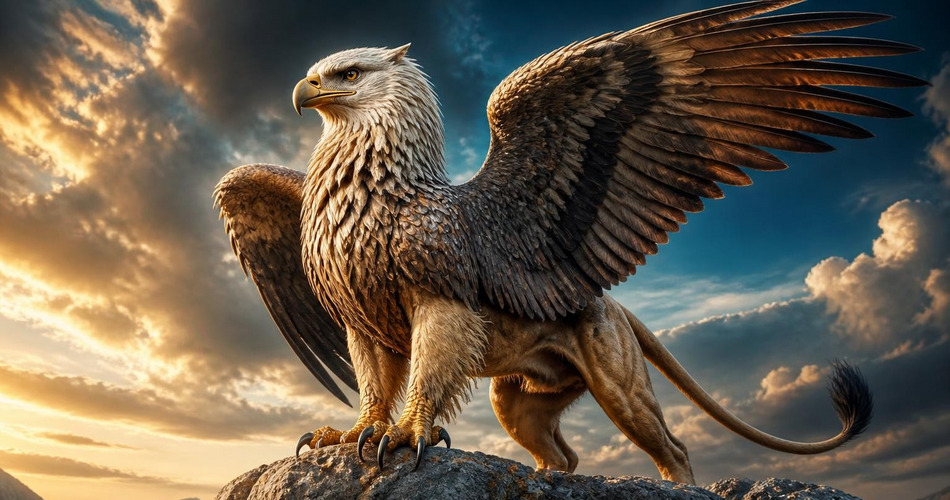
The griffin is a legendary hybrid creature, typically depicted with the body, tail, and hind legs of a lion and the head, wings, and talons of an eagle. As a symbol, it represents a powerful fusion of terrestrial strength and celestial vision, embodying qualities of courage, vigilance, and divine guardianship. Found in the myths and art of ancient civilizations from the Levant to Greece, the griffin has endured for millennia as a potent emblem of power, protection, and nobility.
What Does the Griffin Symbolize?
The griffin is a profoundly dualistic symbol, uniting the lion, the traditional “king of beasts,” with the eagle, the “king of birds.” This combination creates a creature that commands both the earth and the sky, representing a mastery over all realms. Consequently, the griffin symbolizes immense power, authority, and leadership. Its role as a guardian of treasure and sacred places makes it a universal emblem of protection, vigilance, and retribution against those who would steal or defile what is sacred.
Beyond its physical prowess, the griffin is also associated with wisdom and enlightenment. The eagle’s ability to fly high and gaze directly at the sun lends the griffin a connection to the divine, foresight, and intellectual clarity. It represents the perfect balance of brute force and sharp intelligence, making it a symbol of just and enlightened rule.
Positive and Negative Meanings of the Griffin
Positive associations: The griffin is overwhelmingly a positive symbol. It stands for strength, courage, protection, and loyalty. In heraldry, it signifies the boldness and ferocity of a warrior combined with the wisdom and vigilance of a leader. It is a guardian of the divine and a protector of the innocent, often associated with the sun, the sky, and the higher aspects of the human spirit.
Negative meanings: While rare, the griffin’s negative connotations stem from its fearsome and untamable nature. As a relentless guardian, it can represent an obstacle or a fearsome judge that punishes greed and hubris. In some interpretations, its hoarding of gold and treasure can be seen as a symbol of greed or an unyielding, possessive force that prevents access to knowledge or wealth.
History and Origins of the Griffin Symbolism
The origins of the griffin are ancient and complex. The earliest known depictions come from Egypt and Iran (Persia) in the 4th millennium BCE. In ancient Egyptian art, the griffin was often depicted as a powerful hunter and a symbol of the pharaoh’s might, sometimes shown trampling the enemies of Egypt. The motif traveled eastward, becoming prominent in Minoan and Mycenaean cultures, where griffins were painted on palace walls and thrones, notably in the Palace of Knossos on Crete.
The Greeks, who gave us the most enduring literary descriptions, believed griffins lived in the Scythian lands of Central Asia, guarding vast deposits of gold from the one-eyed Arimaspians. The Greek historian Herodotus wrote about these creatures in the 5th century BCE, and the playwright Aeschylus referenced them. This connection to the distant, mysterious East cemented the griffin’s image as a guardian of exotic and priceless treasures. The griffin was also sacred to Apollo, the sun god, and to Nemesis, the goddess of retributive justice, further linking it to divine power and righteous punishment.
Griffin Symbolism in Different Cultures
Ancient Greek and Roman: In classical antiquity, the griffin was a powerful symbol of divine power and vigilant guardianship. It was associated with Apollo, who rode a griffin, and with Nemesis, whose wheel was often flanked by griffins. The Romans adopted the griffin as a symbol of strength and vigilance, frequently using it in funerary art to guard the spirits of the dead.
Christian Symbolism: In medieval Christian iconography, the griffin took on a deeply spiritual meaning. It was seen as a symbol of Christ himself, combining his divine nature (the eagle) with his human nature (the lion). The griffin’s role as a guardian of treasure was reinterpreted as a guardian of the soul and the Church. It also represented the dual nature of Christ’s reign: on earth and in heaven. In bestiaries, the griffin was a noble creature, fiercely protective and a natural enemy of the horse and man.
Heraldry: The griffin is a common charge in European heraldry, where its symbolism is highly codified. It represents the virtues of a perfect knight: courage (lion), vigilance (eagle), strength, and leadership. The griffin is often depicted “segreant” (rampant with wings elevated), and its fierce expression conveys a readiness to defend its honor and territory. Unlike the dragon, which is a symbol of chaos to be overcome, the griffin is a symbol of ordered, protective power.
Spiritual Meaning of the Griffin
Spiritually, the griffin represents the union of the physical and the spiritual, the earthly and the divine. Its lion body grounds it in the material world, symbolizing physical strength, stability, and mastery over the instincts. Its eagle head and wings elevate it to the celestial realm, representing spiritual vision, enlightenment, and connection to the higher self. The griffin thus serves as a powerful totem for those seeking to balance their material and spiritual lives. It is a guardian of sacred knowledge and a guide for those on a spiritual quest, offering protection and clarity of vision.
The Griffin in Myths and Folklore
The most famous myth involving griffins is their eternal conflict with the Arimaspians, a race of one-eyed men who sought to steal the gold the griffins guarded. This story, recorded by Herodotus and later by Pliny the Elder, was widely believed in the ancient world. The griffins were seen as the natural guardians of the earth’s riches, punishing human greed and hubris.
In medieval folklore, griffins were said to be mortal enemies of the horse. They were also believed to inhabit the far reaches of the world, particularly in the East, where they built nests of gold. The griffin’s egg was considered a precious object, and its feathers were thought to have magical properties. The legend of the griffin was so persistent that it was included in many medieval bestiaries and natural histories as a real, albeit exotic, animal.
The Griffin in Dreams
Dreaming of a griffin is a powerful and rare event, often laden with symbolic meaning. As a composite creature, it can represent the integration of different aspects of the dreamer’s personality. It typically appears as a guide or a guardian, offering protection or delivering a message of great importance.
Encountering a griffin in a dream can symbolize a need for vigilance, courage, or a call to embrace one’s own power and leadership abilities. It might also represent a challenge that requires both physical strength and sharp intelligence to overcome. Because the griffin is a guardian of treasure, a dream about one could indicate that the dreamer is being called to protect something valuable in their waking life, or that they are on the verge of discovering a hidden inner treasure.
The Griffin in Art and Literature
The griffin has had a prominent and enduring presence in art and literature. In ancient art, it appears on the walls of the Palace of Knossos and in countless Greek and Roman sculptures and mosaics. In the Middle Ages, the griffin was a popular subject in bestiaries and church carvings, symbolizing Christ’s dual nature.
In literature, the griffin appears in Dante Alighieri’s Divine Comedy (Purgatorio), where it pulls the Church’s chariot, symbolizing the dual nature of Christ. John Milton mentions griffins in Paradise Lost. In modern literature, Lewis Carroll’s Alice’s Adventures in Wonderland features a whimsical Gryphon, a character who is a source of knowledge and guidance for Alice. The griffin is also the house symbol for Gryffindor in J.K. Rowling’s Harry Potter series, representing courage, chivalry, and daring, perfectly encapsulating the creature’s core symbolic meaning. In C.S. Lewis’s The Chronicles of Narnia, horses are turned into winged creatures, echoing the griffin’s fusion of earthly and aerial power.
Griffin Tattoo Meaning
As a tattoo, the griffin is a popular choice for those who identify with its powerful symbolism. It represents a desire for protection, strength, and courage. A griffin tattoo can signify a guardian spirit, a commitment to defending one’s values and loved ones, or an embodiment of personal power and nobility. The design often emphasizes the creature’s dual nature, combining the majestic wings of the eagle with the muscular body of the lion, making it a visually striking and deeply meaningful piece of body art.
Frequently Asked Questions About the Griffin
Q: What does a griffin symbolize?
A: A griffin primarily symbolizes strength, wisdom, guardianship, and the union of earthly and celestial power. It represents the perfect balance of physical might and intellectual clarity.
Q: Are griffins good or evil?
A: Griffins are overwhelmingly considered benevolent and noble creatures in mythology and symbolism. They are guardians of treasure and the divine, punishing greed and hubris, but they are not inherently evil.
Q: What is the difference between a griffin and a hippogriff?
A: A griffin has the body of a lion and the head and wings of an eagle. A hippogriff has the body of a horse and the head and wings of an eagle. In mythology, the hippogriff is a much rarer and later invention, symbolizing the impossible or a love that overcomes great obstacles.
Q: Why is the griffin a symbol of protection?
A: The griffin’s role as a fierce guardian of treasure and sacred places in ancient myths established it as a universal symbol of protection. Its combined strength of the lion and vigilance of the eagle makes it an ideal protector.
Symbols Related to the Griffin
- Dragon: Another powerful hybrid guardian, often representing chaos to be overcome, unlike the griffin’s ordered protection.
- Phoenix: A mythical bird symbolizing rebirth and renewal, sharing the griffin’s celestial and solar associations.
- Hippogriff: A related hybrid (horse/eagle) symbolizing the impossible or the union of opposites.
- Lion: Represents the earthly power, courage, and royalty that forms the foundation of the griffin’s body.
- Eagle: Represents the celestial vision, spiritual height, and authority that forms the griffin’s head and wings.
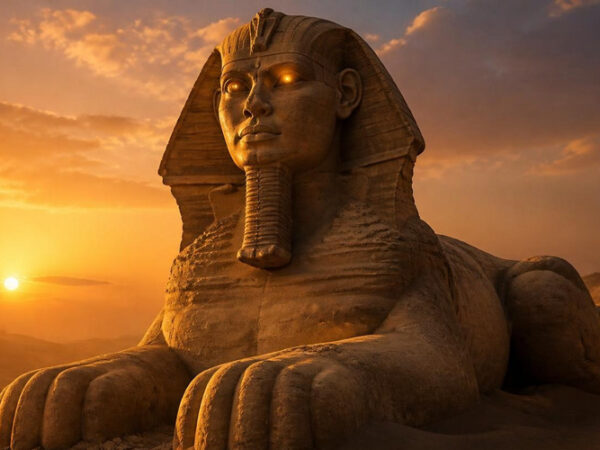
- Sphinx: Another composite guardian creature (human/lion), symbolizing riddles, mystery, and knowledge.