Briefly
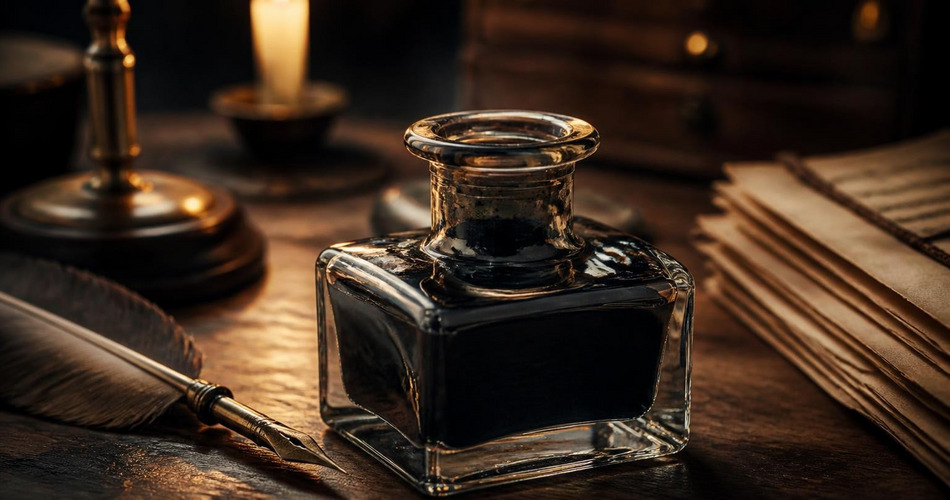
The ink bottle symbolizes the written word, knowledge, and creative expression. As a container for ink, it holds the potential for ideas to be recorded and shared, often representing intellectual labor, authority, and permanence. Its opaque glass or dark contents also evoke mystery, secrecy, and the weight of decisions recorded in ink. Across cultures, ink bottles have been associated with scholars, scribes, and artists, embodying both the power and the burden of communication.
What Does Ink Bottle Symbolize?
The ink bottle, as a vessel for fluid ink, symbolizes the potential for expression and the preservation of thoughts. Historically, ink made from carbon black, gum arabic, and water was stored in small glass or ceramic bottles. This object stands for knowledge and learning, as ink is essential for writing books, letters, and official documents. It also represents creativity, since ink is used in drawing, calligraphy, and artistic works. The ink bottle, often sealed with a cork or stopper, conveys a sense of restricted or reserved power until opened and used.
On a deeper level, the ink bottle is tied to permanence. Unlike pencil marks that can be erased, ink records words indelibly, symbolizing commitments, oaths, or irreversible decisions. This permanence can be positive (a lasting legacy) or negative (a regretful statement that cannot be undone). The ink bottle thus embodies the duality of writing as both a tool for progress and a source of finality.
Positive and Negative Meanings
Positive associations: The ink bottle is linked to wisdom, literacy, and the transmission of culture. It enables communication across time and distance, allowing ideas to endure. In many traditions, an ink bottle on a desk signifies a person of knowledge—a scholar, a writer, or an administrator. It also symbolizes creativity and the birth of artistic works, from calligraphy to fine art.
Negative meanings: An ink bottle can also represent secrecy or deception. Its dark, opaque contents may hide the true nature of the words being written—for instance, contracts signed in ink that bind people unfairly. In some contexts, ink bottles are associated with bureaucracy and the cold, impersonal weight of officialdom. Spilled ink can symbolize a mistake that cannot be corrected, or an irrevocable action with lasting consequences.
History and Origins of the Symbolism
Ink has been used for writing for thousands of years, with the earliest known ink recipes from ancient China and Egypt around 2500 BCE. The ink bottle as a dedicated container emerged with the rise of scribal traditions in medieval Europe and the Islamic world. In European monasteries, ink bottles were essential tools for copying manuscripts, and they became symbols of monastic scholarship. The inkwell—often made of glass, metal, or ceramic—was a common fixture on scribes’ desks.
In East Asia, ink sticks were ground on ink stones rather than used in bottles, but the concept of a container for liquid ink appeared with imported Western writing instruments. The ink bottle’s symbolism evolved with the printing press and mass literacy. In the 19th century, ink bottles were mass-produced, and they became emblematic of education and middle-class aspiration. The iconic image of an ink bottle beside a quill pen or fountain pen represents the golden age of handwriting and correspondence.
The symbolic weight of the ink bottle grew during the era of signature seals and legal documents. Sealing wax was often used with ink to authenticate contracts, and the ink bottle thus became linked to authority and binding agreements. In many countries, official stamps and signatures require ink, reinforcing the ink bottle’s role as a signifier of power and legitimacy.
Symbolism in Different Cultures
In Western culture, the ink bottle is strongly associated with authorship and journalism. The phrase “ink-stained wretch” historically referred to newspaper reporters who worked with inkwells. The ink bottle also appears in imagery of writers—from Shakespeare to 19th-century novelists—as a symbol of literary craft. In heraldry, ink bottles are rare but appear in some coats of arms representing book printers or scholars.
In Islamic culture, ink bottles are valued as tools of the calligrapher, whose art is highly respected. Calligraphy is a major art form in the Islamic world, used to write Qur’anic verses and poetry. The ink bottle here symbolizes devotion, beauty, and the divine word. Master calligraphers often had decorated inkwells, sometimes made of silver or brass, as status symbols.
In East Asian culture, while traditional ink is stored as an ink stick, the concept of the ink bottle (or ink container) appears in scholarly contexts. The four treasures of the study—brush, ink, paper, and inkstone—include the inkstone which serves a similar function as a container and grinding surface. This set represents the ideal tools of a scholar-official, and the ink container symbolizes cultivation and intellectual pursuit. However, in modern China and Japan, Western-style ink bottles are used with fountain pens, and they retain the symbolism of education and professionalism.
Spiritual Meaning
In spiritual terms, the ink bottle represents the wellspring of consciousness from which thoughts and words emerge. The dark liquid inside can be seen as the unconscious, holding hidden truths and insights that require the writer’s hand to bring into the light. Some interpret the ink bottle as a symbol of divine inspiration—the ink being like the holy oil or water that anoints a prophet or scribe to record sacred texts.
In meditation, focusing on an ink bottle can symbolize the containment of the mind’s chaotic thoughts. The act of writing with ink is often viewed as a form of spiritual discipline, where each stroke requires intention and care. The ink bottle thus stands for patience, focus, and the bringing of order to inner life.
In Myths and Folklore
Ink bottles appear in folklore as magical objects. In some European folktales, an ink bottle belonging to a fairy or a wizard could produce endless ink or write by itself. For example, the German tale “The Little Ink Bottle” tells of a magic inkwell that helps a poor boy become a famous scribe. In other stories, an ink bottle that never runs dry symbolizes a writer’s endless creativity or a contract with a supernatural entity.
In Russian folklore, the devil is sometimes said to write people’s names in an ink bottle when they are born, determining their fate. This ties the ink bottle to destiny and the irreversibility of fate, as names written in ink cannot be removed. Such superstitions underline the ink bottle’s symbolic connection to records that are permanent and decisive.
In Dreams
Dreaming of an ink bottle often relates to communication and self-expression. It may indicate a need to write something down or a fear of being misunderstood. The condition of the ink bottle in the dream—full, empty, spilled, or cracked—provides clues about the dreamer’s emotional state regarding a situation requiring commitment or recording.
An ink bottle in a dream can also represent hidden knowledge or secrets that are waiting to be revealed. If the ink is visible, it may symbolize clarity; if the bottle is sealed, it might suggest something being held back. Dreams of ink bottles are common among writers, artists, or students facing exams, reflecting the dreamer’s focus on intellectual or creative work.
Common Dream Scenarios
- Spilling ink from a bottle: Indicates a mistake or a loss of control over a situation, often leading to regret or embarrassment. It can also symbolize the release of information that should have remained secret.
- Finding an old ink bottle: Suggests rediscovering forgotten knowledge, talents, or past experiences that are still relevant. It may prompt the dreamer to revisit a project or relationship.
- Empty ink bottle: A feeling of creative block, lack of inspiration, or the end of a communication process. It warns that the dreamer needs to recharge or seek new sources of ideas.
- Breaking an ink bottle: Symbolizes an irreversible event—an ending, a broken promise, or an unintended revelation. The dark stain left behind may represent lingering emotional residue.
In Superstitions and Omens
In some folk beliefs, an ink bottle that tips over on its own is considered an omen of bad news arriving by letter. Similarly, if ink spills while writing a name, it is thought to bring misfortune to that person. Among writers, dropping an ink bottle has been considered a sign of writer’s block or a failed project. These superstitions highlight the ink bottle’s role as a symbol of communication and permanence, where accidents involving it are seen as disruptions to order and intention.
In Art and Literature
Ink bottles appear in numerous works as symbols of authorship and authority. In Don Quixote by Miguel de Cervantes, the ink bottle is part of the scholar’s study. In Herman Melville’s Moby-Dick, the narrator Ishmael writes his tale with a quill and ink, and the ink bottle represents the act of narration itself. In visual art, Dutch Golden Age paintings often feature ink bottles on desks alongside books and letters, emphasizing the importance of written correspondence in 17th-century life. In modern film, the ink bottle is seen in scenes of newspapers or detective offices, such as in All the President’s Men (1976), where journalists use ink bottles with fountain pens, connecting the object to the pursuit of truth.
Tattoo Meaning
Ink bottle tattoos are popular among writers, poets, journalists, and academics as a symbol of their craft. The design often includes a quill or fountain pen emerging from the bottle. This tattoo signifies a love for writing, storytelling, and the permanence of words. It can also represent a commitment to truth or a dedication to learning. Some choose an ink bottle tattoo with a skull or candle, adding layers of mortality and time. The ink bottle in tattoo art is generally a positive emblem of creativity rather than negativity, though it can also symbolize a significant written promise, such as a vow or a published work.
Meanings of Different Types, Colors, or Variations
The shape and material of the ink bottle can alter its symbolism. A traditional square glass ink bottle (often used in schools) represents uniformity and practicality. A crystal or cut-glass inkwell suggests elegance and wealth, belonging to a wealthy merchant or a prestigious scholar. A metal ink bottle (like brass or silver) connotes durability and status, often used by officials or artists of high rank.
The color of the ink inside also matters. Black ink is standard and symbolizes authority, formality, and finality—it is used in legal documents. Blue ink is associated with signature and authenticity, but also with personal expression. Red ink has strong symbolism, especially in East Asian cultures, where it represents luck, or in accounting, where it signifies loss (“in the red”). In calligraphy, red ink is used for stamps and corrections, so an ink bottle of red ink might symbolize correction, authority, or warning.
Frequently Asked Questions
Q: Is an ink bottle a good luck charm?
A: In some traditions, an ink bottle is seen as a symbol of wisdom and is considered a positive omen for students and writers, but it is not generally regarded as a charm. Its appearance in dreams or omens depends on context.
Q: What does an ink bottle tattoo mean?
A: An ink bottle tattoo typically represents a passion for writing, creativity, and the permanence of the written word. It is popular among authors, journalists, and artists as a symbol of their dedication to their craft.
Q: What is the symbolism of an empty ink bottle?
A: An empty ink bottle symbolizes a lack of inspiration, the end of a creative phase, or a need for renewal. In dreams, it can indicate a fear of being unable to communicate effectively.
Related Symbols
- Feather or quill pen – directly paired with the ink bottle; symbolizes writing, freedom, and the art of calligraphy.
- Fountain pen – modern companion to the ink bottle; represents elegance and continuous creativity.
- Scroll or book – objects made possible by ink; symbolize knowledge and recorded history.
- Typewriter – mechanical writing device; represents mass communication and the speed of written work, often contrasted with the manual ink bottle.
- Seal or stamp – used with ink to authenticate documents; symbolizes authority and official approval.